
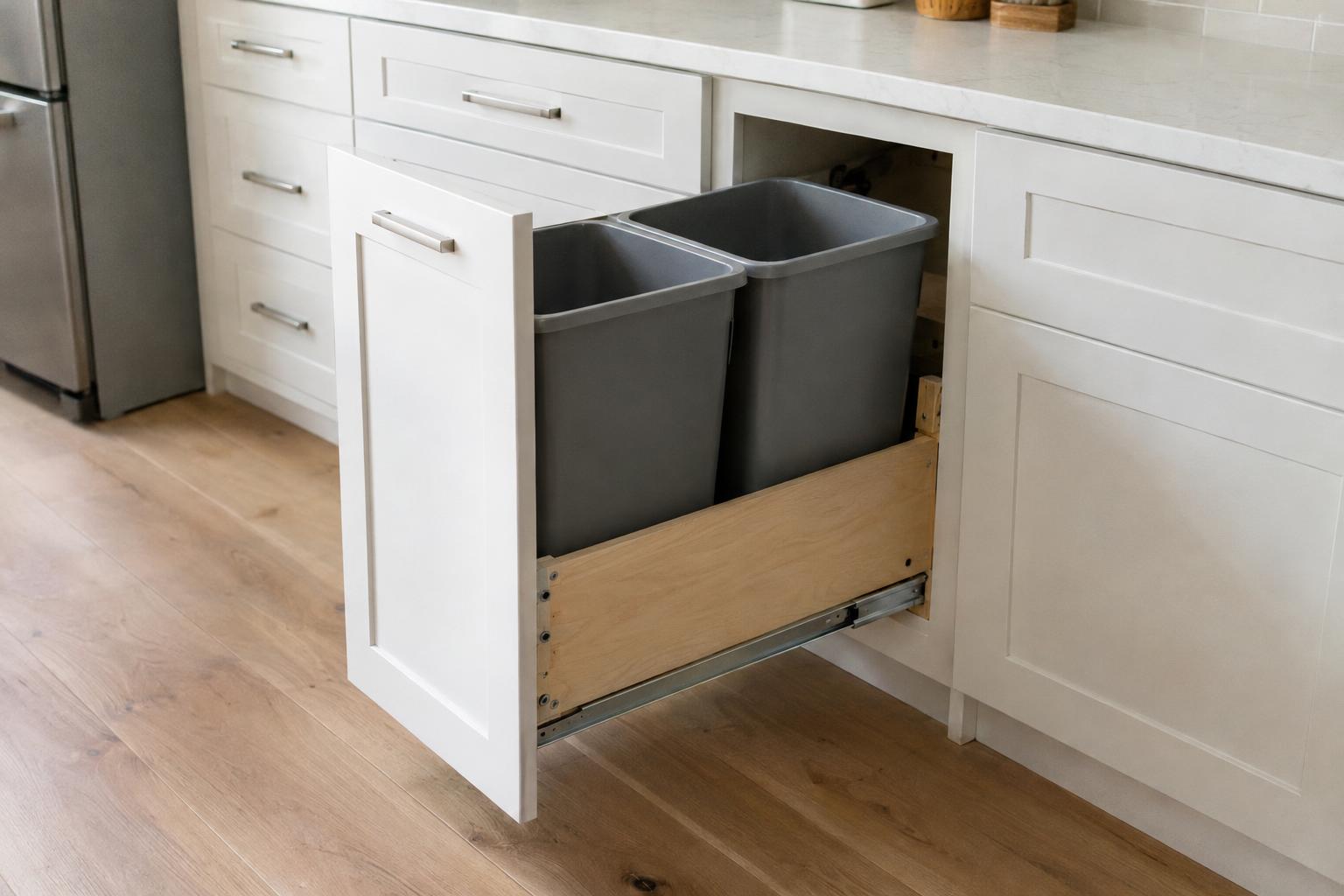
A pull out trash cabinet is one of the quietest upgrades in a kitchen remodel, and one homeowners rarely want to give up once it is installed. Instead of a bin in the corner or a lid you have to wrestle open, the trash and recycling live behind a cabinet door that glides out on full-extension slides. The floor stays clear, the kitchen looks calmer, and daily cleanup gets easier. Here is how sizing, placement, and hardware come together for a pull out unit in a Southwest Florida kitchen.
Why a Built-In Pull Out Trash Cabinet Earns Its Space
A standalone bin takes up floor area exactly where you want to move around. A built-in unit turns that space into storage that works every day. Because the containers ride on slides, you reach the back of the bin without bending around a door, and the cabinet face blends into the surrounding run so the kitchen reads as one clean line.
In Florida homes there is a practical bonus. Warm, humid air makes food waste more noticeable, and an enclosed cabinet keeps bins out of sight and out of the sun while staying easy to empty. Many households also separate recycling, compost scraps, and general trash, and a cabinet built for two or three containers makes that habit realistic.
Sizing the Cabinet Around Your Household
The right size starts with how much waste you produce and how often you take it out. A couple who cooks lightly may be happy with a single large bin. A family that cooks most nights, entertains often, or hosts seasonal visitors usually does better with two containers, one for trash and one for recycling.
The cabinet width is then set by the bins you plan to use. Pull out frames are commonly made to fit standard base cabinet widths, and capacity grows as the cabinet gets wider. We can bring the actual containers, or their dimensions, into the planning conversation so nothing is guesswork. Leave comfortable clearance above each bin too, since a container that sits tight under the countertop makes it awkward to lift out a full bag.
If you are still deciding how your cabinets will be built, our guide to custom versus semi-custom cabinets explains how each approach handles special inserts like this one.
Single, Double, or Triple Bin Configurations
One large bin
This suits small kitchens, bar sinks, and secondary prep areas. It keeps the cabinet narrow and leaves room for drawers nearby, but everything goes in one container, so it works best where recycling is handled elsewhere.
Two bins side by side
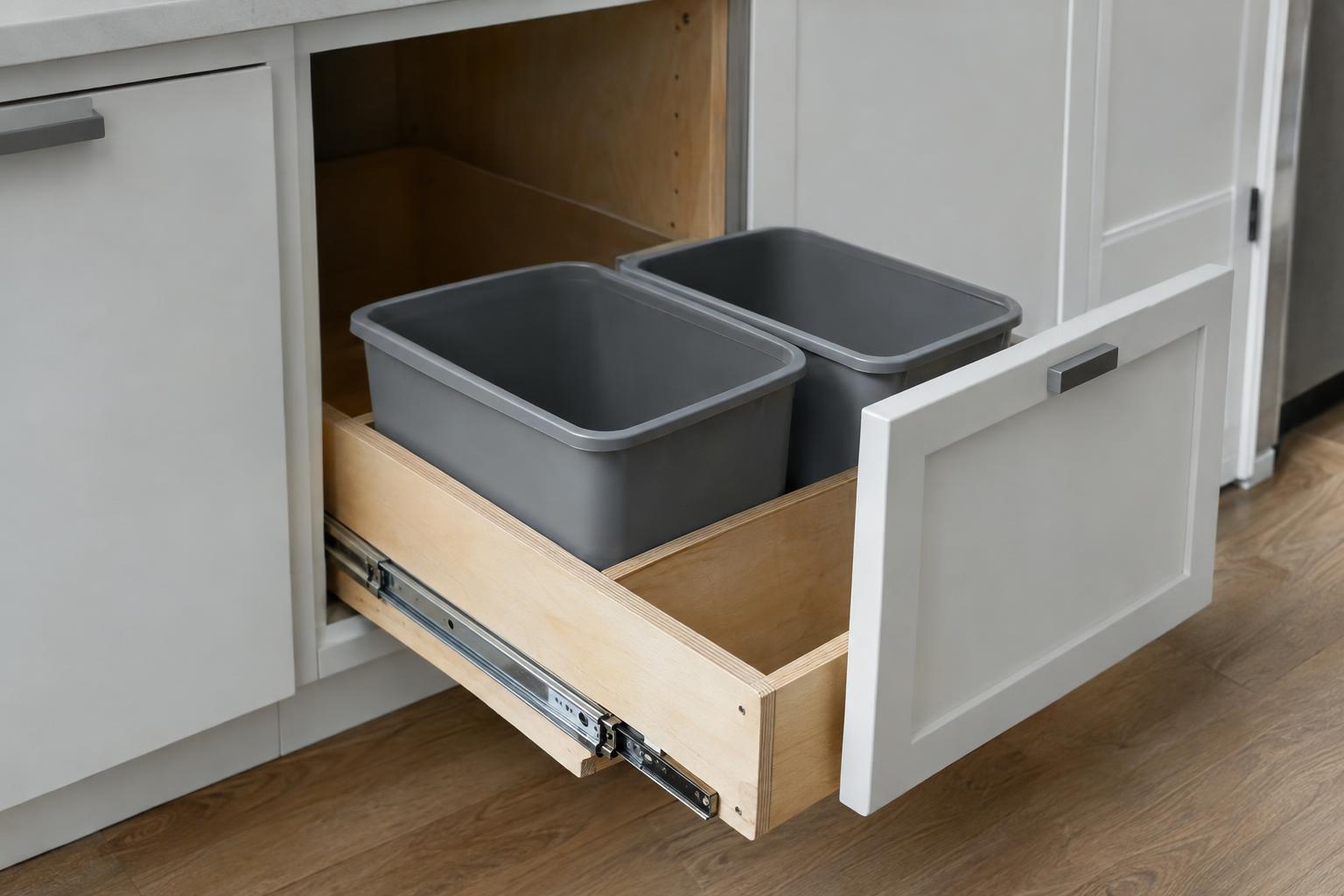
This is the most popular arrangement. One container handles trash, the other handles recycling, and the cabinet stays a manageable width that fits most base runs without crowding neighboring storage.
Three or more containers
Households that compost or sort heavily may prefer a taller or wider unit with several containers. These take more cabinet space, so they are best planned early, before drawer and appliance positions are locked in.
Where to Place It for the Smoothest Workflow
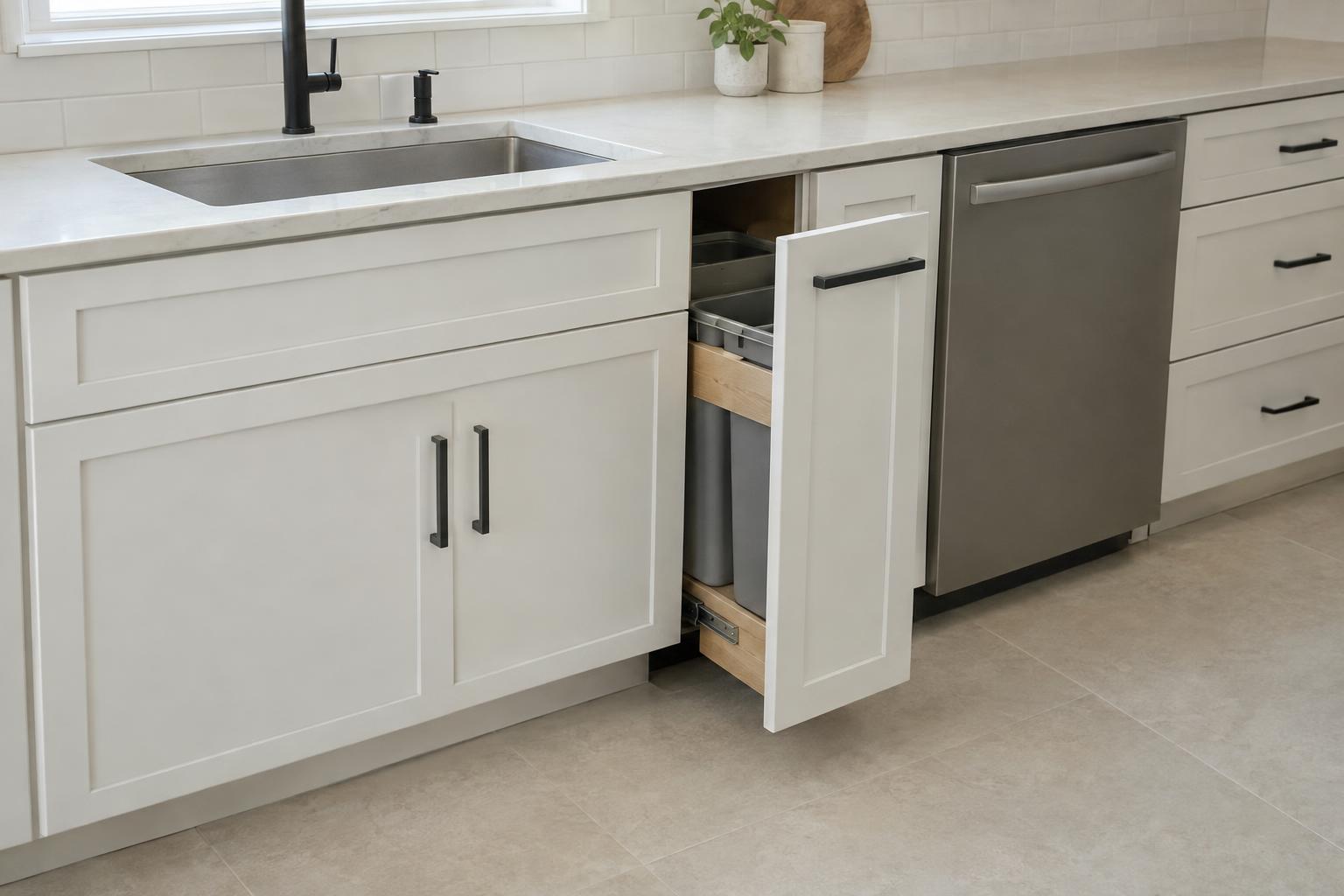
Placement decides whether the cabinet becomes a habit or an afterthought. The best spot is within a step or two of where scraps are generated. Most cooks scrape plates at the sink and trim vegetables at the main prep surface, so a cabinet beside the sink is a reliable choice. A spot next to the dishwasher also works well, as long as the cabinet door and the dishwasher door can be open at the same time without colliding.
Some people ask about the sink base itself. Plumbing and a disposal often take up much of that space, so the available bin size can shrink, and a dedicated cabinet beside the sink usually gives more capacity. An island or peninsula can also host one, though a door front that matches the island finish helps it blend in from the living area.
Keep the unit out of the path of a refrigerator or pantry door swing, and think about the walk to the garage or outdoor bins. A designer can review the layout on the plan so you can see whether doors clear each other before anything is built. Our article on kitchen island layouts for Southwest Florida homes covers the clearances that affect nearby cabinets.
Slides, Soft Close, and Door Mounting Options
The hardware inside determines how the unit feels after years of use. A loaded bin is heavy, so look for full-extension slides rated comfortably above what the unit will carry. Slides that are too light sag or bind, while solid ones glide the same way for years.
There are two common ways to attach the door. In a door-mounted setup, the cabinet door is fixed to the frame and swings out with it, so everything moves as one piece. In a drawer-style setup, the bins sit in a frame on slides and the door front attaches like a drawer front. Door-mounted designs suit narrower cabinets, while drawer-style fronts are common on wider units.
Soft-close is worth considering, since a heavy unit that slams shut can loosen fasteners over time. Our piece on whether soft-close cabinets are worth it walks through the tradeoffs. Some units also offer a touch-open or foot-operated feature, handy when your hands are full.
Handles, Pulls, and Finish Details That Last
Hardware on a trash cabinet takes more abuse than almost anywhere else in the kitchen, because it is grabbed with wet or messy hands. Choose pulls with room for a full grip, and consider a long bar pull on a tall door so you can open it with a forearm. Brushed or matte finishes tend to hide fingerprints better than polished ones.
Southwest Florida kitchens deal with humidity and, in coastal neighborhoods, salt in the air, so ask your contractor about hardware finishes made to hold up in moisture and how to care for them. For more on choosing pulls that suit your cabinet style, see our guide to kitchen cabinet hardware. As an authorized Fabuwood dealer, we can help you plan cabinet door fronts and runs so a pull-out unit lines up with neighboring doors and drawers.
Keeping Odors, Moisture, and Pests Under Control
An enclosed bin makes odor management easier if the cabinet helps. Look for a smooth, wipeable interior and bins that lift out for washing, and use a tight-fitting lid on any compost container. Empty the bins on a regular schedule, and during hot months wipe the interior more often.
Keeping food scraps out of the trash bin can help with odor. If you compost, the EPA offers practical guidance on composting at home, which pairs well with a sorted, easy-to-use bin setup. Because Florida homes also deal with ants and roaches, keep residue from collecting on the cabinet floor, and mention any gaps around plumbing to your contractor so they can be sealed during installation.
The best time to add one of these cabinets is during a kitchen remodel, when cabinet layout, plumbing, and electrical are planned together. Adding one later is sometimes possible by modifying a base cabinet, depending on its construction.
Frequently Asked Questions
How wide does a pull out trash cabinet need to be?
It depends on the bins. Many double-bin units fit a standard base cabinet width, while single-bin units can be narrower. The size can be confirmed against your bins and the surrounding cabinet run during planning.
Can a pull out trash cabinet be added to an existing kitchen?
Often, yes. A suitable base cabinet can sometimes be modified or replaced to hold a pull out frame. Feasibility depends on the cabinet construction and nearby plumbing, so it is best evaluated on site.
Is soft-close worth it on a trash pull out?
For most households, yes. The unit is heavy when loaded, and soft-close slides reduce slamming and wear on the cabinet and hardware over time.
What is the best location in the kitchen?
Usually next to the sink or the main prep area, where scraps are generated. The door should open fully without hitting the dishwasher, an island, or an appliance door.
Ready to give your trash and recycling a proper home? Call (239) 771-2855 to request an estimate, and explore our custom cabinetry services to see what we can build for your kitchen. We are a licensed Florida building contractor (CBC1268590) with a BBB A+ rating.