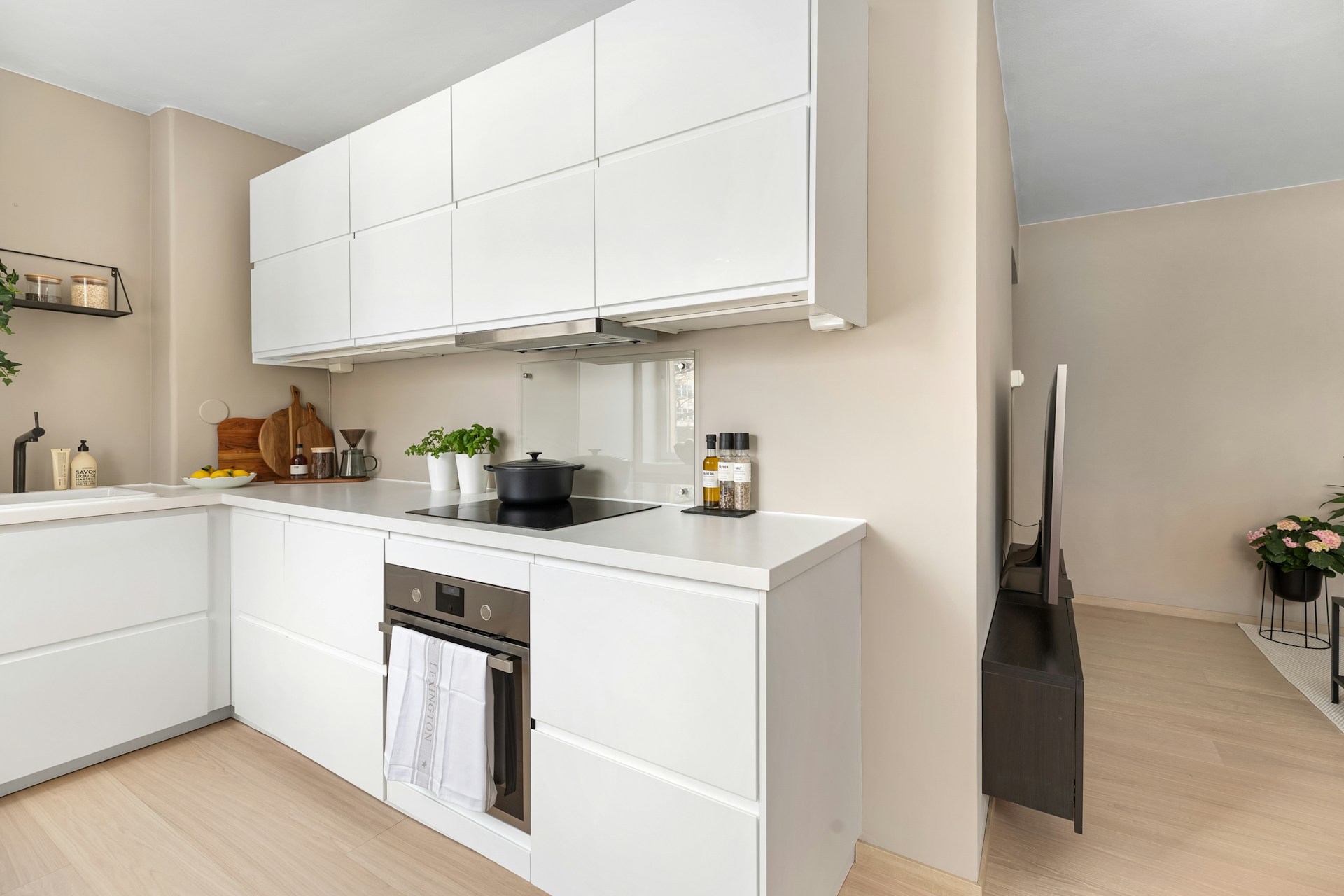
Custom vs Semi-Custom Cabinets: Which Is Worth the Investment?

Kitchen Cabinet

Comparison guide

Custom vs Semi-Custom Cabinets: An Honest Comparison

The custom vs semi-custom cabinets decision is really a question about constraints: how far a manufactured line can bend before a built-from-scratch cabinet becomes the better answer. Semi-custom lines modify a standard catalog, while custom shops build to the drawing. Both can produce an excellent kitchen, and the right call depends on the room dimensions, the design vision, the schedule, and the budget. We help homeowners run that comparison with real layouts through our custom cabinetry services.

Materials and Documentation Apply to Both Categories

Construction quality no longer maps neatly onto the category label. Many semi-custom lines now include dovetail drawer boxes, soft-close hinges and glides, plywood box construction, and multi-step catalyzed finishes, features that were once custom-shop territory. Custom builders still control material selection completely, but the baseline gap has narrowed, which is why a fair comparison examines the specific product rather than assuming quality from the category name.

Sample doors make the comparison concrete. Order or borrow a finished door from each line under consideration, then compare weight, edge finishing, interior surfaces, and hardware feel side by side at home. Reading the finish warranty for each is equally revealing, since coverage terms often say more than showroom lighting does.

Both categories routinely include composite wood components such as plywood, MDF, or particleboard in boxes and panels, and those materials are covered by federal formaldehyde-emission standards. Whichever direction you choose, request the compliance documentation for the actual components alongside the construction specifications, then file it with the cabinet order paperwork. Source: EPA composite wood product standards.

Where Semi-Custom Lines Stop

Semi-custom means modifying a catalog, not escaping it. Widths typically adjust in set increments, depths and heights flex within limits, and the door, finish, and accessory options are broad but finite. Interior fittings such as pull-out shelves, tray dividers, and lazy Susans are usually available as factory options, and decorative pieces like crown molding and matching end panels round out the catalog.

The constraint shows up in unusual rooms: angled walls, nonstandard ceiling heights, or a design that calls for a wood species or hand-applied finish outside the catalog. When a layout needs more than the modification list allows, fillers and compromises accumulate, and that is the signal to price custom fabrication.

Where Custom Shops Earn Their Lead Time

A custom shop builds to the fraction of an inch in any configuration: appliance garages, furniture-style details, integrated charging drawers, exotic species, and finishes matched to a physical sample. Nothing about the room has to conform to a catalog.

The cost is time and money. Custom work is typically the most expensive category and carries the longest fabrication schedule, so it makes the most sense when the design genuinely requires it: high-end builds, unusual footprints, or rooms where cabinetry is the architectural centerpiece rather than a background element.

Run the Comparison on Your Actual Kitchen

Category debates settle quickly when both options are priced against the same measured room. Three steps keep the comparison honest and the quotes comparable.

  1. Measure the room and list required modifications. Document dimensions, ceiling height, appliance specifications, and every storage feature the design needs, then note which items exceed a semi-custom modification list. That short list of exceptions is the real decision input, far more useful than any general rule.
  2. Request comparable written quotes. Price the same layout in a semi-custom line and from a custom builder with equivalent finish assumptions, itemizing boxes, doors, hardware, delivery, and installation, so the difference reflects construction rather than scope drift.
  3. Compare lead times against the project schedule. Confirm current fabrication and delivery timelines for both options and set them next to the demolition and installation plan, since a kitchen without cabinets is a stalled project regardless of price.

Cost Structure, Schedule, and the Florida Factor

The two categories price differently by design. Semi-custom pricing is largely set by the series, the door style, and the modification count, which makes quotes predictable, while custom pricing reflects shop labor, materials, and complexity, which rewards detailed drawings and clear specifications. Schedules follow the same logic: factory lines run on published lead times, while custom fabrication depends on the shop and its backlog. Neither structure is better in the abstract, but they behave very differently when budgets and move-in dates are firm, so ask each bidder how changes and delays are handled before work begins.

Modification limits are where the categories genuinely separate. Semi-custom lines modify within a framework: widths and depths within set ranges, a defined door catalog, and a finish list, which covers most kitchens comfortably. Custom shops remove the framework entirely, matching an existing stain, building to an odd ceiling line, or integrating furniture-style details no catalog offers. List the places your design pushes past standard dimensions, and the right category usually identifies itself.

Climate belongs in the comparison too. In Southwest Florida, plywood construction resists humidity better than particleboard, catalyzed finishes shrug off damp air, and west-facing rooms benefit from finishes rated for UV exposure, and those criteria apply whether the cabinet comes from a factory or a shop. For most homeowners, a well-specified semi-custom line covers the design; for unusual rooms and singular visions, custom earns its premium. The measured comparison tells you which side of that line your kitchen sits on.

Frequently Asked Questions

Are custom cabinets always higher quality than semi-custom?

Not automatically. Many semi-custom lines now include plywood boxes, dovetail drawers, and catalyzed finishes. Custom shops offer complete control of materials and sizing, but quality depends on the specific product and builder.

When is custom cabinetry worth the longer schedule?

When the room has unusual dimensions or angles, the design requires a species or finish outside manufactured catalogs, or the cabinetry itself is the centerpiece of a high-end build.

Price Both Paths for Your Kitchen

Alliance Construction designs kitchens in both categories and can quote a measured layout in a semi-custom line and as custom fabrication side by side. Request an estimate to see the real difference for your room, then review our kitchen remodeling services for the full project scope.

About the Author

Natan Collodetti

Natan Collodetti is the Owner of Alliance Construction & Renovation, a licensed general contractor (CBC1268590) serving Fort Myers and Southwest Florida. With hands-on experience in kitchen remodeling, bathroom renovations, and whole-home transformations, Natan leads a team dedicated to quality craftsmanship and transparent communication. Alliance Construction operates from their Fort Myers showroom at 11751 Metro Pkwy STE 1.

We Serve Southwest Florida

Alliance Construction provides remodeling services in Cape Coral, Naples, Bonita Springs, Estero, North Fort Myers, and Punta Gorda. View all services →