

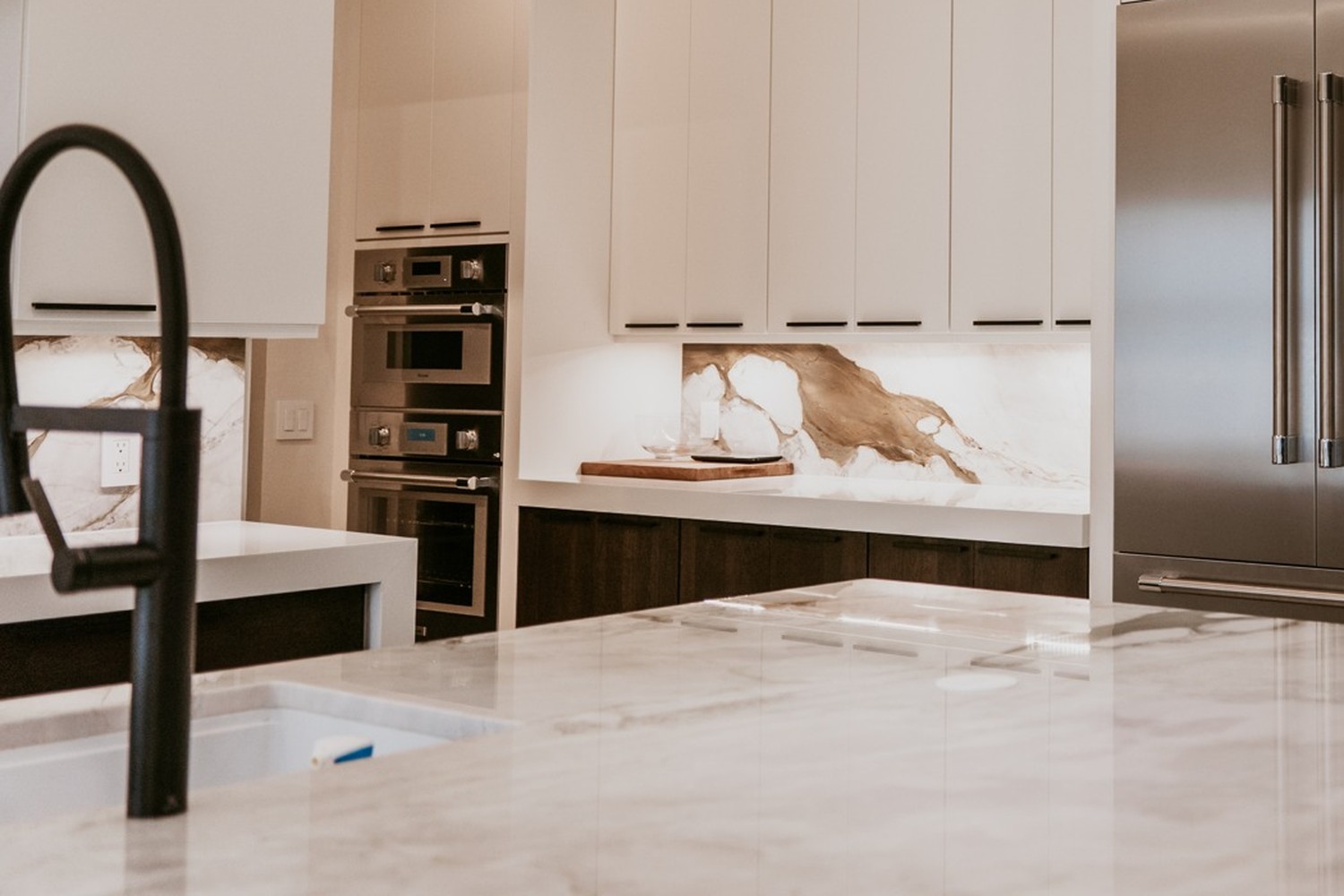
A black kitchen faucet can change the personality of a kitchen more than almost any other single fixture. It gives the sink area a crisp, graphic line against light stone, pairs naturally with dark cabinetry, and ties together the other black accents in the room. It also comes with real questions about finish durability, cleaning, and how to keep the rest of the fixtures looking intentional. Here is what Southwest Florida homeowners who are considering one should know.
Why a Black Faucet Works So Well in Modern Kitchens
Black is a neutral that behaves like jewelry. On a white or lightly veined countertop, a dark faucet creates contrast that makes the sink the focal point without adding color. Against a dark island, it can almost disappear, giving a quieter, tone-on-tone look. Either way, it reads as deliberate.
The trend also fits how many people live in the kitchen now. The sink is where the work happens, so a fixture with a strong shape and a confident finish feels like a design choice rather than a utility. In open floor plans common around Fort Myers, Naples, and Cape Coral, the faucet is visible from the living room, which makes the finish and silhouette matter even more.
Matching Black Across the Whole Kitchen
The most successful kitchens with a black faucet repeat that finish a few times, without trying to match everything exactly. Cabinet pulls, pendant lights, a cooktop surround, or window hardware can all echo the faucet. Repetition tells the eye the choice was planned. You do not need every black element to be identical, but you do want them to feel like relatives.
Finish and sheen are the details to compare in person. A matte faucet beside a glossy pendant can look mismatched, even when both are technically black. If you are choosing hardware as well, our look at kitchen cabinet hardware covers how pull shapes and finishes work together. Bringing samples home and viewing them together in your own kitchen light helps.
Matte, Satin, and Glossy: How Black Finishes Differ
Not all black faucets are the same. Matte finishes have a soft, flat look that hides some glare and can feel contemporary. Satin or brushed black has a slight sheen that tends to look a little richer. Glossy black is dramatic and reflective but shows marks more quickly.
Under the finish, the material and coating matter. Many faucets use a durable coating applied over metal, and quality varies between product lines. Because manufacturers use different processes, it helps to read the care instructions on the spec sheet and ask how the finish is rated for everyday kitchen use. A thicker, well bonded coating generally holds up better to cleaning and daily handling.
It is also worth remembering that black shows water spots and mineral film more than polished chrome does. That is not a reason to avoid black, only a reason to plan for light, regular wipe downs.
Choosing a Style: Pull-Down, Pull-Out, or Gooseneck
Silhouette drives both looks and function. A tall gooseneck with a pull-down head gives you room to fill large pots and reach every corner of the sink. A lower profile faucet looks cleaner under a window but may limit tall cookware. Single handle models are easy to operate with wet or full hands, while two handle versions suit a more traditional room.
Spray options matter if you cook often. A spring style or coiled arm has a commercial look, while a simple arched spout feels more residential. When you shop, check how far the spout reaches into the bowl and whether the head docks securely, since a faucet that looks great but does not reach the sink corners will frustrate you quickly.
Pairing a Main Faucet With a Second Black Faucet
Many island layouts include a second faucet, often a smaller bar or prep faucet, and keeping both in the same finish creates a clean, intentional pairing. In a kitchen with a large island sink, a larger pull-down faucet handles the heavy work while a slim arched faucet sits close by for quick rinses or filling a glass.
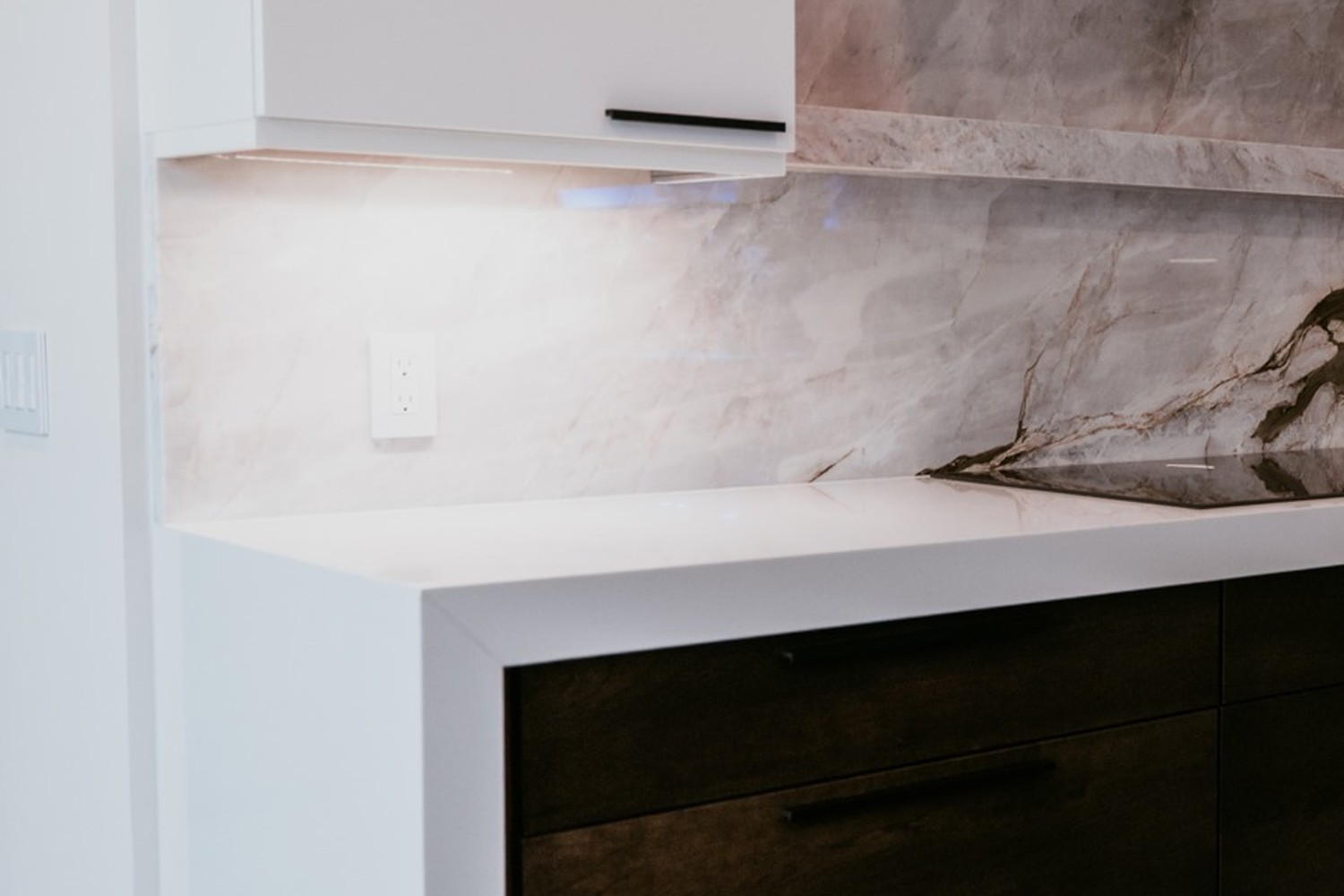
A second faucet is practical, but it needs planning. It requires its own supply lines, its own deck opening, and sometimes extra space on the counter. Because plumbing for an island is easier to route before cabinets and stone are installed, it is worth settling these decisions during design. Our guide to kitchen island layouts explains how sink placement affects the rest of the island. Repeating the faucet finish in cabinet pulls, as in the kitchen below, ties the island and the rest of the room together.
Everyday Care for a Black Faucet in Southwest Florida
Care is simple but consistent. Wipe the faucet with a soft damp cloth and mild soap and water, then dry it to prevent spotting. Avoid abrasive pads, scouring powders, and harsh chemical cleaners, because they can dull or scratch many finishes. When in doubt, follow the cleaning guidance published for that specific product.
Water quality plays a role here. Water in many parts of our region can leave mineral deposits, and those deposits show up faster on dark finishes. If you notice a chalky film, start with mild soap and water, and for stubborn mineral film, follow the faucet maker’s instructions, since some finishes do not tolerate acidic cleaners. Coastal air and humidity can also be tougher on fixtures than inland conditions, so periodic wiping helps the finish last longer.
Plumbing and Installation Details to Confirm
The faucet you love needs to fit the sink and counter you have, or the ones you are planning. Count the pre-drilled holes in the sink or the cutouts in the stone, because some faucets need one opening while others need several. Thick stone countertops and deep sink rims may require longer mounting hardware, so check that the faucet was designed for them.
Water pressure and flow also deserve attention. EPA WaterSense labels bathroom faucets but does not cover kitchen faucets, so compare the manufacturer’s listed flow rate on the spec sheet. If you are replacing a faucet as part of a larger renovation, it is easiest to install it after countertops and the sink are in place, which is why fixture timing is worth coordinating with the rest of the kitchen remodeling schedule.
Questions to Ask Before You Buy
Before you commit, ask what the finish is made of, how it should be cleaned, and what the maker says about its durability. Confirm the hole configuration, the spout height and reach, and whether replacement parts, such as spray heads and cartridges, can be found later. Look at the faucet in person if you can, and compare it with your cabinet pulls and lighting so the blacks feel related.
It also helps to consider the sink material. A white or light sink emphasizes the faucet, while a dark sink blends it in. Neither is wrong, but choosing them together avoids surprises. Our 3D design visualization shows layouts for remodels.
Frequently Asked Questions
Does a black kitchen faucet show water spots?
It can, especially in areas with mineral heavy water. Wiping and drying the faucet after cleaning keeps spotting minimal, and matte or satin finishes tend to hide marks better than glossy ones.
Do I have to match my cabinet hardware to the faucet?
No. Echoing the finish in a few places looks intentional, but exact matches are not required. Mixing finishes can work when the tones and sheen feel related.
Is a black faucet durable enough for daily use?
Quality varies by manufacturer and coating, so review the product’s care and durability information. Gentle cleaning and avoiding abrasive products help most finishes last.
Can I add a second black faucet to my island?
Often, yes, if the layout allows for the extra supply lines and counter space. It is best planned during design, before cabinets and countertops are installed.
Choosing fixtures for a kitchen update? Call (239) 771-2855 to request an estimate, and our team can help you plan fixtures that look right together. You can also explore our kitchen remodeling services. We are a licensed Florida building contractor (CBC1268590) with a BBB A+ rating.