
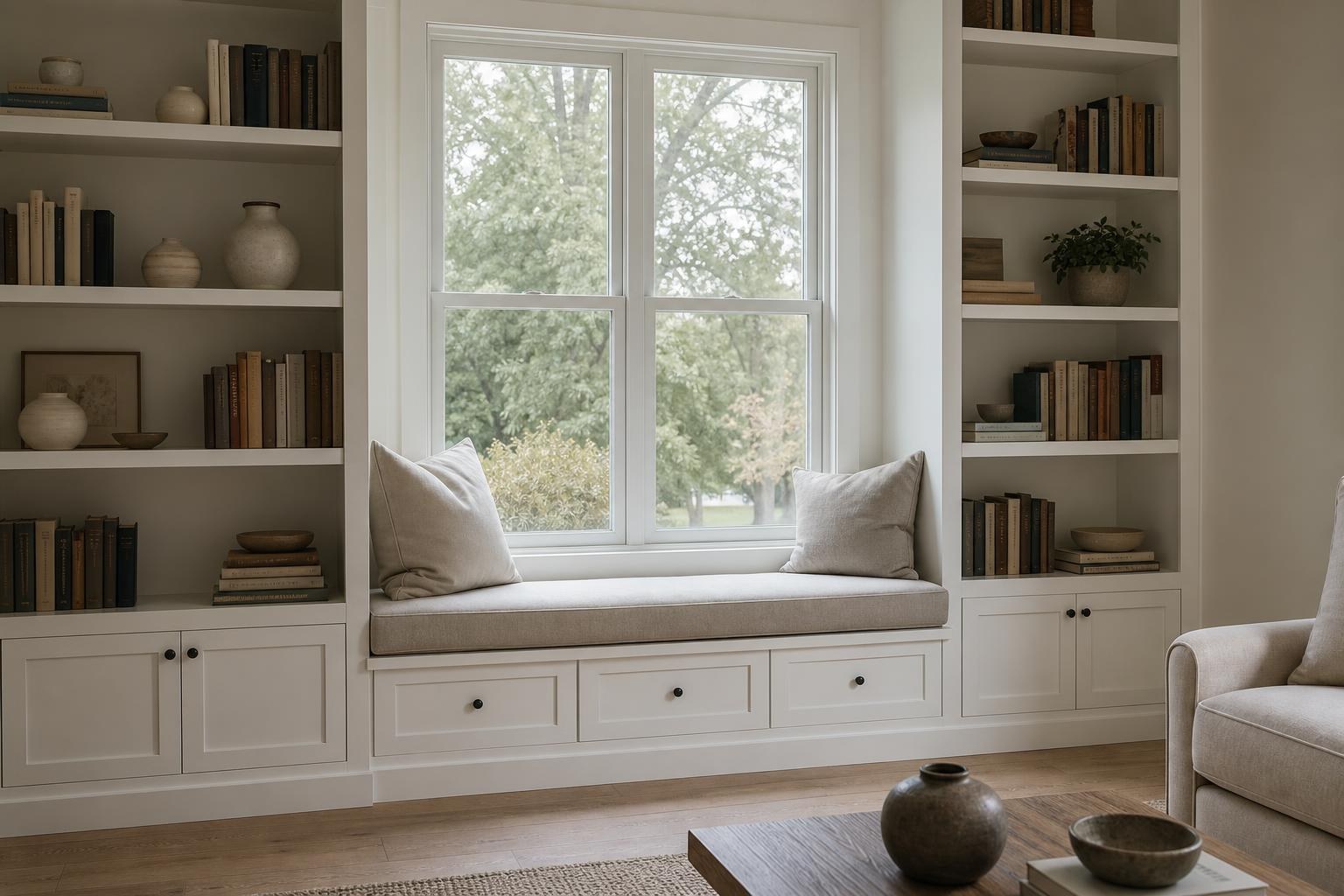
A built-in bookcase with window seat gives a Southwest Florida living room, den, or primary bedroom something store-bought furniture rarely can: a bright reading perch, storage that disappears into the wall, and shelves sized to the collection you actually own. It turns an underused window into the spot everyone fights over, especially in a Fort Myers home where big windows look out on palms, a pool, or a canal.
Our climate adds a few details that matter. Strong sun fades books and fabrics, humidity works on wood and cushions, and many homes here have impact-rated windows with their own hardware that has to keep working. A built-in designed for Florida accounts for all of that from the first sketch.
From layout and proportions to storage, comfort, lighting, and safety, these are the details that make the piece work for years.
Layouts for a Built-In Bookcase With Window Seat
The classic layout is a pair of tall bookcases flanking a window, with a cushioned seat running between them. It frames the view, gives you shelves on both sides, and works well on a wall where the window is centered. A single bay seat is a simpler option when a window projects out or sits in an alcove, and it needs no shelving at all.
Where wall space is tight, low shelves under a window can do the job alone, with a seat-height top that doubles as extra seating. Our custom cabinetry is built to the wall it lives on, so we measure around the window, baseboard, and ceiling as they actually are, not as the plans say. A wide window suits a flanking layout, while a smaller bedroom window may call for a simple bay seat.
Dimensions and Storage Proportions That Feel Right
A few typical proportions make a window seat comfortable. A seat depth of roughly 18 to 24 inches lets an adult sit or curl up, and a seat height of roughly 16 to 19 inches matches a standard chair. Treat these as starting points, because the right numbers depend on who uses the seat and how high the window sill sits.
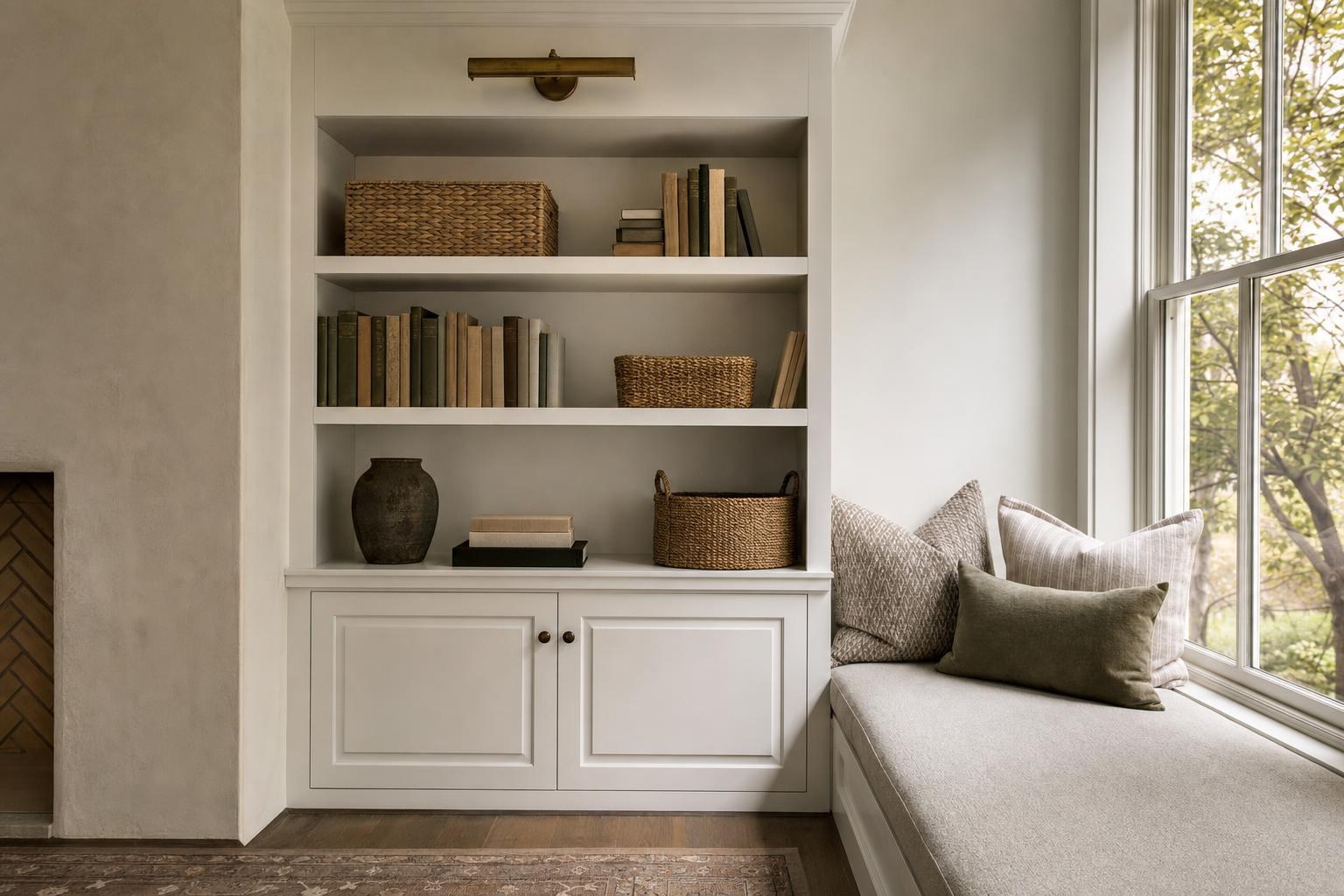
Bookshelf depth of roughly 10 to 12 inches holds most books and keeps the cabinets from crowding the room. Long shelf spans sag under the weight of books over time, so we keep spans short, add a center support where a span is wide, and use thick shelf stock. Adjustable shelves are a good idea, since a collection of art books and paperbacks rarely has one size.
Think about what will go on the shelves before you settle on the layout. Tall art books, framed photos, and baskets each want a different shelf height, and a mix of open shelves and closed cabinet doors keeps a busy room looking calm. Closed doors at the bottom of the bookcases are also a good home for games, cables, and anything you would rather not display.
In a room with a low ceiling or a wide opening, taller cabinets can be broken into a lower shelf zone and an upper display zone so the wall does not feel heavy. We work out these proportions in a 3D design visualization, which lets you see the shelves, seat, and window together before anything is built.
Drawers, Comfort, and Cushions
The seat base is prime storage. Deep drawers make throws, games, and seasonal items easy to reach without moving a cushion, and they are the better choice for things you use often. A lift-up lid gives deeper open storage for bulky items, but you have to take the cushion off to get at it, so it suits things you rarely need.
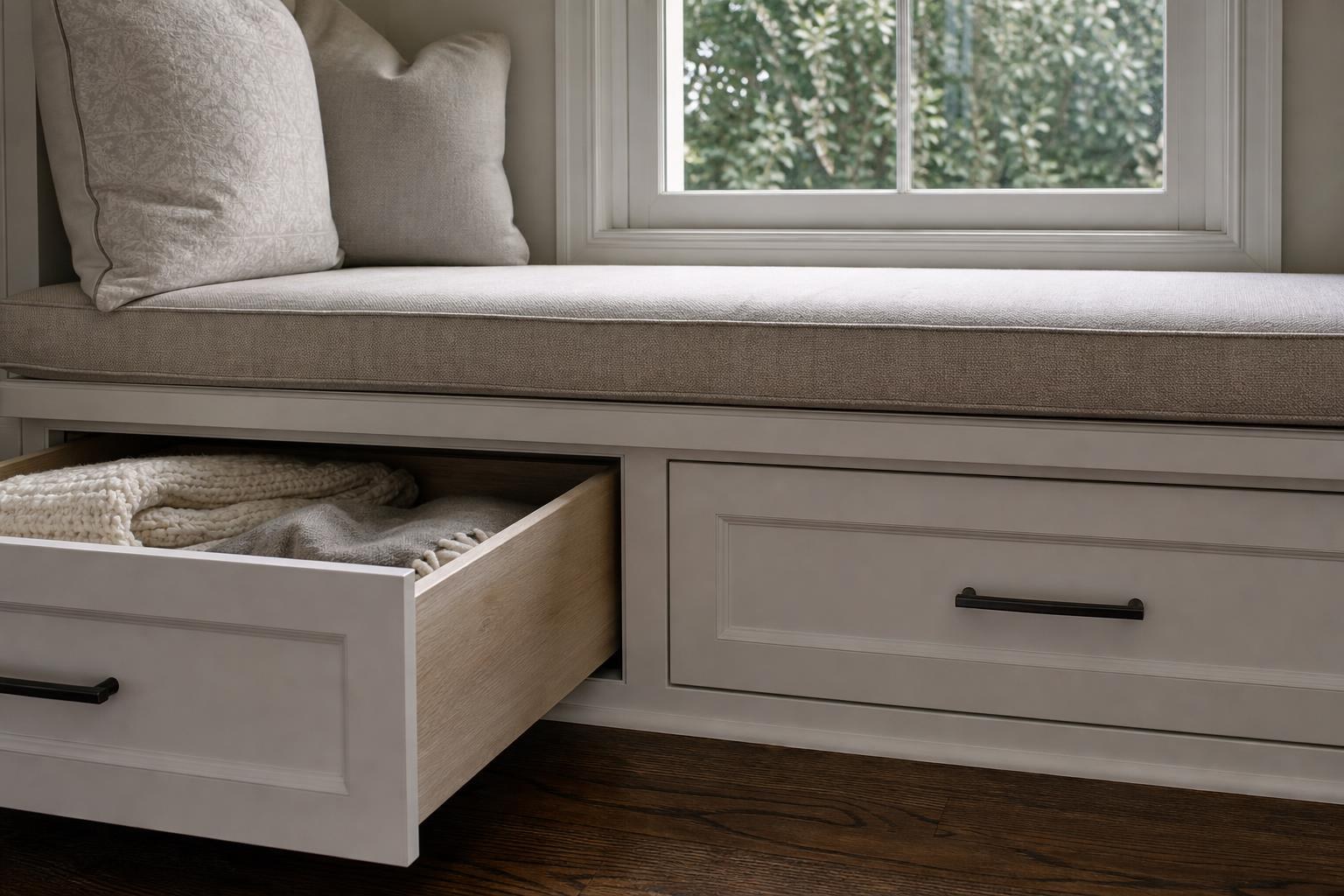
Comfort comes from the cushion. A firm base with a removable cover is easy to keep clean, and performance fabrics made for sun and humidity tend to hold their color and shape better than standard upholstery. Ask about quick-drying fill and covers that can be washed, particularly if the seat faces a sunny window or a sliding door that opens to a lanai.
Add a few back cushions and a slim shelf or ledge beside the seat for a mug or a lamp, and the window becomes a real room within the room. We can also shape the back of the seat with a simple rail or a paneled backboard so pillows stay put.
Drawer hardware deserves attention too. Full-extension slides let you reach the back of a deep drawer, and soft-close mechanisms keep a heavy drawer from slamming in a quiet bedroom. A built-in bookcase with window seat sees daily use, so we choose hardware and finishes that handle it.
Planning Around Florida Sun and Humidity
Direct sun fades book spines, painted wood, and fabric over time. UV-filtering glass or film can slow that down, and many impact-rated laminated glass units also filter UV, so ask your window supplier what yours does. A seat under a west-facing window may need more protection than one on a shaded north wall.
Humidity is the other concern. We seal and finish all exposed surfaces so the wood is protected, and we leave room for air to move around and behind shelves. Books and baskets packed tight against a cool exterior wall can trap moisture, and that matters most in a home that sits closed up through the rainy season while seasonal residents are away.
Working Around Windows, Vents, and Electrical
A built-in should never block an air supply or return register, so we plan around them or relocate them properly instead of covering them. If the window is in a bedroom, it may be the emergency escape opening, and the seat has to leave it fully operable. Ask your building department about escape requirements before you finalize a bedroom design.
Impact-rated windows have their own hardware, frame depth, and sill details, so we measure around the actual window and avoid fastening through its frame. Good electrical planning makes the nook more useful, with outlets for a lamp or charger, USB ports, picture lights over art, and in-shelf lighting. New circuits and outlets may need an electrical permit, so the plan should account for that.
Anchoring a Built-In Safely
Tall furniture can tip, and that is a real safety concern in homes with children and grandchildren who visit. The U.S. Consumer Product Safety Commission runs the Anchor It campaign, which exists to prevent tip-over injuries and recommends anchoring tall furniture to the wall.
A true built-in is fastened to the framing or block behind the wall, not simply set against it. In a block-and-stucco home in Punta Gorda or North Fort Myers, that means using the right fasteners for masonry rather than relying on drywall alone. We locate framing and block before installing so the piece is anchored securely.
Matching the Bookcase to the Rest of the Room
A window seat looks best when it speaks the same language as the cabinetry around it. If your living room already has a media wall, our post on built-in entertainment centers shows how we blend shelving with a television, and our guide to a home office remodel in Naples covers desk and storage ideas for a workspace nearby.
For closets and bedroom storage, custom closet systems can continue the same finish and hardware so the whole room feels designed together.
Frequently Asked Questions
How deep should a window seat be?
Typical seat depth runs roughly 18 to 24 inches, with a seat height of roughly 16 to 19 inches. The best depth depends on the window and on whether you plan to sit upright or curl up with a book.
Can a window seat go under a hurricane-rated window?
Yes, as long as the design leaves the window’s hardware and operation clear and does not fasten through the frame. We measure around the actual window before building so cranks and latches still work.
Will sun damage the books and cushions?
Direct sun fades books, wood, and fabric over time. UV-filtering glass or film and performance fabrics help, and many impact-rated laminated glass units also filter UV.
Does a built-in bookcase need to be anchored to the wall?
Yes. Tall furniture can tip, and built-ins are fastened to the wall’s framing or block for that reason. Follow the guidance on anchoring tall furniture from the Anchor It campaign.
A built-in designed around your wall and your window starts with a conversation about how you will use it. See our custom cabinetry work. Call us at (239) 771-2855 to schedule a showroom visit or request an estimate. We are a licensed Florida general contractor (CBC1268590) and an authorized Fabuwood dealer.