
Many bathroom remodels come down to one question: where do the towels go? A bathroom linen cabinet is among the most used pieces of storage in the house, and one of the easiest to get wrong. Too shallow and bath towels get crammed in sideways. Too far from the shower and you drip across the floor. Too exposed and everything feels damp by August. Here is how we help homeowners across Fort Myers, Cape Coral and Naples choose between closed storage and open shelves.
Choosing a Bathroom Linen Cabinet: Start With What You Store
Before we talk styles, we walk through the linen inventory. How many bath towels does your household use in a week? Do guest, beach and pool towels share the same space? Is there a stack of spare toiletries, a hair dryer or a first aid kit that needs a home? Southwest Florida households often add beach and pool gear to the list, and seasonal residents tend to stock extra sets for visiting family.
That list drives the size and type of storage. A couple in a primary bath may need one tall cabinet plus a few open shelves for daily towels. A hall bath serving guests may call for closed storage that hides everything behind a door. Once we know the inventory, closed versus open becomes a practical decision instead of a purely visual one.
Open Shelves vs. Closed Doors in a Humid Bathroom
Open shelves are attractive and convenient. Folded towels are visible and easy to grab, and they add color and texture to a room that can feel hard and bare. Open shelving also has a moisture advantage: air moves around the towels, which helps them stay fresh between uses. Closed cabinets hold whatever humidity enters when the door is open, so they need good ventilation and a habit of not storing damp items inside.
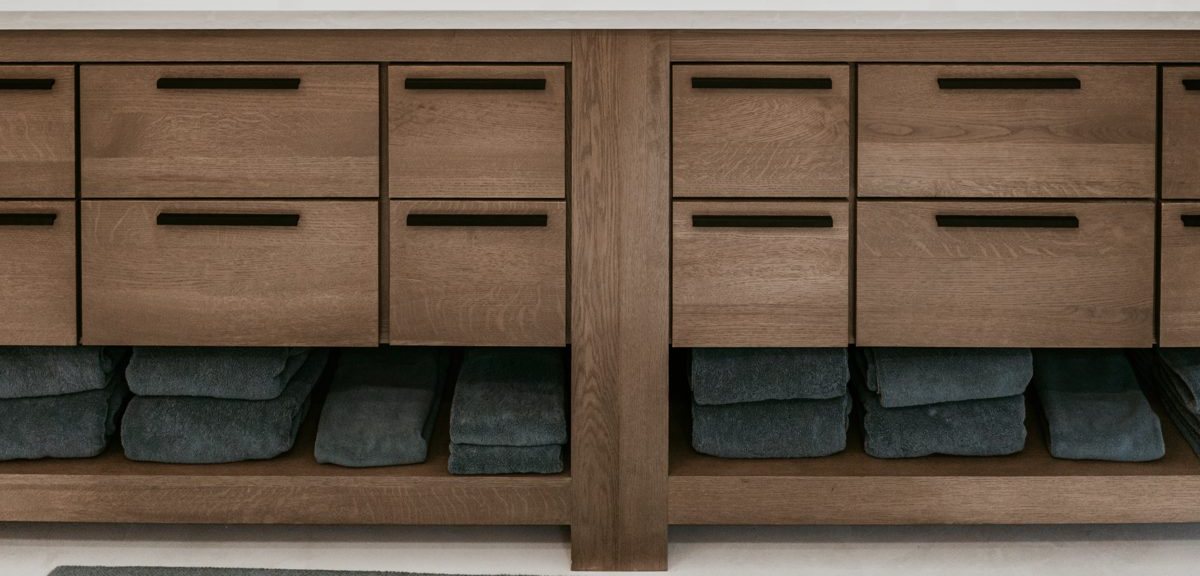
On the other hand, open storage shows everything, including half-used bottles and mismatched washcloths, and it collects dust and soap spray faster. We often recommend a mix: open shelves for towels you use daily, closed storage for backups and toiletries. Sometimes the mix lives in one piece. The vanity below pairs drawers with open lower shelves, so folded towels sit within reach of the sinks while everyday items stay put away.
The Tall Linen Cabinet: Maximum Storage in a Small Footprint
A tall cabinet is the classic answer. It uses vertical space that would otherwise sit empty, so you gain storage without giving up floor area. We commonly place them beside the shower, at the end of a vanity run, or in a corner that is hard to use otherwise.
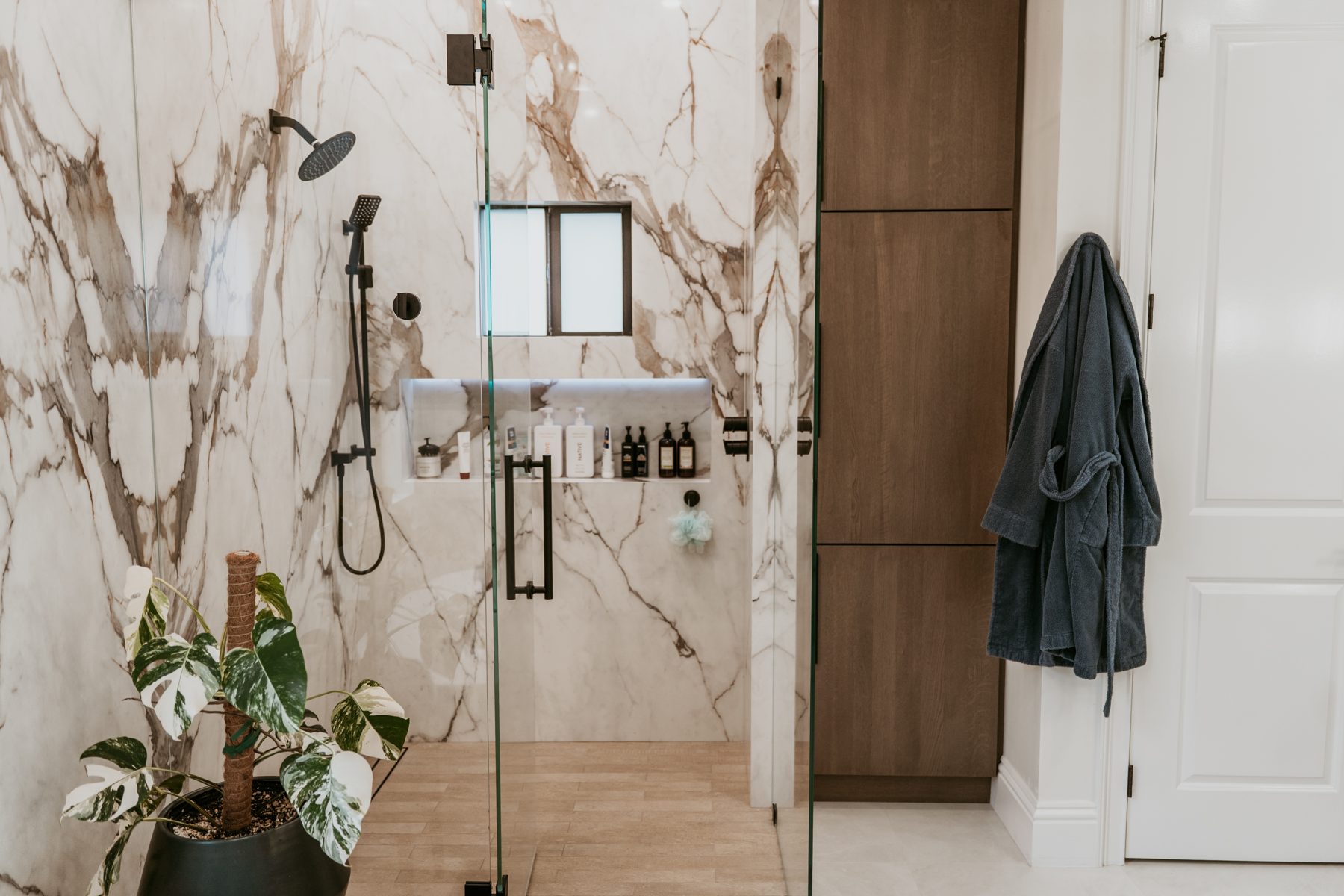
We pay attention to the interior as much as the exterior. Adjustable shelves let you change spacing over time, and pull-out trays in the lower section keep heavier items easy to reach. A solid door keeps the look clean, while a slatted door allows a bit more airflow. A tall wood unit set beside a glass shower enclosure is a good example of a linen tower that sits close to the shower and still reads as part of the room’s design. For more on construction choices, our guide to custom vs. semi-custom cabinets explains how sizing flexibility affects tall units.
Built-In Niches and Recessed Linen Storage
When floor space is tight, a recessed niche can be the cleverest option. Because depth is limited by the wall framing, niches suit hand towels, washcloths and toiletries better than bulky bath sheets. They also have to be planned early, since plumbing, wiring and structure may sit inside the wall. In a remodel we check what is behind the wall before committing to a location, and exterior walls deserve extra caution. A niche on an interior wall, between the bathroom and a hallway or closet, is often the simplest place to start. For a larger layout change, our bathroom remodeling team can look at the whole room together.
Depth, Door Swing and Clearances
Depth is where linen storage most often disappoints. Very shallow shelves force you to stack towels instead of folding them flat, while a very deep cabinet becomes a dark tunnel where the back half goes unused. As a general design guideline, a depth that fits a folded bath towel with a little breathing room works well for most linen shelving, and we confirm the size of your actual towels first.
Door swing matters just as much. A tall door that opens into the bathroom entry, the shower door or the toilet area becomes a daily annoyance. We check each swing against neighboring doors and walkways. If clearance is tight, options include a door hinged toward a wall, two narrower doors instead of one wide one, drawers or pull-outs in the lower section, or a pocket or sliding door where the wall allows.
Placement Near the Shower, Lighting and Daily Flow
The best linen location matches how you move. Most people want towels within a step or two of the shower or tub, but outside the spray zone. A tall cabinet beside the shower, or open shelves on the opposite wall, usually strikes that balance. Towels within reach of the water pick up moisture, so a modest buffer is wise, especially with an open or frameless shower entry.
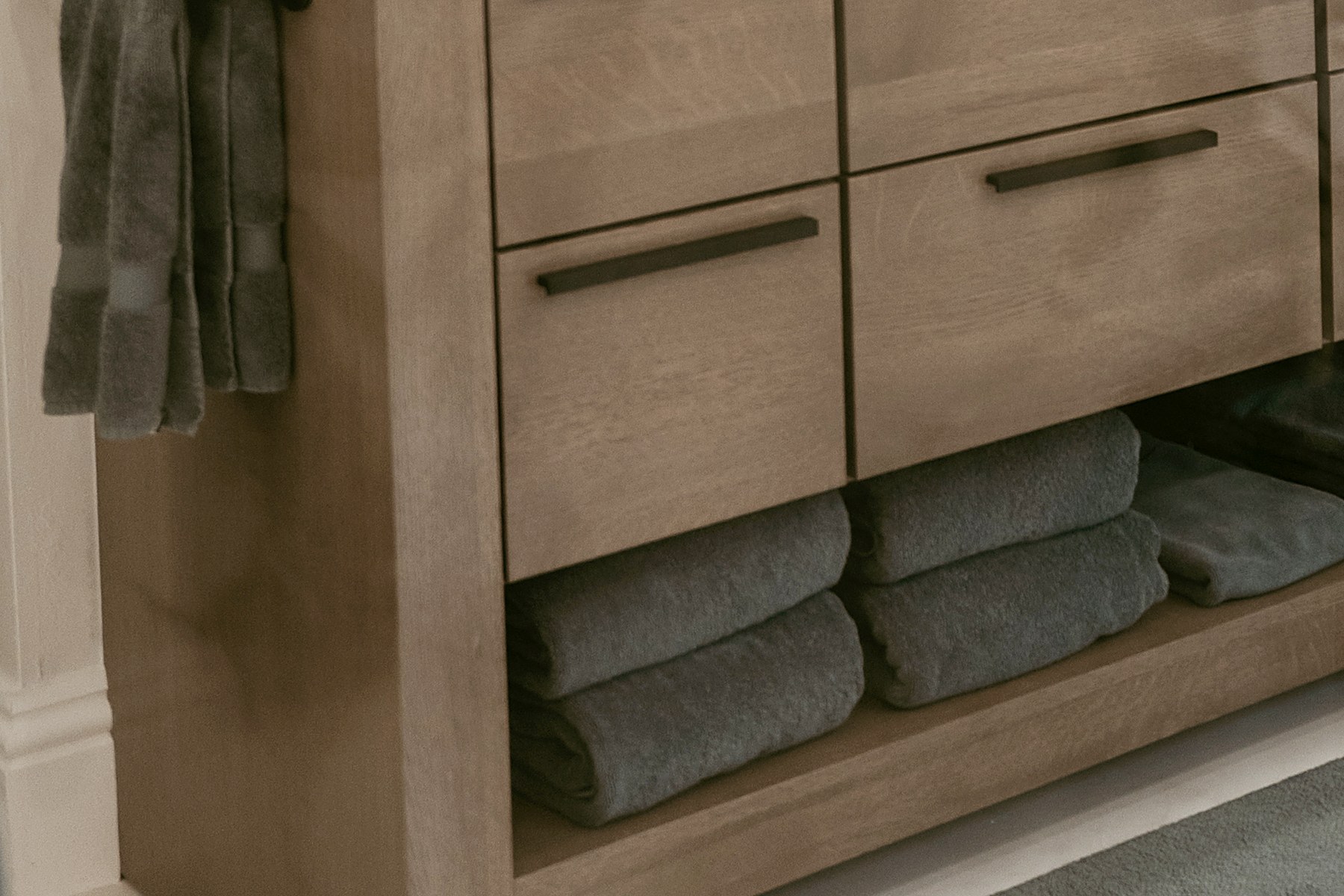
Lighting is easy to overlook and pays off daily. A small LED strip inside a tall cabinet helps you find what you need, and a soft light under open shelves gives a gentle glow at night so you are not switching on bright overhead fixtures. Near the shower, choose fixtures rated for damp locations and ask your contractor about placement relative to water. Open towel storage under a vanity, shown below, keeps everything close to the sink while leaving the cabinet feeling light.
Humidity-Friendly Finishes and Ventilation
In Southwest Florida, humidity is a year-round condition, and bathroom storage has to cope with it. Wood and wood veneer can perform well when sealed on every surface, including the inside, edges and back panel. Painted and laminate finishes should be well sealed at the edges, since moisture getting under a finish causes peeling and swelling. Hardware and fasteners suited to damp spaces are worth specifying too.
Ventilation is the other half. A bathroom exhaust fan that is sized appropriately and vented to the outdoors does more to protect cabinets and linens than any finish. The EPA’s mold and moisture guidance explains why controlling indoor humidity is the most reliable way to prevent mildew. If your fan is old, noisy or underperforming, upgrading it is often worth including in a bathroom project. Hanging used towels to dry before folding them away helps too.
Aging in Place: Reach, Height and Ease of Use
Linen storage is one of the easiest places to build in accessibility, and it helps everyone. Towels used daily should live between roughly waist and shoulder height, where they can be grabbed without bending or reaching overhead. Higher shelves suit seldom-used items such as spare bedding.
We often suggest pull-out shelves in lower cabinets so you do not need to kneel to see the back, and handles that are easy to grip with wet hands. Doors that stay out of the walking path also make a difference. Our guide on walk-in showers vs. bathtubs covers other choices that affect long-term comfort.
Frequently Asked Questions
How deep should a bathroom linen cabinet be?
Many homeowners find that a depth fitting a folded bath towel with a little extra room works best. We confirm your towel sizes before finalizing the design.
Are open shelves a bad idea in a humid bathroom?
Not at all. Open shelves let air circulate around towels. They do show clutter and collect dust, so many people pair them with closed storage.
Can a linen cabinet go right next to the shower?
Often yes, with a little buffer from direct spray and a finish sealed on all surfaces. The right distance depends on your shower type and layout.
Can I add linen storage without enlarging the bathroom?
Frequently. A recessed niche or a slim tall cabinet can add storage without changing the footprint. We check the walls and plumbing first.
If you are planning a bathroom update with storage that fits your routine, we are ready to help. Call (239) 771-2855 to request an estimate, or learn more about our bathroom remodeling services. We are a licensed Florida building contractor (CBC1268590).