
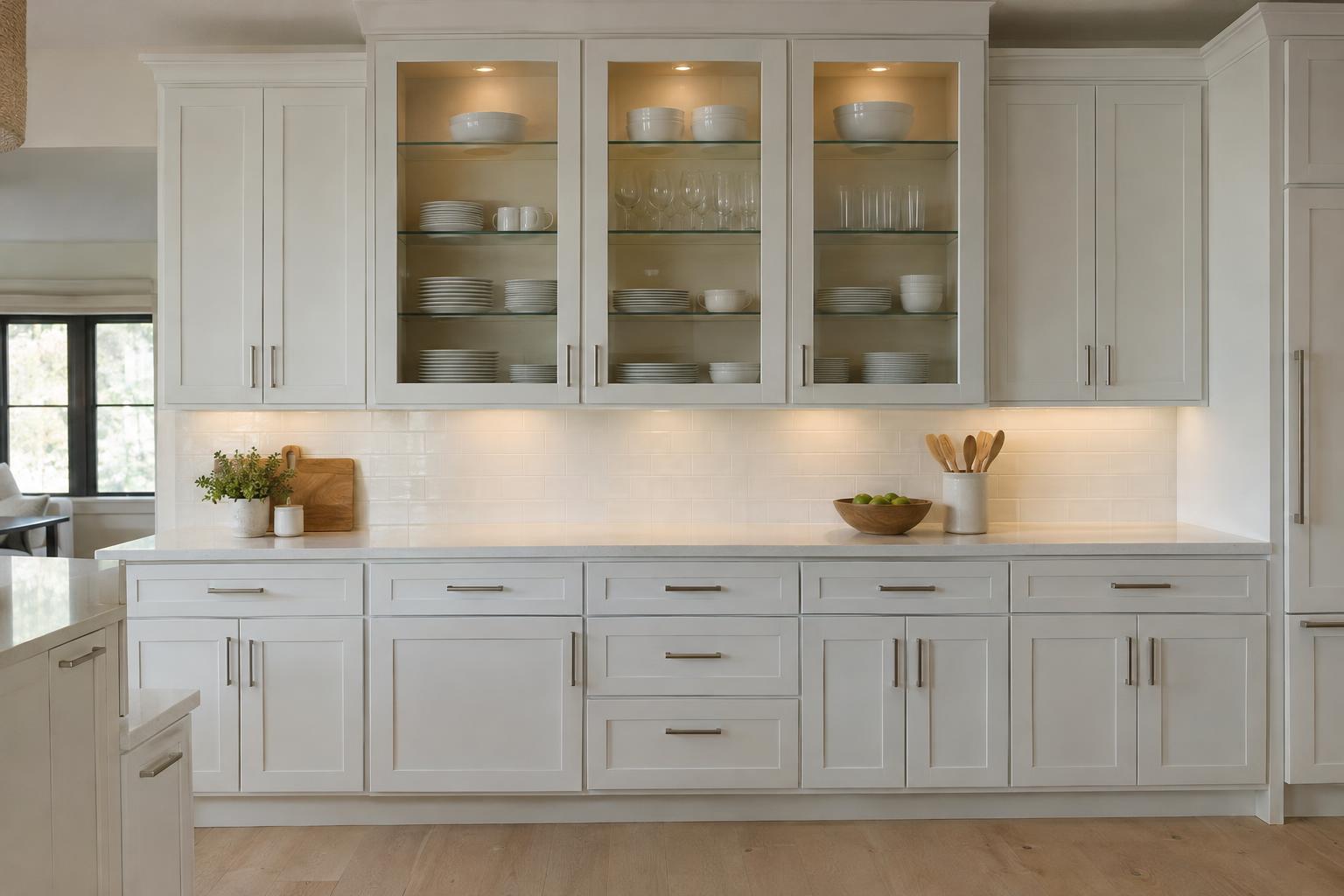
Few details change the feel of a kitchen as quickly as glass front kitchen cabinets. A few doors with glass in place of solid panels can lighten a heavy wall of cabinetry, add a place for favorite dishes, and give a room a finished, furniture-like quality. They can also become a source of frustration if they are placed in the wrong spot or filled with the wrong things. Here is how to think about where glass belongs and where a solid door is simply the smarter choice for a Southwest Florida kitchen, and the answer usually comes down to how you cook, what you own, and how much you enjoy keeping a display tidy.
Why Glass-Front Kitchen Cabinets Are Worth Considering
The first benefit is visual relief. A long run of upper cabinets in a single flat finish can feel like a wall, especially in a kitchen with limited natural light. Introducing glass breaks up that mass, adds depth, and lets light travel into the cabinet itself. In an open plan home where the kitchen is visible from the living area, those lit shelves can act as quiet decoration.
The second benefit is personality. Open shelving asks you to show everything, but a glass door gives you a frame around what you choose to display. Stemware, white dinnerware, a collection of pottery, or a set of serving pieces all look intentional behind glass. The door also keeps dust and kitchen vapors away from items that are not used every day, which is a real advantage compared with fully open shelves.
Where Glass-Front Cabinets Work Best
Placement is what separates a polished kitchen from a cluttered one. The most reliable spots are away from the busiest cooking zone: flanking a window, centered over a beverage or coffee station, above a bar or buffet area, or at the end of a run where the cabinet is visible from the dining space. In each case the contents stay relatively tidy because they are accessed less often, and the glass is seen from a distance where it makes the biggest impression.
Symmetry helps. A pair of glass doors on either side of a range hood, or a cluster of three in the center of a longer wall, creates a rhythm that looks designed rather than scattered. Mixing glass with solid doors is usually better than making every upper cabinet transparent, because the solid doors give you a place to hide the everyday items that do not photograph well.
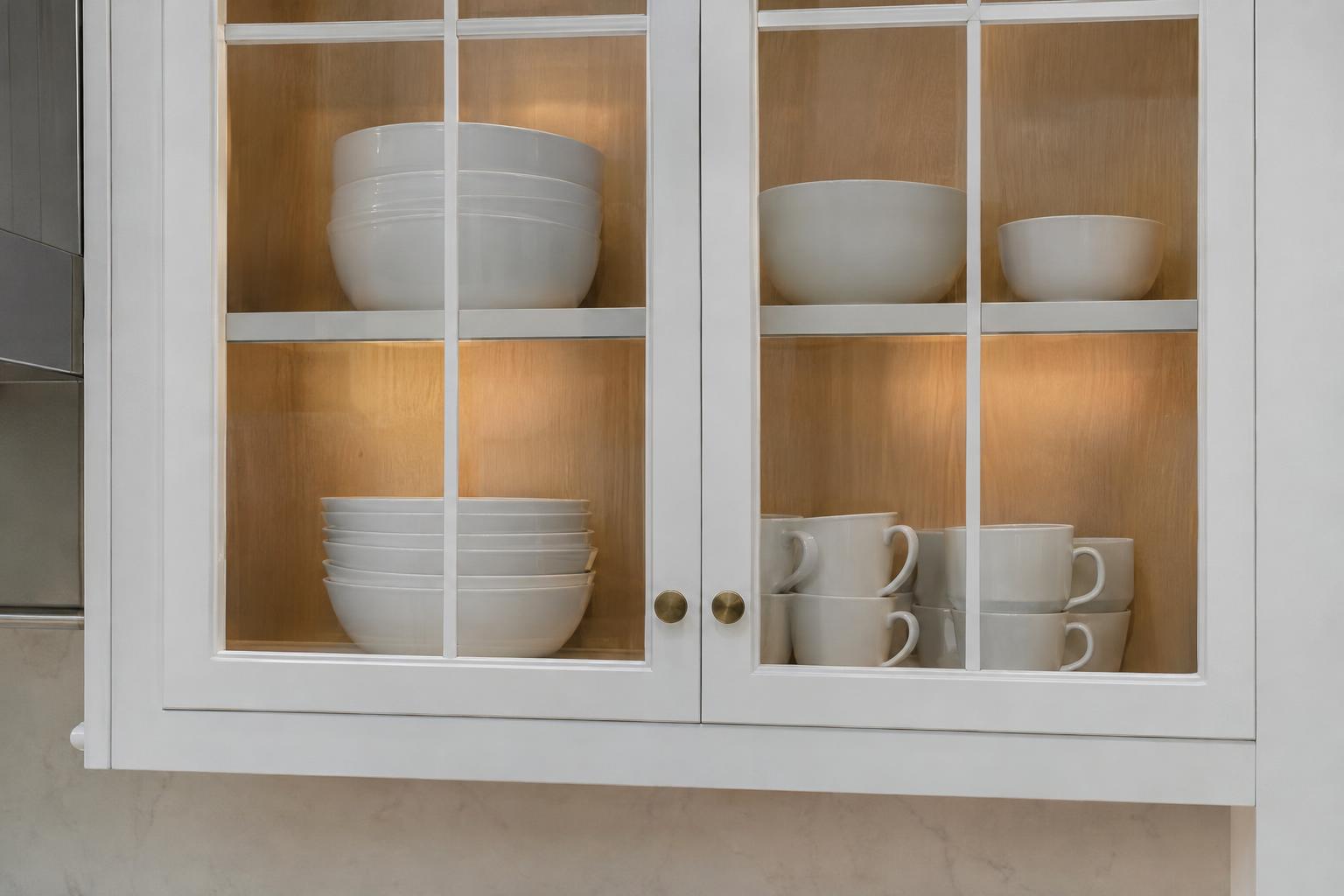
Interior treatment matters just as much as the door. Shelves of glass or wood, a back panel in a contrasting finish, and a small amount of lighting turn the inside of the cabinet into a feature. A mullioned door, with thin dividing bars across the glass, adds a traditional or cottage character, while a single clear pane reads as cleaner and more contemporary.
Where Glass-Front Cabinets Do Not Work
The honest part of this conversation is the list of places where glass is best avoided. Directly beside or above the range is the first. Cooking releases grease and moisture, and a glass door will show a film long before a solid painted door would. Cabinets near the stove are also where people store the oils, spices, and mismatched containers they reach for constantly, and none of that looks good on display.
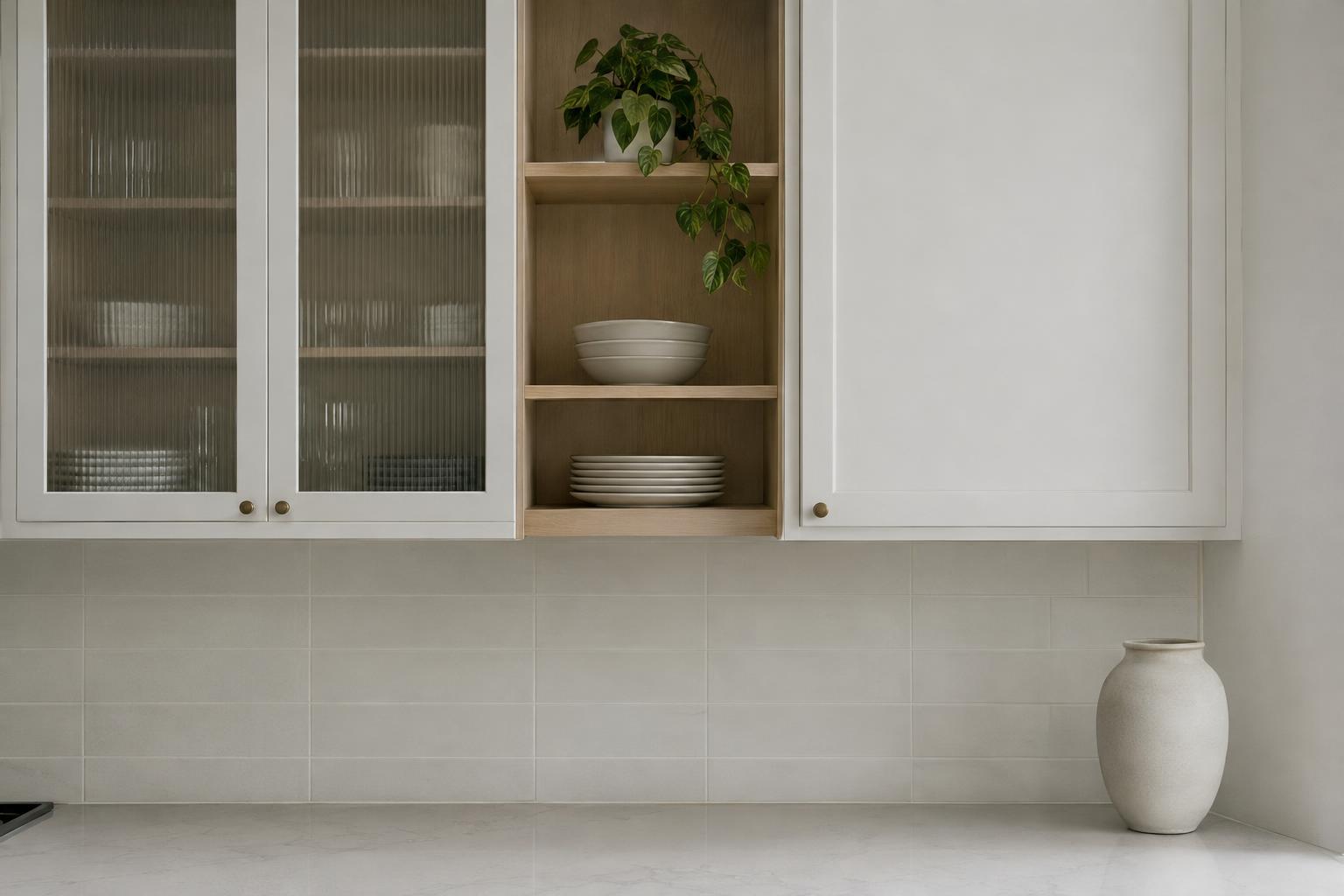
The second is the household that does not enjoy tidying. If you have a mix of plastic cups, cereal boxes, and takeout containers, a clear door will broadcast every one of them. Glass-front cabinets reward owners who are willing to curate. If that sounds like a chore, a reeded or frosted pane, described below, offers a softer compromise.
The third is the high-traffic family kitchen where small children or pets are common. Glass can be tempered and installed securely, but it still takes a hit better when it is out of reach. Placing glass doors on upper cabinets away from the main path, and keeping lower cabinets solid, keeps the room practical. Finally, glass is generally best avoided in a pantry wall where the goal is to store large quantities of food, since the clutter is the point and the display is not.
What to Put Behind the Glass
Before you commit, picture what you would actually store in each cabinet. Matching white or neutral dishes look calm and cohesive. Glassware catches light well and looks best on glass shelves. Colorful or patterned dinnerware can work if the palette suits the room, but a mix of too many shapes and colors will feel busy.
It helps to be realistic about quantity. A glass-front cabinet typically holds fewer things than a solid one, because you will stack less and leave room between items. Many homeowners keep two or three glass cabinets for display and use the surrounding solid cabinets for everything else. If you are thinking about the balance between storage types, our guide to drawers versus shelves in the kitchen covers how to plan the layout around the way you work.
Clear, Mullioned, Reeded, or Frosted: Choosing the Glass
Clear glass shows everything and has the cleanest look. It suits a collection you want to display and a cabinet that stays organized. Mullioned doors divide the glass into smaller panes, which hides a little of the contents and adds architectural detail. Reeded glass, with its fine vertical ribs, blurs what is inside while still letting light and color pass through, so a bit of disorder is forgiven. Frosted or textured glass goes further in concealing contents.
Lighting, Humidity, and Care in Southwest Florida
Light is what turns a glass-front cabinet into a showpiece. Small interior LED fixtures, placed at the top or front edge of each shelf, wash dishes in a warm glow and lend a feeling of depth after dark. LEDs also run cool and use less energy than older bulb types, and you can read more about how they work in the Department of Energy’s LED basics overview. The wiring should be planned before cabinets are installed, so that cords and drivers are hidden and the switch location suits the room.
Humidity deserves attention here. Our climate is damp for much of the year, and a kitchen that relies on open windows or a lanai door will see more moisture than an air-conditioned space. Glass-front cabinets are sealed less tightly than some people assume, so it helps to keep dishes clean and dry before storing them and to run the air conditioning consistently, especially for seasonal homes that sit closed up. Wood interiors should be finished properly to resist swelling, and the finish on the doors should be one that tolerates frequent wiping.
Planning Glass-Front Cabinets With Alliance
As an authorized Fabuwood dealer, we can discuss cabinet options with you in person and help you decide how many glass doors your layout can support. A good starting point is marking the upper cabinets that should stay solid, such as those near the range, and then selecting a few locations where glass has the most impact. Sketching the wall with glass and solid doors labeled helps you judge the balance before anything is built.
Glass-front doors can be part of a full kitchen project or a smaller cabinet update. If you are weighing the structure of your cabinetry, our comparison of custom versus semi-custom cabinets explains how those choices affect what is possible, from door styles to interior details.
Frequently Asked Questions
Do glass-front cabinets make a kitchen look smaller?
Usually the opposite. Glass adds depth and lets light travel, which makes a wall of cabinets feel less heavy. The caveat is clutter: a crowded interior can make the room feel busier.
Can I use glass-front cabinets next to the stove?
Glass is usually best avoided here. Grease and steam build up on glass quickly, and the items stored near a stove are rarely display worthy. A solid door is easier to live with in that zone.
How many glass-front cabinets should a kitchen have?
Many kitchens look best with a few, placed with intention, rather than all uppers in glass. Balance them with solid doors that conceal everyday items.
Is reeded glass easier to live with than clear glass?
For many homeowners, yes. It softens the view of the contents while keeping the light and texture, so occasional disorder is less noticeable.
Not sure which cabinets should get glass? Call (239) 771-2855 to request an estimate, and see our custom cabinetry services for what is possible. We are a licensed Florida building contractor (CBC1268590) with a BBB A+ rating.