
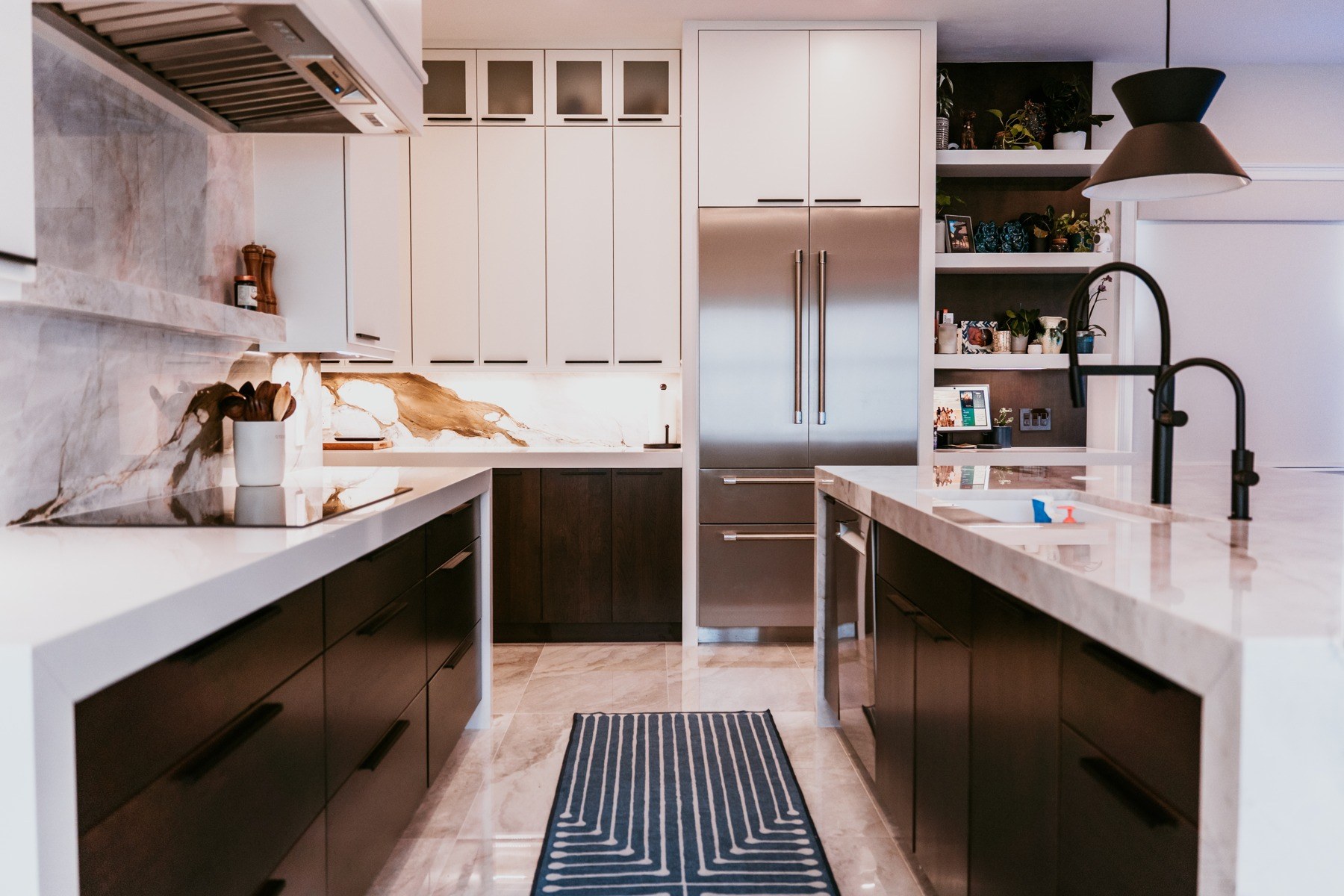
Two tone kitchen cabinets let you pair a light color with a darker one so the room feels layered instead of flat. Done well, the combination hides daily wear on the lower cabinets, keeps the upper half bright, and gives a Southwest Florida kitchen a custom look without adding square footage. Done poorly, it looks busy and dates quickly. Color pairings work best when they are planned alongside layout, lighting, and countertops, and this guide walks through how to think about each decision.
What Two-Tone Cabinets Really Mean in a Working Kitchen
A two-tone kitchen uses two cabinet colors or finishes in one space. The most common split puts a lighter shade on the upper cabinets and a deeper one on the base cabinets. Another popular approach gives the island its own color while the perimeter stays uniform. A third keeps everything one color except a tall pantry wall or a built-in hutch that acts as a feature.
The reason the look works is contrast with purpose. Lower cabinets take the kicks, scuffs, and splashes, so a richer tone forgives marks. Upper cabinets sit near eye level and ceiling light, so a lighter tone keeps the room open. When the pairing follows how the kitchen is used, it reads as intentional rather than decorative.
Choosing Which Cabinets Get Which Color
Before comparing paint chips, it helps to start with a floor plan. Where does your eye land when you walk in? That is usually where a darker or bolder cabinet belongs, because it anchors the room. Appliance walls, an island, or a bank of drawers beside the range all make natural anchors.
Here are the placements homeowners most often consider:
- Light uppers, dark bases: the classic split. It keeps walls feeling tall and hides wear low in the room.
- Contrasting island: a single color accent that defines the gathering spot.
- Accent hutch or bar: one small zone in a deeper color, with the rest of the kitchen kept simple.
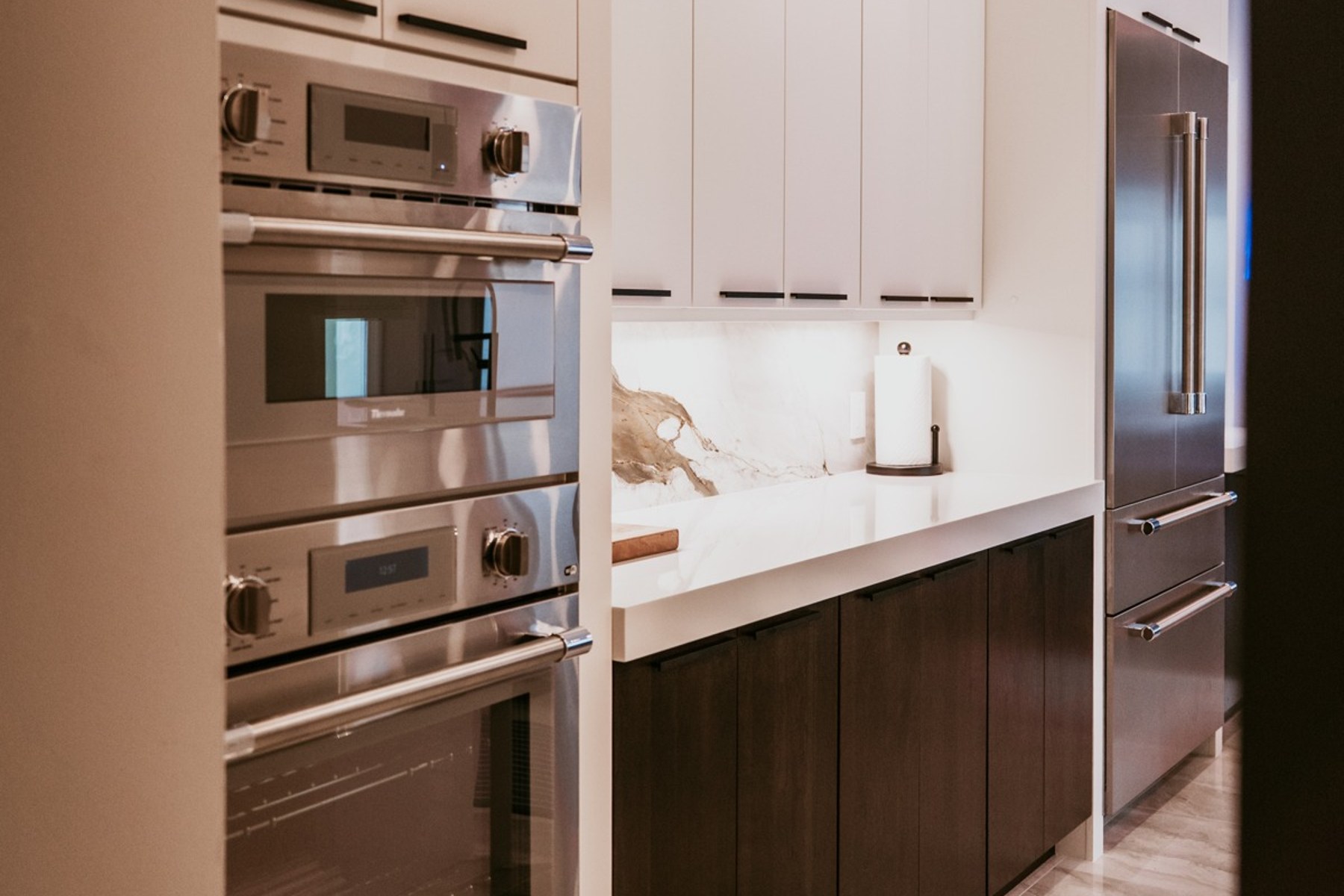
The photo below shows a completed Alliance kitchen that pairs white tall and upper cabinets with dark lower cabinets, a combination homeowners often ask about.
Color Pairs That Hold Up in Southwest Florida Light
Natural light along the Gulf coast is strong and warm, and it changes through the day. A paint swatch that looks soft in a showroom can turn yellow by afternoon or gray by evening. For that reason, viewing samples at the actual cabinet location, morning and late day, before committing is worth the effort.
Some pairings tend to age gracefully in coastal homes:
- A warm white with a deep walnut or espresso wood tone, which adds warmth and ties to natural stone.
- A soft greige with a charcoal or near-black base, a calm option for open plans that flow into a living area.
- A cream with a muted navy, which stays classic in traditional and transitional layouts.
It is best to steer clear of two colors that are close but not quite matching, because the eye reads near-misses as a mistake. Either commit to clear contrast or stay in one family.
Finishes and Materials That Handle Humidity
Color gets the attention, but finish decides how the cabinets look in five years. Southwest Florida kitchens deal with humidity, cooking moisture, and frequent air conditioning cycles. Cabinet boxes, doors, and finishes should be chosen with that in mind, and your contractor can walk you through what each construction option does well.
Darker cabinets show fingerprints and water spots more readily than mid-tones, especially in a gloss finish, so a matte or satin sheen is more forgiving. Lighter cabinets show splatter near the sink and range, but they brighten the room.
Finishes can also affect indoor air. Many paints, stains, and coatings release volatile organic compounds, and the EPA explains how these chemicals can affect indoor air quality in its guidance on volatile organic compounds. If your household is sensitive to odors, mention it early so finish options and ventilation during installation can be discussed.
Tying Countertops, Backsplash, and Floors Together
Two cabinet colors give you two chances to clash with everything else, so the surrounding surfaces need a plan. The countertop can act as the bridge. A countertop with veining or flecks that include both of your cabinet tones lets the room feel connected, and the color you see in the stone often suggests which cabinet gets which shade.
The backsplash comes next. If the countertop is busy, keep the backsplash quiet. If the countertop is plain, a patterned stone or tile can carry the visual weight.
Flooring should lean to the lighter or the mid-tone side. A dark floor under dark base cabinets can make the lower half of the room heavy. Many Florida homes already have light tile throughout, which gives dark base cabinets room to stand out.
Hardware, Lighting, and Small Details That Finish the Look
Hardware is the simplest way to connect two colors. Slim black bar pulls work on both a white upper and a dark lower cabinet, so the metal ties the two halves together. Brass or brushed nickel can do the same job, as long as it repeats in the faucet, lighting, or appliance handles. Our post on kitchen cabinet hardware covers style options.
Lighting changes how both cabinet colors read. Under-cabinet lighting washes the backsplash and counter, which keeps dark bases from swallowing the room at night. Pendant lights over an island can echo a hardware finish. Check bulb color temperature too, since a very cool bulb can turn warm whites gray.
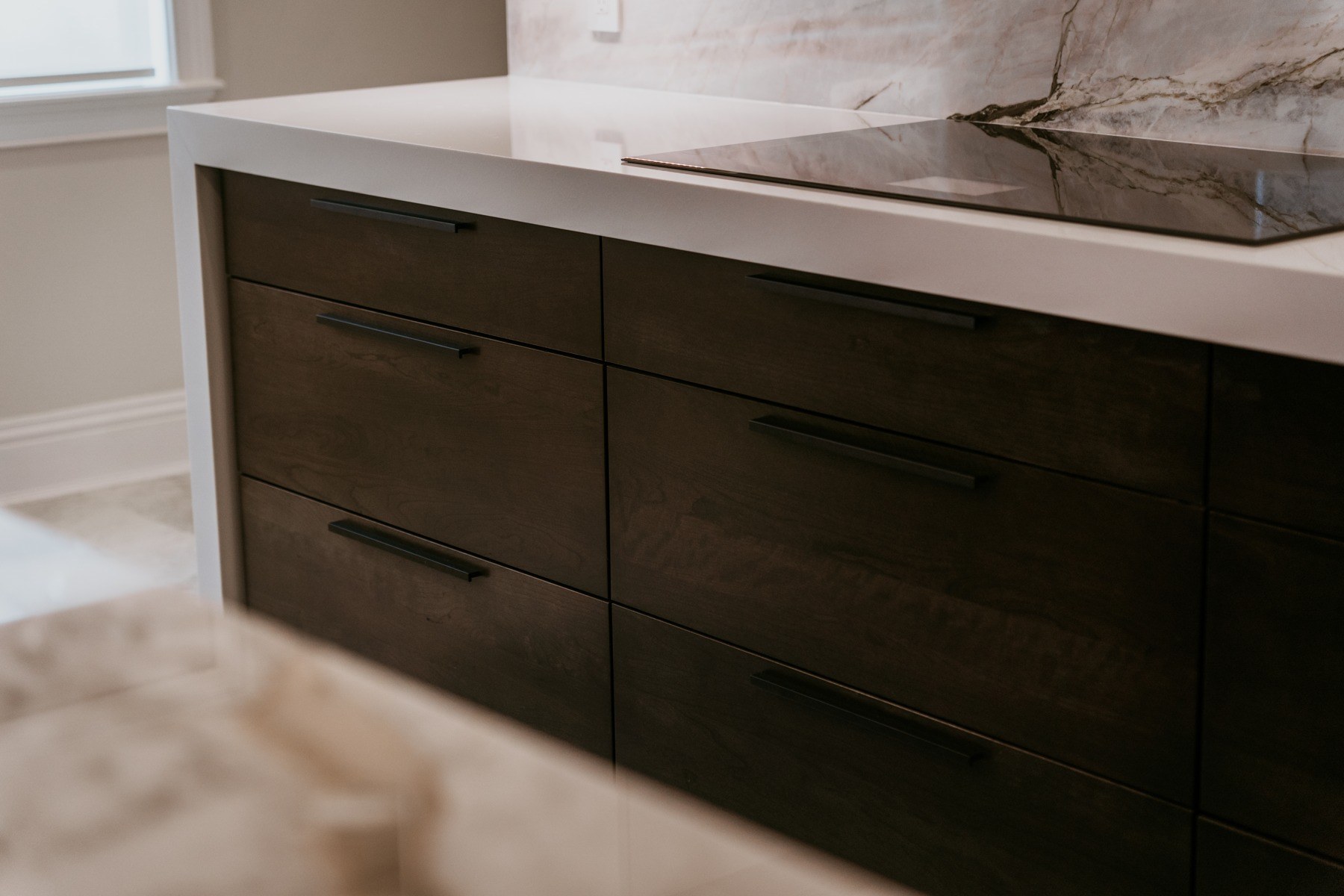
Sample doors and drawer fronts are worth viewing in person. The image below shows a completed Alliance kitchen with dark lower drawers and slim bar pulls beneath a light countertop, a detail that shows how simple hardware keeps a contrasting base clean.
Common Two-Tone Mistakes to Avoid
The same missteps come up again and again. Splitting colors in the wrong place is the first. Changing color at a random line, such as halfway across a run of cabinets, looks like a mistake. Color changes should happen at natural breaks, like a corner, a tall cabinet, or the edge of an island.
The second is using too many tones. Add a third, such as a stained wood hood, and the result can feel scattered.
The third is choosing a color from a small chip. A tiny swatch is a poor predictor of how a full wall of cabinets will look. Larger samples, viewed next to your countertop and flooring, avoid surprises.
The fourth is ignoring wear. Match the finish to how often you are willing to wipe it down.
Planning Two-Tone Cabinets for Your Kitchen
A good plan starts with how you cook, entertain, and store things, then moves into layout and color. Judging contrast from a small chip rarely tells the whole story, so it helps to view larger samples in your own kitchen, next to your countertop and flooring.
As an authorized Fabuwood dealer, we can help you compare options in person. Bring your countertop and flooring samples, and we can build the palette around them. For seasonal homes, it also pays to consider finishes that are easy to maintain when the house is closed up for part of the year. Browse finished work in our project gallery.
Frequently Asked Questions
Are two tone kitchen cabinets still in style?
Yes, the approach has stayed popular because it is flexible. It can be bold or understated and suits traditional, coastal, or modern homes. Colors with lasting appeal keep the kitchen from feeling dated.
Should the darker color go on the top or the bottom?
Most homeowners place the darker tone on the base cabinets and the lighter tone on the uppers. Dark bases hide scuffs and ground the room, while light uppers keep the walls feeling open.
Can I do two-tone cabinets in a small kitchen?
Often yes. In a smaller room, keep the contrast gentle and limit the darker color to the lower cabinets or a single island. Light uppers help the space feel taller, and consistent hardware keeps the room from feeling split.
Do two cabinet colors cost more to install?
Your estimate will show how each color and finish choice affects the scope. Layout, finish selection, and changes to walls, flooring, or countertops tend to matter more than the color count itself.
Want to see how a two-tone palette would look in your own kitchen? Call (239) 771-2855 to request an estimate, and our team can help you plan the layout, colors, and finishes. You can also read about our custom cabinetry services. We are a licensed Florida building contractor (CBC1268590) with a BBB A+ rating.