
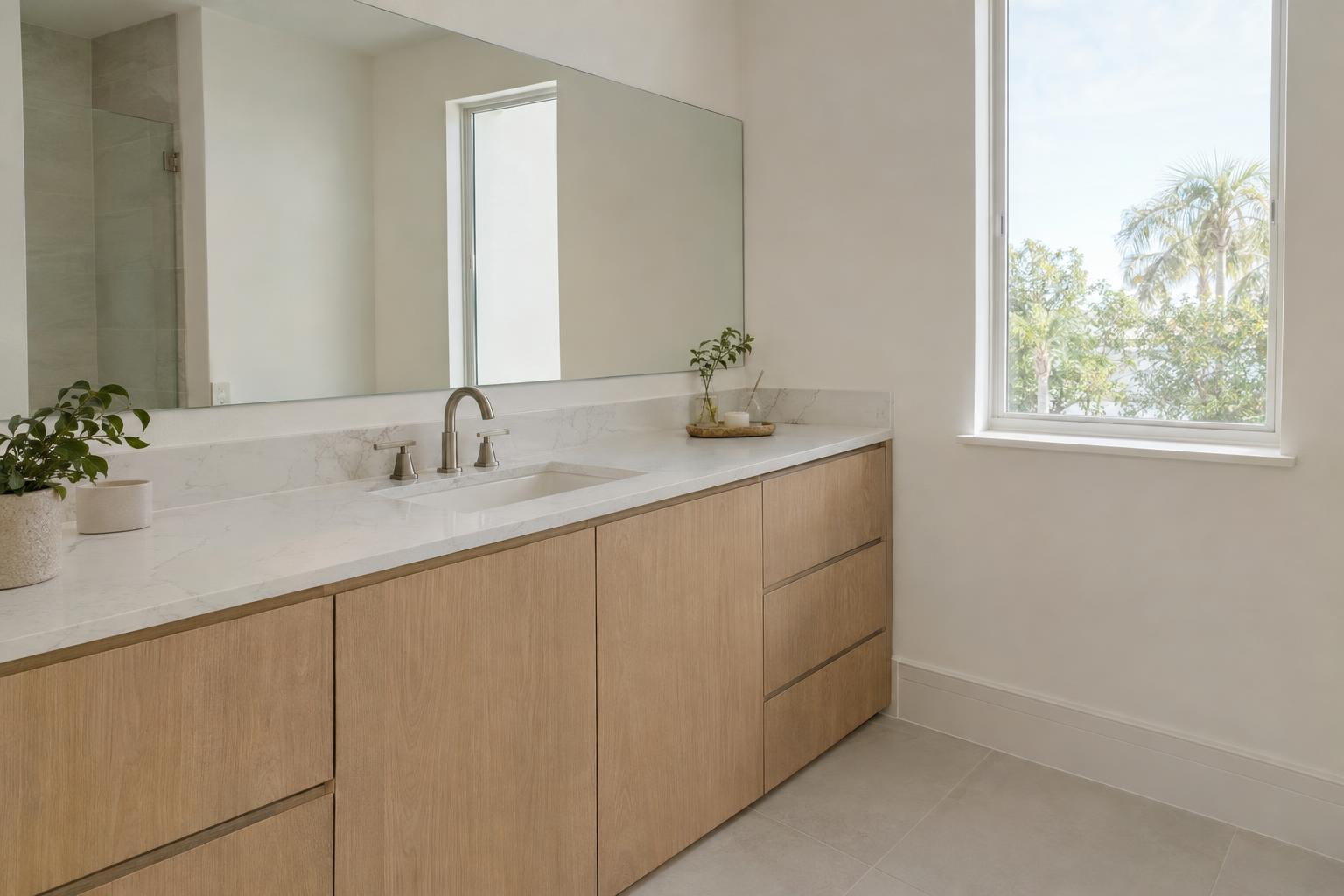
Choosing bathroom countertop materials in Southwest Florida is different from choosing them in a drier climate. Daily steam, coastal humidity, toothpaste, hair products, and sunscreen all end up on that surface, and the material has to look good while handling them. Homeowners do best when they weigh appearance, upkeep, and moisture behavior before they fall for a sample. Here is how the main options compare for a Florida bath.
What Humid Florida Baths Ask of a Countertop
A bathroom vanity top lives near water more than almost any other surface in the house. Splashes land around the faucet, damp towels get set down, and steam from a shower can linger for hours when ventilation is weak. Add summer humidity that makes it hard for a room to fully dry, and a countertop has to do more than look pretty.
When evaluating a material, it helps to ask four questions. How does it handle standing water? Does it stain from cosmetics, hair dye, or mouthwash? How much routine care does it need? And how does it look next to the cabinet, tile, and plumbing finishes you have chosen? Moisture control matters beyond the countertop itself, and the EPA explains in its guide to mold, moisture, and your home why drying wet surfaces promptly is a core habit in humid homes.
Comparing the Main Material Families
Most vanity tops fall into a handful of families: engineered quartz, natural granite, natural marble and similar soft stones, solid surface, porcelain slab, and laminate. Each has a different personality. Some are consistent and easy. Others are one of a kind but ask for more attention.
Before you compare patterns, decide where you sit on two scales. First, do you prefer a uniform look or natural variation? Second, are you comfortable with periodic sealing and gentle cleaners, or do you want the lowest possible upkeep? Those two answers narrow the field quickly.
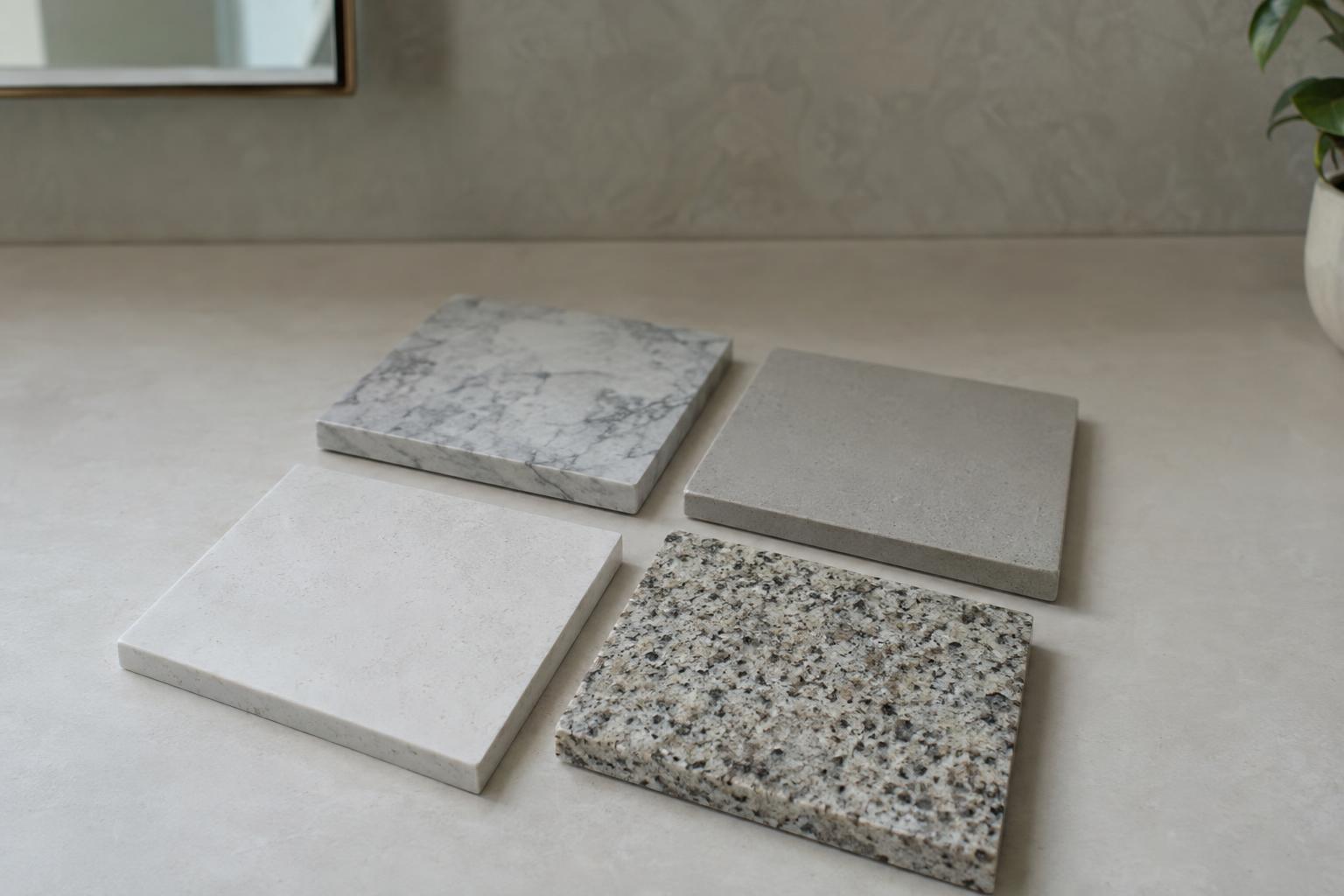
The image below is a neutral illustration of the kind of sample comparison worth making: several finishes side by side, viewed under your own bathroom light.
Engineered Quartz for Consistent, Low-Fuss Surfaces
Engineered quartz is made from ground stone bound with resin, then formed into slabs. The patterns are fairly consistent from slab to slab, which makes it a good match when you want a clean, predictable look. Manufacturers also offer veined designs that echo marble without the same upkeep.
In a humid bath, quartz is popular because it is generally not porous and usually does not need sealing, though you should always follow the manufacturer’s care guidance. It tends to resist everyday staining from cosmetics and hair products. Hot styling tools set directly on the surface can be an issue for resin-based materials, so a heat-safe tray is a smart habit.
Quartz also works well in primary baths where you want a sleek, matching look across a long double vanity.
Granite: Natural Character With a Sealing Routine
Granite is a natural stone, so every slab differs. If you like visible movement and a speckled or flowing pattern, it is hard to beat. Because it is a natural material, it can have small pores, so it is often sealed to help it resist moisture and stains. Ask your fabricator how often the specific stone you choose should be resealed.
For guest baths and secondary baths that see lighter use, granite is a durable pick. Darker and mid-tone granites also hide water spots better than glossy solid colors do. If your home has a warm or traditional feel, granite pairs well with wood vanities and classic faucets.
Walk the slab yard if you can. Photos hide the scale of veining and the color shifts across a slab, and seeing the exact piece avoids surprises when it arrives.
Marble and Other Soft Stones: Beauty That Needs Attention
Marble, limestone, and similar stones bring a soft, luxurious look that many homeowners love. They are also more sensitive. Acidic products such as some cleaners, toiletries, and even citrus can etch the surface, leaving dull marks. Soft stones can also absorb stains more readily if they are not sealed and cared for.
That does not rule them out. Some homeowners accept a lived-in patina and enjoy the character that develops. If you love the look but not the upkeep, a veined quartz or porcelain slab can give you the same impression with fewer concerns. A powder room that sees light use is often the best place to try a softer stone.
Whatever you choose, use a pH-appropriate cleaner and wipe up spills quickly. Our post on bathroom vanity styles for Southwest Florida shows how different tops pair with cabinet styles.
Where Water Meets the Countertop: Sinks, Edges, and Backsplash Joints
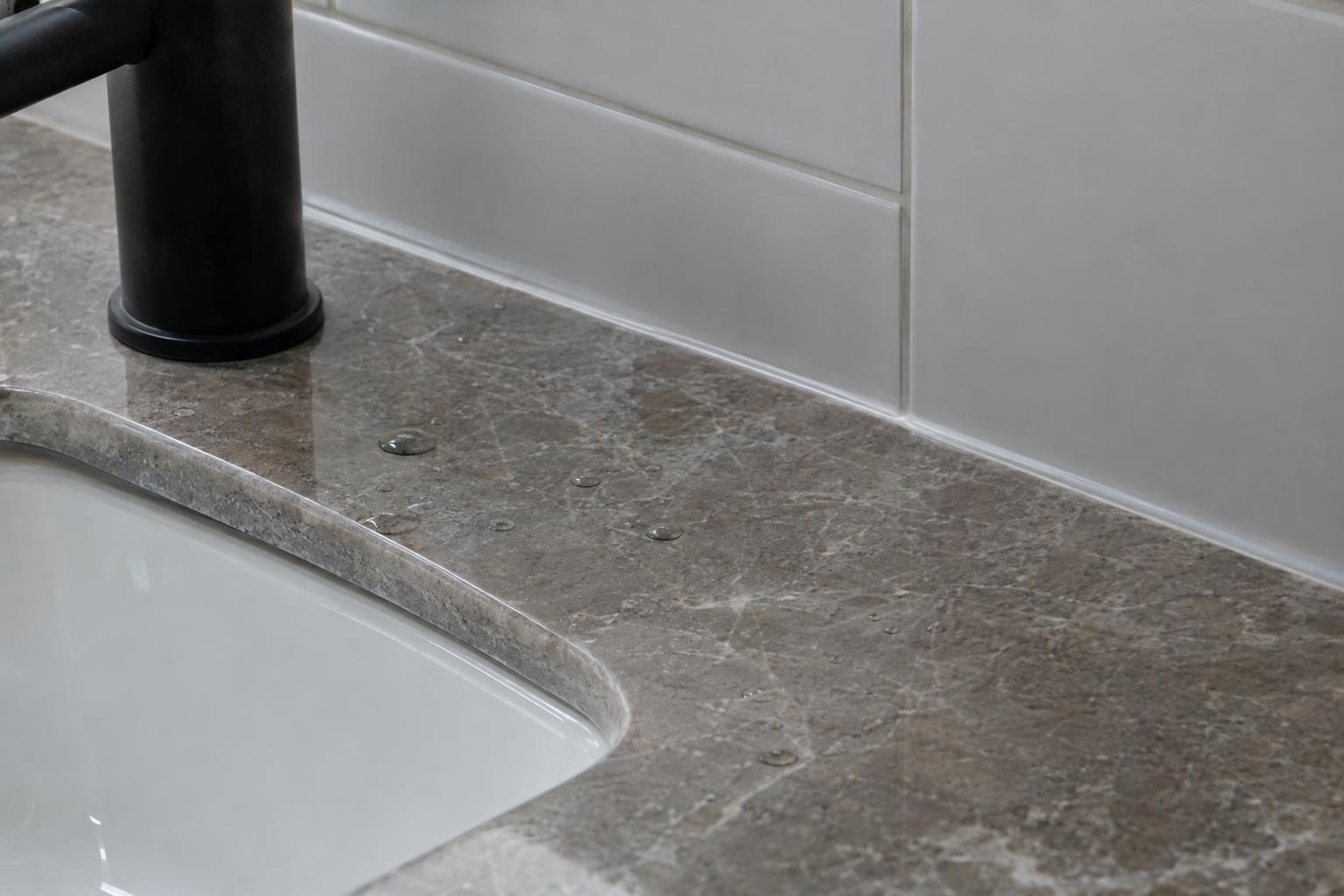
Material gets the attention, but moisture problems usually start at the joints. The seam between the countertop and the backsplash, the edge around an undermount sink, and the base of the faucet are where water collects and can seep in if the sealant is poor.
A quality installation uses a flexible sealant at the wall and backsplash joints and keeps the sink cutout edges well sealed. Undermount sinks make wiping easy because water and crumbs sweep straight into the bowl. Integrated sinks eliminate the seam entirely, which some homeowners prefer for easy cleaning.
Edge profile is another practical choice. A softly eased edge resists chipping better than a sharp square corner, especially on a vanity that kids use daily. The image below is a neutral illustration of the area where a countertop, faucet, and tile meet, and where sealing deserves the closest attention.
Solid Surface, Porcelain, and Laminate Options
Solid surface is a manufactured material that can be formed with the sink as one continuous piece. Because there is no seam at the bowl, cleanup is simple, and minor surface marks can often be buffed out. The look is clean and uniform, though it can feel less dimensional than stone.
Porcelain slabs have become a strong option for bathrooms. They can reproduce the look of marble or concrete and are generally resistant to moisture and staining. Because they are thin and rigid, fabrication needs an experienced installer, and edges deserve careful detailing.
Laminate remains an option for a budget-minded refresh, and modern patterns are more convincing than they used to be. The tradeoff is that a damaged edge or a poorly sealed seam can let moisture reach the core, so careful installation is critical in a humid bath. Pairing any of these tops with the right wall finish also matters, and our guide to bathroom tile in Florida humidity covers that side.
Choosing the Right Material for Your Bathroom
A good starting point is how the bathroom is used. A primary bath with two people getting ready each morning calls for a different surface than a guest bath that sees visitors a few weeks a year. Seasonal residents often favor low-maintenance tops because the house may sit closed for months.
From there, it helps to coordinate the countertop with the cabinet color, faucet finish, tile, and lighting so everything works together. Viewing full-size samples next to your cabinet color and tile helps you see how a surface fits the room before anything is cut. If you are planning a full update, our bathroom remodeling team can help plan the countertop along with the vanity, plumbing, and finishes.
Frequently Asked Questions
What are the best bathroom countertop materials for humidity?
Engineered quartz, porcelain slab, and solid surface are common choices because they are generally non-porous and easy to wipe clean. Sealed granite also performs well. The best option depends on your style preference and how much upkeep you want to take on.
Do I need to seal my bathroom countertop?
It depends on the material. Natural stones such as granite and marble are often sealed, while quartz and solid surface typically are not. Follow the care instructions from your fabricator and manufacturer, and ask how often resealing is recommended.
Is marble a bad idea in a Florida bathroom?
Not necessarily, but it needs more care. It can etch and stain, so it suits homeowners who are comfortable with a natural, aging look and who wipe up spills promptly. A powder room is often a good fit.
Can I replace only the countertop and keep my cabinets?
Often yes, as long as the cabinets are sound, level, and suited to the new top and sink. Our team can evaluate the vanity during a visit and explain which option makes sense for your bathroom.
Weighing countertop samples for your bath? Call (239) 771-2855 to request an estimate, and we can talk through which material suits your space. See our bathroom remodeling services for the bigger picture. We are a licensed Florida building contractor (CBC1268590) with a BBB A+ rating.