
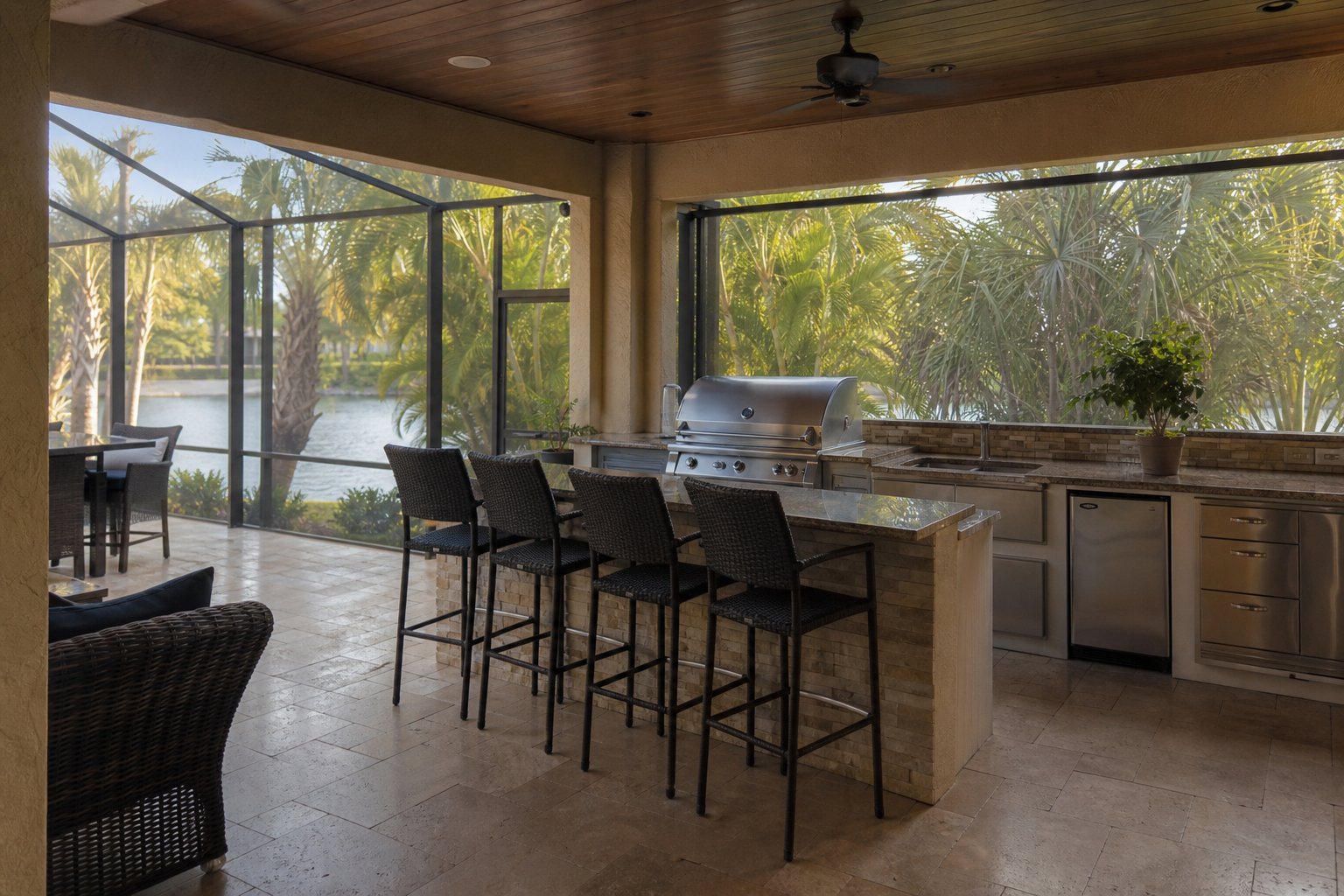
Outdoor cooking is practically a way of life in Southwest Florida. With our long warm season and the screened lanais that come standard on so many homes, the question we hear constantly is not whether to cook outside, but how far to take it. Some homeowners want a compact summer kitchen for easy weeknight grilling, while others are dreaming of a full outdoor kitchen that rivals what they have indoors. Both are great choices, and the right one depends on how you live, how you entertain, and what your lanai can support. Here is how we help homeowners in Fort Myers, Estero, and Bonita Springs decide.
What We Mean by a Summer Kitchen
When we say summer kitchen, we mean a focused, efficient outdoor cooking station built around a quality grill. A typical summer kitchen includes a built-in grill, some durable counter space for prep and plating, storage below, and often a single utility like a side burner or a small refrigerator. It is designed to make grilling easy and pleasant without trying to replace your indoor kitchen.
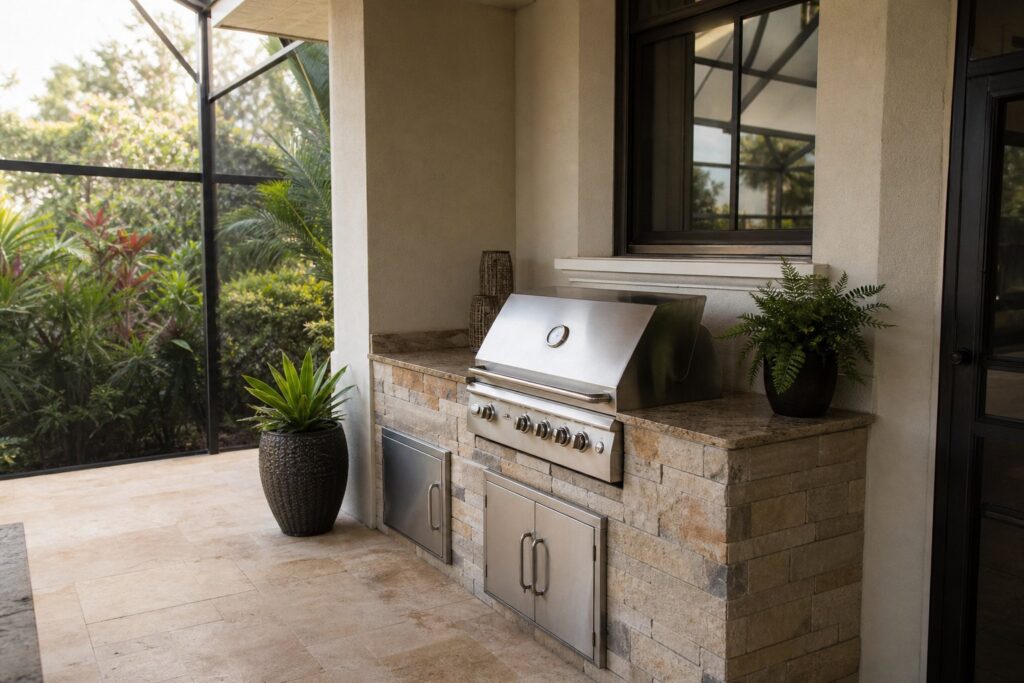
For many SWFL homeowners, a summer kitchen is exactly right. It fits comfortably on a standard lanai, costs less, and covers the way most people actually cook outside: firing up the grill a few evenings a week and enjoying the breeze. It is the practical choice when the goal is good food and easy upkeep.
What a Full Outdoor Kitchen Adds
A full outdoor kitchen is a different animal. It is built to host. Beyond the grill, it might include a large refrigerator, an ice maker, a sink with running water, a power burner for big pots, a pizza oven or smoker, ample counter and bar seating, and sometimes a vent hood if it sits under a roof. It becomes a true second kitchen where you can prepare an entire meal start to finish without going inside.
This is the right choice for homeowners who entertain often and want the gathering to happen outdoors. If your idea of a perfect evening is a dozen friends around the lanai while you cook, a full outdoor kitchen earns every dollar. It is a larger investment, but it transforms how you use your outdoor space.
How Your Lanai Shapes the Decision
The biggest practical factor is space. We look at the footprint of your lanai or patio, the location of the pool, and the traffic flow before recommending anything. A summer kitchen tucks neatly along one wall or in a corner and leaves plenty of room for seating and movement. A full outdoor kitchen needs real square footage, and crowding one onto a small lanai makes the whole space feel cramped.
Whether the area is screened, covered, or open affects appliance listing, clearances, ventilation, weather exposure, and the products that may be used. A hood or other ventilation feature is not automatically suitable merely because a lanai is covered; the appliance instructions, enclosure, structure, and local requirements must be reviewed together.
Building for Our Climate and Salt Air
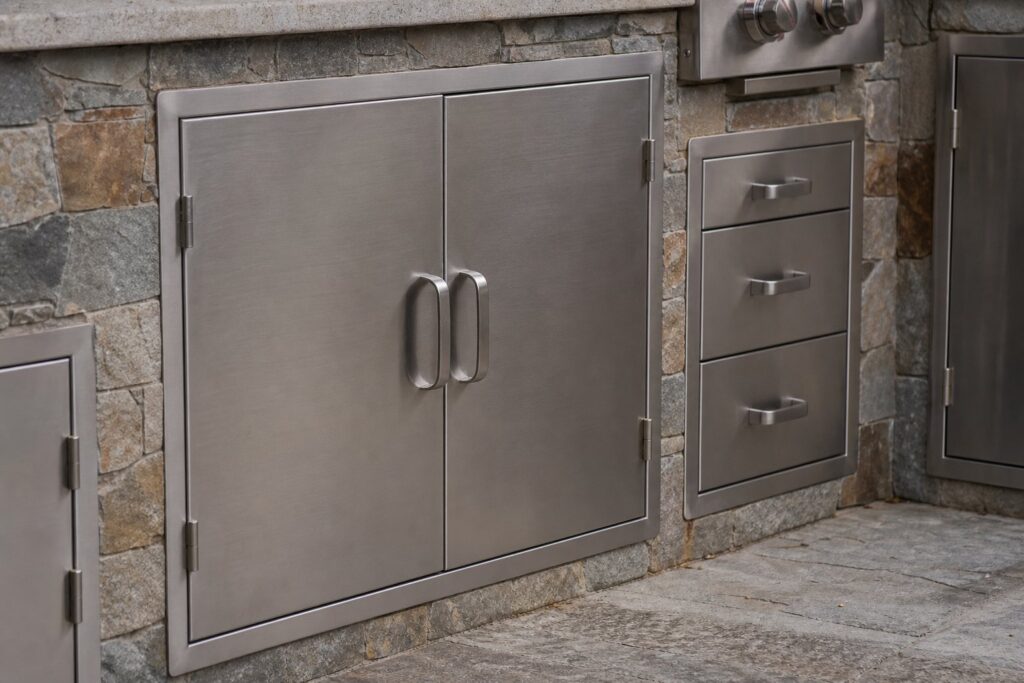
For either scope, select appliances, cabinetry, access doors, fasteners, counters, sealants, and framing systems that their manufacturers list for the planned exposure. Stainless grade, corrosion resistance, required maintenance, and warranty coverage vary by product. Our separate guide to summer-kitchen add-ons for Florida weather covers those material questions in more depth.
Utilities: Gas, Water, and Power
Utility scope is one of the clearest differences between the two options. A grill-focused station may need fewer connections, while a sink, refrigerator, ice maker, lighting, or specialty appliance can add water, drainage, gas, electrical, ventilation, and permit coordination. Plan those routes before masonry and finishes. For a larger addition example, see our guide to outdoor-kitchen additions in Bonita Springs.
Comparing the Investment
Budget is usually where the decision crystallizes. A summer kitchen is generally the lower-scope path because it uses fewer appliances, utilities, cabinets, and counters. A full outdoor kitchen is a larger investment with more capability, but actual cost and any effect on home value depend on the design, site, products, permits, and local market.
We always encourage homeowners to think about how they will genuinely use the space over the next several years. There is no point building a sprawling outdoor kitchen that gets used twice a year, and equally no point in a tiny setup if you host every weekend. Matching the build to your real life is how the investment pays off.
Designing It to Match Your Home
An outdoor kitchen should feel like it belongs to the house, not like it was dropped onto the patio. We carry the home’s materials and colors outside, matching stone, tile, and finishes so the new space reads as a natural extension of your living area. On a lanai near the pool, that cohesion is what makes the whole outdoor space feel resort-like.
We also think about shade, lighting, and the flow between the kitchen, the dining area, and the pool deck. The cooking station is the anchor, but the surrounding layout is what makes the space somewhere you actually want to spend your evenings.
Helping You Choose the Right Scope
In most conversations, the answer becomes clear once we walk the space and talk through how a homeowner lives. Casual grillers with modest lanais are thrilled with a well-built summer kitchen. Frequent hosts with room to spare are far happier going all in on a full outdoor kitchen. There is no wrong answer, only the right fit for your home and habits.
Whichever direction you lean, the plan should coordinate the structure, appliances, utilities, required clearances, ventilation, permits, and finishes before construction begins. That coordination helps avoid conflicts and gives each component the conditions its manufacturer requires.
For portable propane and charcoal grills, the NFPA’s grilling safety guidance recommends outdoor use well away from the home, deck railings, and overhanging branches or eaves. Permanently installed appliances require their listed manufacturer clearances, any required ventilation, and local code review.
Frequently Asked Questions
Can I start with a summer kitchen and expand later? Sometimes, with planning. If we know an expansion may come, we can rough in extra utilities and design the layout to grow. It is far easier to plan for the future at the start than to retrofit finished masonry down the road.
Will an outdoor kitchen hold up to our salt air and humidity? It can perform well when every component is rated for its exposure and maintained as its manufacturer directs. Ask about stainless grade, cabinet construction, fasteners, counter and sealant care, appliance clearances, and warranty exclusions before selecting products.
Do I need permits for an outdoor kitchen? The answer depends on the jurisdiction and scope. Gas, water, drainage, electrical, structural, ventilation, and covered-lanai work may trigger permits or inspections, so confirm requirements before construction and define responsibility in the contract.
Can you match the outdoor kitchen to my existing lanai and pool deck? Absolutely. We carry your home’s materials and colors outside so the new kitchen blends seamlessly with your lanai, pool area, and the rest of your outdoor living space.
If you are weighing a summer kitchen against a full outdoor kitchen, we would love to walk your lanai and help you decide. Explore our outdoor living work, see how we serve homeowners in Estero and Bonita Springs, and call us at (239) 771-2855 to start planning.