
Before a single plank or tile goes down, concrete moisture testing tells you whether the slab under your Fort Myers home is dry enough for the floor you picked. It is a short step that protects a large investment, and it is often the difference between a floor that stays flat and tight and one that cups, buckles, or peels. We build it into our flooring plans wherever the floor and the slab call for it, not as an optional extra.
Almost every Fort Myers home sits on a concrete slab, and the same is true of most homes we work on in Cape Coral, Naples, and Punta Gorda. Concrete looks solid and dry, but it holds moisture and passes it upward as vapor, especially through our long, humid rainy season. A slab that feels perfectly fine underfoot can still release enough moisture to damage a glued or floating floor sitting on top of it.
We will cover how slabs take on moisture, which floors are most sensitive, how testing works in general terms, and how a slab is prepared for the floor going on top of it. Your flooring manufacturer sets the test method and the limits for its own product, so treat this as preparation for that conversation, not a replacement for the manufacturer’s instructions.
Why Southwest Florida Slabs Hold So Much Moisture
Our soil is sandy, and summer storms can keep the ground around a home wet for weeks. Concrete is porous, so it absorbs and transmits moisture from the soil below and from the humid air above. A slab does not need standing water to cause trouble, because vapor moving through it is enough.
Seasonal homes add another wrinkle. When a house in Naples or Bonita Springs is closed up for the summer with the air conditioning turned off or set way back, indoor humidity climbs and the slab never gets a chance to settle. Flooring installed in a closed-up home, or right after a stretch of heavy rain, deserves extra care.
Which Floors Are Most Sensitive to Slab Moisture
Solid and engineered wood are the most sensitive, because wood takes on moisture and changes size as it does. A damp slab can push that movement far enough to cause cupping, gaps, or buckling. Glued-down and floating vinyl plank can also react to slab moisture, and each manufacturer publishes its own limits.
Tile is more forgiving of moisture, but it is not immune, and it still needs a flat slab. If you are still choosing a material, our posts on waterproof flooring options for Naples remodels and wood-look tile versus engineered hardwood cover how each type behaves in our climate.
How Concrete Moisture Testing Works
A proper test measures how much moisture the slab holds or releases, then compares the result with the limit published by the flooring and adhesive manufacturer. The common methods are a moisture meter for a quick read, in-situ relative humidity probes set into the slab, and calcium chloride tests that measure vapor coming off the surface. Each has its place, and the manufacturer’s instructions name which one applies to your floor.
The National Wood Flooring Association guidance on concrete subfloors says wood floors can be installed over concrete when it is properly prepared, and that you must follow the flooring and adhesive manufacturer’s recommendations for moisture testing and limits. There is no single pass-or-fail number. The limit depends on the product, the adhesive, and the test method, and it differs from one manufacturer to the next.
A Simple Plastic Sheet Check, and Its Limits
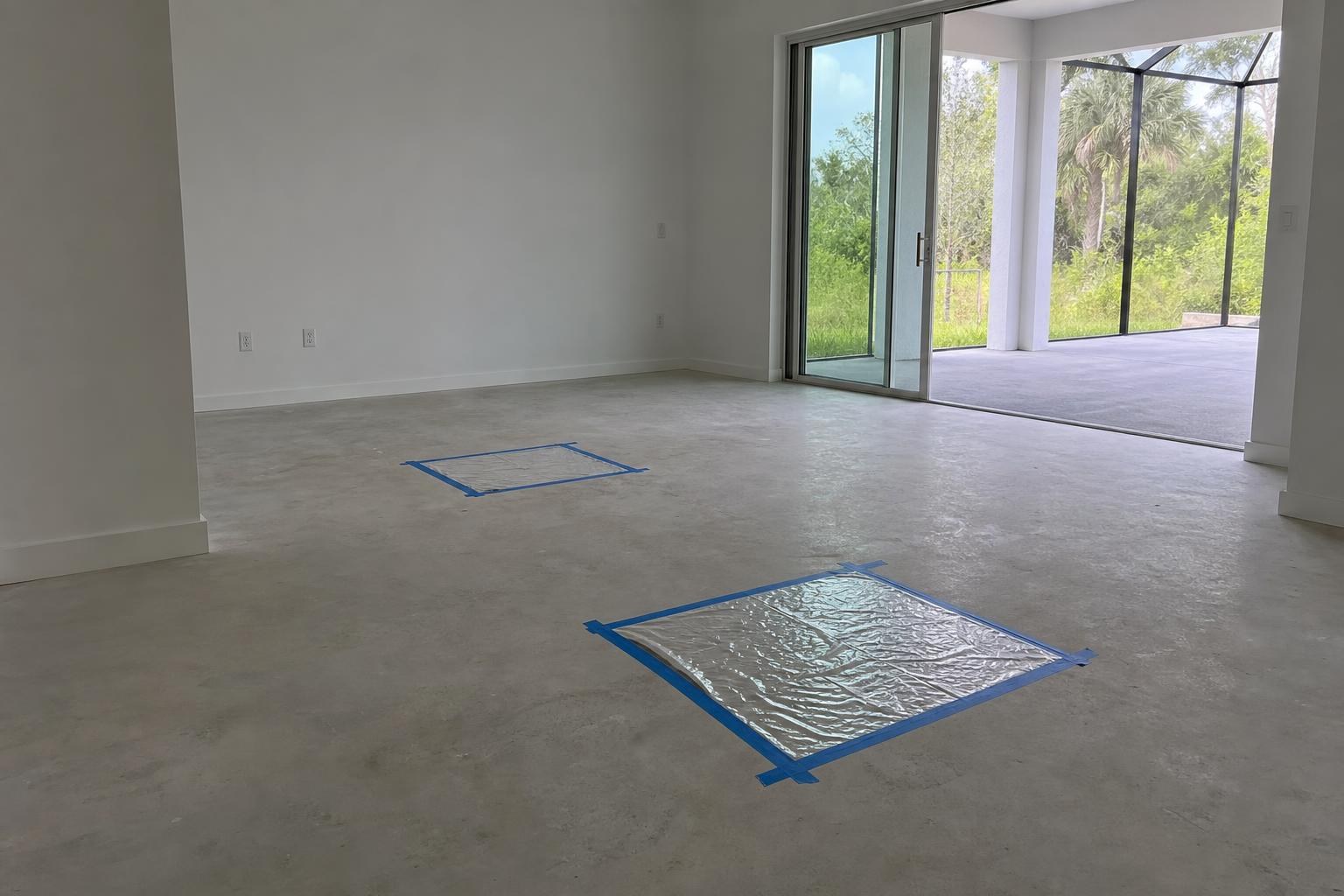
Homeowners sometimes ask whether they can check a slab themselves. One informal method is to tape a square of clear plastic flat to the concrete, sealing all four edges, and look for condensation or a darkened patch underneath after a day or two. If moisture shows up, you have a good reason to call for a real test.
A clear sheet does not mean a dry slab, though. The plastic check can hint at a problem, but it does not replace a real test and it will not stand in for the test a manufacturer requires. Use it as an early warning, then let a proper method give you the answer.
Slab Flatness and Preparation Before Any Floor Goes Down
Moisture is only half of slab readiness. An unlevel slab causes tile lippage, where one tile edge sits higher than its neighbor, and it makes floating planks flex, which shows up as bounce, noise, and open joints. For wood floors, the same NWFA guidance calls for a flat slab, with tolerances of 1/8 inch within a 6 foot radius, or 3/16 inch within a 10 foot radius.
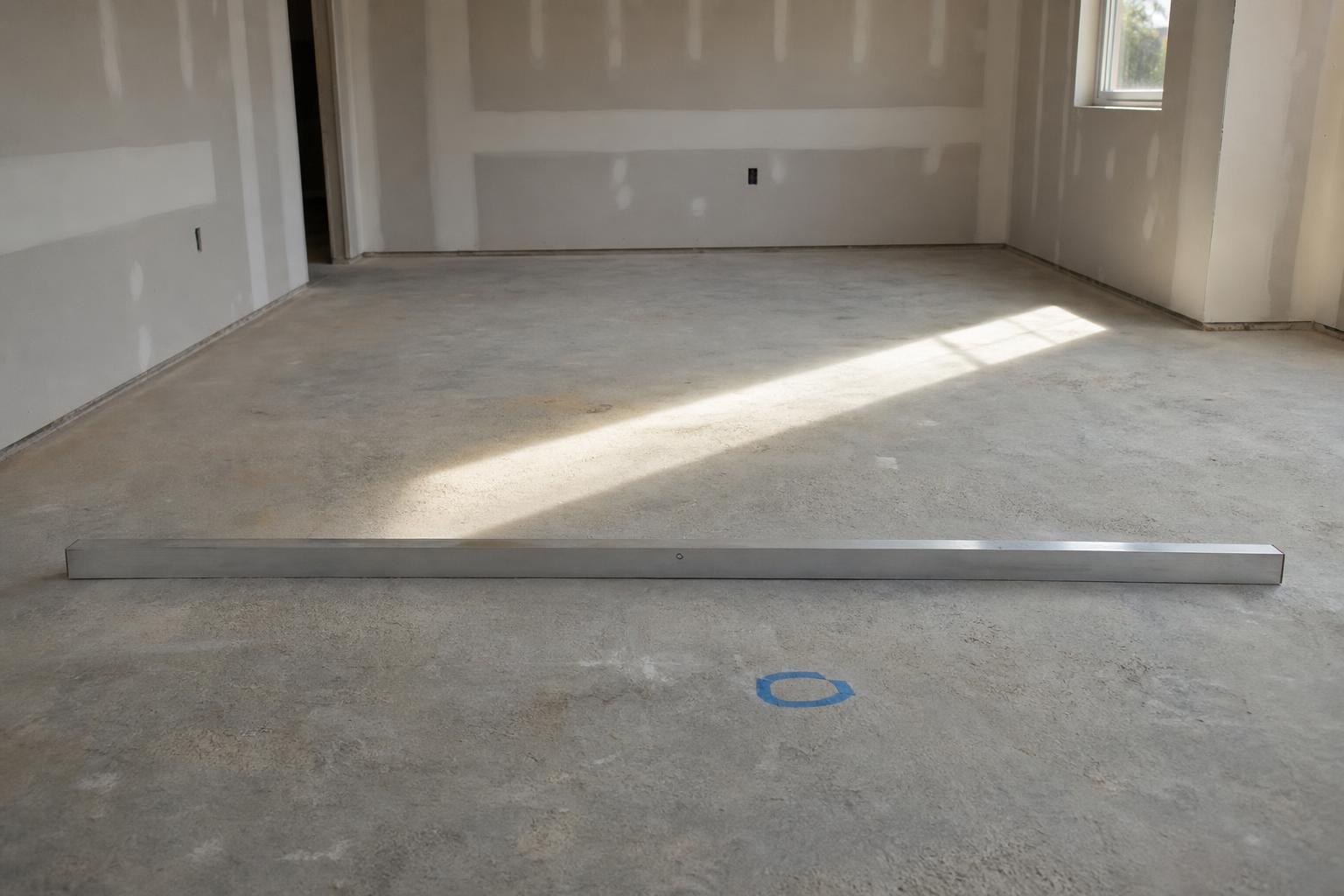
When a slab falls outside tolerance, we flatten high spots by grinding and fill low spots with self-leveling compound. Grinding creates fine dust, so OSHA silica dust rules apply, and dust control is part of the job, not an afterthought.
The surface also has to be clean. Sealers, waxes, oils, paint, and drywall compound on the slab can stop adhesives from bonding, and the slab should be sound, without cracks, loose areas, or hollow spots. In remodels we often uncover old adhesive or paint splatter from a previous floor, and all of it has to be dealt with first.
For wood, the NWFA also strongly recommends a vapor retarding membrane with a low perm rating, such as polyethylene film. Whether a membrane is needed, and which kind, depends on the floor, so we follow the flooring manufacturer’s written instructions on each project in Estero, Cape Coral, or anywhere else we build.
Tile and Finished Flooring Over a Tested Slab
Once the slab is tested, flat, and clean, the finished floor goes down with far fewer surprises. Porcelain tile is generally the most forgiving choice for our slabs, but large-format plank tile is the least forgiving about flatness, because long edges telegraph every dip and rise in the concrete below.
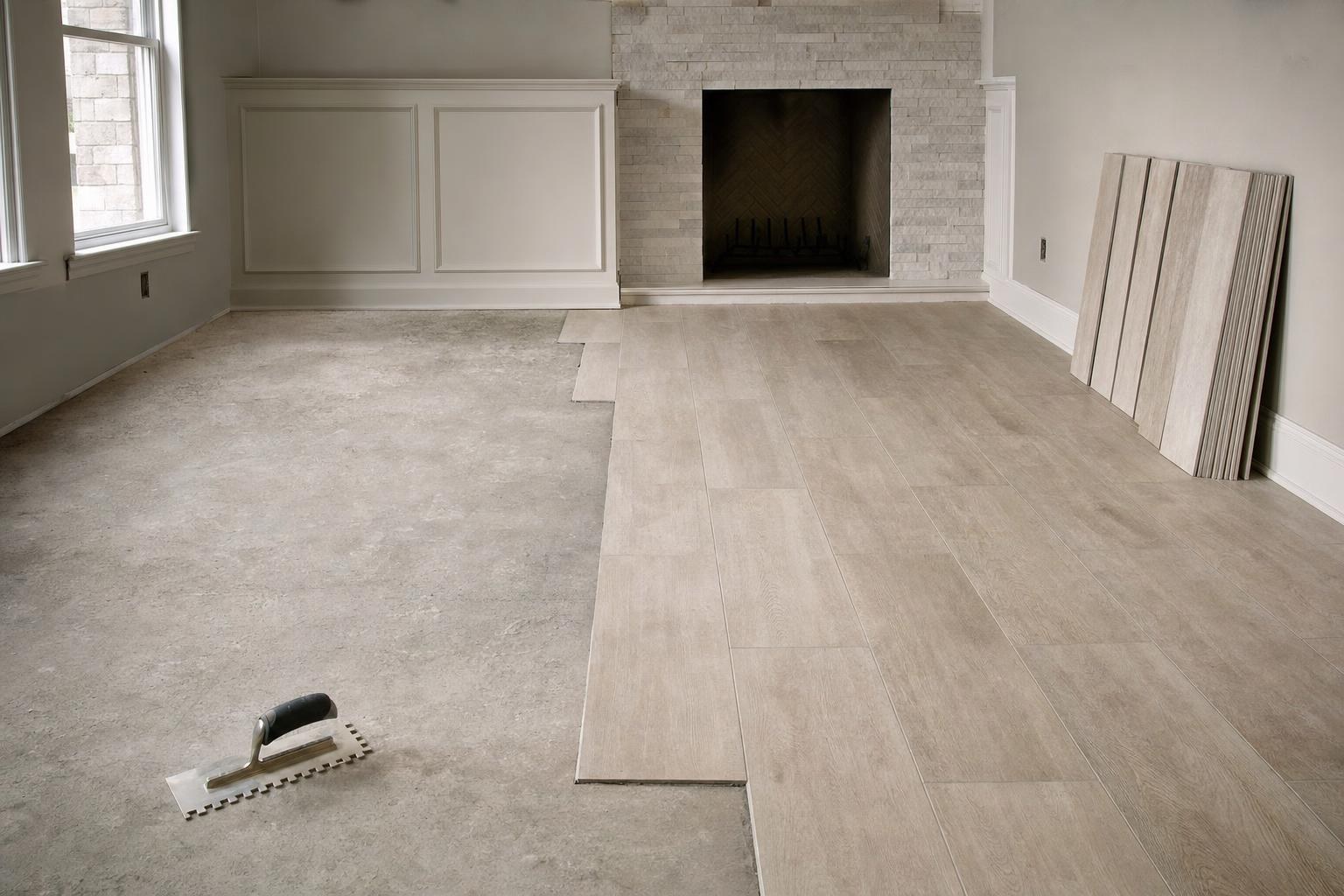
For wood and vinyl, we match the adhesive, underlayment, and moisture barrier to the manufacturer’s instructions on that exact product. That is how a floor is set up to stay tight through a wet August and a dry February, and it is why we never treat flooring as a last-day detail. You can see how we approach the full scope on our flooring installation page.
If you are replacing floors across several rooms, it helps to plan where different materials meet. We cover that in our post on flooring transitions in Cape Coral whole-home remodels, and our post on planning a flooring replacement in Punta Gorda walks through the order of the work.
What to Do If the Readings Come Back High
A high reading is not a disaster. It means you get to make a decision before the floor is installed instead of after. There are usually three routes: wait and retest, use a moisture-mitigation product or membrane that the flooring manufacturer specifies, or choose a different floor that tolerates the slab better.
Waiting often makes sense after a rainy stretch or after a closed-up house has had its air conditioning running for a while. Only use a mitigation product if the flooring manufacturer names it for your floor, because one that is not approved can create new problems. If readings stay high, we look for the source, such as grading that sends water toward the foundation, a leaking line, or irrigation spraying the wall.
Frequently Asked Questions
Do I need concrete moisture testing before installing tile?
Tile is more forgiving of moisture than wood or vinyl, but you should still check the tile and setting material manufacturer’s instructions. A flat slab matters even more for tile, because an uneven surface leads to lippage and cracked grout lines.
Can I test my slab myself?
You can try the plastic sheet check or a basic meter to spot an obvious problem, but neither replaces the test your flooring manufacturer requires. For a wood or vinyl floor, ask for the specific method and limit in writing before you order material.
Does the time of year affect the results?
It can. Slab readings may run higher after heavy rain or in a house that has been closed up with the air conditioning off, so the home should be at normal living conditions when the test is done. If the readings look off, it is reasonable to wait and retest.
Will a vapor barrier solve a wet slab?
Not automatically. A membrane helps manage vapor, but manufacturers set limits on how much moisture a given system can handle, so follow the flooring manufacturer’s instructions and do not assume a membrane fixes a high reading.
Planning new floors? Start with the slab. Call us at (239) 771-2855 to schedule a showroom visit at 11751 Metro Pkwy in Fort Myers or to request an estimate, and read more about our flooring installation services. We are a licensed Florida general contractor (CBC1268590).
We Serve Southwest Florida
Alliance Construction provides remodeling services in Cape Coral, Naples, Bonita Springs, Estero, North Fort Myers, and Punta Gorda. View all services →