
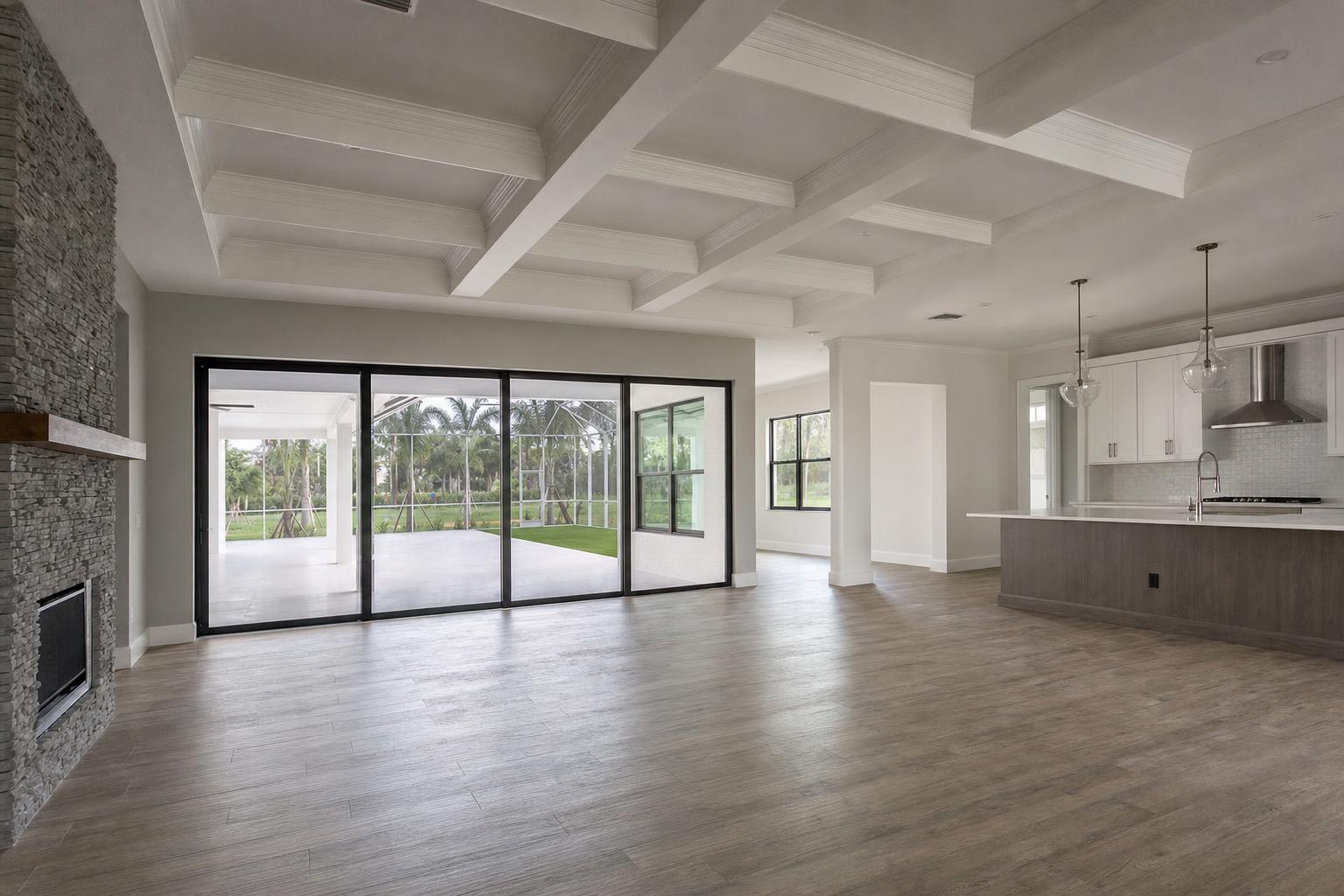
A well-planned coffered ceiling bonita springs design can change the feel of a room without changing its footprint. In many Bonita Springs homes, the ceiling is a large blank surface that has more potential than homeowners first realize. Coffered ceilings add shape, shadow lines, and a finished custom look, but they also need careful planning around lighting, air vents, ceiling height, and trim details. In Southwest Florida, those choices should also work with open floor plans, bright daylight, and the clean finishes many seasonal and full-time residents prefer. Before you choose beam sizes or paint colors, it helps to understand what makes a coffered ceiling look balanced and built for the space.
Choose a coffered ceiling layout that fits the room, not just the idea
The best coffered ceilings start with the room’s proportions. A pattern that looks great online can feel cramped or oddly scaled once it is installed in a Bonita Springs great room, kitchen, or primary bedroom. The goal is to make the ceiling look intentional from every main viewing angle.
Match the grid to the room shape
Square or nearly square rooms usually work well with evenly sized coffers. Long rectangular rooms often look better with a layout that follows the room’s length instead of forcing perfect squares. In open living areas, the coffer pattern may also need to line up with a kitchen island, dining table, fireplace wall, or large sliding glass doors.
Keep beam spacing visually comfortable
If the coffers are too small, the ceiling can feel busy. If they are too large, the design may lose the layered look that makes a coffered ceiling special. A good plan considers the beam width, the size of each recessed panel, and how the pattern reads from the entry, seating area, and adjacent rooms.
Work from the room center, then adjust for edges
One of the smartest steps is centering the pattern where the eye naturally lands, then adjusting border sizes at the perimeter. That often creates a cleaner result than trying to keep every opening identical. This matters even more in homes with open floor plans, where the ceiling detail has to look balanced from several directions at once.
For larger updates that tie the ceiling into the rest of the home, it helps to view it as part of a broader home renovation plan rather than a stand-alone detail.
Plan beam depth and ceiling height for a true coffered ceiling Bonita Springs look
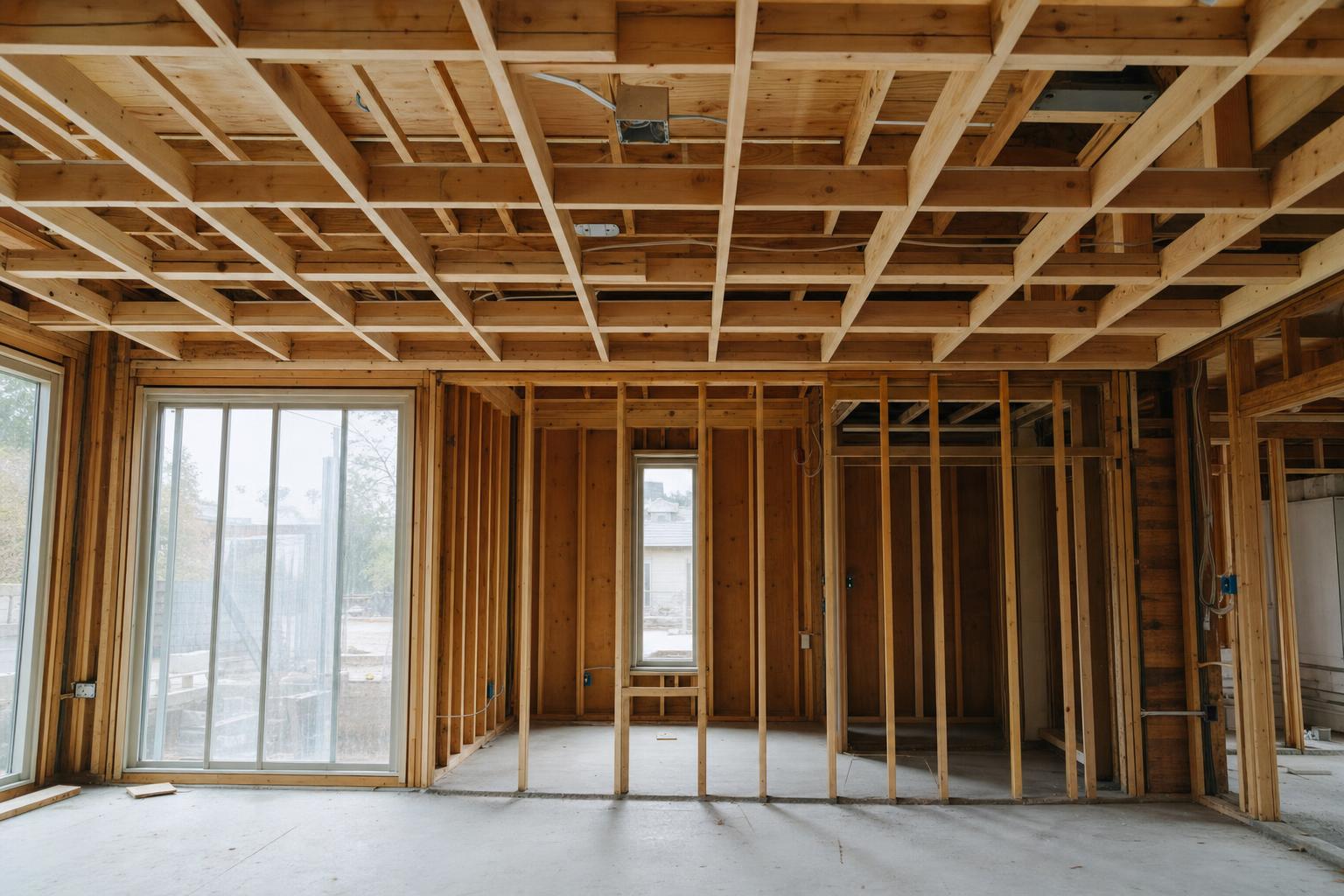
Beam depth is where many homeowners either get the dramatic look they want or end up with something flatter than expected. In Bonita Springs homes, the existing ceiling height sets the limits. A coffered design needs enough relief to create contrast, but not so much that the ceiling feels lower or heavy.
Shallow details create a subtle effect
On standard ceiling heights, a shallower beam profile can still add style without making the room feel compressed. This approach works well when the goal is refinement rather than bold architecture. It is also useful where air diffusers, recessed lights, or sprinkler heads leave limited room for deeper framing.
Higher ceilings allow stronger shadow lines
Rooms with taller ceilings can support deeper beams and more pronounced panel recesses. This is where a coffered ceiling often becomes a focal point. The deeper the elements, the more important it is to keep the proportions disciplined. Wide beams paired with small panels can feel oversized, while narrow beams in a very large room may disappear visually.
Use trim profiles that match the depth
Crown molding, panel trim, and beam edge details should support the overall scale. Delicate trim can look lost on large beams. Heavy trim can make a modest ceiling feel crowded. In many Southwest Florida interiors, simple trim profiles with crisp lines fit well with coastal, transitional, and contemporary styles.
If your home in Bonita Springs is already undergoing updates, a contractor can often coordinate ceiling details with wall finishes, flooring, and built-ins through a wider Bonita Springs remodeling project.
Coordinate lighting, HVAC, and ceiling obstacles before framing begins
A coffered ceiling should look clean when finished, but that clean look depends on solving conflicts early. Light fixtures, supply vents, return grilles, speakers, smoke detectors, and access panels can all affect the layout. It is much easier to shift a pattern on paper than after beams are built.
Map every ceiling item first
Before finalizing the grid, mark the location of recessed lights, pendants, chandeliers, diffusers, returns, and any life-safety devices. In some homes, one vent or return placed near the room center can throw off the whole pattern if it is not addressed early. A layout can often be adjusted so those items land neatly within panels or align along beam lines.
Think about air flow, not just appearance
Southwest Florida homes rely heavily on air conditioning for comfort and humidity control. A coffered ceiling should not crowd vents or reduce system performance by placing trim and framing where air needs to move freely. Keeping registers functional and visually integrated is part of good design, not a compromise.
Layer light for function and effect
Many coffered ceilings look best with more than one kind of light. Recessed fixtures can provide general illumination. A central chandelier or pendant can define the room. Accent lighting can bring out beam lines and panel depth. In media rooms or dining spaces, dimming controls can also make the ceiling detail more noticeable at night.
For trade and finish guidance tied to codes and standards, see the Association of the Wall and Ceiling Industry standards resources.
Select materials and finishes that hold up visually in bright Bonita Springs interiors
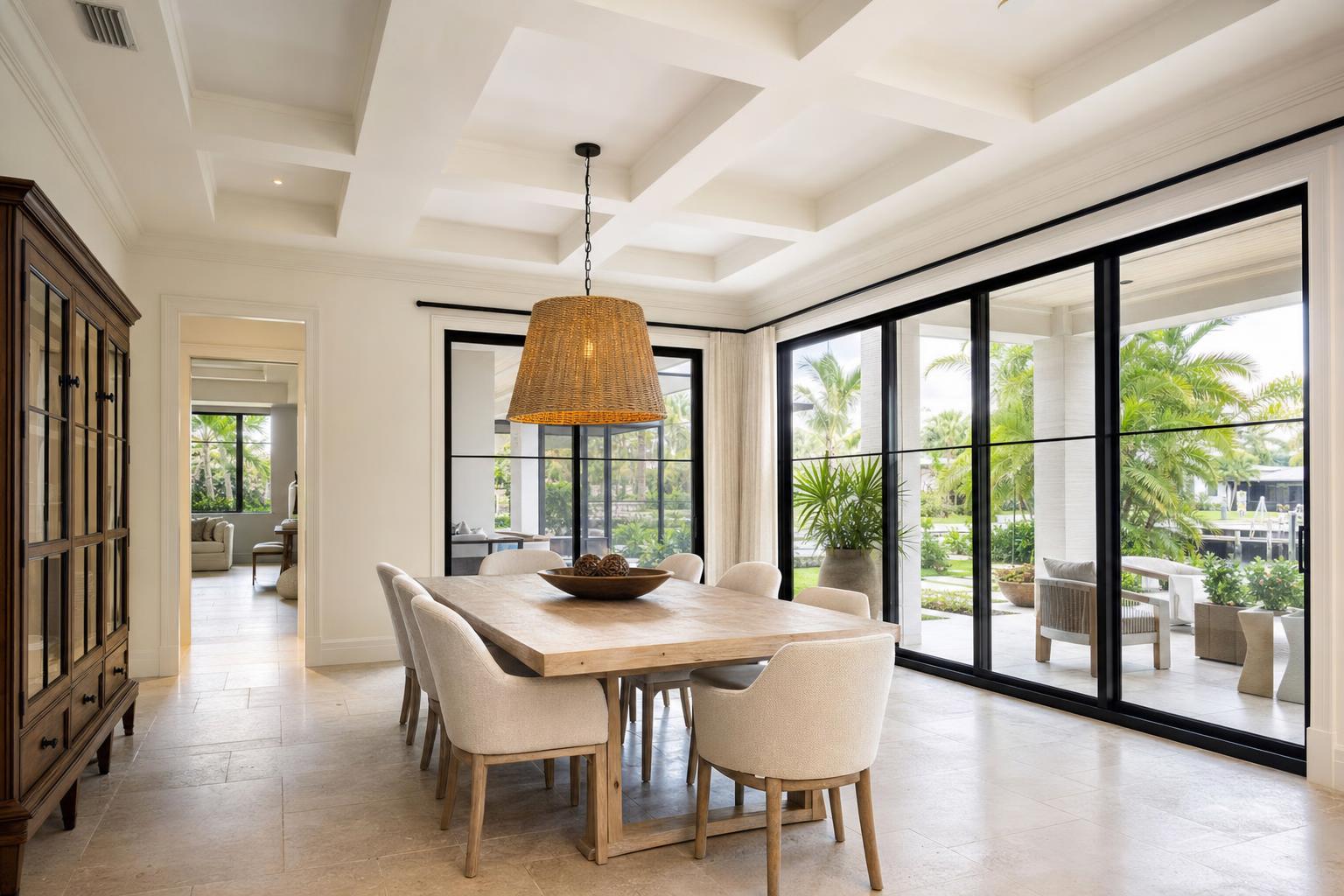
Material choice affects both the final look and the quality of the finish. Most homeowners focus first on the pattern, but the paint grade, trim joints, and surface smoothness are what people notice up close. In a bright Bonita Springs home with large windows and strong natural light, flaws can show quickly.
Paint-grade versus stain-grade construction
Paint-grade coffered ceilings are common because they work with many home styles and allow crisp, uniform color. Stain-grade wood can be striking, but it requires more careful material selection and consistent grain appearance. A stained finish often highlights every variation, which can be beautiful in the right room but less forgiving than paint.
Smooth surfaces reveal the craftsmanship
Ceilings catch side light from windows and glass doors. That means uneven seams, wavy trim, or rough patching can become visible, especially in the morning and late afternoon. Good prep and finish work matter as much as the framing pattern itself. If the room also includes wall updates, coordinated painting and finish work can help the whole space feel unified.
Color choices change the effect
A ceiling painted all one color often creates a softer, more modern look. Using a slightly different color on the beams or the recessed panels can make the pattern stand out more. White and off-white remain popular, but warmer neutrals can reduce glare in sunlit rooms and pair well with natural flooring, woven textures, and light cabinetry.
Build the ceiling detail into the remodel sequence and permit planning
Coffered ceilings often seem like finish carpentry, but they affect several parts of a remodel. Sequencing matters. If the room also needs electrical work, HVAC adjustments, patching, or new finishes, those steps should be planned in the right order to avoid rework and delays.
Start with existing conditions
Older repairs, uneven framing, hidden mechanical lines, and prior ceiling textures can all affect the scope. A contractor should check the structure above, confirm what needs to stay accessible, and determine whether the new detail will be surface-applied or require deeper framing changes.
Coordinate trades before trim goes in
Electricians and HVAC crews may need to move fixtures, add new wiring, or shift ceiling components before beams and trim are installed. Once the finish materials go in, changes are more disruptive. In occupied homes, this sequence also helps control dust and reduces the risk of damage to finished surfaces.
Expect permitting when the work reaches beyond decorative trim
Some ceiling projects are mainly finish work. Others involve electrical changes or other work that can trigger permitting and inspections. That is one reason homeowners should discuss the whole scope early rather than treating the coffered ceiling as a late add-on. If you are ready to discuss your space, visit the contact page to request project details and next steps.
Frequently asked questions about coffered ceilings
Will a coffered ceiling make my room look smaller?
It can if the beams are too deep or the grid is too tight for the room size. A well-scaled design usually adds depth and interest without making the room feel closed in. The key is matching beam width, recess size, and trim profile to the existing ceiling height and the room’s proportions.
Are coffered ceilings a good fit for open-concept living areas?
Yes, if the layout is planned around the full room and not just one section of it. In open spaces, the ceiling pattern should relate to major features such as islands, dining areas, seating groups, and large doors or windows. A centered, balanced plan usually works better than a rigid grid forced across every zone.
Can recessed lighting and air vents still work with a coffered ceiling?
Usually, yes. The layout simply needs to account for those items before construction begins. Lights, supply vents, return grilles, and detectors should be mapped early so they land in logical positions. This step is especially important in Southwest Florida homes, where air conditioning performance and clean ceiling lines both matter.
What finish looks most natural in a Bonita Springs home?
Many homeowners choose a paint-grade finish in white or a soft neutral because it reflects light well and suits coastal and transitional interiors. A stained wood ceiling can also look beautiful, but it is less forgiving and creates a stronger visual statement. The best choice depends on the room style, daylight level, and adjacent finishes.
Alliance Construction & Renovation can help you plan a coffered ceiling bonita springs project that fits your room, finish goals, and remodel scope. Call (239) 771-2855 or request an estimate.
We Serve Southwest Florida
Alliance Construction provides remodeling services in Cape Coral, Naples, Bonita Springs, Estero, North Fort Myers, and Punta Gorda. View all services →