
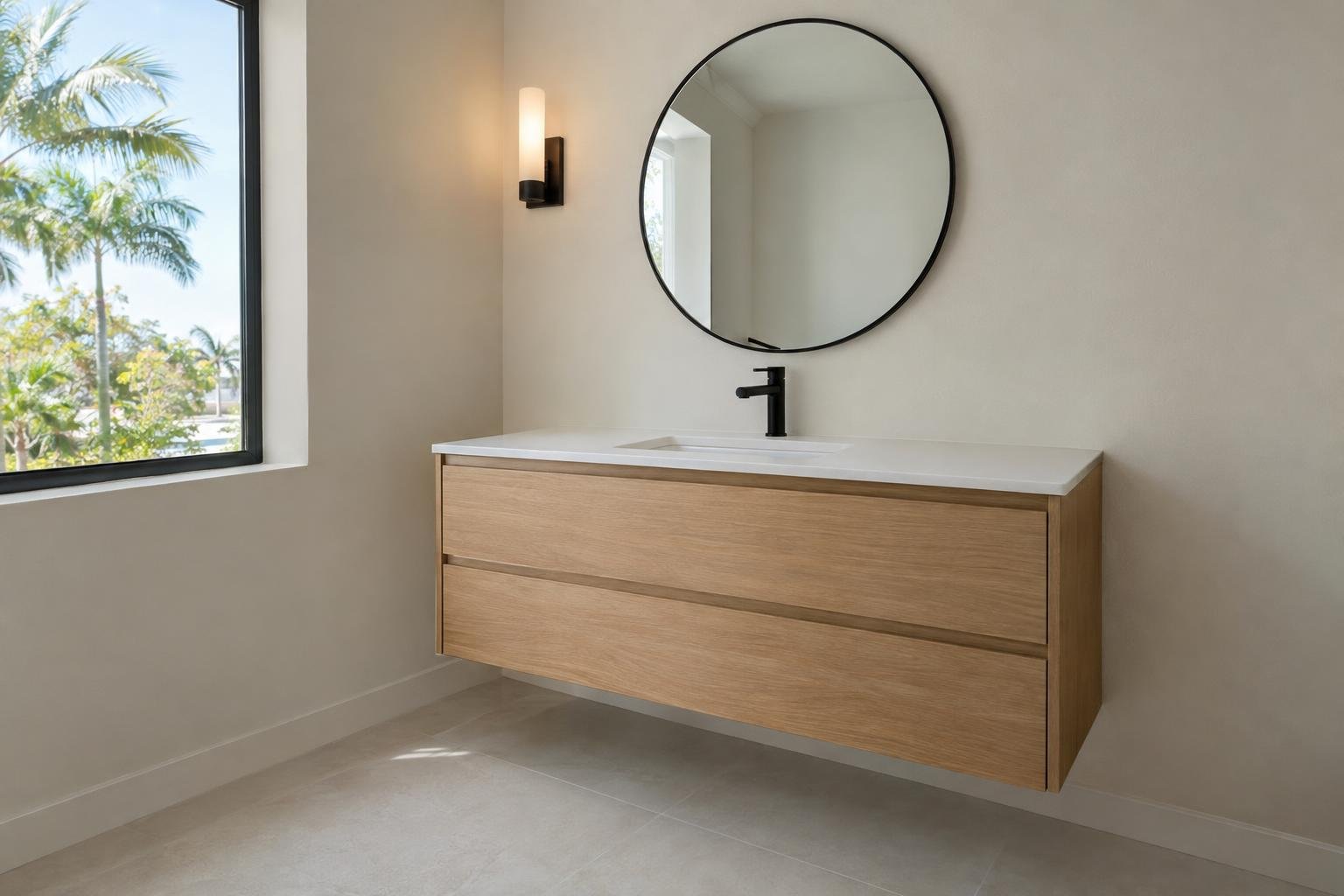
A floating vanity mounts to the wall with open space beneath it, while a traditional vanity rests on the floor on a cabinet base, legs, or a toe kick. Both can look beautiful, and both can work well in a Southwest Florida bathroom. The better choice depends on your wall construction, your plumbing, how you use the space, and how much storage you need. Here is how our team walks homeowners through the decision during a remodel. The images in this guide are illustrations of typical designs, not photos of Alliance projects.
What Separates a Floating Vanity From a Floor-Standing One
The difference is structural. A floor-standing vanity carries its weight on the floor, so the cabinet, countertop, and sink are supported from below. A wall-hung vanity transfers that load to the wall, which means the wall behind it has to be built to carry a cabinet, a stone or quartz top, a filled sink, and everything stored inside.
That single fact drives most of the other tradeoffs: where plumbing runs, how deep the cabinet can be, what the room feels like, and what the installation involves. Each is a good answer to a different set of conditions.
Wall Blocking and Plumbing Inside the Wall
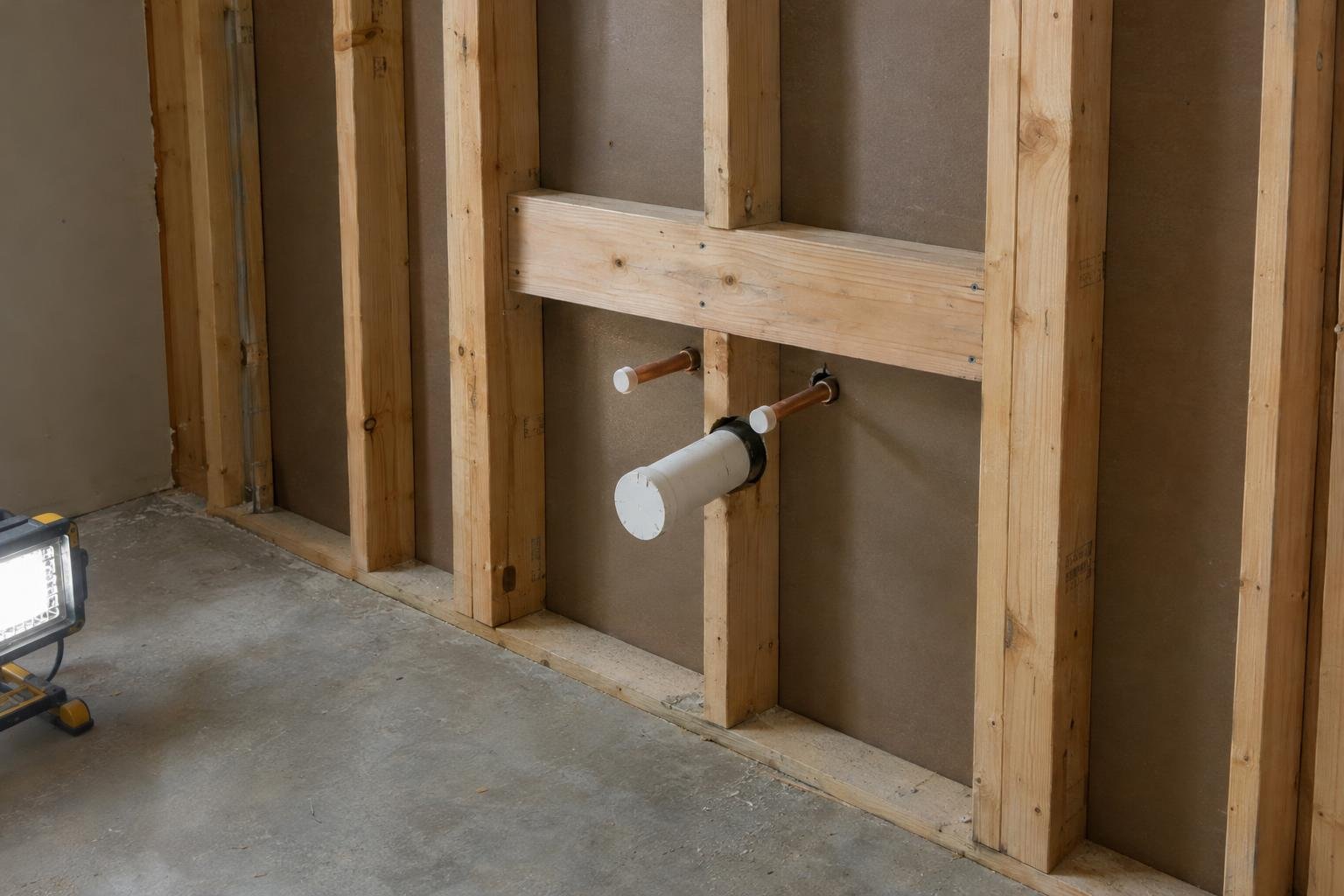
A floating vanity needs solid support, and that usually means blocking or reinforcement placed between the studs before the wall is closed. When a bathroom is opened up during a remodel, adding that support is straightforward. When the walls are already finished, it can mean opening drywall or tile to reach the framing. We check this early so the plan matches what is behind the wall.
Plumbing is the second consideration. With a floating vanity, the drain and supply lines are often routed through the wall and the trap may be visible beneath the cabinet unless it is concealed. With a floor-standing cabinet, the plumbing can often stay where it is, hidden inside the base. If you are moving a sink location for either style, a licensed plumber should handle the work, and your building department or contractor can tell you what permits may apply. Our bathroom remodeling team coordinates that sequence so the framing, plumbing, and finish work happen in the right order.
Storage: Drawers, Open Shelves, and Floor Space
Storage is where traditional vanities often have the advantage. A floor-standing base can use every inch from the countertop down, with deep drawers for daily items and room for stacked towels or baskets. Many homeowners find that a full-height cabinet holds more than a wall-hung unit of the same width.
A floating vanity can still be practical, especially with wide drawers that make the most of a shallower cabinet. The open space underneath can hold a basket or a stool, though it is not enclosed storage. If your household shares a bathroom and needs room for hair tools, cleaning supplies, and spare linens, we usually start by listing what must fit and then compare cabinet options against that list.
Cleaning Underneath and Day-to-Day Upkeep
One of the most common reasons people choose a floating vanity is cleaning. With open space below, a mop or robot vacuum can pass straight through, and there is no toe-kick corner collecting dust. The tradeoff is that the underside of the cabinet and the visible plumbing become part of the room’s appearance, so they need to look tidy.
Traditional vanities hide the floor beneath them, which means less to keep clean in plain sight, but the toe kick and the seam where it meets the floor can trap dirt and need occasional attention. Whichever style you choose, a quality sealed finish on the cabinet and countertop makes wipe-downs simple.
Mounting Height and Daily Reach
Height is another detail worth settling early. Wall-hung units can be mounted at whatever height suits the people using them, which is helpful for tall households or for anyone who prefers a more comfortable reach. Floor-standing cabinets usually come in standard heights, though a custom build can adjust that. Counter height, faucet reach, and mirror placement are worth confirming together so the finished sink area feels natural to use every day.
Humidity, Moisture, and Florida Bathrooms
Moisture is a real factor in our climate. Cabinets that sit directly on the floor can be exposed to splashes, spills, and any water that spreads across the floor, so the bottom edge needs good sealing. A wall-hung cabinet sits above the floor, which can help keep the base away from standing water and allows air to move beneath it.
Good ventilation matters more than the style of vanity. A properly sized exhaust fan, quick attention to leaks under the sink, and sealed cabinet interiors all help. The EPA’s guide to mold, moisture, and your home explains why controlling moisture is the most effective way to prevent problems. For finish choices that hold up in humid rooms, our article on bathroom vanity styles for Southwest Florida goes deeper.
Resale and Style Considerations
Many buyers respond to a bathroom that feels clean, bright, and well organized. A floating vanity often reads as modern and open, which suits contemporary and transitional homes. A traditional vanity can feel warmer and more substantial, and it fits a wide range of architecture, from classic coastal to updated Mediterranean styles.
For resale, the safest guidance is to choose the style that suits your home and is installed well. Solid support, a quality top, and consistent finishes matter more to most buyers than the label on the cabinet. If you are likely to sell in the near future, we are happy to talk through which choices tend to feel current without feeling trendy. Our project gallery shows how different finishes and layouts look in completed homes.
Small Baths Versus Large Baths
In a small bathroom, a floating vanity can make the room feel larger because more of the floor is visible. A shallow depth can also help in a tight layout, though it may reduce storage. In a hall bath or powder room, that open look is often worth the tradeoff.
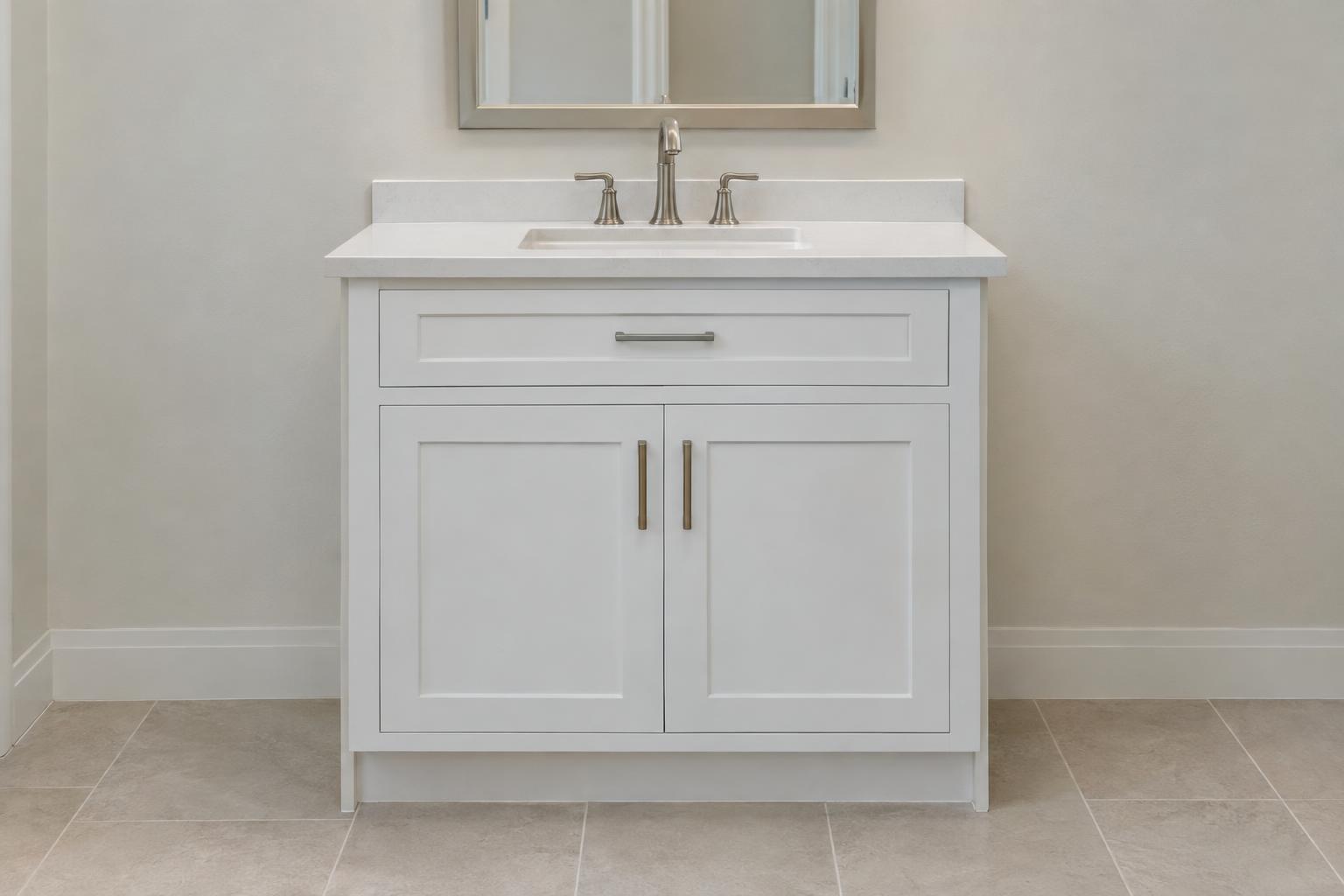
In a large primary bath, a long floor-standing double vanity gives you generous drawers and counter space for two people. A wall-hung double vanity can work too, but the wall has to support a long, heavy run. The vanity pictured above is a floor-standing cabinet with doors and a drawer, a good example of how a traditional base sits on its own toe kick.
Frequently Asked Questions
Is a floating vanity harder to install than a traditional one?
It can be, because the wall needs to be reinforced to carry the cabinet, top, and sink. The work is simpler when the wall is open during a remodel, and we plan for it before finishes go in.
Do floating vanities hold less than traditional vanities?
Often they do, since the space under the cabinet is open and the depth may be shallower. Wide, deep drawers can recover a good amount of storage, so compare the actual drawer layout rather than the style alone.
Are floating vanities a good idea in humid climates?
They can be, since the cabinet sits above the floor and air can move beneath it. Ventilation, sealed finishes, and prompt leak repair matter just as much in either style.
Which vanity style is better for resale?
It depends on the home. Buyers usually respond to a vanity that fits the home’s style, is well built, and is well maintained, so we recommend choosing for how your bathroom will be used.
If you are weighing a wall-hung vanity against a floor-standing one, we can help you compare the options for your specific bathroom. Call (239) 771-2855 to request an estimate, or see our bathroom remodeling services to learn how we work. We are a licensed Florida building contractor (CBC1268590).