
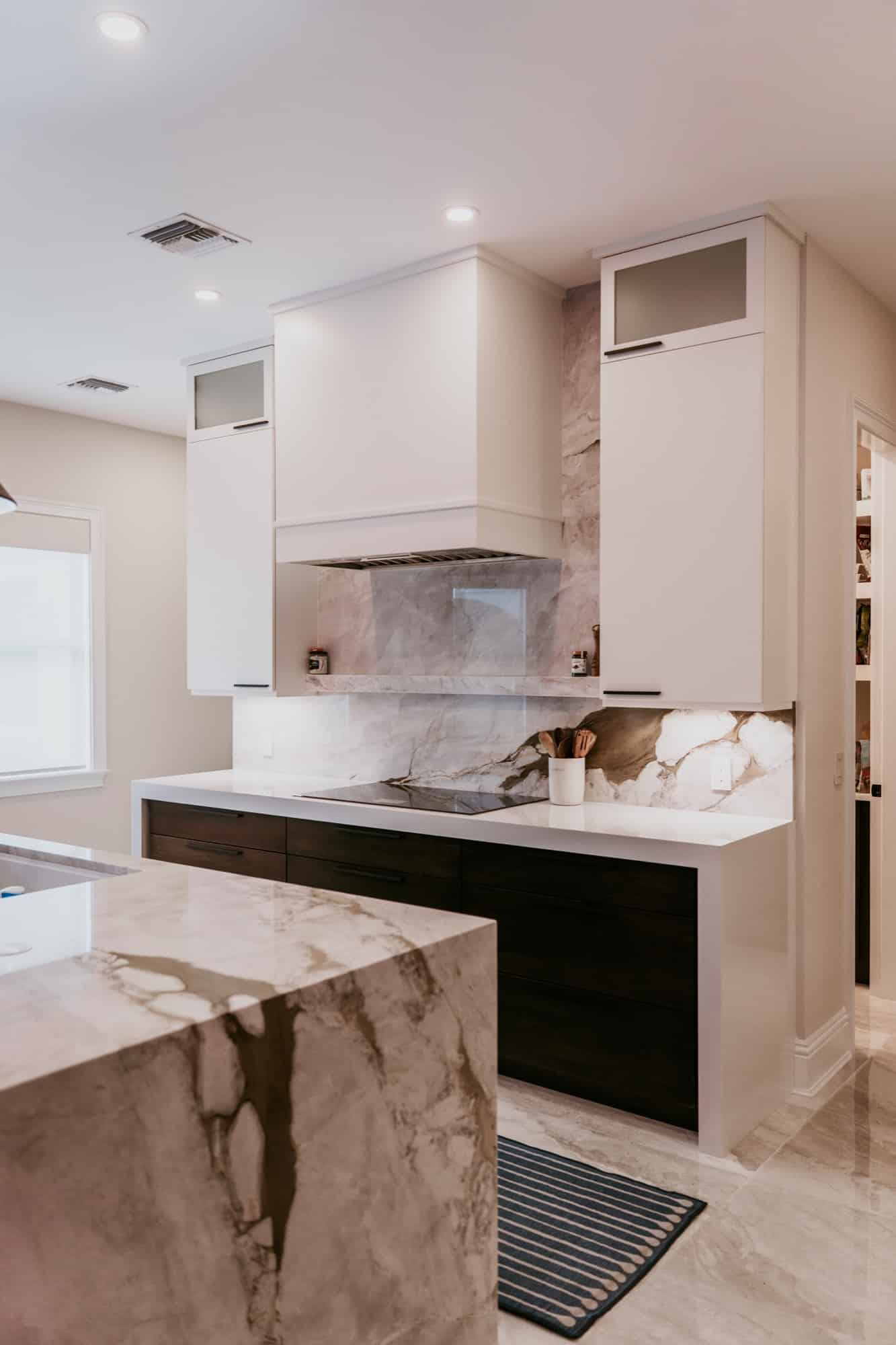
A kitchen can look polished on paper and still feel slightly off once the cabinets, backsplash, and appliances are in place. That usually happens when the hood area was treated as a separate feature instead of part of the full composition. Good range hood design ideas bring those pieces together. In Southwest Florida homes, where many kitchens are bright, open, and visible from living spaces, the hood often acts like a visual anchor. Its shape, finish, and cabinet relationship affect how settled the whole room feels. If you are planning a remodel in Fort Myers, Naples, Cape Coral, Estero, Bonita Springs, Punta Gorda, or North Fort Myers, it helps to choose the hood design early, not at the end.
Use the hood as the visual center of the cooking wall
The hood naturally pulls the eye. It sits at the middle of the range wall and often breaks up a long run of cabinets. If that center point looks too heavy, too small, or unrelated to the rest of the kitchen, the entire wall can feel unbalanced.
Pick a silhouette that matches the room’s style
A straight, boxy hood surround usually fits clean-lined kitchens with simple cabinet fronts and little ornament. A tapered surround feels more furniture-like and can soften a wall of cabinetry. A curved shape can add elegance, but it needs support from other details in the room so it does not look random.
Think about the kitchen from across the room, not only from the cooktop. In many Southwest Florida homes, the kitchen opens to the dining and living areas. A hood that looks great up close but too bulky from a distance can throw off the whole space.
Let the hood relate to nearby cabinet mass
If your upper cabinets are tall and wide, a very narrow decorative hood can look undersized. If the cabinets are light and minimal, an oversized hood wrap can dominate the wall. The goal is not perfect symmetry in every kitchen, but visual calm. The hood should feel intentional between the cabinets, not squeezed in or overbuilt.
During a kitchen remodeling project, it often helps to look at the full elevation of the cooking wall before final selections are ordered. That is when spacing, crown transitions, cabinet heights, and shelf placement are easiest to coordinate.
Make cabinet lines and range hood design ideas work together
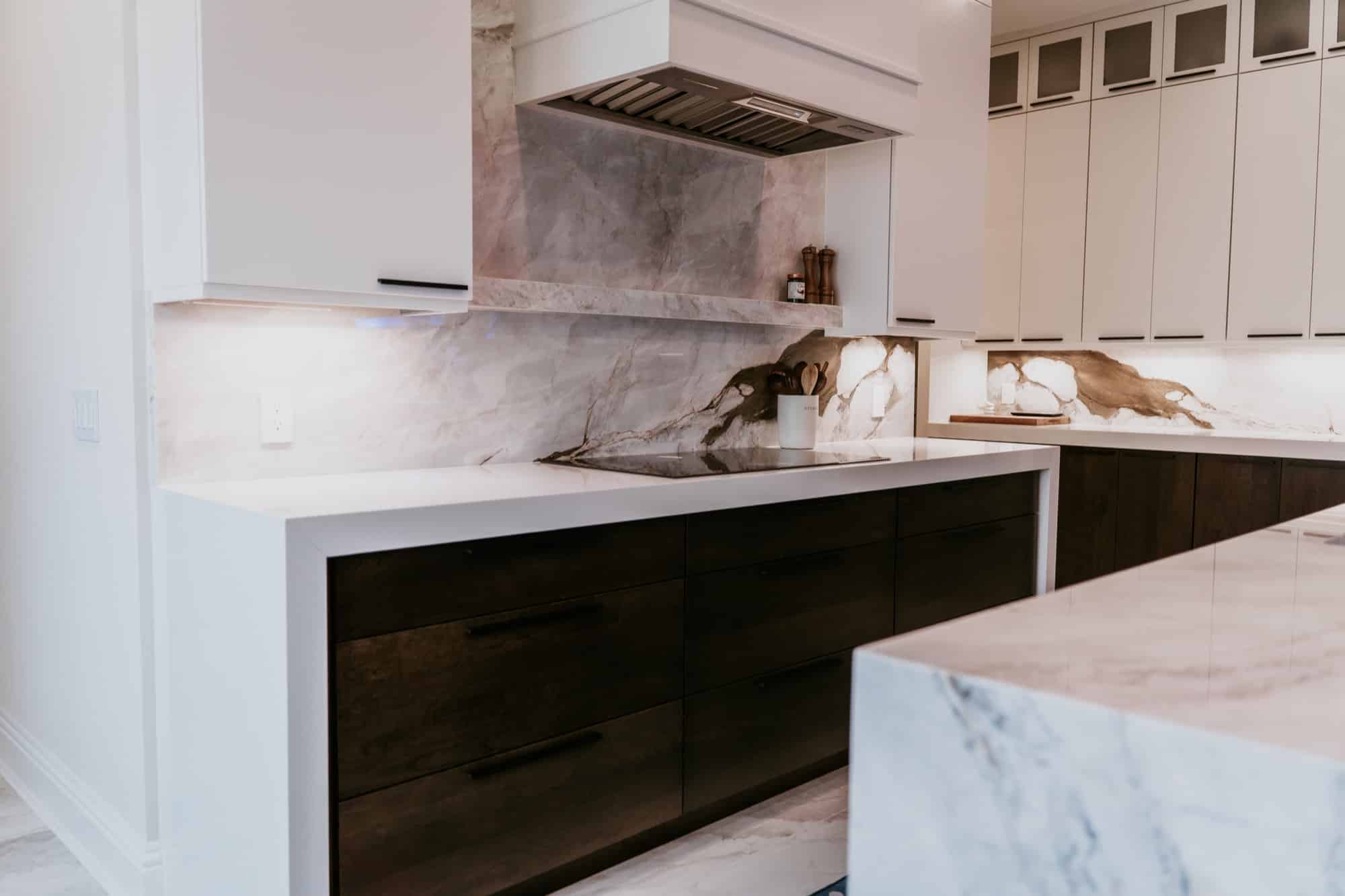
One of the easiest ways to create a cohesive kitchen is to treat the hood area as part of the cabinet design language. That does not mean the hood has to disappear. It means the lines around it should make sense with the doors, drawers, panels, and trim nearby.
Repeat shapes instead of mixing too many statements
If your cabinet doors have a slim, simple profile, the hood surround usually looks better with restrained detailing. If the cabinetry has a more classic frame and panel look, a hood with some depth and trim can fit naturally. Repeating one or two key shapes is often enough to make the kitchen feel unified.
Fabuwood’s Allure specification book shows several decorative hood shapes alongside its cabinet styles. Comparing those details is helpful when selecting a coordinated design. A hood does not have to copy every cabinet detail, but it should speak the same design language so the cooking wall reads as one composition.
Decide how the hood meets the upper cabinets
Some kitchens look best when the hood is framed tightly by cabinets. Others benefit from a little breathing room, especially if the wall needs to feel lighter. You might use narrow filler areas, open shelving, or a visible backsplash return to keep the center from feeling crowded.
If the upper cabinets reach the ceiling, the top of the hood surround should connect cleanly into crown or another finishing detail. If there is a gap or awkward transition, the eye will go straight to it. Those small alignment choices can make a finished kitchen look custom rather than pieced together.
When homeowners are selecting custom cabinetry, this is often where design coordination pays off. Cabinet depth, trim thickness, and door style all influence which decorative hood approach feels natural in the room.
Choose a finish that supports the backsplash and countertop, not just the appliance color
Many homeowners begin with stainless appliances and assume the hood should match them exactly. Sometimes that works. Sometimes it makes the cooking wall feel too metallic or too cold. Finish selection should consider the whole field behind and around the hood.
Painted hood surrounds can calm a busy wall
If your backsplash has movement, variation, or a handmade surface, a painted hood surround can bring order to the wall. It gives the eye a solid shape to rest on. This is especially useful in bright coastal-style kitchens, where light finishes and reflective surfaces can quickly compete with each other.
Painted hoods also connect well with painted upper cabinets. In open kitchens, that can make the room feel more settled from different angles. White, warm off-white, and soft neutral finishes are common choices because they blend well with natural light.
Wood tones add warmth, but they need repetition
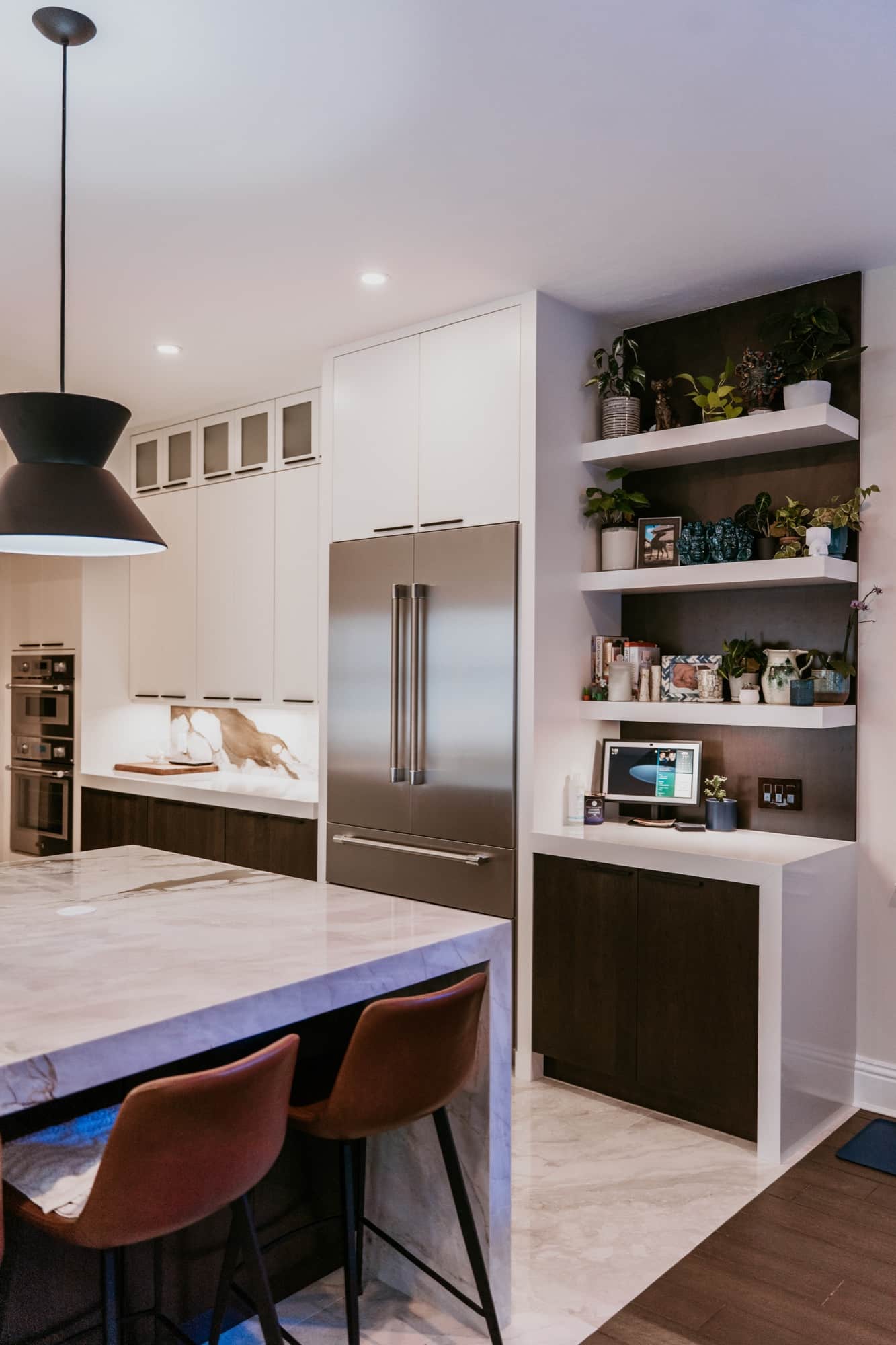
A wood hood can be beautiful, especially when a kitchen needs warmth or contrast. The key is repetition. If the hood is the only wood feature on that side of the room, it may look isolated. If the wood tone appears again in the island, floating shelves, beams, or accent cabinetry, the design usually feels more complete.
Decorative surround versus functional insert
This point is easy to miss during planning. The visible hood surround is the finished exterior. Inside it, there is often a separate functional insert or liner chosen to match the hood manufacturer’s requirements. The decorative portion affects style. The insert affects what must fit inside that shell. Your installer should verify manufacturer requirements before the surround is finalized so the finished look and the working components are coordinated.
Balance the hood with backsplash coverage, shelving, and nearby storage
The area around the hood can either feel complete or look like several unrelated ideas meeting in the middle. Backsplash material, shelf placement, and cabinet interruptions all affect that result.
Decide whether the backsplash is background or feature
If you want the hood to stand out, the backsplash usually works best as a supporting surface. If you want the backsplash to become the feature, the hood may need a quieter finish and simpler shape. Trying to make both the star can leave the wall feeling busy.
Full-height backsplash installations often pair well with simple hood forms because the wall surface already provides visual interest. If the backsplash is understated, the hood can carry more of the design weight with a richer shape or stronger finish contrast.
Use shelves carefully beside a hood
Floating shelves can lighten the wall and keep the kitchen from feeling boxed in. They also expose whatever sits on them. Near a cooking area, that means styling needs to stay simple and practical. If shelves are too deep visually or loaded with decor, the hood area can start to feel cluttered.
A cabinet on one side and shelves on the other can work, but only if the imbalance looks intentional. The hood then becomes the element that holds the composition together. This kind of layout often benefits from a clear plan for what will be stored, displayed, and cleaned regularly.
Think about sightlines from adjoining rooms
In many local homes, kitchen walls are visible from the foyer, great room, or lanai doors. That means the hood wall should be considered from several directions. A backsplash pattern that looks strong straight on may feel overwhelming from a distance. A large hood form that feels dramatic in the kitchen may seem top-heavy from the living room. Looking at renderings or elevations from multiple viewpoints can prevent that mismatch.
Plan for easy cleaning so the design still looks good after busy use
A hood can be striking on installation day and frustrating a few months later if its finish, trim profile, or shelf details collect grime in hard-to-reach places. Good design is not only about appearance. It should stay manageable in daily life.
Simpler profiles are easier to maintain
Deep ledges, rough textures, ornate trim stacks, and small crevices can trap grease and dust. In Southwest Florida, humidity can make surface buildup feel sticky faster, especially in homes that sit closed up part of the year. A simpler hood shape with smoother transitions is often easier to wipe down and keep looking fresh.
Consider nearby surfaces too
Cleaning does not stop at the hood itself. Think about the backsplash joints, the underside of adjacent shelves, and trim corners where the hood meets cabinets. If two finishes meet in a way that creates tight grooves or exposed edges, that area may become a maintenance annoyance.
This does not mean every hood should be plain. It means decorative choices should fit your habits. If you cook often, or if the home is used seasonally and you want reopening to be easier, low-fuss surfaces are worth favoring.
Choose a design your household will actually enjoy living with
Some homeowners love a dramatic statement hood and are happy to maintain it. Others prefer a quieter, built-in look that blends into the cabinetry. Neither is more correct. The best choice is the one that still feels appealing after the kitchen is used every day, not only when it is photographed empty and spotless.
Frequently asked questions about range hood design ideas
Should a range hood match the cabinets exactly?
Not always. A hood can match the cabinet color and style closely, or it can act as a gentle accent. The better question is whether it relates to the cabinets in a clear way. Repeated shapes, trim language, or finish tones usually matter more than an exact match.
Is a wood hood a good choice in a bright Southwest Florida kitchen?
Yes, if the wood tone appears elsewhere in the room so it does not feel isolated. Wood can warm up a white or neutral kitchen and keep it from feeling flat. In bright spaces, softer wood finishes often integrate more easily than very dark or very orange tones.
Can floating shelves work beside a range hood?
They can, especially when the goal is to lighten the upper wall. The shelves should feel proportionate to the hood and should not overcrowd the cooking area visually. It helps to keep shelf styling practical and restrained so the hood remains part of a composed wall, not a cluttered one.
When should the hood design be selected during a remodel?
Earlier than many homeowners expect. The hood affects cabinet layout, trim transitions, backsplash planning, and the look of the full cooking wall. Choosing the style during the design phase usually leads to cleaner lines and fewer compromises than waiting until cabinetry and wall finishes are already set.
Alliance Construction & Renovation helps homeowners refine range hood design ideas so the kitchen feels cohesive from cabinets to backsplash to finish details. If you are planning a remodel in Southwest Florida, call (239) 771-2855 or request an estimate.