
If you are planning a kitchen remodel, the single vs double bowl kitchen sink decision affects your routine more than many finish selections. You use the sink for rinsing produce, filling pots, washing sheet pans, soaking utensils, and clearing dishes after meals. In Southwest Florida homes, that daily use often has to work for busy families, seasonal residents, and open kitchens where the sink is always visible. A bowl layout that looks good in a showroom can feel awkward once your faucet, cookware, and cleanup habits enter the picture. The better approach is simple: compare how you actually cook and clean, then choose the basin layout that supports those tasks.
How a single vs double bowl kitchen sink changes the way you work
The biggest difference is not style. It is workflow. A sink can make cleanup smoother, or it can force you to juggle dishes and pans in too little space.
When a single bowl makes everyday cleanup easier
A single bowl sink gives you one open basin. That works well if you often wash large sauté pans, baking sheets, cutting boards, roasting pans, or oversized mixing bowls. Instead of angling cookware around a center divider, you can lay it flatter and rinse with less splashing.
Single bowl layouts also suit homeowners who use a dishwasher for most plates and glasses. In that setup, the sink becomes more of a staging and rinsing station than a hand-washing station. One large basin can feel simpler and less cramped.
Another plus is flexibility. You can set a colander, wash produce, stack a few dishes, or soak one large item without deciding which side of the sink should handle each task.
When a double bowl feels more organized
A double bowl sink separates jobs. One side can hold dirty dishes while the other remains open for rinsing vegetables or filling a pot. If you hand-wash often, that split can feel cleaner and more orderly.
Many homeowners also like a double bowl because it creates a natural system. Wash on one side, rinse on the other. Or keep one side available for food prep while coffee mugs and utensils sit out of the way in the second basin.
This layout can be especially useful in homes where more than one person uses the kitchen at the same time. One person can prep dinner while another clears dishes without taking over the entire sink.
Dishwasher habits should guide the choice
Think honestly about what happens after meals. If dishes usually go straight into the dishwasher, a single bowl often makes sense. If you regularly hand-wash delicate glassware, knives, pans, or baby items, a double bowl may better fit your routine.
The sink should support your habits, not an ideal version of them. That is one reason sink selection belongs early in a kitchen remodeling plan, while cabinet sizes, countertop cutouts, and faucet placement are still easy to coordinate.
Measure your real cookware before picking a sink
Many sink regrets start with a simple mistake: choosing by appearance instead of by what you wash.
Test your largest items first
Before you choose a bowl layout, pull out the cookware that gives you the most trouble now. That might be a stock pot, air fryer basket, slow cooker insert, roasting pan, sheet pan, or oversized skillet. Measure those items and compare them to the usable basin space, not just the overall sink size.
A center divider in a double bowl can block wide cookware, even when the sink itself seems large on paper. A single bowl may solve that problem immediately. On the other hand, if your largest pieces are manageable and you value separation more, a double bowl may still be the better fit.
Check sink cabinet compatibility early
The base cabinet below the sink limits your options. Bowl width, bowl depth, divider style, and mounting method all need to fit the cabinet and work with plumbing lines. In remodels, existing drain locations can also affect how easily a new sink layout goes in.
This is one reason homeowners often select the sink alongside their custom cabinetry. Cabinet layout, sink size, trash pullout placement, and dishwasher location all influence one another. A sink that looks ideal by itself may crowd the cabinet interior or reduce useful storage below.
Do not overlook faucet reach and accessories
A sink and faucet should function as one system. If you choose a wide single bowl, make sure the faucet reaches the full basin comfortably. If you prefer a double bowl, think about where the faucet stream lands and whether it serves both sides well.
Accessories can also shift the decision. Bottom grids, fitted cutting boards, drying racks, and colanders often work differently in a single basin than in a divided one. If you want sink accessories to do part of your prep and cleanup work, review those details before finalizing the sink.
Divider styles and drain placement can change the whole experience
“Single” and “double” are only the starting point. The divider height and drain layout can make one sink feel far more useful than another.
Full divider versus low divider
A traditional double bowl has a full-height divider that fully separates the two basins. This creates clear task zones, but it also limits space for washing wide items. A low-divider sink gives some of that separation while leaving more room to maneuver large cookware across both sides.
According to the Kohler sink bowl configuration guide, single bowls provide uninterrupted basin space, while low-divider options offer divided bowls with better accommodation for larger cookware. That makes low-divider designs worth a close look if you want separation without giving up too much usable washing area.
Offset bowls and unequal bowl sizes
Not every double bowl is split evenly. Some sinks use one larger bowl and one smaller bowl. That can be a smart middle ground if you like keeping prep and cleanup apart but still want one side large enough for pans and mixing bowls.
An offset layout can also support specific routines. You might use the larger side for washing and the smaller side for garbage disposal tasks, drink glasses, or produce prep. Just be sure the smaller bowl will still be useful for your household instead of becoming wasted space.
Drain location affects usable floor space
Drain placement does not get enough attention. A centered drain can be fine, but rear or offset drain locations often leave more flat basin floor for stacking dishes or setting a pot down. They may also help the sink feel less crowded during cleanup.
Below the sink, drain placement can change how much room remains for storage, water filters, or pullout accessories. Ask to see how the sink choice works with the plumbing area inside the cabinet, especially if you want organized storage below.
What usually works best in Southwest Florida kitchens
Local homes often have open layouts, hard-working secondary kitchens, or seasonal occupancy patterns. Those factors can shape sink choice in practical ways.
Open kitchens reward easy cleanup
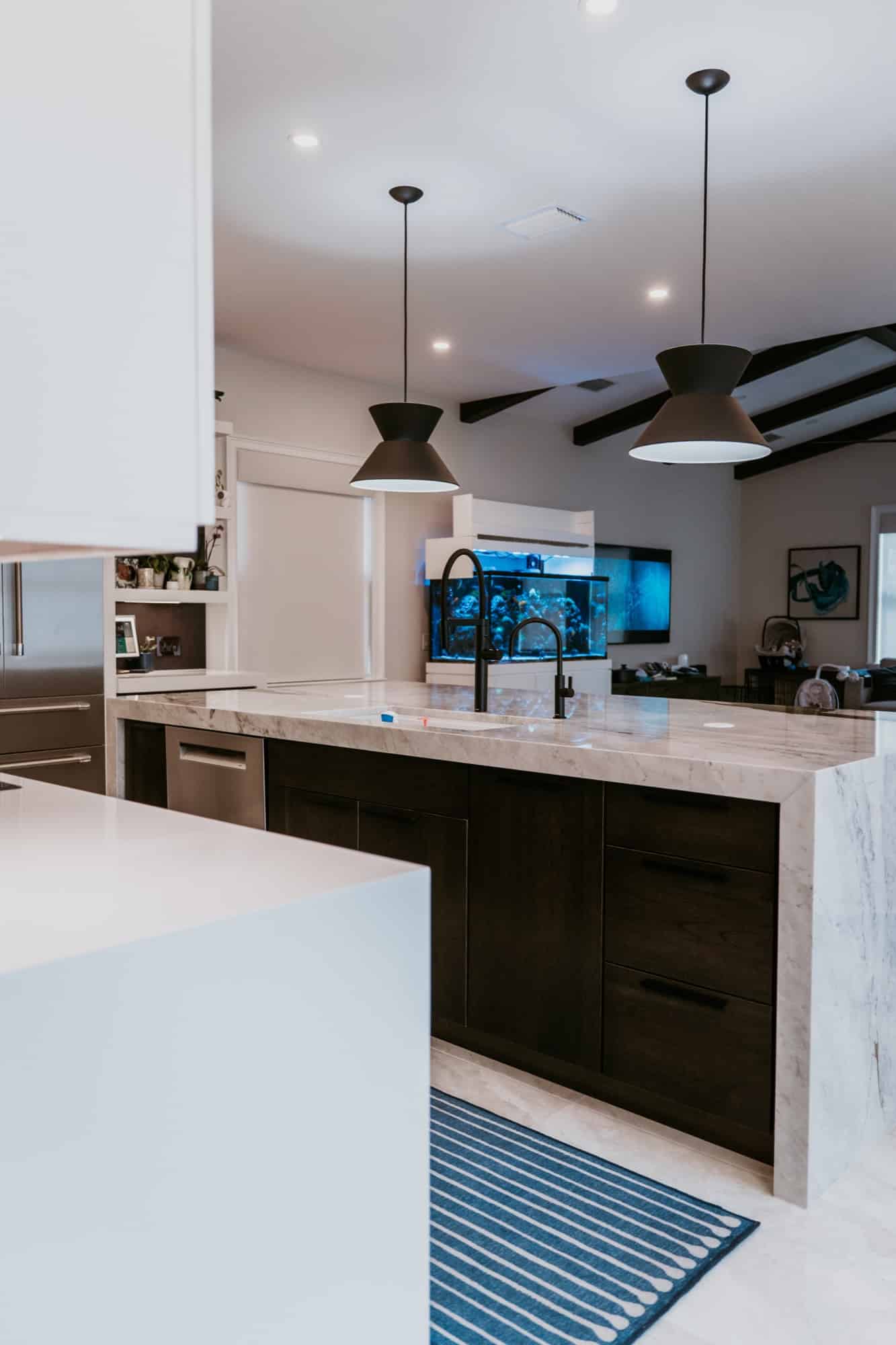
In many Fort Myers, Naples, Estero, and Cape Coral homes, the kitchen is visible from the living area. If your sink sits on an island or faces the main room, dish pileup becomes more noticeable. A double bowl can hide some clutter by keeping dirty items to one side. A single bowl can look cleaner when empty and handle big cleanup sessions quickly.
Think about your visual tolerance for dishes as much as your washing style. That is a real part of living with the sink every day.
Seasonal occupancy can favor simple, flexible layouts
Some Southwest Florida homes are occupied year-round, while others are used seasonally. In a part-time residence, many owners want a sink that feels straightforward for guests and easy to maintain between stays. A single bowl often wins on simplicity. There is less dividing hardware to work around, and one large basin can handle a variety of tasks without explanation.
That said, if the home hosts family gatherings during peak season, a double bowl may make holiday cooking and cleanup flow better. Picture the busiest week in the house, not the quietest one.
Slab homes and remodel sequencing matter
Because many local homes are built on slab foundations, plumbing changes inside a remodel should be coordinated early. That does not mean you cannot change sink styles. It means bowl configuration, drain location, disposal plans, and dishwasher placement should be reviewed together before cabinets and countertops are finalized.
During remodel planning, keep the sink decision tied to installation sequence. Countertop cutout, faucet hole layout, sink support, and plumbing rough-in all need to line up. If you are comparing options and want a second opinion on fit and layout, use the contact page early rather than after materials are ordered.
Choose the bowl layout that fits your habits, not the display model
It is easy to get distracted by apron fronts, workstation accessories, and finish colors, but bowl configuration affects comfort more than almost any sink detail. A beautiful sink that fights your cookware or cleanup routine will not feel beautiful for long.
If you want the shortest path to a good choice, answer a few practical questions. Do you wash large cookware often? Do dishes usually go into the dishwasher? Do you prefer one big open workspace, or do you want separate zones for prep and cleanup? Is one person usually at the sink, or several? Are you trying to keep dish clutter less visible in an open kitchen?
For many homeowners, the answer becomes clear once they stop thinking in labels and start thinking in tasks. Single bowls favor flexibility and oversized items. Double bowls favor separation and organization. Low-divider and offset styles can bridge the gap when you want some of both.
The best remodel decisions feel obvious after installation. You should be able to rinse a pan, fill a pot, prep produce, and clear dishes without fighting the sink. That is the goal.
Frequently asked questions about single vs double bowl kitchen sinks
Is a single bowl kitchen sink better for large pots and sheet pans?
Usually, yes. A single bowl gives you uninterrupted basin space, which makes it easier to wash wide or awkward items without bumping into a center divider. If your current sink frustrates you when cleaning roasting pans, cutting boards, or baking sheets, a single bowl is often the most straightforward improvement.
Does a double bowl sink still make sense if I have a dishwasher?
It can. A dishwasher reduces hand-washing, but a double bowl still helps if you like keeping one side open for food prep while the other holds dirty dishes. It is also useful for households that rinse produce, soak utensils, or hand-wash select items even when the dishwasher handles most of the daily load.
What is a good compromise if I want both separation and space?
A low-divider sink or a double bowl with one larger basin can be a strong compromise. These layouts keep some task separation while improving access for bigger cookware. They are worth considering if a standard double bowl feels too restrictive but a single bowl seems too open for the way you organize cleanup.
Should I choose the sink before cabinets and countertops?
Yes, or at least at the same stage. Sink size, bowl configuration, mounting style, faucet placement, and drain location all affect the sink base cabinet and countertop cutout. Choosing early helps avoid awkward fit issues and makes it easier to coordinate storage below, plumbing, and overall kitchen workflow.
Alliance Construction & Renovation helps homeowners compare the single vs double bowl kitchen sink choice within the full kitchen layout, cabinetry, and installation plan. Call (239) 771-2855 or request an estimate.