
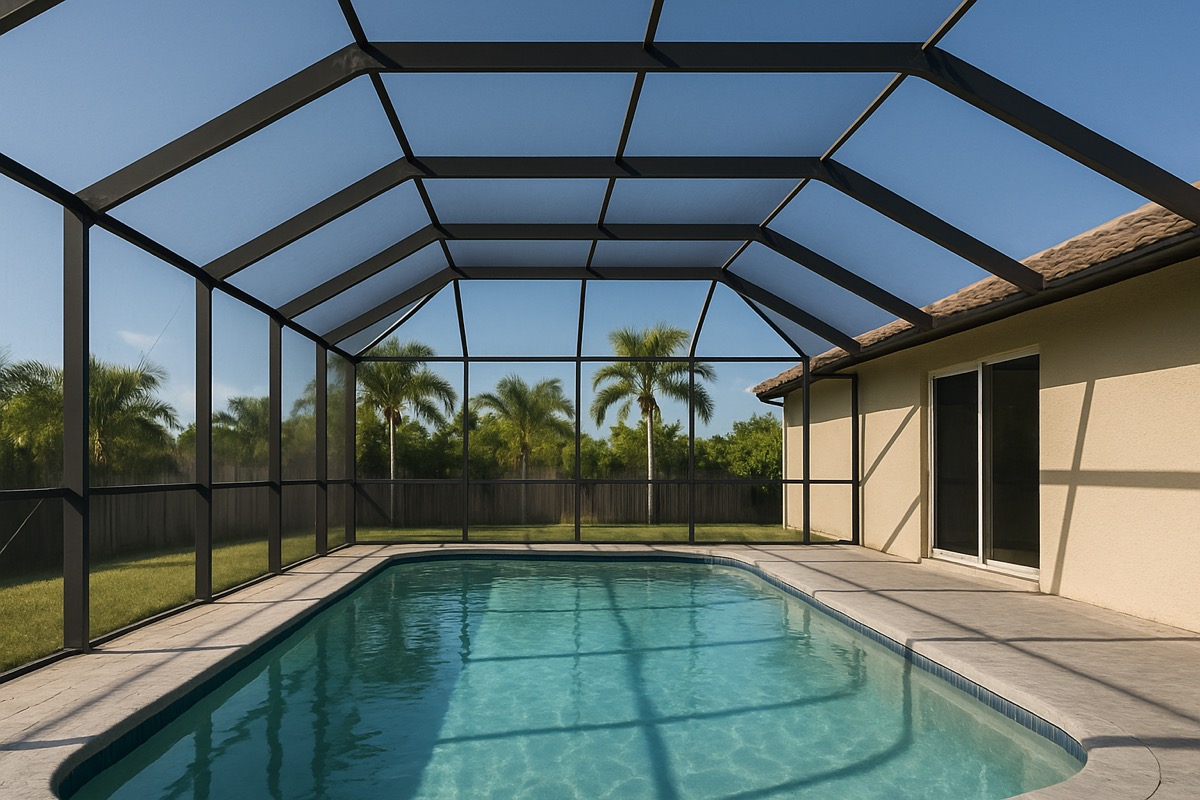
A screened pool enclosure is a Southwest Florida essential, keeping bugs, leaves, and debris out while letting you enjoy the pool year-round. It also takes the brunt of our weather, so after storm season many homeowners find torn screens, bent frames, or worse. Here is how we approach pool cage repairs and how to know whether you need a fix or a rebuild.
Common types of storm damage
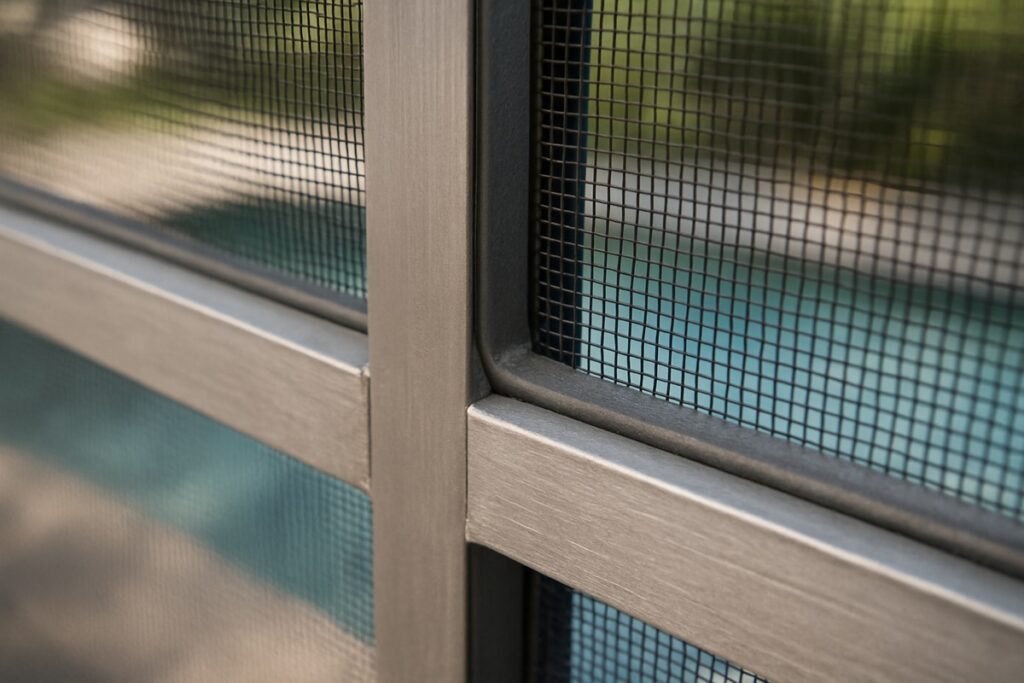
Pool cages fail in a few predictable ways. The most common is torn or blown-out screening, where panels rip free of their spline or shred entirely in high winds. Next is hardware damage, including loose or missing fasteners that let panels and framing work loose over time. More serious is frame damage, where aluminum members bend, buckle, or pull apart at connections, which often signals the structure took a significant hit. Knowing which type of damage you have points to the right repair.
Rescreening: the most frequent fix
When the frame is sound but screens are torn, rescreening restores the enclosure without rebuilding it. Individual panels can be replaced, or the whole cage can be rescreened if many panels are aged and brittle. This is the most common and most affordable repair, and it is a good moment to consider an upgrade to a heavier screen if your old mesh was thin. Fresh screening on a solid frame can make an older enclosure feel new again.
Frame and hardware repairs
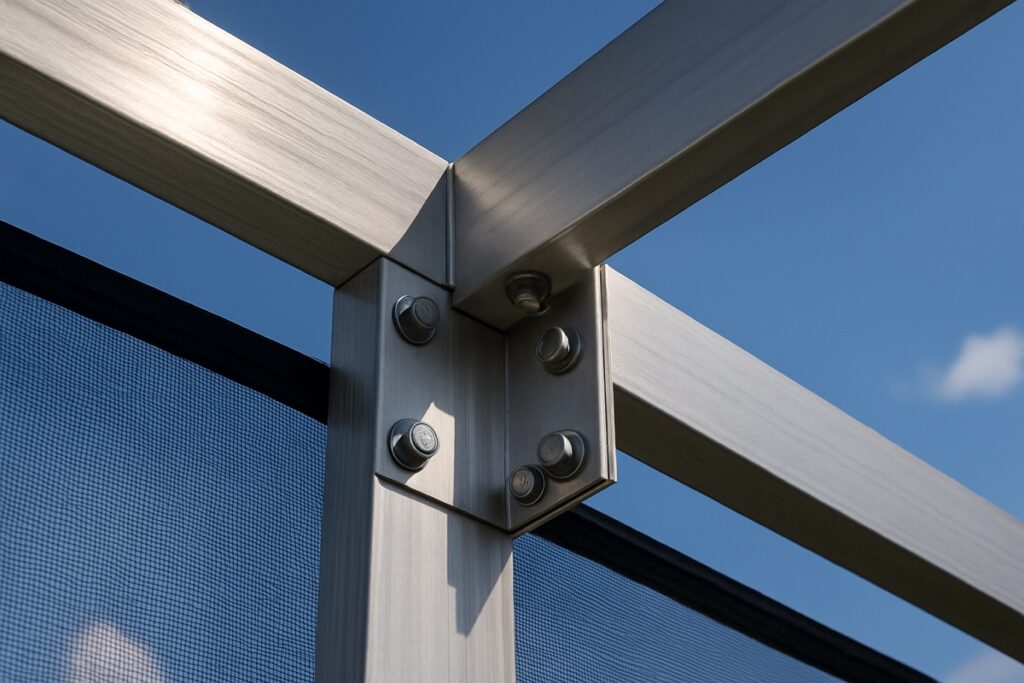
Bent or damaged framing is a more involved repair that should not be put off, because a compromised frame is weaker against the next storm. Damaged members can often be replaced or reinforced rather than rebuilding the entire structure, and loose or corroded fasteners should be replaced with proper hardware rated for the load and the coastal environment. Addressing the frame and hardware is what restores the enclosure’s strength, not just its appearance, so it stands up to the next season.
Repair or rebuild?
The decision comes down to the extent of the damage and the age of the structure. If the frame is fundamentally sound and the damage is screening and hardware, repair is the clear, cost-effective path. If framing is widely buckled, connections have failed, or the cage is old and was already deteriorating, a rebuild may be the better investment, especially since newer enclosures can be built to current wind-load standards. We assess the structure honestly and tell you which path makes sense rather than over-repairing a cage that is at the end of its life.
Acting before the next storm
Damaged enclosures are most vulnerable when partly compromised, since a torn panel or weakened frame gives the next storm something to grab. Repairing promptly after the season protects both the enclosure and, in severe cases, your home, since a failing cage can become flying debris. Handling repairs through a licensed contractor also ensures the work meets code and is documented, which matters for insurance and at resale. Getting ahead of the next season is the smart play.
Upgrading while you repair
A repair is also a chance to improve the enclosure rather than just restore it. If your old screening was a light mesh, upgrading to a heavier or no-see-um screen improves durability and keeps out the tiniest insects. Worn hardware can be replaced with corrosion-resistant fasteners better suited to our coastal air, and aging frame sections can be reinforced. Making these improvements during a repair costs little extra while the crew is already on site, and it leaves you with an enclosure that is stronger and more comfortable than before the damage.
One contractor for the whole outdoor space
A pool cage rarely exists in isolation; it ties into the deck, the lanai, and sometimes an outdoor kitchen or screen doors. Handling enclosure repairs through a general contractor means the work is coordinated with the rest of your outdoor living space and built to current standards, with permits and documentation handled for insurance and resale. For a Bonita Springs homeowner, that single point of accountability means the enclosure, deck, and surrounding features all work together rather than being patched by separate vendors who never coordinated.
Inspecting your cage after a storm
After a storm passes and it is safe to be outside, a careful walk around your pool enclosure tells you a lot before anyone climbs a ladder. We suggest looking first at the screen panels for tears, sagging, or any mesh that has pulled free of its spline, since that is the most visible sign of stress. Then look at the frame itself, scanning along the horizontal and vertical members for any that look bent, bowed, or pushed out of line with the others. Pay attention to the corners and the connection points where members meet, because that is where a hard hit shows up as separated brackets or popped fasteners. Check the anchors where the cage ties into the deck or footer for any movement or lifting. Finally, look up at the roof panels and gutters for pooling, debris, or sagging that adds weight. None of this requires a contractor, and noticing a small problem early often means a simple repair instead of a major one. When something looks off, photographing it gives you a record for insurance and a clear starting point for us to assess.
Choosing the right screen for the rebuild
If your repair involves rescreening, the type of mesh you choose shapes how the enclosure performs for years. Standard fiberglass screen is the most common and economical, and it does the basic job of keeping out leaves and larger insects. No-see-um screen has a tighter weave that blocks the tiny biting midges that plague Southwest Florida evenings near the water, which makes a real difference in comfort if you use the lanai at dusk. Pet-resistant screen uses a heavier, tougher mesh that stands up to dogs and cats pushing against it, and many homeowners use it just on the lower panels where contact happens. There are also screens designed to cut more sun and heat, turning the pool deck into a cooler space during the worst of summer. We walk through how you actually use the enclosure and which panels see the most wear, then match the mesh to that rather than rescreening the whole cage in one generic product. Spending a little more on the right screen during a repair you are already paying for is one of the easier upgrades to justify.
Keeping the enclosure healthy between storms
A little maintenance through the year keeps small issues from becoming the damage a storm exposes. Rinsing the frame periodically clears the salt and mineral buildup that our air and water leave behind, which slows the corrosion that weakens aluminum and hardware over time. Keeping the gutters and roof panels clear of leaves prevents the standing water and added weight that stress a frame. Tightening or replacing any fastener that has worked loose, and touching up spots where the finish has worn through to bare metal, stops corrosion before it spreads. We also recommend trimming back any trees or palms that overhang the cage, since falling fronds and branches are a frequent cause of torn screens and dented frames in our area. A cage that is maintained going into hurricane season is simply in better shape to ride out whatever the season brings, and the upkeep is far cheaper than the repairs it prevents.
For official preparedness guidance ahead of storm season, see Ready.gov’s hurricane safety resources.
Frequently asked questions
Can a single torn panel be replaced? Yes. Individual screen panels can be rescreened without redoing the whole cage, as long as the frame is sound.
How do I know if I need a rebuild? Widely bent framing, failed connections, or an old, deteriorating structure point toward rebuilding, often to current wind standards. We assess and advise honestly.
Is enclosure damage covered by insurance? It often depends on your policy and the cause. Documented, code-compliant repairs through a licensed contractor support any claim.
Storm damage to your pool cage? Explore our outdoor living and general contracting services, and reach out through our contact page or call (239) 771-2855 to assess your Bonita Springs enclosure.