
Decision guide
Screen Enclosure vs Open Patio in Fort Myers
The screen enclosure vs open patio question comes up in almost every Fort Myers outdoor project, and neither answer is wrong. A screened lanai trades some airflow and an uninterrupted sightline for insect protection and cleaner surfaces, while an open patio keeps views, ventilation, and future layout options wide open. The better fit depends on how the household actually uses the space through a Southwest Florida summer. The comparison below draws on our outdoor living services work across Lee County.
Both Options Can Involve Permitting in Lee County
An enclosure is a structure, not an accessory. Aluminum framing, footings, attachment to the existing slab or roof, and any electrical work for fans or lighting all move the project into regulated territory. Lee County requires building permits for constructing, enlarging, or altering a structure and for regulated electrical, gas, mechanical, or plumbing installations, so a screened cage and many covered or structural patio scopes should be reviewed with the permitting authority before contracts are signed.
Whichever direction you lean, fold the review timeline into the project schedule rather than treating it as a formality at the end. Permit review and inspections add calendar time to enclosure builds and to structural or electrical patio work alike, and the record they create becomes part of the property file a future buyer can verify. A contractor who handles the submittals routinely can tell you upfront what your specific scope triggers and how long approval typically takes.
Open patios are not automatically exempt. A roof structure, a raised deck, gas lines for a fire feature or grill, and new circuits for outdoor lighting can each be permit-relevant on their own. Municipal boundaries matter as well: an address in Fort Myers proper, Cape Coral, or unincorporated Lee County may follow a different process, so confirm the jurisdiction for the specific parcel and the current requirements before finalizing a design. Source: Lee County Building and Permitting Services.
What a Screen Enclosure Does Best
Insect control is the headline benefit. From late spring through fall, mosquitoes and no-see-ums can end an evening outdoors quickly, and a screened lanai keeps the space usable during exactly the hours Florida patios are most pleasant. Screens also intercept leaves and windblown debris, so pool owners spend less time skimming and furniture stays cleaner between uses.
Around a pool, a cage can also contribute to the layered safety measures Florida pool owners rely on, though barrier requirements should be confirmed for the specific property. Screen mesh filters a portion of direct sun as well, which softens glare and helps fabrics and finishes last. The trade-offs are periodic rescreening, storm vulnerability, and a visible frame across the view.
What an Open Patio Does Best
An open design keeps sightlines clear, which matters on canal, lake, golf, and preserve lots where the view is part of the property value. It also avoids screen maintenance entirely: there are no panels to patch after a windstorm and no cage to inspect when storm season ends.
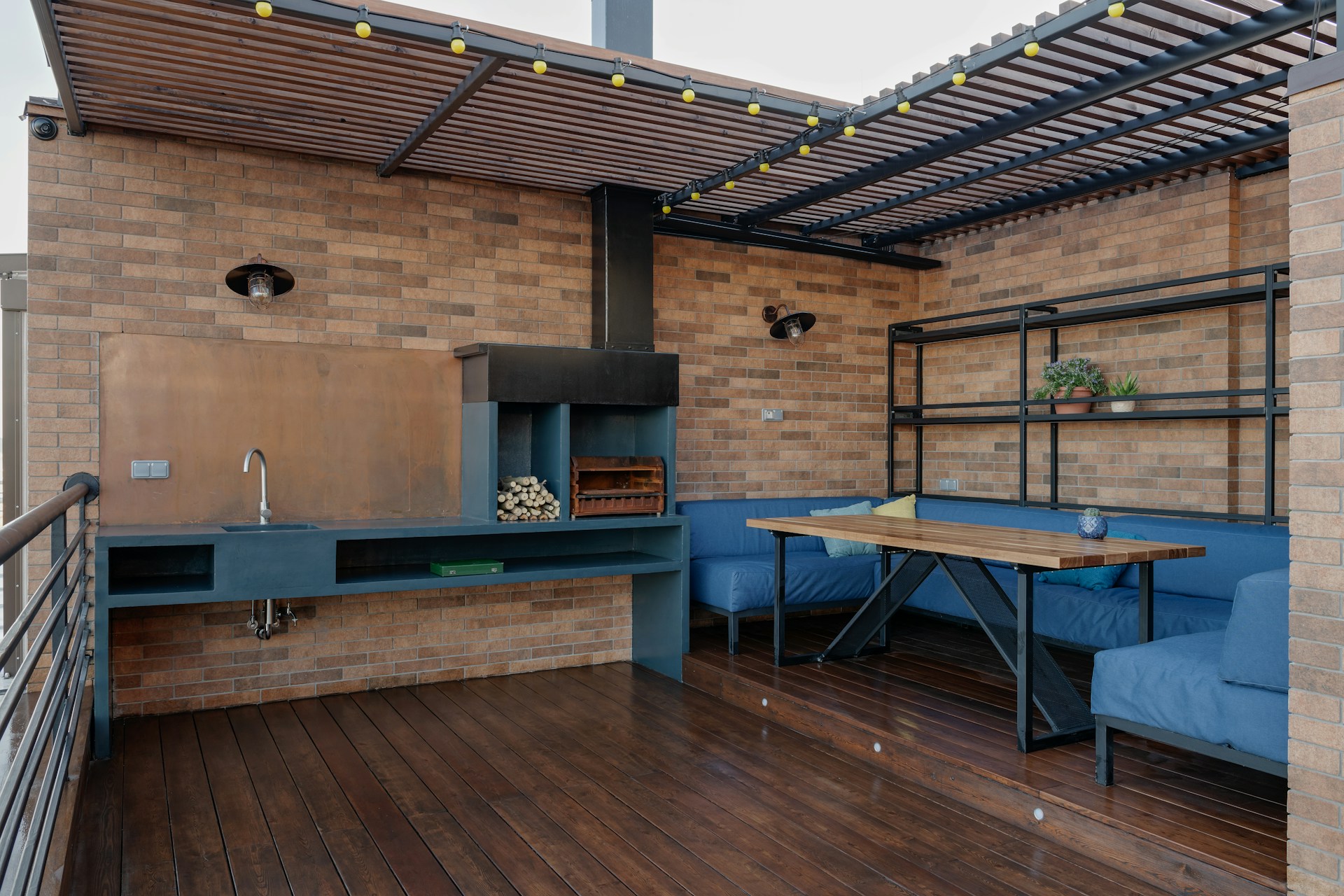
Open layouts give the most design latitude. Pergolas, shade sails, fire pits, and grill stations that need generous ventilation clearances all sit more naturally in an unenclosed footprint, and the space can be reworked later without modifying a structure. The compromises are bugs at dusk, direct sun and rain exposure, and more frequent cleaning of surfaces and furniture.
How to Decide Between Screened and Open
Treat the choice as a use-pattern question before a construction question. Note when the household is actually outside, whether a pool is involved, which direction the exposure faces, and how much upkeep feels acceptable, then compare complete scopes rather than impressions.
- Map how the space will be used. Record evening versus daytime use, pool activity, cooking plans, pets, and the view you want to protect. Evening-heavy households in bug season usually lean screened, while view-first and entertaining-first households often lean open.
- Request written scopes for both options. Have each version priced on the same footprint with structure, footings, electrical, drainage, and finish surfaces itemized, so the comparison reflects the complete installed scope and its cost drivers instead of a bare materials number.
- Confirm permits and product specifications before committing. Verify the jurisdiction for the address, ask how wind-load requirements shape the enclosure design, and review screen, fastener, and framing specifications for coastal exposure before signing anything.
Maintenance, Airflow, and Long-Term Flexibility
Ongoing ownership differs more than the initial build. Screen panels age in sun and salt air and need periodic rescreening, and a major storm can damage panels or framing, so an enclosure carries a recurring maintenance line in the household budget. An open patio shifts the effort toward routine upkeep instead: furniture management through rain season, more frequent washing of surfaces, and shade planning for the hottest months. Neither option eliminates upkeep; they simply distribute it differently, and airflow follows the same pattern, since mesh softens a breeze that an open terrace receives at full strength.
Daily use patterns deserve real weight in the comparison. A screened room extends comfortable hours in the buggy months around dusk, keeps leaves and pool debris down, and gives pets and small children a safely contained place to roam, while an open patio wins for full sun, grilling smoke, and unboxed sightlines. Sequence matters too: an open patio built on a well-designed slab can often accept an enclosure later, so starting open does not necessarily close off screening down the road.
Flexibility cuts both ways at resale. Many buyers in the Fort Myers market expect a screened pool, while buyers on view lots often prize the open sightline, so the surrounding neighborhood is a better guide than any universal rule. Plenty of homeowners resolve the tension with a hybrid layout: a screened lanai off the main living area for everyday evenings and a separate open terrace for grilling and fire features. Lot size, budget, and exposure determine whether that combination is practical, which is why the decision belongs on a measured site plan rather than a brochure.
Frequently Asked Questions
Do screen enclosures require a permit in Lee County?
Structural work such as an enclosure is generally permit-relevant, and regulated electrical work adds its own requirements. Confirm the rules for your specific address and jurisdiction before starting.
Can a home have both a screened lanai and an open patio?
Yes. A common layout pairs a screened lanai off the main living area with a separate open terrace for grilling and fire features, when the lot and budget allow it.
Compare Both Options on Your Lot
Alliance Construction designs and builds screened enclosures, open patios, and combined layouts across Fort Myers and Southwest Florida, and can price both directions on the same footprint. Call (239) 771-2855 or request a project consultation, and if the project grows toward covered or conditioned space, our home additions team can extend the scope.
We Serve Southwest Florida
Alliance Construction provides remodeling services in Cape Coral, Naples, Bonita Springs, Estero, North Fort Myers, and Punta Gorda. View all services →