
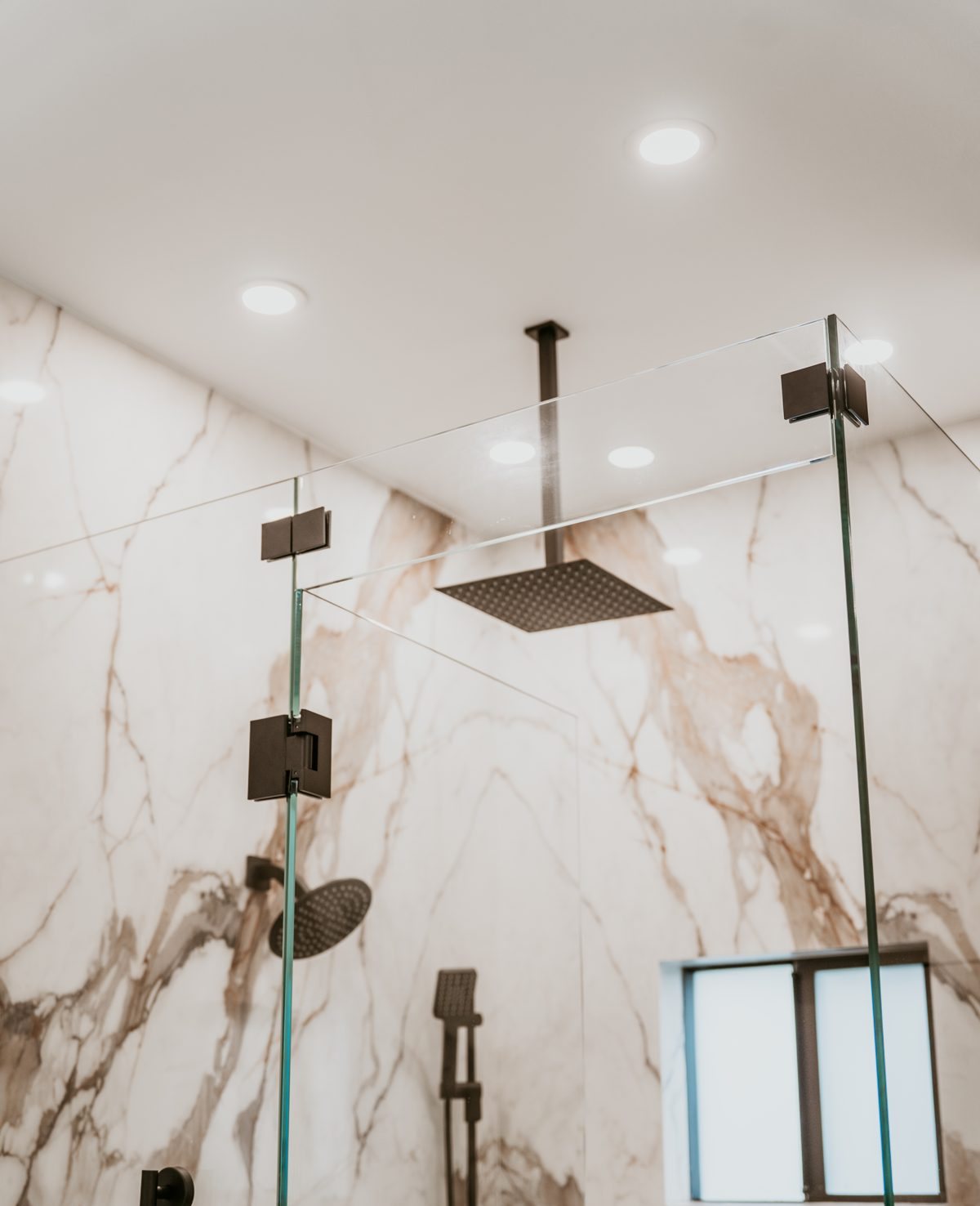
Choosing between a rainfall shower head and a handheld sprayer is one of the most personal decisions in a bathroom remodel, and the answer is often “both.” A rainfall shower head gives you a soft, enveloping stream from overhead, while a handheld gives you control, which is handy for rinsing, cleaning, and bathing with less strain. Whether you are updating a primary bath in Cape Coral or building a new walk-in shower in Bonita Springs, planning the plumbing and the glass layout together keeps the finished shower comfortable and easy to live with.
How a Rainfall Shower Head Feels and Covers
A rainfall head is typically mounted above you, either on a ceiling arm or a wall arm that extends over the shower floor, and it spreads water across a wide face. The effect is gentle and enveloping, more like standing in a warm shower of rain than being sprayed. Many people love it for washing hair and for slow, relaxing showers.
The tradeoff is that a rainfall head covers you from above rather than at a targeted angle. Water falls straight down, so it does not reach the corners of the shower or rinse the lower walls and floor unless you add another outlet. Some people also find a wide, soft stream feels cooler on bare shoulders, especially in a bathroom with strong air conditioning, so many designs pair it with a second source of water.
Where a Handheld Shower Head Earns Its Place
A handheld shower head on a hose gives you direction. You can aim it at a specific spot, rinse soap off the shower walls, wash a pet or a child, or rinse a shower seat. It is the practical tool in the shower, and it makes weekly cleaning noticeably easier.
Handhelds also support aging in place. Someone who prefers to sit while bathing, or who needs a caregiver to help, can control the water without standing under a fixed stream. Mounted on a slide bar, the same sprayer can serve a tall adult and a small child by moving up and down. For homeowners planning ahead, adding a handheld is one of the simplest ways to make a bathroom more adaptable.
Water Use and WaterSense Guidance
Water use is a real consideration, especially with more than one outlet in a shower. Fixtures that carry the EPA WaterSense label are independently certified to meet water efficiency and performance criteria, and the program publishes guidance on WaterSense labeled shower heads that is worth reading before you choose. Looking for that label is a straightforward way to compare options without guessing.
A few other points apply to rainfall styles. A larger head at a given flow rate spreads the same water over a bigger area, so it can feel lighter than a smaller head. Multiple outlets running at once can use more water than one, and local plumbing, water pressure, and the fixtures you pick all affect the result. We recommend confirming the flow rating on the product sheet for any head you are considering.
Planning the Valve and Diverter
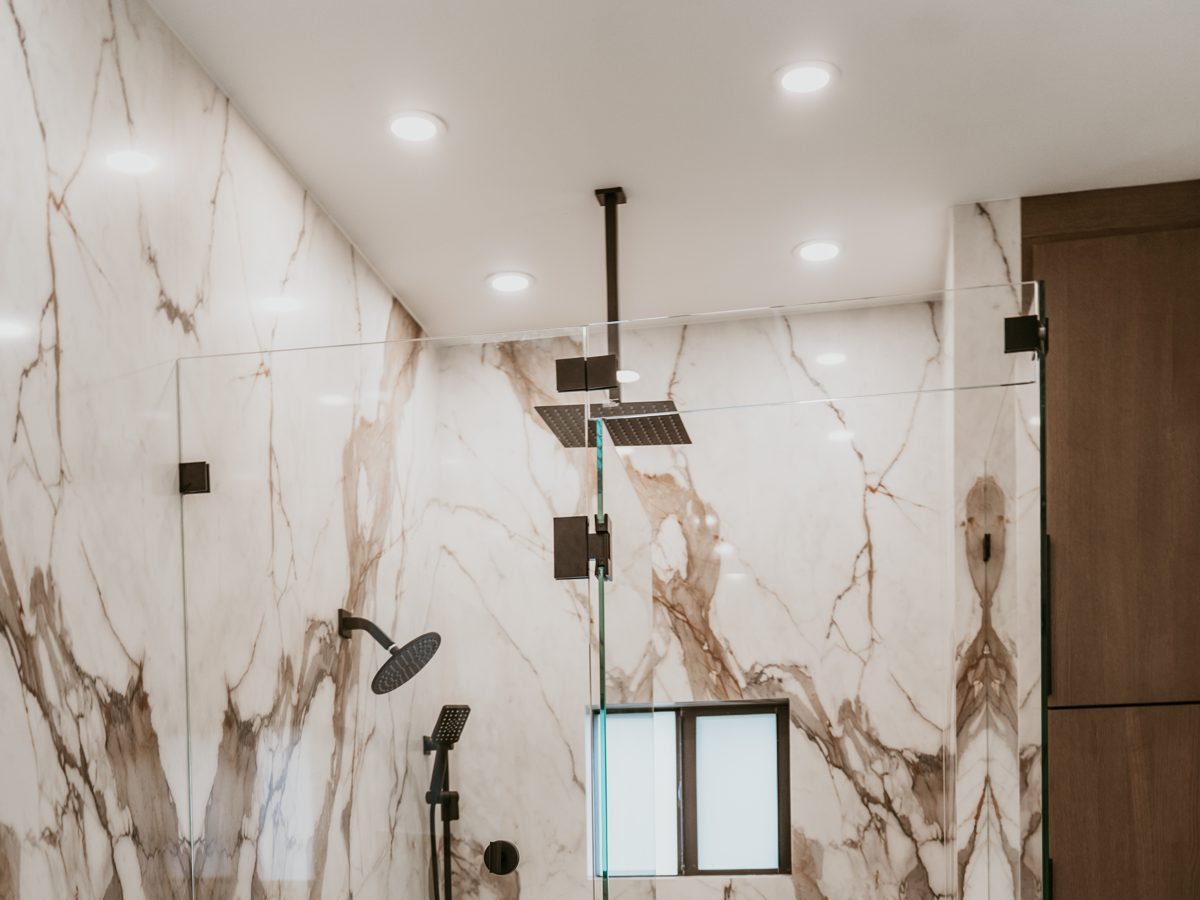
This is where good showers are won or lost. Behind the wall, the valve controls temperature and volume, and a diverter or multi-outlet valve decides which head is running. If you want a rainfall head and a handheld, the valve has to support both, and whether they can run at the same time depends on the system you choose. Changing this after the walls are finished is expensive and disruptive, so it should be settled before tile or slabs go up.
We also plan where each control sits. Valves placed near the entry let you start the water without stepping under a cold stream, which many people appreciate. Pressure-balancing or thermostatic valves help keep the temperature steady when someone flushes a toilet elsewhere in the house. Your plumber and the product installation sheets will specify the correct rough-in, and we coordinate that with your fixture choices from the start of the project.
Mounting Position and Ceiling Height
A ceiling-mounted rainfall head needs support above the ceiling and a drop arm that matches your ceiling height. Taller ceilings make a dramatic effect, but the arm and the head must still sit at a comfortable height for the tallest person using it. A wall-mounted rainfall arm is often simpler if the ceiling is low or the framing above is not suited to a ceiling mount.
Blocking in the wall or ceiling framing needs to happen before the surfaces are closed up. We also check where the head sits relative to the glass, the bench, and the door so water lands where you want it. The handheld mount deserves the same thought: a slide bar placed at a convenient reach, with the hose long enough to reach the corners, makes everyday use better.
Humidity and Ventilation in a Rainfall Shower
A large overhead head puts a lot of moisture into the air, and in Southwest Florida humidity is already part of daily life. A properly sized bath exhaust fan, run during and after showers, helps keep moisture from lingering on ceilings and walls. A window is a nice touch, but it should not replace mechanical ventilation. Check with your building department or contractor on the ventilation approach that suits your bathroom.
Materials matter too. Large-format wall surfaces have fewer grout lines for moisture to work into, and ceilings and walls inside the shower need the right moisture-resistant products behind them. Discussing these details early helps the shower stay clean and dry between uses.
Glass Layout and Splash Control
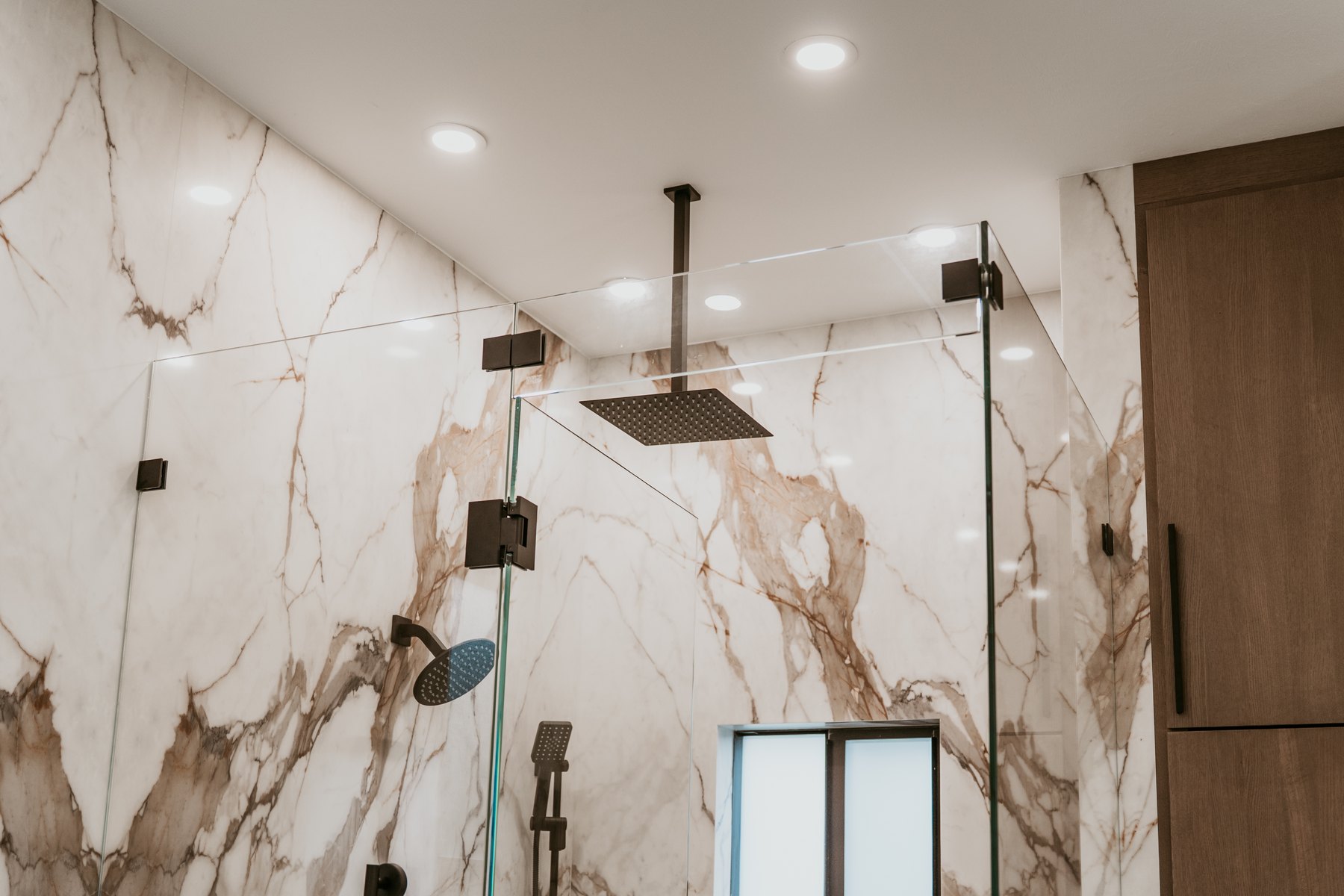
The glass enclosure and the shower heads have to be designed together. A frameless glass walk-in layout looks open and clean, but an overhead rainfall head sprays straight down and a fixed panel may need to be positioned to stop water from leaving the shower. The position of the head, the width of the glass, the door swing, and the floor slope all work as a system. For a deeper look at choosing a shower format, see our guide to walk-in showers versus bathtubs.
Our 3D design visualization shows layouts for remodels, which can help when you are weighing where the shower head and glass should go.
Frequently Asked Questions
Can I have a rainfall shower head and a handheld in the same shower?
Yes. Many showers include both. The valve and diverter have to be planned to support both outlets, and some systems let them run together while others switch between them.
Do rainfall shower heads use more water?
Not necessarily. Water use depends on the flow rating of the head, not its size. Look for WaterSense labeled models and check the flow rating on the product sheet.
Is a ceiling-mounted rainfall head hard to install?
It takes more planning than a wall-mounted head because it needs support above the ceiling and plumbing routed to the right spot. It is easiest to do during a remodel while framing is accessible.
Does a rainfall shower need extra ventilation?
A large overhead head can add noticeable moisture, so a properly sized exhaust fan is a smart part of the plan. Your contractor can recommend what suits your bathroom.
If you are planning a shower that feels good and is easy to maintain, we are ready to help. Call (239) 771-2855 to request an estimate, or learn more about our bathroom remodeling services. We are a licensed Florida building contractor (CBC1268590).