
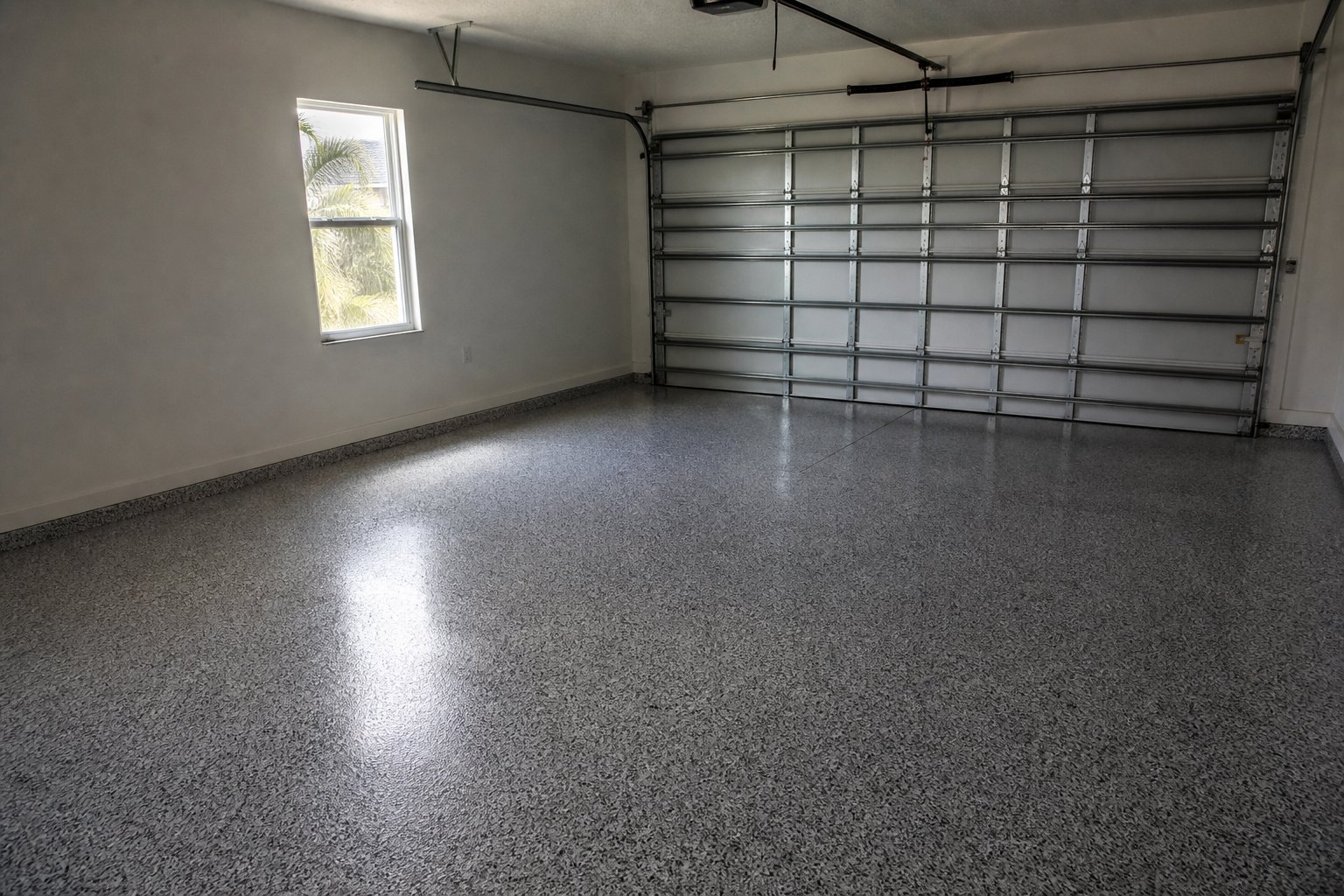
The garage is the hardest-working floor in most homes, and in Florida it doubles as a workshop, storage space, and sometimes a hangout. A bare concrete slab gets dusty, stains easily, and looks tired fast. An epoxy coating transforms it into a clean, durable, easy-to-maintain surface. Below is what to weigh before committing to a garage floor coating.
What an epoxy coating actually is
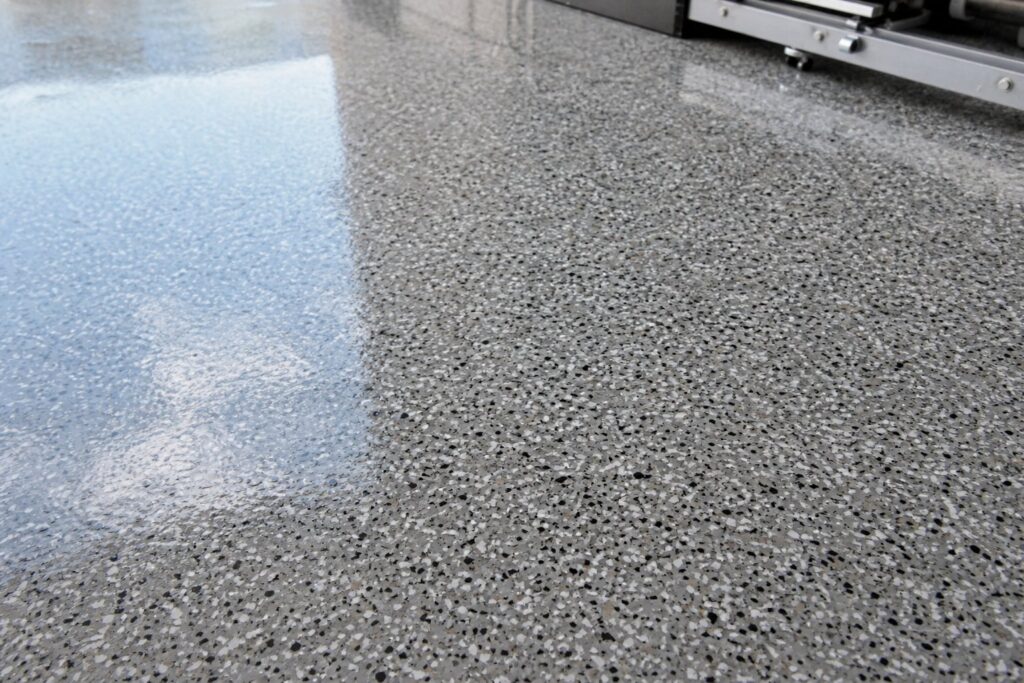
Epoxy is a tough resin coating applied over prepared concrete that cures into a hard, seamless surface bonded to the slab. It is not a paint you roll on in an afternoon and expect to last; quality epoxy systems involve real preparation and proper materials. Done right, the result is a floor that resists stains, chemicals, abrasion, and the hot-tire pickup that pulls cheaper coatings off the concrete. It is the difference between a coating that lasts years and one that peels within months.
Preparation is everything
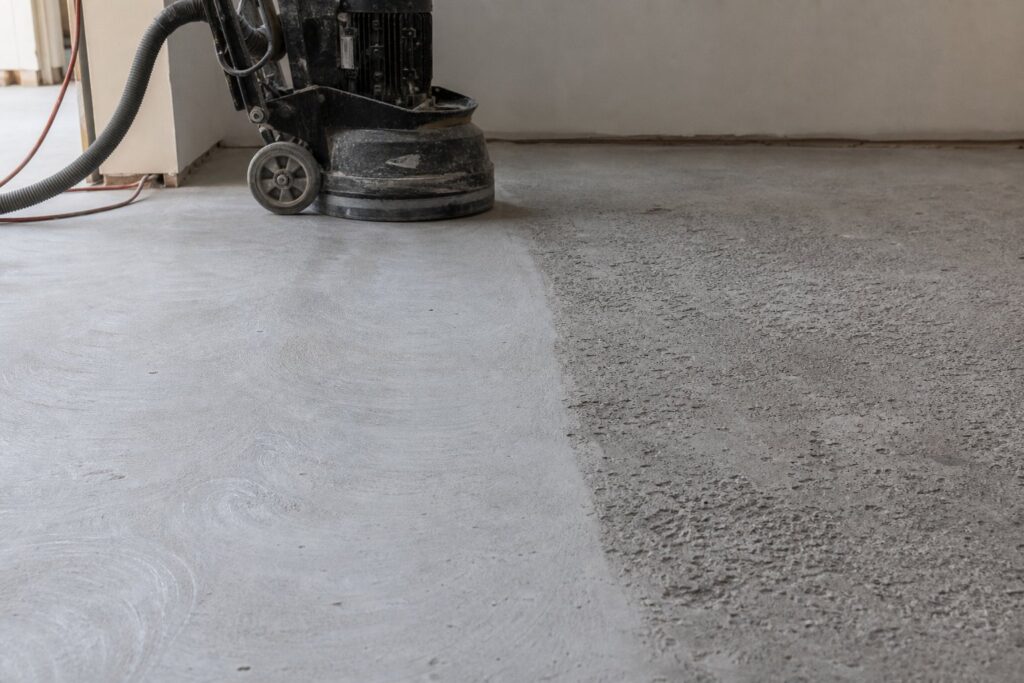
The single biggest factor in how long an epoxy floor lasts is surface preparation. The concrete must be cleaned, any oil and stains removed, cracks and pits repaired, and the surface mechanically profiled, usually by grinding, so the epoxy can bond. Skipping or shortcutting this step is the number one reason garage coatings fail. In Florida, moisture in the slab also has to be assessed, since vapor coming up through concrete can undermine a coating that was applied over a damp slab. A qualified installer should evaluate slab moisture and complete the required preparation before selecting and applying a coating system.
Finish and color options
Epoxy is not just gray. Most systems offer a range of base colors, and decorative flake or chip blends can add texture and help disguise minor surface variation. Some coating systems can include a traction additive, although no finished floor should be assumed slip-proof. The appropriate finish depends on the garage’s use, exposure to water, maintenance needs, and the selected coating system.
Living with an epoxy floor
Once cured, an epoxy floor is remarkably low-maintenance. Spills wipe up rather than soaking in, dust sweeps away easily, and the surface shrugs off the oil, chemicals, and abrasion a garage dishes out. For Cape Coral homeowners who use the garage as a workshop or extra living space, that easy cleanup and durability is the daily payoff. The floor also brightens the whole garage, since a light, reflective coating makes the space feel cleaner and better lit.
Why proper installation matters
Garage floor coatings are an area where preparation and product selection have a major effect on performance. Proper grinding, moisture evaluation, a system suited to the slab, and correct cure conditions all help support a durable result. Actual service life depends on the slab, coating system, installation conditions, vehicle use, and maintenance. For a floor that takes this much daily abuse, the bond beneath the visible finish matters.
How long the project takes
Homeowners often ask how long their garage will be out of commission. The answer depends on the system, repairs, number of coats, site conditions, and manufacturer cure requirements. Traditional multi-coat epoxy work may take several days, and vehicles or heavy items should stay off the surface until the installer confirms it is ready for service. Alliance can provide a project-specific schedule once the slab and selected system are evaluated.
Part of a more usable garage
For many Cape Coral homeowners, the floor coating is one piece of making the garage a genuinely usable space. Paired with good storage, organized shelving, and proper lighting, a finished floor transforms the garage into a clean workshop, hobby space, or overflow living area rather than a catch-all. We can approach the garage as a whole project, coordinating the coating with any storage or finish work so the space comes together as one upgrade rather than a series of disconnected fixes.
Why moisture testing matters for Florida
Moisture vapor moving through a concrete slab can contribute to blistering or loss of adhesion, even when the surface appears dry. Surface preparation alone does not resolve every moisture condition, so the slab and site conditions should be evaluated before a coating system is selected. If readings or other evidence indicate elevated moisture, an installer may recommend a compatible primer, moisture-mitigation system, or a different approach. The appropriate response depends on the slab and the coating manufacturer’s requirements. This evaluation is an important part of reducing avoidable adhesion problems in a Florida garage.
Epoxy versus polyaspartic and other systems
Epoxy is the name most people know, but it is worth understanding that it is one of several coating chemistries, and the right one depends on your garage and your patience for the install. Traditional epoxy builds a thick, hard, durable film and is a proven workhorse, though it cures slowly and can yellow over time in areas of strong UV exposure. Polyaspartic and polyurea coatings cure much faster, often letting a floor return to service in a day or two rather than several, and they resist UV yellowing and hot-tire pickup well, which is why many systems pair an epoxy base coat with a polyaspartic topcoat to get the best of both. The trade-off is that the faster-curing products are less forgiving to apply and reward an experienced installer. The selected system should account for return-to-service needs, direct sun exposure, slab conditions, and the level of use the floor will receive rather than treating every garage as the same job. Knowing these options exist helps you understand why a quality quote is not simply a single product applied the same way every time.
Maintaining the finish for the long haul
One of the quiet pleasures of a finished garage floor is how little it asks of you, but a few simple habits keep it looking new for the long haul. Sweeping or dust-mopping clears the grit that would otherwise act like sandpaper underfoot, and the occasional damp mop handles anything that builds up. Wiping spills before they sit is mostly about keeping the floor looking clean, since a quality coating resists staining on its own. For homeowners who park hot vehicles on the floor, pulling fully into the garage before the tires are scorching and using a parking mat under the tires of a daily driver both help the most demanding spots last even longer. Placing a mat or a piece of plywood under a workbench or a project car on a lift protects against dropped tools and dragged metal. None of this is demanding, and that low-maintenance reality is exactly the payoff a properly installed coating delivers for years.
For general safety information about uncured epoxies and resins, see CDC/NIOSH guidance on epoxies and resins.
Frequently asked questions
How long does an epoxy garage floor last? A properly prepared and professionally installed epoxy floor can last many years even with heavy use. Preparation is the key variable.
Why do some garage coatings peel? Inadequate surface preparation and moisture-related adhesion issues are common causes. Grinding and moisture evaluation help reduce that risk, but the correct approach depends on the slab and coating system.
Is epoxy slippery when wet? A smooth topcoat may be slippery when wet. Decorative flake or a traction additive may be options; confirm which finish is appropriate for your garage and how it will be used.
Thinking about a garage floor upgrade? Explore our painting and finish services, then reach out through our contact page or call (239) 771-2855 to discuss your Cape Coral garage.