
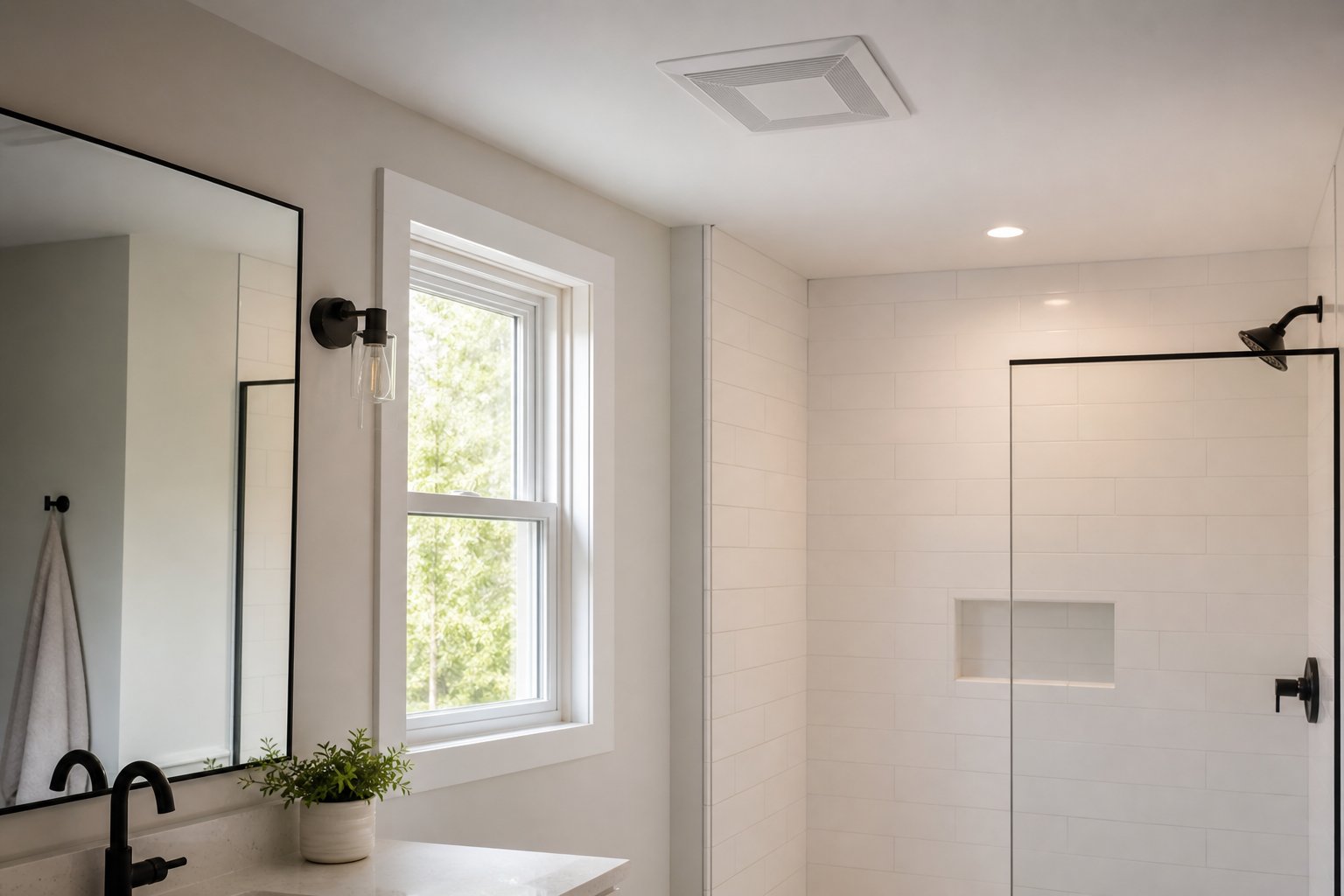
Spend one August in Fort Myers and you understand what humidity does to a house. Outdoor air hovers near saturation for months, afternoon storms roll through almost daily, and every hot shower adds another cloud of moisture indoors. That is why bathroom ventilation in Florida humidity deserves far more attention than it usually gets. In Southwest Florida, an undersized or poorly routed exhaust fan is not a minor oversight: it is the starting point for mildew stains, peeling ceiling paint, swollen trim, and that musty odor no amount of cleaning seems to fix.
Our team at Alliance Construction & Renovation remodels bathrooms across Fort Myers, Cape Coral, Naples, Punta Gorda, and the surrounding communities, and ventilation is part of every bathroom conversation we have. A new tile shower or quartz vanity only stays beautiful if the room can shed moisture as fast as daily life creates it.
This guide explains how to spot weak airflow, size an exhaust fan, route ductwork through a storm-resistant exterior, and choose finishes that tolerate daily humidity.
How Southwest Florida Humidity Changes Bathroom Ventilation
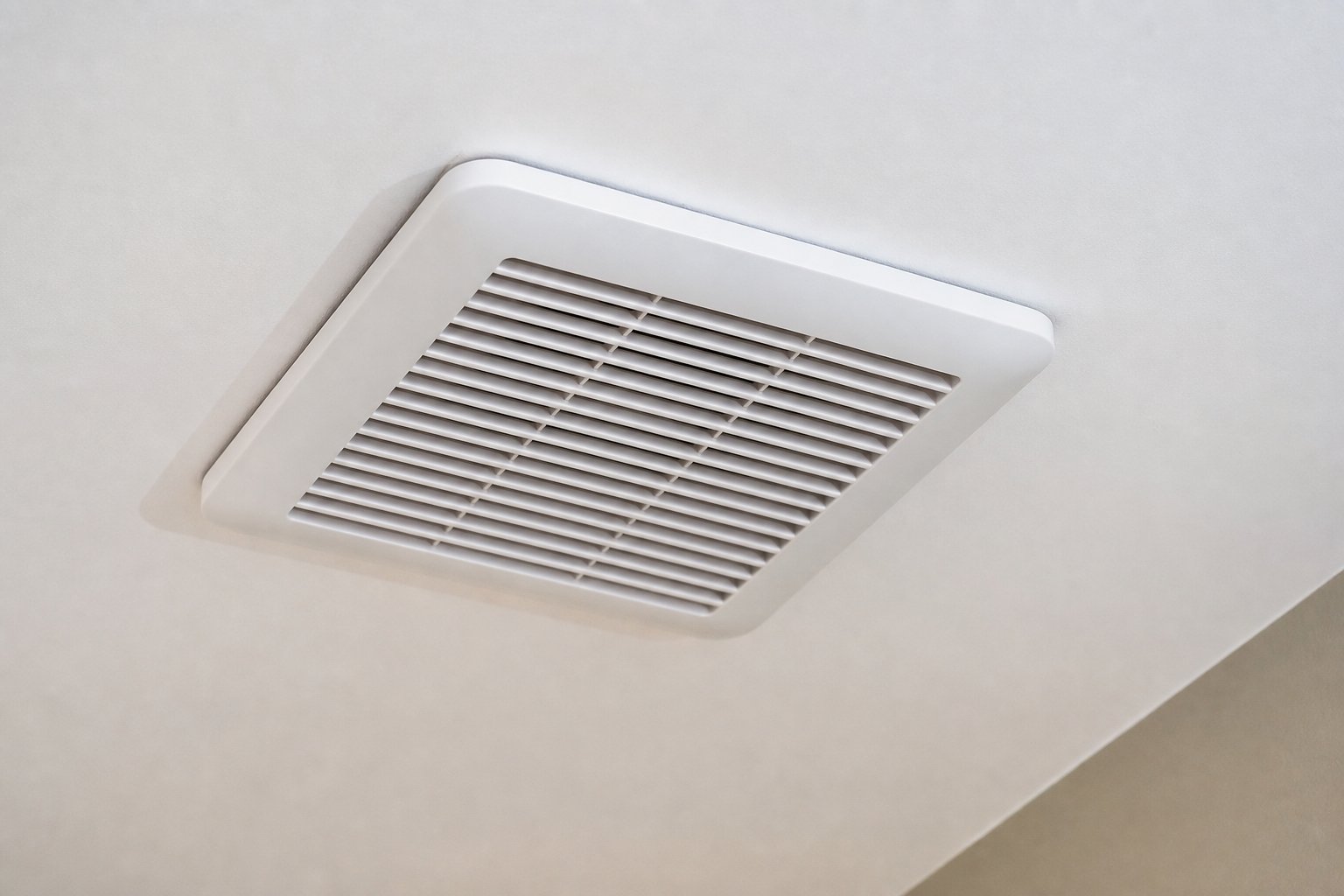
Your air conditioner does more than cool the house: it is the main tool your home has for pulling moisture out of the air. Every long, hot shower works against it. In Southwest Florida, where outdoor air is already loaded with moisture for most of the year, the bathroom becomes a bottleneck. Steam condenses on mirrors, walls, and ceilings, soaks into grout and drywall, and lingers long after the water is off.
The stakes are higher here for another reason: many homes in Fort Myers, Naples, and Punta Gorda sit closed up for months while seasonal owners are away. A bathroom that traps moisture in April can quietly grow mildew all summer with nobody around to notice. Good ventilation, planned into the remodel rather than bolted on afterward, is the most reliable protection a bathroom here can have.
Signs Your Current Bathroom Is Holding Too Much Moisture
Most homeowners live with a moisture problem for years before they name it. Here is what we look for when we walk into a bathroom in an older Cape Coral or North Fort Myers home:
- Mirrors that stay fogged for ten minutes or more after a shower.
- Peeling or bubbling paint on the ceiling, especially above the shower.
- Mildew returning quickly in grout lines and caulk joints no matter how often you clean.
- Swollen doors and trim that stick in the summer months.
- A musty odor that persists even in a clean room.
- Rust or corrosion on hinges, fixtures, and light fittings.
Any one of these points to air that is not leaving the room fast enough. Several together usually mean the fan is undersized, worn out, or venting somewhere it should not, and in many older homes that somewhere is the attic.
Sizing and Selecting the Right Exhaust Fan
Exhaust fans are rated in cubic feet per minute, or CFM, which describes how much air they move. The long-standing industry guideline calls for roughly one CFM per square foot of bathroom floor area, with a minimum of 50 CFM for small baths and added capacity for large showers, soaking tubs, and enclosed toilet rooms. In our climate we treat those numbers as a starting point, not a target: a bathroom in Estero or Bonita Springs simply sees more moisture.
Beyond raw airflow, the features that matter most here are:
- Humidity-sensing controls that switch the fan on automatically and run it until moisture drops, ideal for guest baths and seasonal homes.
- Delay timers that keep air moving for a set period after you leave the room.
- Low sone ratings, because a quiet fan actually gets used instead of switched off.
- Efficient motors that can run longer cycles without a noticeable hit to your electric bill.
ENERGY STAR’s certified ventilating fans directory is a good place to compare quiet, efficient models before your contractor orders one.
Duct Routing, Roof Work and Hurricane Code
The fan is only half the system. Where that moist air goes matters just as much, and this is where Southwest Florida homes have their own set of rules. The Florida Building Code requires exhaust air to terminate outdoors, never in the attic or a soffit cavity.
Routing depends on how your home is built. Concrete block homes common across Cape Coral and Punta Gorda often route ducts up through the attic to a roof cap, while frame construction and second-story baths can offer shorter wall paths. Whatever the route, we keep duct runs short and smooth, seal every joint, and finish at a hurricane-rated exterior cap with proper flashing, a backdraft damper, and a screen. On roof terminations, flashing detail matters twice in Florida: once for the daily rainy season and again for the wind-driven rain a tropical system brings.
Moisture-Smart Showers and Wet Areas
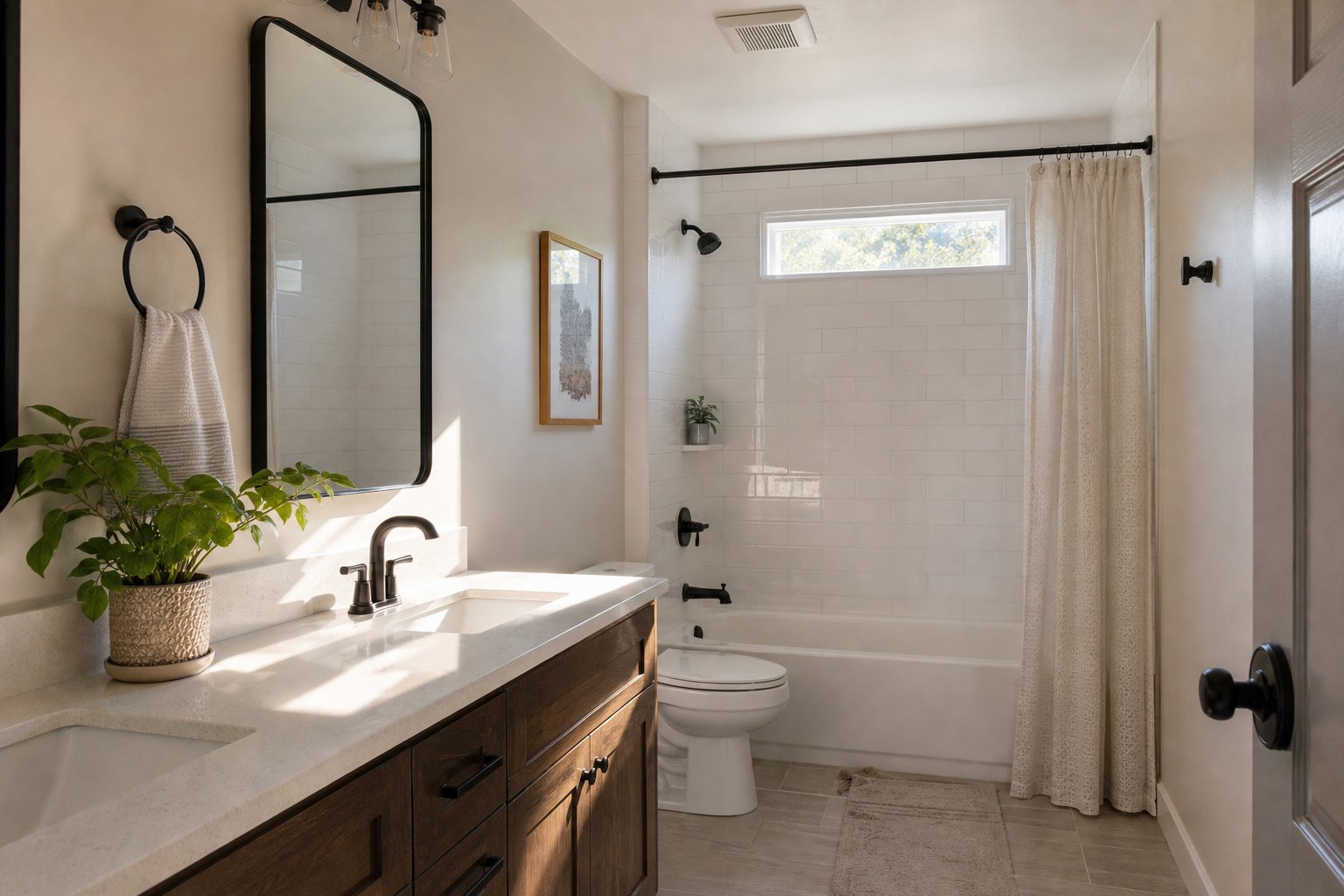
Ventilation works best alongside materials and layouts that shed water instead of holding it. When we design a bathroom remodel for a Southwest Florida home, the wet areas get the most scrutiny. Walk-in showers with full glass enclosures dry faster and hold less standing moisture than curtained tubs. Large-format porcelain tile means fewer grout lines, and upgraded grout resists the staining and mildew that plague older installations.
Behind the tile, the details you never see do the heavy lifting: a continuous waterproofing membrane, sealed corners and penetrations, and cement board rather than standard drywall in the wet zones. That hidden layer separates a shower that lasts from one that fails quietly inside the wall.
Vanities, Mirrors and Finishes That Handle Humidity
The vanity area takes a slower, steadier form of moisture exposure: fog, splashes, and humid air day after day. Cabinet construction matters more here than almost anywhere else in the house. We specify plywood cabinet boxes and quality painted finishes because particleboard swells the moment humidity finds an unsealed edge. Quartz counters shrug off the standing water that can stain natural stone. Mirrors with built-in defoggers and LED lighting stay usable even after back-to-back showers.
Wall finishes round out the room: moisture-resistant drywall in the humid zones, and bathroom-rated paint in a satin or semi-gloss sheen that can be wiped down without burnishing. Small choices, but together they decide how the room looks in year five.
Permits and Inspections in Lee, Collier and Charlotte Counties
Ventilation upgrades often touch electrical circuits, roof penetrations, and mechanical duct work, and that means permits. Lee, Collier, and Charlotte Counties each run their own permitting offices, and inspectors here pay close attention to roof flashing and exterior terminations for good reason. As a licensed Florida contractor (CBC1268590), our general contracting team handles the permit applications, coordinates the trades, and schedules the inspections so the work is documented correctly. That paper trail matters at resale and whenever an insurance question comes up.
Frequently Asked Questions
How long should a bathroom exhaust fan run after a shower?
In Southwest Florida, plan on 20 to 30 minutes after the shower ends. That is longer than most people leave a manual switch on, which is why we recommend humidity-sensing controls or delay timers that handle it automatically.
Can a bathroom fan vent into the attic?
No. The Florida Building Code requires exhaust air to terminate outdoors. Attic venting loads insulation and framing with moisture and is a common source of hidden mold. If your fan currently vents into the attic, rerouting it should be a priority, not an option.
Do I need a permit to upgrade bathroom ventilation?
A like-for-like fan swap on an existing circuit may not require one, but new wiring, new duct routing, or a new roof or wall penetration generally does in Lee, Collier, and Charlotte Counties. We confirm the requirements with the local office and pull the permits as part of the project.
Will a better fan fix a bathroom that already has mildew?
Better airflow stops the problem from getting worse, but existing mildew in grout, caulk, or drywall needs to be cleaned out or replaced. In many cases the smart move is to fold ventilation into a larger update of the wet areas so the room starts clean and stays that way.
If your bathroom fogs up and stays that way, our team can help you fix the cause and upgrade the room around it. Explore our bathroom remodeling services, see how our general contracting team manages permits and inspections, or browse the rest of our home renovation work across Southwest Florida. You can also visit our showroom at 11751 Metro Pkwy in Fort Myers to see materials in person and preview your project with 3D design visualization. Call us at (239) 771-2855 to schedule a showroom visit or request an estimate.