
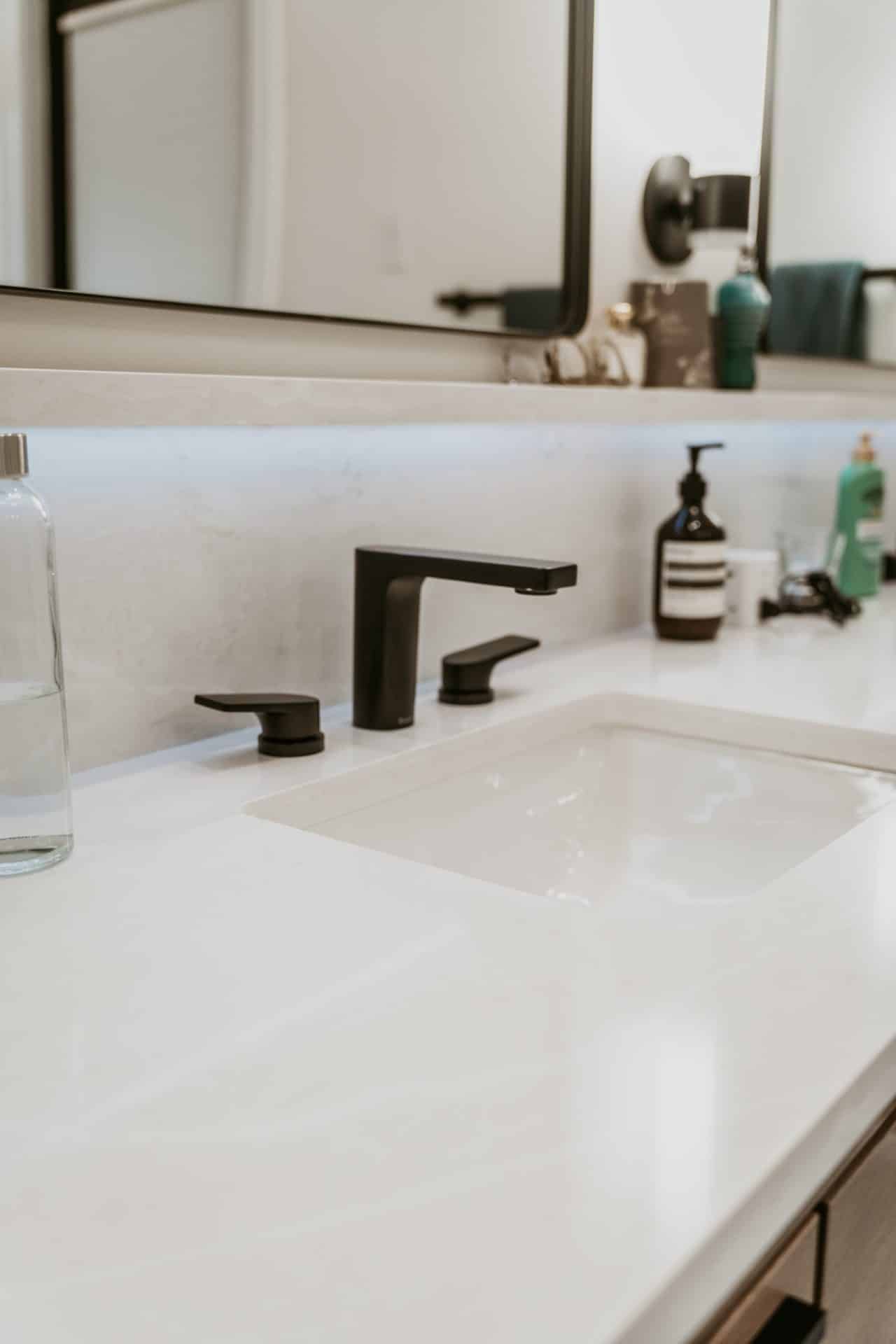
A vanity wall does more work than many homeowners expect. In Southwest Florida, bathroom vanity backsplash options affect cleanup, paint wear, mirror placement, and the overall look of the room. A backsplash can be as simple as a short strip behind the sink or as bold as a full-height surface that runs to the mirror or ceiling. The best choice usually comes down to how often the bath is used, how much splash the sink area gets, and how clean or detailed you want the finished wall to look. If you are planning a remodel in Fort Myers, Naples, or nearby communities, it helps to sort out these details before the vanity top is fabricated and the wall finish is chosen.
How bathroom vanity backsplash options change the way the sink wall works
The sink wall gets repeated water spots, soap drips, toothpaste splatter, and hand marks. Even a careful household ends up wiping this area often. That is why backsplash planning should start with daily use, not just style photos.
A short backsplash is the simplest approach. It protects the wall directly behind the countertop and gives the faucet a clean transition. This can work well in a guest bath, powder room, or primary bath where the design calls for a lighter visual line.
A taller backsplash gives more protection and can reduce repainting around the sink zone. This is often useful where kids use the bath, where vessel sinks throw more splash, or where a faucet sits higher and pushes water back toward the wall.
Then there is the full wall treatment. Tile or slab material can run from the vanity top to the mirror, to a wall sconce line, or much higher. That changes the room from a basic sink wall into a more finished feature. It can also make wipe-down easier because you are cleaning a durable surface instead of painted drywall.
Before you settle on appearance, think about what the vanity wall has to handle each day. A backsplash is small on paper, but it affects maintenance every week.
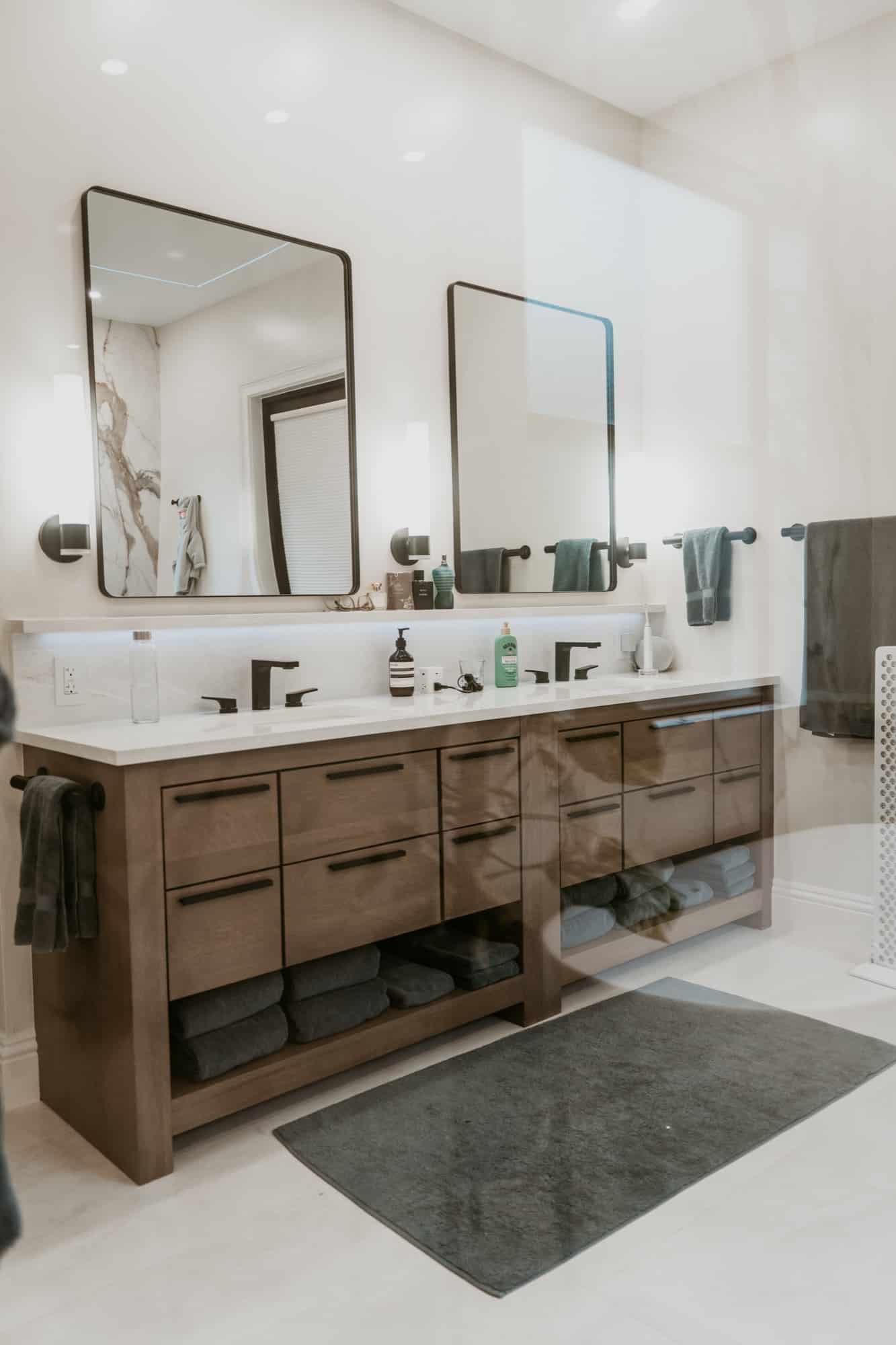
Short splash, tile, slab, or paint above: choosing the best vanity wall treatment
Most bathroom vanity backsplash options fall into four practical groups. Each one can look good when the details are handled well.
Short backsplash in the same countertop material
This is the classic low-profile choice. The backsplash is cut from the same material as the vanity top and installed at the back edge. It keeps the countertop as the star and lets the wall above stay painted or wallpapered if that fits the design.
This option often works best when you want a calm look, when the faucet is centered and not overly tall, and when the mirror starts fairly close above the sink. It also suits bathrooms where too many horizontal lines would make the room feel chopped up.
Tiled backsplash area behind the sink
Tile gives you more design freedom. You can keep it low and simple, take it up to the mirror, or cover the full vanity wall. Tile is useful when you want color, texture, or a shape that ties into the shower without copying it exactly.
For a bathroom, small grout lines and textured tile can be harder to clean near a sink. That does not rule tile out. It just means the best selections are usually those that wipe down easily and do not trap residue around the faucet area.
Full-height slab for a seamless look
A slab backsplash can run from the counter up the wall with very few interruptions. This approach is popular when homeowners want a more tailored look with less visual clutter. It pairs well with floating vanities, modern cabinetry, and larger mirrors.
It also creates a cleaner transition around undermount sinks because the eye reads one continuous surface family. In many remodels, this choice makes the room feel more custom without relying on busy patterns.
Paint above a protected splash
You do not always need a full hard surface wall. A protected lower section with paint above can still work very well. This is common when the room needs softness, when the upper wall includes sconces or framed mirrors, or when the design calls for a more furniture-like vanity.
The key is to make sure the protected zone is high enough and finished neatly so the painted portion does not sit in the main splash path.
If you are comparing wall finishes as part of a larger bathroom remodeling project, decide on the vanity wall before mirrors, lighting, and faucet rough-in are finalized. Those items all affect the backsplash layout.
Mirror height, faucet reach, and side returns: the details that make a backsplash look finished
Many vanity walls fail at the edges, not in the center. Good backsplash design is really about transitions.
Where the backsplash meets the mirror
If a mirror sits just above the counter, a short backsplash may be all you want. But if there is a gap between the countertop and mirror, that exposed strip needs to look intentional. A low splash with a large blank painted band can feel unfinished, especially on a wide double vanity.
One clean solution is to raise the hard surface to the mirror line. Another is to keep the splash low but place the mirror closer to the countertop so the composition feels tighter.
How faucet style affects splash patterns
Wall-mounted faucets, widespread faucets, and taller deck-mounted faucets all create different visual and cleaning conditions. A faucet with more height can throw more water onto the wall. A faucet installed through a slab or tile backsplash needs very careful layout so openings align well and trim sits cleanly.
When the faucet is a main visual feature, the backsplash should support it, not crowd it. If the faucet shape is bold, a quieter backsplash often looks better. If the faucet is simple, the wall finish can carry more personality.
Do you need side splashes or side returns?
Not every vanity needs side splashes. If one side of the vanity dies into a wall and the sink is close to that side, a return piece can help protect the paint and finish the edge. If the vanity has open space on both sides, side splashes may look awkward or unnecessary.
Some homeowners like the balanced look of matching returns on both sides even if only one side meets a wall. Others prefer a cleaner furniture-style appearance with no returns at all. The right choice depends on sink placement, wall contact, and whether the goal is a tailored built-in look or a lighter freestanding feel.
Inside corners and end terminations
Tile, quartz, stone, and other materials all need a deliberate stopping point. A backsplash should not appear to just end randomly at mid-wall. It may terminate at a mirror edge, align with a cabinet side, wrap into a side wall, or finish with a trim detail. These small decisions are what separate a polished bathroom from one that feels pieced together.
Material choices for bathroom vanity backsplash options and how they clean up
Homeowners often pick a backsplash based on color first. That is understandable, but cleaning and joints should come right behind appearance.
Quartz and similar solid-surface looks
These surfaces are popular because they can create a coordinated countertop and backsplash with a crisp finish. They are especially useful when you want fewer visual breaks and a wipeable sink wall. One advantage of carrying the same surface through nearby bathroom areas is visual continuity. A short design note from Cambria vanity and backsplash examples shows how repeating related vanity, backsplash, and shower surfaces can help a bathroom feel more connected overall.
Tile and grout considerations
Tile works in almost any style, from coastal to contemporary. The catch is grout. Near a vanity sink, grout lines collect residue faster than many people expect. Larger format tile can reduce that issue. Smooth finishes are also easier to wipe than heavily textured surfaces.
If you want decorative tile, think about using it where it is seen most and touched least. Behind the mirror line or across a larger dry portion of the wall may be better than crowding the faucet area with lots of cut pieces and joints.
Natural stone looks and movement
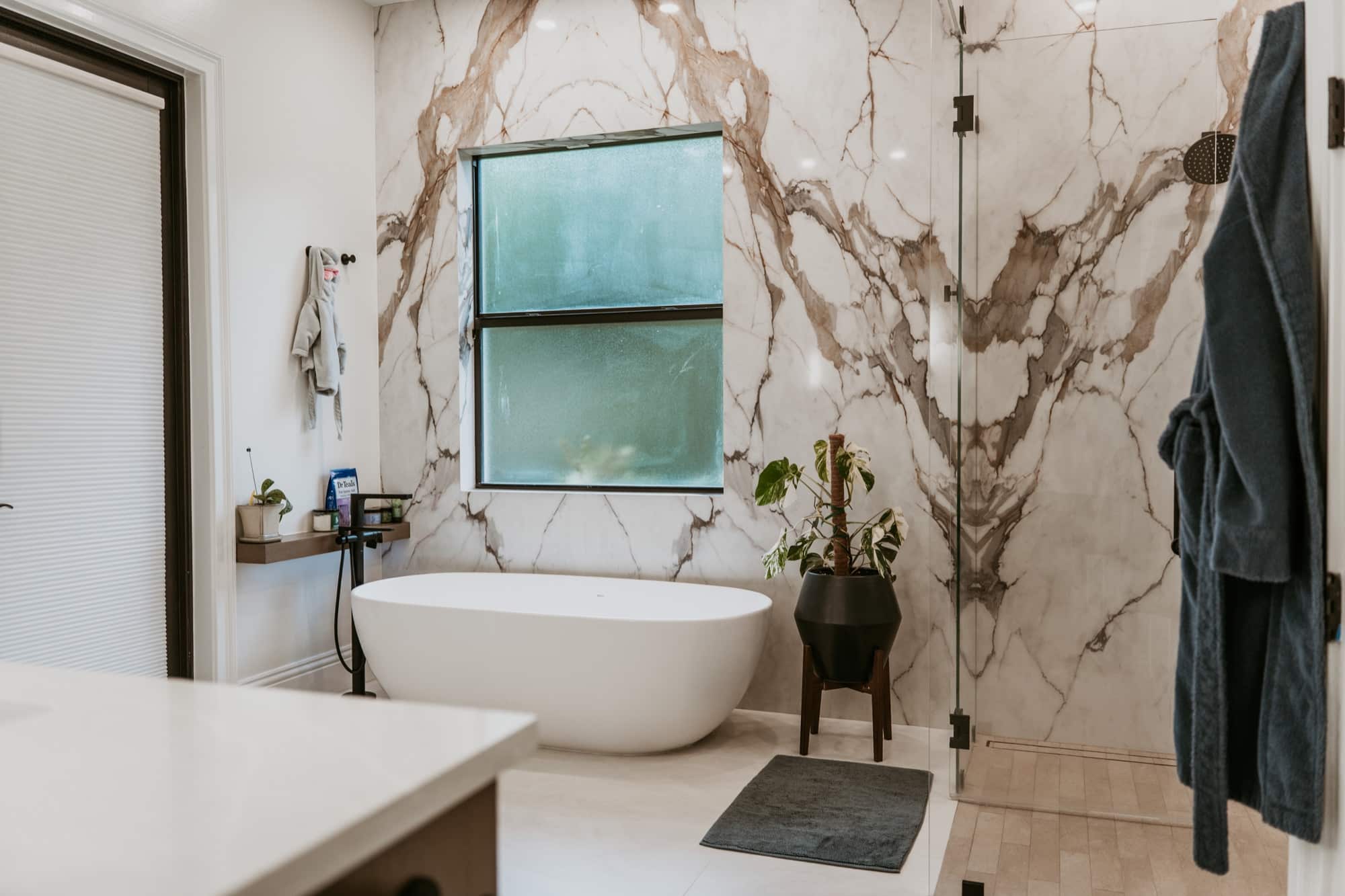
Stone or stone-look materials can be beautiful on a vanity wall, especially in a primary bath. Veining and movement can turn a small sink area into a feature. The important part is seam placement and pattern flow. On a double vanity, poor alignment across two sink stations can be distracting.
Painted wall sections and trim profiles
If part of the wall stays painted, think about where that paint line starts and how the top of the backsplash finishes. A plain square top edge may suit a modern vanity. A shaped trim or tile cap may fit a more traditional bath. The finish at the top should look intentional from across the room, not like an afterthought added to protect the drywall.
You can browse completed spaces in the remodeling gallery to compare how different vanity wall treatments change the feel of a bathroom.
Southwest Florida planning: humidity, slab walls, seasonal use, and remodel sequencing
In Southwest Florida, backsplash decisions are not only about style. The room has to perform well through humidity, regular AC cycles, and in some homes, long periods of seasonal occupancy.
If a home sits empty for part of the year, a vanity wall that is easy to wipe down after return visits can be a practical choice. Paint above a sink may show splash marks more clearly than tile or slab. In a frequently used family bath, that difference becomes obvious fast.
Many homes in Fort Myers, Cape Coral, Estero, and nearby areas also have typical slab construction and solid wall conditions that can affect how electrical devices, mirrors, and sconces are set out. That does not automatically change your backsplash material, but it does make early layout planning more important. You want the faucet, light fixtures, medicine cabinets, mirror edges, and backsplash terminations all coordinated before finish work begins.
Permitting can also affect sequencing when your remodel includes plumbing moves, electrical changes, or new lighting around the vanity. If the wall surface depends on where rough-ins land, it is wise to finalize the sink wall design before material orders are placed.
Another local point is cleaning around sand, sunscreen, hair products, and everyday moisture. Bathrooms near pools or beach use can take more wear than homeowners first assume. In those spaces, easier-clean surfaces near the vanity tend to be appreciated over time.
Frequently asked questions about bathroom vanity backsplash options
Should a bathroom vanity backsplash match the countertop?
It often does, but it does not have to. Matching the countertop gives a simpler and more unified look. A contrasting tile or wall finish can add more character. The best choice depends on whether you want the vanity top to blend into the room or stand out as a feature.
How high should a vanity backsplash go?
There is no one perfect height for every bathroom. A lower splash can work well when the sink throws very little water and the mirror sits close to the countertop. A taller backsplash is often better when the faucet is higher, the sink area gets frequent use, or you want stronger wall protection and a more finished visual line.
Do double vanities need the same backsplash treatment across the whole wall?
Usually yes, especially if both sinks share one long countertop and mirror arrangement. Keeping the backsplash consistent helps the wall look organized and intentional. If the vanity is split into separate stations, there may be more flexibility, but the materials and termination points should still relate clearly to one another.
Is tile or slab easier to maintain behind a bathroom sink?
In many cases, slab-style surfaces are easier to wipe because they have fewer joints. Tile can still be a very good option, especially when the layout is simple and the surface is not heavily textured. Near a sink, the biggest maintenance factor is often the amount of grout and trim, not just the tile itself.
Alliance Construction & Renovation helps homeowners compare bathroom vanity backsplash options that fit the vanity layout, wall finish, and daily use of the space. For remodeling in Fort Myers, North Fort Myers, Naples, Punta Gorda, Cape Coral, Estero, or Bonita Springs, call (239) 771-2855 or request an estimate.