
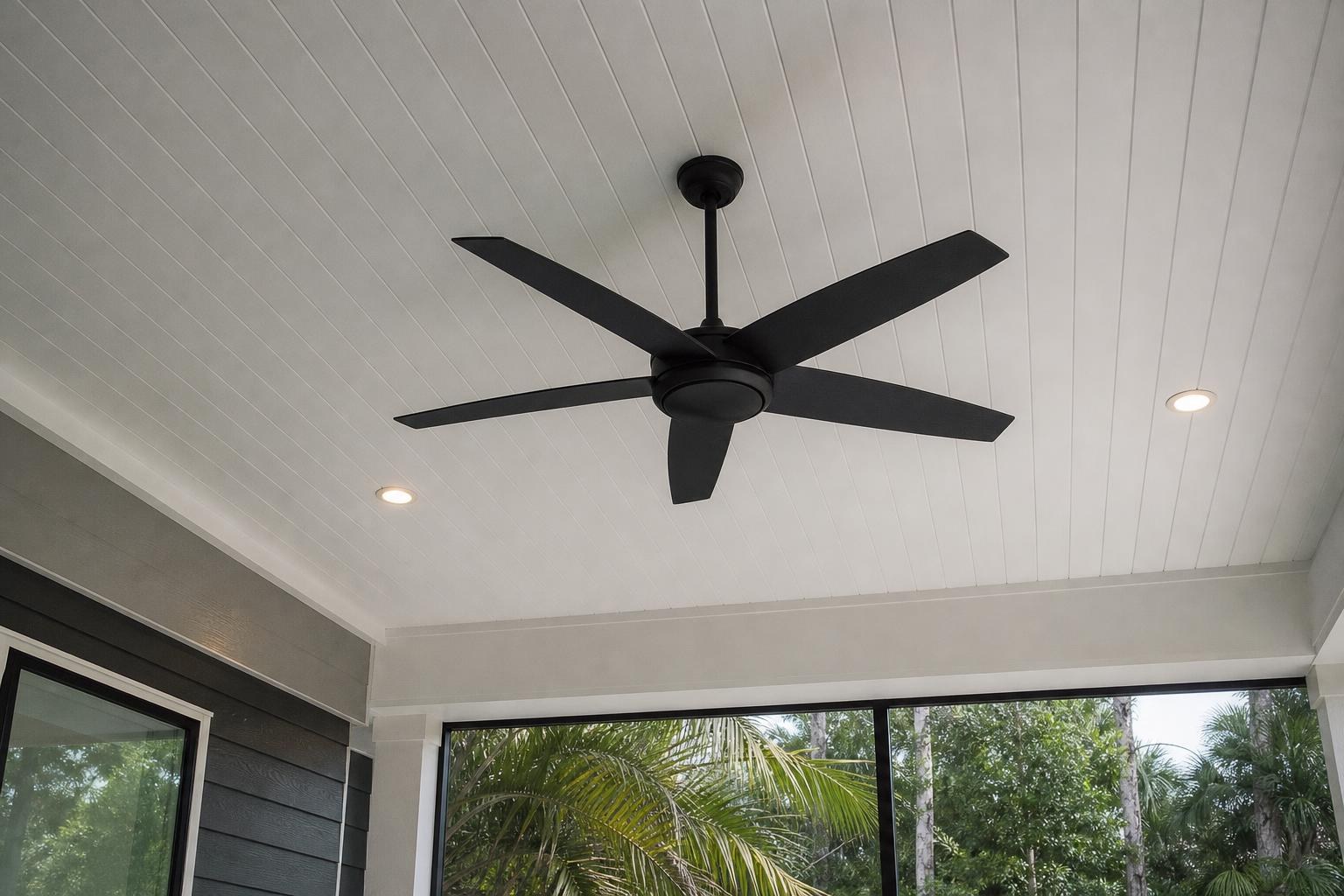
The best lanai ceiling ideas do two jobs at once: they make the space feel finished, and they hold up to Southwest Florida humidity, salt air, and wind-driven rain. Whether your lanai is in Naples or North Fort Myers, the ceiling is the part you notice every time you look up, and it is the first place a poor material choice starts to sag or stain.
A bare concrete pad under screen can become a room your family actually lives in. The ceiling, the fan, and the lighting are what make that shift happen. They set the color, the brightness, and the breeze, and they decide whether the space feels like an extension of the house or an afterthought.
Materials, fans, and lighting each follow their own rules on a lanai, and the overhead details matter more than most people expect.
What a Lanai Ceiling Faces That an Indoor Ceiling Never Does
An indoor ceiling sits in air that is cooled, dried, and still. A lanai ceiling sits in humid air, catches wind-driven rain when a summer storm blows through the screen, and takes a steady dose of UV and salt. Finishes that look fine in a living room can peel, stain, or grow mildew here within a couple of seasons.
Wind is the other factor. Florida’s wind requirements apply to a lanai just as they do to the rest of the house, so anything overhead has to be secured properly. If you are still deciding what kind of structure you want in the first place, our comparison of a pergola versus a covered lanai is a helpful place to start.
Lanai Ceiling Ideas That Hold Up in Humid Air
For an open or screened lanai, we lean toward materials that tolerate moisture. PVC or vinyl tongue-and-groove planks, including beadboard-style profiles, are popular because they stay clean and resist rot. Aluminum panels and fiber-cement soffit panels are also durable choices that shrug off damp air.
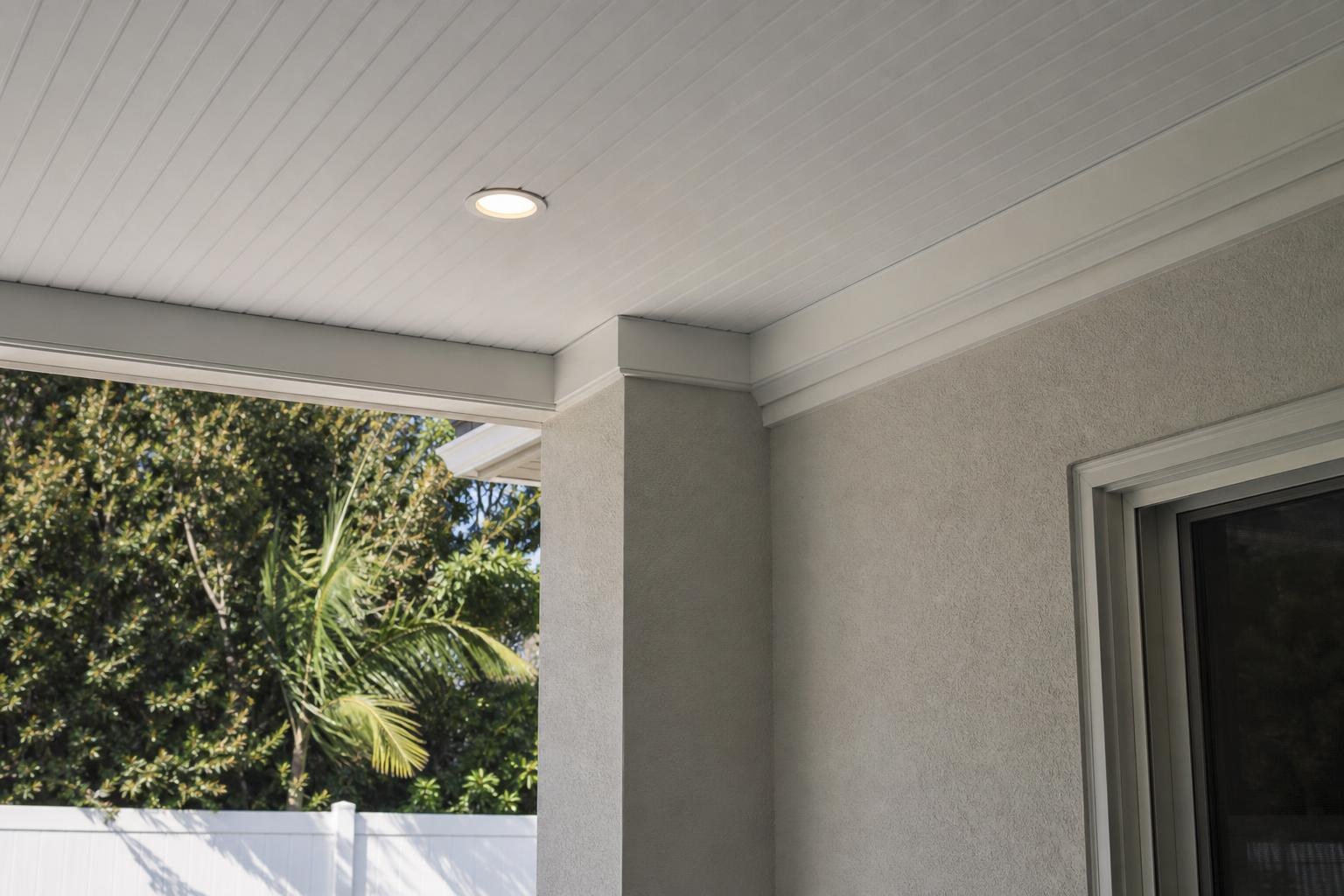
Properly sealed and painted wood is another option and gives a warm, custom look. It needs more upkeep, because the paint or stain has to be kept up and the ends and edges stay sealed. Light-colored ceilings bounce daylight and make the lanai feel larger. Darker ceilings can look dramatic and hide stains, though they show dust and absorb more of the light you paid for.
Beams and trim deserve the same thought. A painted beam or a slim trim profile where the ceiling meets the stucco wall gives the room a finished edge. Clean caulk lines and neat corners are small details that make a lanai look designed rather than assembled.
The shape of the ceiling matters too. Some lanais have a flat ceiling framed below the roof, while others follow the roof pitch for a vaulted look. Planks work well in both, and a vaulted ceiling gives a fan room to hang on a longer downrod. The best lanai ceiling ideas start with what your structure already allows.
Materials to Avoid Overhead on an Open Lanai
Some materials are wonderful indoors and a poor match for an open lanai. Paper-faced drywall and untreated MDF soak up humidity, then sag and grow mildew. That is true even under a roof, because moisture moves through screen and rain blows in sideways.
Stucco and drywall ceilings belong in fully enclosed, conditioned lanais, where the air is controlled like the rest of the house. If you are thinking about enclosing the space, treat it as a bigger project with its own permits and cooling plan. For a semi-open lanai, stay with the moisture-tolerant options above. Many of the looks you see online assume an air-conditioned room, so check the conditions before you copy one.
Fasteners, Wind, and Salt Air
What holds the ceiling up matters as much as what you see. We use stainless or coated fasteners and corrosion-resistant hardware, because ordinary screws rust and stain the finish near the coast. Rust streaks on a white ceiling are one of the first signs of a shortcut. Hardware on trim, brackets, and fan mounts deserves the same attention as the fasteners in the planks.
In a strong wind, air pushing up under the roof edge can lift panels that are only lightly attached. Planks and panels need to be secured to structure and trimmed so edges stay tight. If your lanai screen has taken a beating in a storm, our guide to screen enclosure repair versus rebuild explains how to think about what comes next.
Choosing Ceiling Fans That Suit the Lanai
A ceiling fan is one of the most useful upgrades on a lanai because moving air makes Florida heat more bearable. The first question is the rating. A damp-rated fan is meant for covered areas protected from direct water, while a wet-rated fan is built for spots where rain can reach it, such as near open screen sides. When in doubt, choose wet-rated.
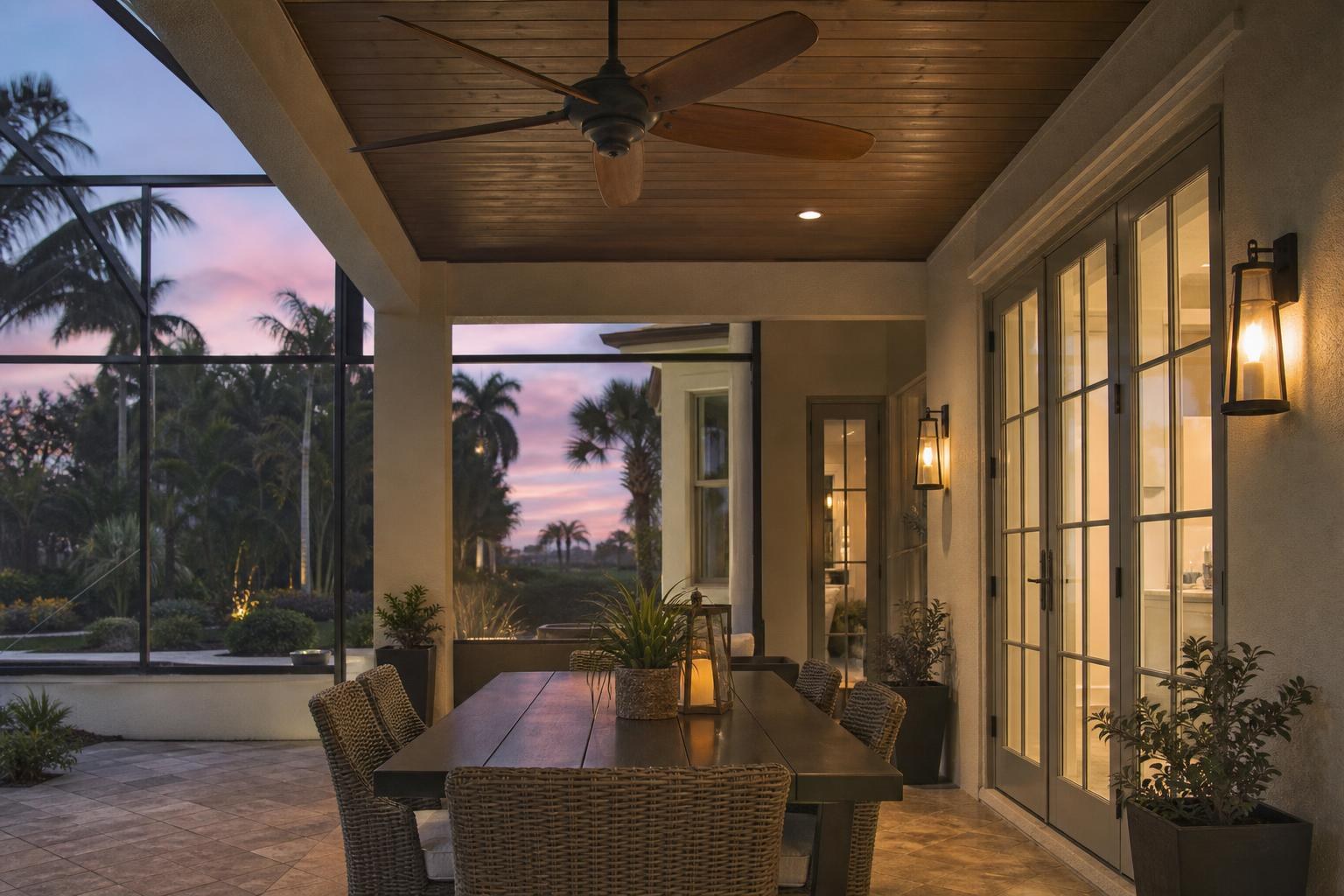
Size matters too. Match the blade span to the room, because a small fan in a large lanai barely stirs the air, and a huge fan in a small one feels like a wind tunnel. Higher ceilings call for a downrod so the blades sit at a useful height. Follow the manufacturer’s instructions on mounting height and clearance.
Fans also need solid support. They should be mounted to proper structural blocking and an electrical box listed for ceiling fan support, never to a thin panel. The ENERGY STAR ceiling fan program certifies efficient fans, and certified models must meet its efficiency standards, which is worth a look if the fan will run most of the day.
Layered Lighting for Evenings Outside
The lanai is where many Fort Myers and Estero households spend their summer evenings, so lighting deserves a plan. We like layers: wet-rated recessed LEDs for general light, wall sconces for warmth, and dimmers so the mood can shift from dinner to late conversation. Layering keeps the space from feeling like a parking garage at night.
Warm color temperatures make the lanai feel like a room. Warm bulbs also tend to draw fewer insects than cool white ones, though results vary. Electrical work on a lanai generally needs a permit, and when we build the ceiling, fan, and lighting together, we handle the permits and inspections.
Heat, Bugs, and Everyday Upkeep
The lanai ceiling will not cool the space on its own, but a good fan helps the area feel more comfortable in Cape Coral and Bonita Springs summers. A steady breeze also makes it harder for mosquitoes to settle near where you sit.
Maintenance is simple if you build it into the routine. Rinse salt and dust off the ceiling and fan blades, and check fasteners and trim after storm season. Touch up paint or caulk before small gaps turn into bigger problems. A few minutes of care each season helps keep the ceiling looking good. For more on how we approach full outdoor spaces, see our outdoor living work and our post on lanais and decks in North Fort Myers.
Frequently Asked Questions
What is the best ceiling material for a screened lanai?
PVC or vinyl plank ceilings, aluminum panels, and fiber-cement soffit panels are strong choices because they tolerate humidity and wind-driven rain. Sealed and painted wood also works if you are willing to do the upkeep.
Can I use drywall on a lanai ceiling?
Only in a fully enclosed, conditioned lanai. On an open lanai, paper-faced drywall soaks up humidity and can sag or grow mildew.
Do I need a wet-rated fan on my lanai?
Use a wet-rated fan anywhere rain can reach it, such as near open screen sides. A damp-rated fan is meant for covered areas protected from direct water. Check the manufacturer’s listing for your exact spot.
Does adding a ceiling fan or lights require a permit?
Electrical work on a lanai generally needs a permit, so ask your building department what applies at your address. We handle the permits when we build the ceiling, fan, and lighting together.
A lanai ceiling comes together best when the materials, fan, and lighting are planned as one. See our outdoor living projects. Call us at (239) 771-2855 to request an estimate. We are a licensed Florida general contractor (CBC1268590) with a 5.0 Google rating.