
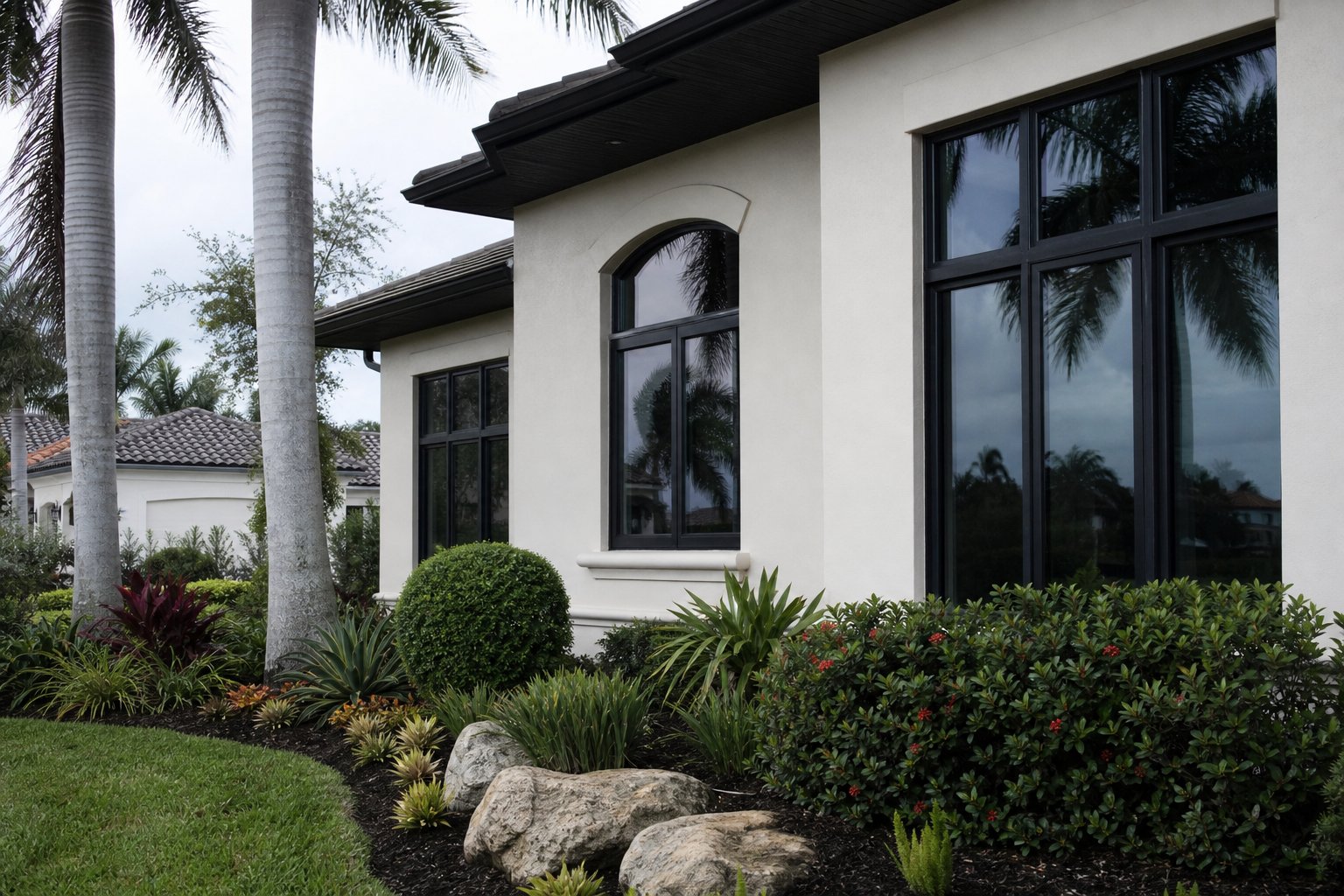
Every Southwest Florida homeowner eventually faces the same question: how do we protect the windows when a storm is coming? The two main answers are impact-rated windows and hurricane shutters. Both can keep your home safe when chosen and installed correctly, but they work very differently day to day. Below, we break down how the two compare so you can pick the right protection for your home.
How impact windows work
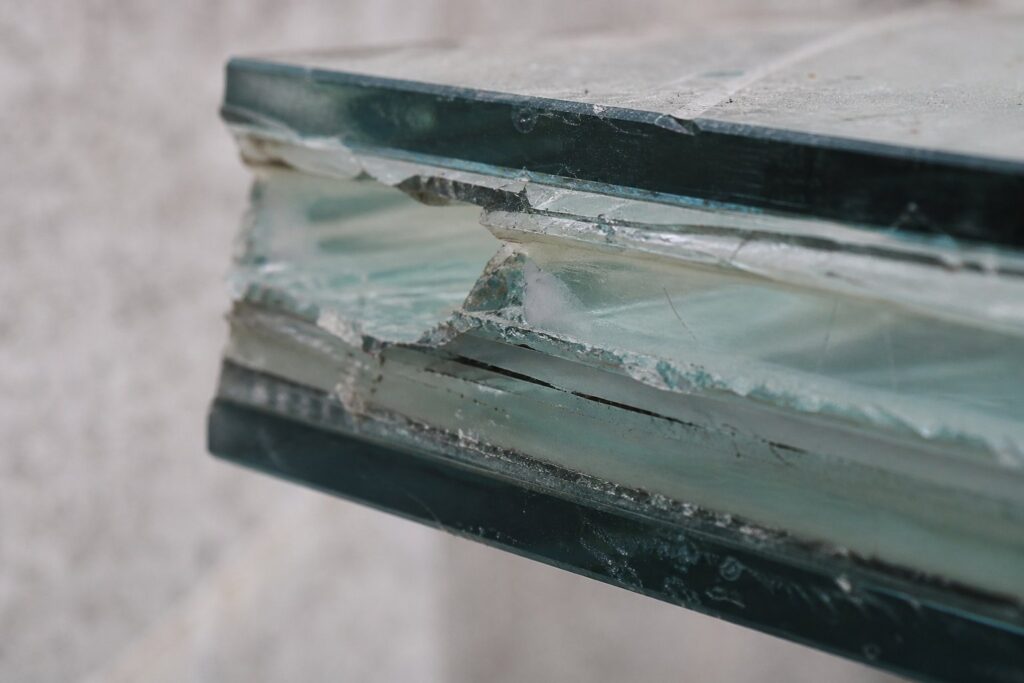
Impact windows are permanently installed units built with laminated glass that holds together when struck, much like a car windshield. Once they are in, your protection is always in place. There is nothing to deploy when a storm approaches, which is a real advantage when watches turn into warnings quickly. Beyond storm protection, impact windows reduce outside noise, improve energy efficiency by cutting heat transfer, and add a layer of security against break-ins. The trade-off is upfront cost, since they are a larger investment than shutters.
How hurricane shutters work
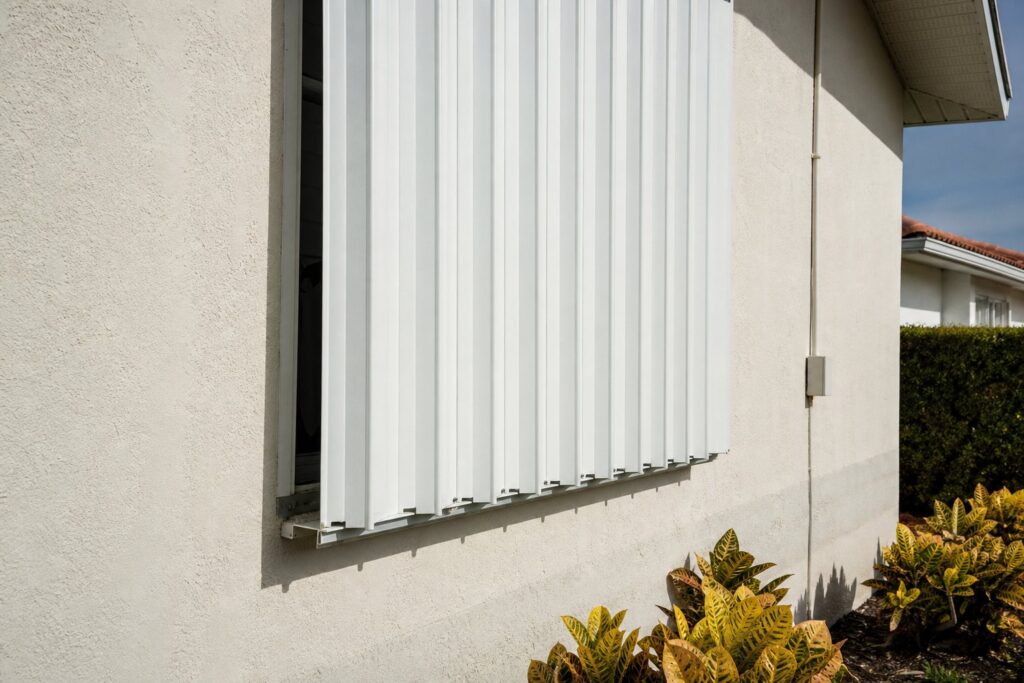
Hurricane shutters protect your existing windows by covering them when a storm threatens. They come in several types, from removable panels to accordion and roll-down styles, with a range of prices and convenience levels. Shutters generally cost less upfront than replacing every window, which makes them an accessible way to reach a protected home. The trade-off is that most require deployment. Panel systems in particular take time and effort to put up before a storm and take down after, which matters when you are also preparing the rest of the house.
The convenience factor
For many homeowners, the daily reality tips the decision. Impact windows are effortless: protection is built in and invisible, and you never lift a finger when a storm forms. Roll-down shutters offer similar convenience at the press of a button but only on the openings they cover. Removable panels are the most economical but the most labor-intensive, and that labor lands at the worst possible time. Be honest with yourself about whether you will reliably put up panels when a storm is days away.
Insurance and home value
Both options can reduce windstorm insurance premiums when they meet Florida’s code requirements, since they lower the risk of catastrophic damage. Impact windows often have the added benefit of being a permanent home improvement that appeals to buyers, since the protection conveys with the house and requires nothing of the new owner. We help homeowners document the work so it can be applied toward insurance mitigation credits where eligible.
Understanding the cost picture
Cost is usually the pivot point, so it helps to see the full picture. Hurricane shutters generally carry a lower upfront price, which makes them an accessible way to reach a protected home, especially for a house with many openings. Impact windows are a larger investment because you are replacing the windows themselves, but that investment buys benefits beyond storm protection, including energy savings, noise reduction, and security that show up every day, not just during a storm. When homeowners weigh the numbers over the years they will own the home, and factor in possible insurance savings and the appeal to future buyers, the gap often narrows more than the sticker prices suggest.
What the installation process looks like
Knowing what to expect makes the decision easier. Impact window installation is a more involved project, since each window is removed and replaced and the openings are properly sealed and finished, but a professional crew moves through a home efficiently and the result is permanent. Shutter installation varies by type, from mounting tracks and bolts for panels to fitting roll-down or accordion systems at each opening. In both cases, proper installation to Florida’s code is what makes the protection real and what qualifies the work for insurance mitigation credits. We handle the permitting and inspections so the protection is documented and counts when you need it to.
Getting the protection documented
Storm protection only counts when it is installed to code and documented, and that paperwork is easy to overlook. We handle the permitting and inspections so your impact windows or shutters meet Florida’s requirements, and we make sure you have the product approvals and final documentation needed to apply for windstorm mitigation credits with your insurer. That documentation also matters at resale, when a buyer or their inspector wants proof the protection is legitimate. Doing the work right and papering it correctly turns storm protection from a hopeful purchase into a verified upgrade that protects your home, your wallet, and your home’s value.
Matching protection to how your home is built
Not every Southwest Florida home calls for the same approach, and we tailor the recommendation to the house in front of us. A two-story home with tall, hard-to-reach windows is a difficult place to wrestle removable panels into position when a storm is bearing down, which often pushes those homeowners toward impact windows or roll-down shutters they can deploy from the ground. A single-story home with a manageable number of openings has more room to consider economical panel systems. Large sliding glass doors that open onto a lanai are their own consideration, since they present a wide span of glass that needs serious protection, and the impact-rated and roll-down options for those openings differ from what works on a standard window. We look at the elevations most exposed to wind, the openings that would be hardest to protect under pressure, and the way you actually live in the house before settling on a plan.
Budget realities shape the plan too, and there is no shame in phasing the work. Many homeowners we work with start by protecting the largest and most vulnerable openings, then complete the rest of the house in a later season. A mixed approach is perfectly valid: impact windows on the front elevation and the big slider, sturdy shutters on the remaining windows, each chosen for its spot. What matters is that every opening ends up protected to code, because a single unprotected window can let wind pressure into the home and turn a manageable storm into a structural problem.
Caring for your storm protection over time
Whichever route you choose, a little upkeep keeps the protection ready when it counts. Impact windows are close to maintenance-free, but it still pays to keep the frames and weep holes clean so they drain properly, to check the weatherstripping every so often, and to make sure the locks engage fully, since a latched impact window performs better under pressure than an unlatched one. Shutters need a bit more attention. Tracks and bolts should be cleaned and lubricated so panels slide and seat without a fight, hardware should be checked for corrosion in our salty coastal air, and roll-down and accordion mechanisms benefit from an occasional test run well before any storm is on the horizon. The worst time to discover a seized track or a missing wing nut is the afternoon a warning is issued.
We encourage homeowners to do a calm pre-season check each year rather than scrambling when a system is already forming in the Gulf. Confirm you have all the panels and fasteners, run the roll-downs through a full cycle, and walk the house to be sure nothing has been quietly damaged since last season. Storm protection is only as good as its condition on the day it is needed, and a short annual habit is what keeps a Cape Coral or Bonita Springs home genuinely ready rather than only protected on paper.
For official preparedness guidance ahead of storm season, see Ready.gov’s hurricane safety resources.
Frequently asked questions
Do impact windows or shutters lower insurance? Both can qualify for windstorm mitigation credits when they meet code. Keep documentation of the rated products and installation to apply for them.
Which offers better everyday benefits? Impact windows, because they also reduce noise and energy costs and require no deployment. Shutters protect only when put up.
Can I do a mix? Yes. Some homeowners install impact windows on the most exposed elevations and use shutters elsewhere to manage cost.
Planning storm protection before the next season? Read about our general contracting services and reach out through our contact page or call (239) 771-2855 to talk through options for your Cape Coral or Bonita Springs home.
We Serve Southwest Florida
Alliance Construction provides remodeling services in Cape Coral, Naples, Bonita Springs, Estero, North Fort Myers, and Punta Gorda. View all services →