
Design guide
Bathroom Lighting Design for Naples Homes
Strong bathroom lighting design layers three kinds of light so the room works at six in the morning and relaxes at ten at night. In Naples homes, where finish quality is the expectation, lighting deserves the same attention as tile and cabinetry. This guide covers task, ambient, and accent layers, the ratings wet areas require, and the color decisions that flatter, with support from our bathroom remodeling services team.
Keep Electrical Work With Verified Professionals
Most lighting upgrades reach past the fixture itself: new switch legs, dimmers, added circuits, exhaust fan wiring, and fixtures installed over showers and tubs. That is electrical work, and it belongs with qualified, properly licensed professionals rather than whoever quotes the lowest per-fixture price. The practical question for a homeowner is not whether a rule applies but how to verify the person proposing the wiring, and Florida gives consumers a straightforward workflow for exactly that check before any contract is signed.
Scope the conversation in fixtures and locations, not just hours. A written fixture schedule listing each light, its location, and its wet or damp listing gives an electrician something concrete to price, and it makes the shower and tub zones, where listings matter most, impossible to overlook.
The Florida Department of Agriculture and Consumer Services advises homeowners to check a contractor’s license and complaint history with the Department of Business and Professional Regulation before hiring, to ask for a written estimate and inspect the terms carefully before signing, and to be wary of cash-only deals. Run that check on anyone proposing wiring changes in your bathroom, keep the license number with your project records, and treat reluctance to provide it as an answer in itself. Source: FDACS guidance on hiring service contractors.
Task Lighting at the Vanity and Mirror
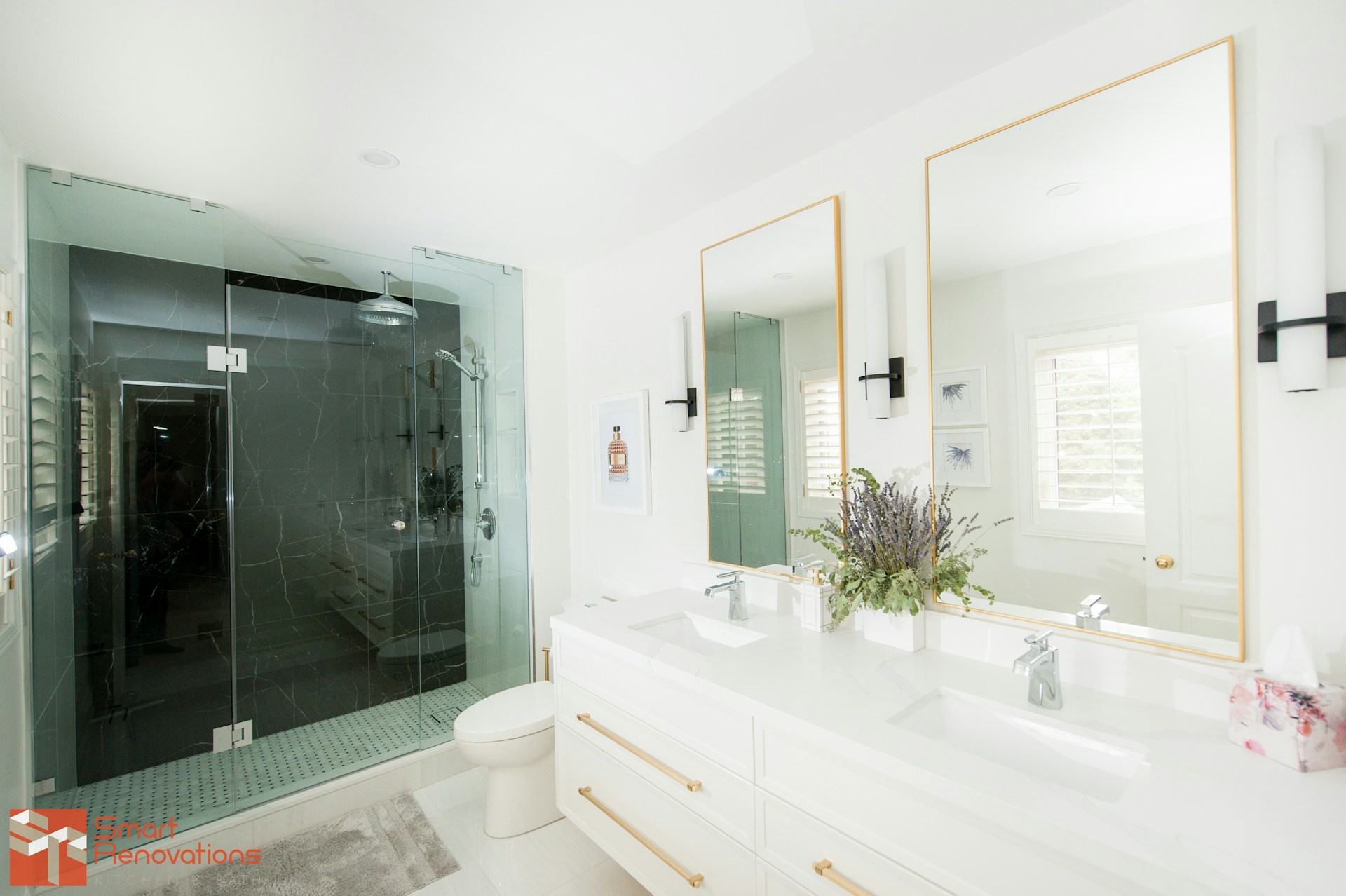
The vanity is where task light earns its keep. Sconces mounted on either side of the mirror at roughly eye level, about 60 to 65 inches from the floor, eliminate the shadows a single overhead fixture throws under the brow, nose, and chin.
When side mounting is impossible, a horizontal bar above the mirror is the next best option, and backlit LED mirrors provide even task light while acting as a design element on their own. Give each mirror of a double vanity its own fixtures, and choose diffused or frosted shades to spread light without glare.
Ambient Fill and Accent Layers
Recessed fixtures deliver clean ambient light without visual clutter: place one over the shower or tub and one or two in the general room, using IC-rated housings with modules rated for damp locations. Anything inside the shower itself must carry a wet-location rating.
Accent layers give a Naples bathroom its finish: lighted shower niches that show off tile, toe-kick strips under a floating vanity that double as a nightlight, cove lighting for soft indirect fill, and in a large primary bath with high ceilings, a statement fixture over a freestanding tub.
Design the Lighting in Three Passes
Lighting design goes fastest when it moves from function to specification to scope in order, rather than picking fixtures from photographs first. Walk the room at the times it is actually used, morning and evening, and note where the current lighting fails: shadows at the mirror, a dark shower, or a single glaring ceiling fixture doing all the work.
- Map every layer on the plan. Mark task fixtures at each mirror, ambient fixtures for the room and shower, and the accent locations worth wiring, then give each layer its own switch or dimmer so brightness can shift from morning routine to evening bath.
- Verify ratings and color together. Confirm damp or wet-location ratings for every fixture near water, keep color temperature between 2700K and 3000K across all layers, and check that each LED product is actually compatible with the dimmer controlling it.
- Confirm the electrical scope in writing. List new circuits, switch changes, and fixture locations, verify the license and complaint history of whoever performs the wiring, and keep that documentation with the project file.
Choose Color and Controls for How the Room Feels
Color temperature decides whether the finished bathroom feels inviting or clinical. Light between 2700K and 3000K renders skin warmly and suits the coastal palettes common in Naples interiors, while anything above 4000K pushes the room toward a laboratory feel. Consistency matters as much as the number: when strip accents, recessed cans, and vanity fixtures carry different temperatures, the mix reads as a mistake even to people who cannot name why. Specify one temperature and hold every layer to it.
Placement finishes what color temperature starts. Vanity light belongs at face height on both sides of the mirror, where it fills shadows evenly, while a ceiling fixture alone throws light downward and shades the eyes. Aim accent layers at texture, tile, or art rather than at the mirror itself.
Controls determine how much of the design actually gets used. Dimmers cost little and let the same fixtures serve a bright morning routine and a low-lit evening soak, provided the LED products are dimmer-compatible. A toe-kick or niche light on its own switch covers the middle-of-the-night trip without waking the whole room. Decide the switching plan while walls are open, because adding a control point later costs far more than drawing it on the plan today, and label each circuit clearly at closeout.
Frequently Asked Questions
What color temperature is best for bathroom lighting?
Between 2700K and 3000K for warm, flattering light. Keep every layer, including LED strips, at the same temperature, and avoid going above 4000K, which makes a bathroom feel clinical.
Do shower lights need a special rating?
Yes. Fixtures inside a shower must be rated for wet locations, not just damp locations, and recessed housings elsewhere in the bathroom should be IC-rated with damp-rated modules.
Light Your Naples Bathroom Properly
Alliance Construction plans lighting alongside tile, cabinetry, and layout so every layer lands where the design needs it. Explore our remodeling in Naples page and request a project consultation to review a lighting plan for your bathroom.
We Serve Southwest Florida
Alliance Construction provides remodeling services in Cape Coral, Naples, Bonita Springs, Estero, North Fort Myers, and Punta Gorda. View all services →