
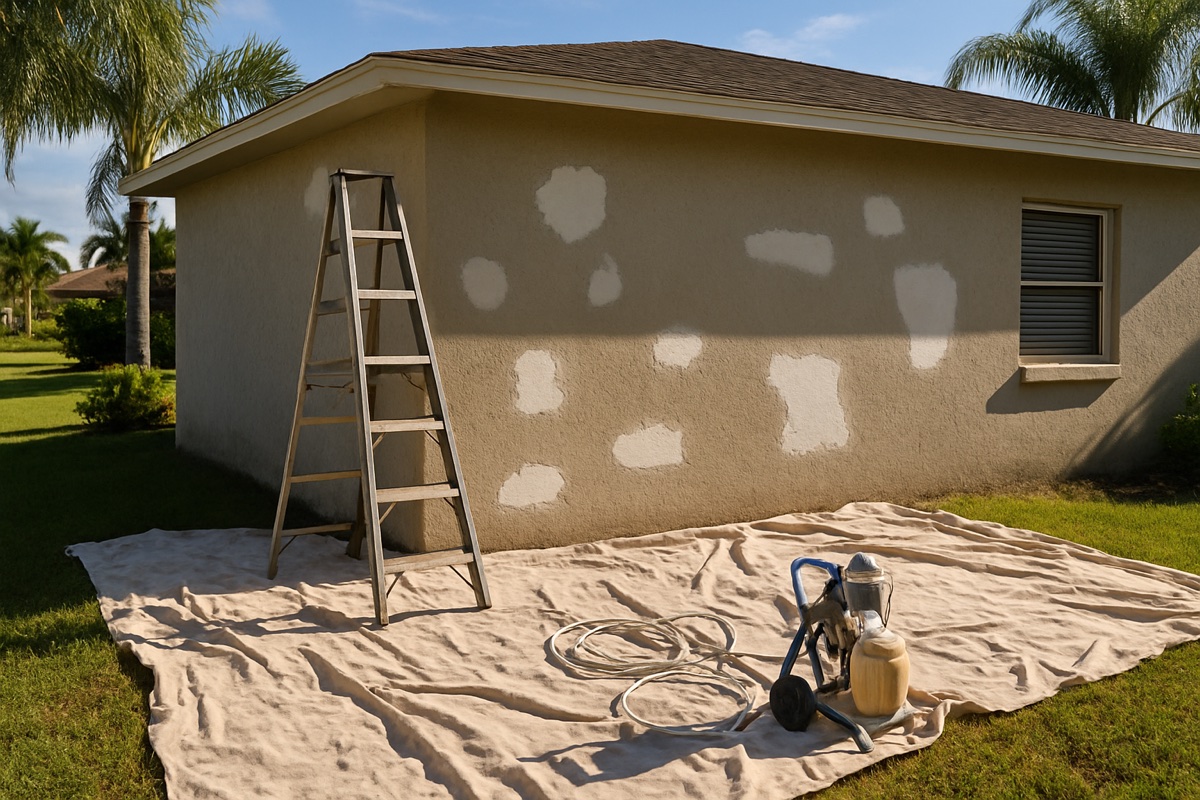
An exterior repaint on a stucco Southwest Florida home is not the same project as repainting a wood-framed house in a drier climate. In Cape Coral, Fort Myers, and Naples, your stucco shell faces year-round ultraviolet exposure, 70%-plus relative humidity for most of the year, salt-air corrosion if you’re within five miles of the coast, and the kind of wind-driven rain that follows a Gulf storm. Skip the prep steps (or schedule the work at the wrong point in the rainy season) and a fresh coat of paint can bubble, peel, or fail within eighteen months. This guide walks you through every stage of proper exterior repaint preparation so your investment holds up through Florida’s climate and looks solid for eight to twelve years.
Understanding What SWFL Stucco Faces Before You Paint
Most Southwest Florida homes built after the 1960s use concrete-block construction (CBS, or concrete masonry unit framing) with a three-coat or two-coat stucco finish applied directly over the block or over a scratch coat. That system is fundamentally different from synthetic stucco (EIFS) or fiber-cement siding, and it responds to moisture in its own way. CBS walls absorb and release humidity constantly. In Lee County and Collier County, where overnight dewpoint temperatures routinely sit in the mid-70s from June through September, moisture that gets trapped under a paint film has nowhere to go except back through the coating: creating blisters, efflorescence, or peeling seams at expansion joints.
Salt air compounds the problem. Homes within five miles of the Gulf, Charlotte Harbor, or the Caloosahatchee River experience accelerated oxidation on metal lath if any surface crack allows water intrusion. Once lath rusts and expands, stucco fractures from the inside. By the time you see a visible crack wider than a hairline, moisture may already have worked behind the finish coat. That’s why a thorough inspection (not just a visual skim) must come first on any exterior repaint project in Southwest Florida.
Chalking is another common issue. Florida’s intense UV index breaks down paint binders faster than nearly anywhere in the continental United States. Run your hand across an older painted stucco surface and a white or tinted powder transfers to your palm; that’s chalk, and it signals binder degradation. Paint applied over chalked stucco bonds poorly; the chalk layer itself separates, taking the new coat with it. Recognizing these regional failure modes before you open a paint bucket is what separates a durable exterior repaint from a short-term fix.
Pressure Washing, Cleaning, and Surface Assessment
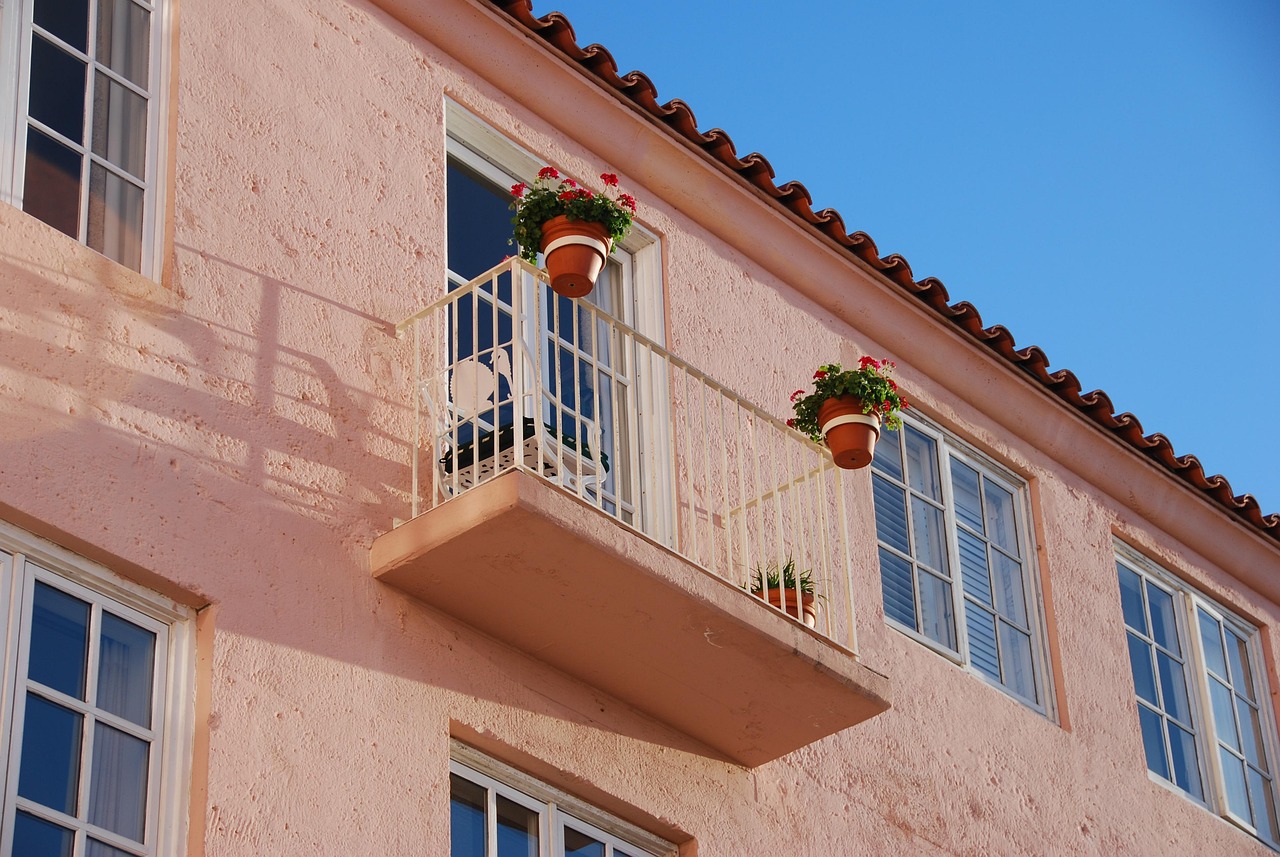
Proper surface preparation for an exterior repaint stucco Southwest Florida project starts with mechanical cleaning; not chemical treatment alone. A gas-powered pressure washer running between 1,500 and 2,500 PSI with a 25- or 40-degree fan tip is the standard tool. Higher pressures can fracture aged stucco or drive water behind window flanges, so dial back to the lower end on stucco that’s showing fine surface crazing. Work top to bottom in overlapping passes, holding the nozzle eight to twelve inches from the wall surface to strip chalk, dirt, algae, and mildew spores without gouging the finish coat.
Southwest Florida’s humid environment makes algae and mildew growth almost inevitable on north-facing and shaded elevations. A pre-treatment with a diluted sodium hypochlorite solution (typically one part bleach to three parts water) scrubbed in and allowed to dwell for ten minutes before rinsing kills biological growth at the root rather than just removing visible discoloration. Follow up with a thorough rinse; bleach residue left on stucco can interfere with primer adhesion.
After washing, let the wall dry completely before proceeding. In practice, that means waiting a minimum of 48 to 72 hours in summer humidity and potentially five to seven days in the heart of the rainy season (June through September). Moisture meters (a handheld tool a qualified contractor carries) should read below 15% surface moisture before primer application. This is a non-negotiable step that many homeowners underestimate. Paint manufacturers’ warranty requirements almost universally specify a dry substrate, and Lee County inspectors reviewing commercial repaints will ask for documentation of surface preparation on permitted projects.
While the wall is clean and dry, conduct a thorough assessment: mark hairline cracks with chalk, note any areas where the stucco sounds hollow when tapped (indicating delamination), and flag rust staining near windows, soffit edges, or expansion joints. This assessment determines your repair scope before the first drop of primer goes on.
Hairline Crack Repair and Caulking for SWFL Conditions
current Florida Building Code requires that building envelopes be weather-resistant, and properly repaired stucco is part of maintaining that envelope integrity. For an exterior repaint on a Southwest Florida home, crack repair is not cosmetic; it’s structural protection against the wind-driven rain events that accompany tropical storms and hurricanes. Even modest Category 1 conditions push water horizontally at 74 to 95 mph, and any unrepaired crack becomes a direct entry point.
Hairline Cracks (Under 1/16 Inch)
Hairline cracks in stucco finish coats are extremely common in Southwest Florida, driven by thermal cycling: the daily swing from morning cool to afternoon heat that expands and contracts CBS walls. For cracks under 1/16 inch, a high-quality elastomeric crack filler or a thin-bodied masonry caulk rated for exterior masonry works well. Apply with a caulk gun or a brush-grade filler, feather it smooth with a damp putty knife, and allow it to cure to the manufacturer’s specified dry time: typically 24 hours at Florida temperatures.
Wider Cracks and Delaminated Areas
Cracks wider than 1/16 inch, or areas where the stucco sounds hollow, require more involved repair. Delaminated sections must be cut out with an angle grinder, the substrate inspected for rust or moisture damage, and new stucco applied in matching coats. A two-coat repair (scratch coat plus finish coat) followed by seven to ten days of cure time is standard before paint. Using a polymer-modified stucco patching compound improves adhesion and flexibility in our climate. On repairs wider than a few inches, applying a fiberglass mesh tape over the patch before finish coat dramatically reduces future cracking at the repair boundary.
Caulking Transitions and Penetrations
Every penetration through the stucco envelope (hose bibs, electrical conduits, cable TV sleeves, AC line sets, window flanges) needs fresh, paintable polyurethane or siliconized acrylic caulk before painting. Check existing caulk at window and door frames; Florida UV degrades caulk faster than in northern climates, and dried, cracked caulk at a window flange is a primary water intrusion path. For homes near the coast, specify a caulk that meets ASTM C920, Type S, Grade NS, Class 25, Use NT; that classification covers non-sag applications suitable for Florida’s movement-prone masonry joints.
Primer Selection and Application for Florida Stucco
Primer is not optional on an exterior repaint stucco Southwest Florida project; it is the adhesion and moisture-management layer that determines whether your topcoat survives. The two categories most relevant to CBS stucco homes in Lee, Collier, and Charlotte counties are masonry block filler (for coarser textures and porous surfaces) and elastomeric primer (for surfaces with residual micro-cracks or significant chalk).
Elastomeric primer is the product of choice for most Florida stucco repaints. Formulated with higher rubber content than standard acrylic primer, it bridges hairline cracks up to approximately 1/32 inch, creates a flexible film that moves with the substrate during thermal cycling, and delivers the kind of surface build that helps moisture bead off the wall rather than wick in. Major manufacturers (Sherwin-Williams, Benjamin Moore, and Behr all have Florida-market elastomeric lines) specify their products are suitable for masonry in high-humidity, UV-intense environments.
Application method matters. Elastomeric primer should be applied with a 3/4-inch or 1-inch nap roller for flat to lightly textured stucco, or an airless sprayer followed by back-rolling on heavier texture. Apply at the manufacturer’s recommended spread rate: do not thin the product or spread it too thin chasing coverage. A single coat of elastomeric primer on properly cleaned and repaired stucco typically runs $0.30–$0.60 per square foot in material cost at current Southwest Florida pricing. Allow full cure before topcoat application; in summer humidity, that often means overnight or longer rather than the “two-hour recoat” listed on northern-climate data sheets.
For new stucco repairs, a masonry conditioner or PVA primer applied over the patch before the elastomeric primer prevents the fresh, highly porous patch from pulling moisture and pigment out of the finish coat unevenly: a phenomenon called “flashing” that leaves dull spots in the final appearance. Our painting and finish services cover primer selection specific to each substrate condition we encounter in the field.
Timing the Project Around SWFL Weather and Humidity
Scheduling an exterior repaint in Southwest Florida requires working around two distinct weather patterns: the dry season (November through April) and the rainy season (May through October, with the wettest months being July through September). The dry season is clearly preferred for exterior painting. Relative humidity drops to 50–65% on many afternoons, afternoon thunderstorms are rare, and surface moisture levels stabilize faster between coats.
That said, demand for exterior painting contractors in Southwest Florida peaks during the dry season: particularly after snowbirds arrive in November and assess their homes’ condition. Expect to book licensed painting contractors four to six weeks out from November through March. Project costs for a full exterior repaint on a 2,000-square-foot single-story CBS home in the Fort Myers or Cape Coral market currently run $4,500–$9,000 depending on surface complexity, number of coats, primer type, and repair scope. Two-story or heavily textured homes with deep soffits push toward the upper end of that range.
Rainy season repaints are possible but require strict attention to daily weather windows. The typical Gulf Coast afternoon thunderstorm pattern means mornings are usually the safest application window: crews can often apply paint from 7 a.m. to noon before storm cells build. However, paint applied when substrate temperature is above 90°F (common on west-facing walls in June) can skin over too quickly, trapping solvents and reducing adhesion. Best practice is to paint in shade wherever possible and follow manufacturer temperature limits, which for most 100% acrylic latex topcoats cap at 95°F surface temperature.
If you’re in a FEMA-designated flood zone (common in coastal Lee County and along the Peace River corridor near Punta Gorda) check whether any wall repairs trigger a general contracting permit review before work begins. Minor repaints typically don’t require a permit in Lee County, but structural stucco repairs exceeding certain thresholds may. A licensed contractor can clarify the threshold with the Lee County Building Department before work starts, protecting you from compliance issues at resale.
Topcoat Selection and Finish Maintenance
For the finish coat on an exterior repaint stucco Southwest Florida home, 100% acrylic latex elastomeric or premium acrylic exterior paint is the right category. Avoid alkyd (oil-based) paints on stucco; they become brittle in UV-intense Florida conditions and don’t tolerate the moisture movement that CBS walls produce. Look for products with a stated 15-year or longer durability rating and built-in mildewcide, which matters greatly in our humidity. Flat or low-sheen finishes are traditional on stucco texture but are harder to clean; a satin finish adds washability without making imperfections jump out under Florida’s harsh afternoon light.
Two coats of topcoat after primer is standard. On heavily chalked surfaces or bare stucco repairs, three coats may be warranted. Each coat on a 2,000-square-foot home uses approximately two to three gallons of paint at normal spread rates. Thin the first topcoat only per manufacturer instructions (usually no more than 5% water) and apply the second coat at full body once the first is dry to the touch (typically two to four hours in dry-season conditions).
After the repaint, annual maintenance is straightforward but important. Rinse north-facing and shaded walls with a low-pressure garden hose annually to remove algae spore buildup before it becomes a stain. Inspect caulk at windows and penetrations after each hurricane season: wind events flex the building and can open previously sealed joints. Touch up hairline cracks as they appear rather than waiting for a full repaint cycle. With proper prep and maintenance, a quality exterior repaint on Florida stucco should hold its appearance for eight to twelve years before another full repaint is needed.
Frequently Asked Questions
How long should I wait after pressure washing before priming stucco in Southwest Florida?
In the dry season (November through April), 48 to 72 hours of drying time is typically sufficient if temperatures are in the mid-70s to 80s with low humidity. During the summer rainy season, you may need five to seven days. Use a handheld moisture meter to confirm surface readings below 15% before applying any primer. Skipping this step is the most common cause of early paint failure on Florida stucco.
Do I need a permit to repaint the exterior of my home in Lee County?
A standard exterior repaint (cleaning, patching hairline cracks, priming, and painting) does not typically require a building permit in Lee County. However, if repairs involve removing and replacing more than a minor portion of the stucco system or if structural elements are exposed, a permit may be required. Check with the Lee County Building Department or ask your licensed general contractor to verify the scope before work begins.
What paint finish works best on Florida stucco: flat, satin, or semi-gloss?
Satin is the most practical choice for most Southwest Florida stucco homes. It holds up better to mildew and algae than flat finishes, withstands periodic cleaning, and doesn’t reflect Florida’s intense sunlight as harshly as semi-gloss. Flat finishes remain common on deeply textured stucco where the low sheen is aesthetically preferred, but they require more frequent repainting in humid climates. Semi-gloss is generally reserved for trim, shutters, and doors rather than field stucco surfaces.
Can I paint stucco during Southwest Florida’s rainy season?
Yes, with careful scheduling. Morning application windows (typically 7 a.m. to noon) allow paint to apply and begin curing before afternoon thunderstorms arrive. Avoid application when surface temperatures exceed 95°F or when rain is forecast within four hours of application. Elastomeric products generally handle incidental light rain after a two-hour cure window, but a direct downpour on wet paint will cause runs and adhesion failure. Dry season scheduling is always preferred for best results.
When you’re ready to plan your exterior repaint, Alliance Construction & Renovation is a licensed Florida general contractor serving Fort Myers, Cape Coral, Naples, and communities throughout Lee, Collier, and Charlotte counties. Our crews handle full surface preparation (pressure washing, crack repair, priming, and finish coats) with permit-pulled work on any scope that requires it. Explore our painting and finish services or call us directly at (239) 771-2855 to schedule a consultation and get an accurate estimate for your stucco repaint project.