
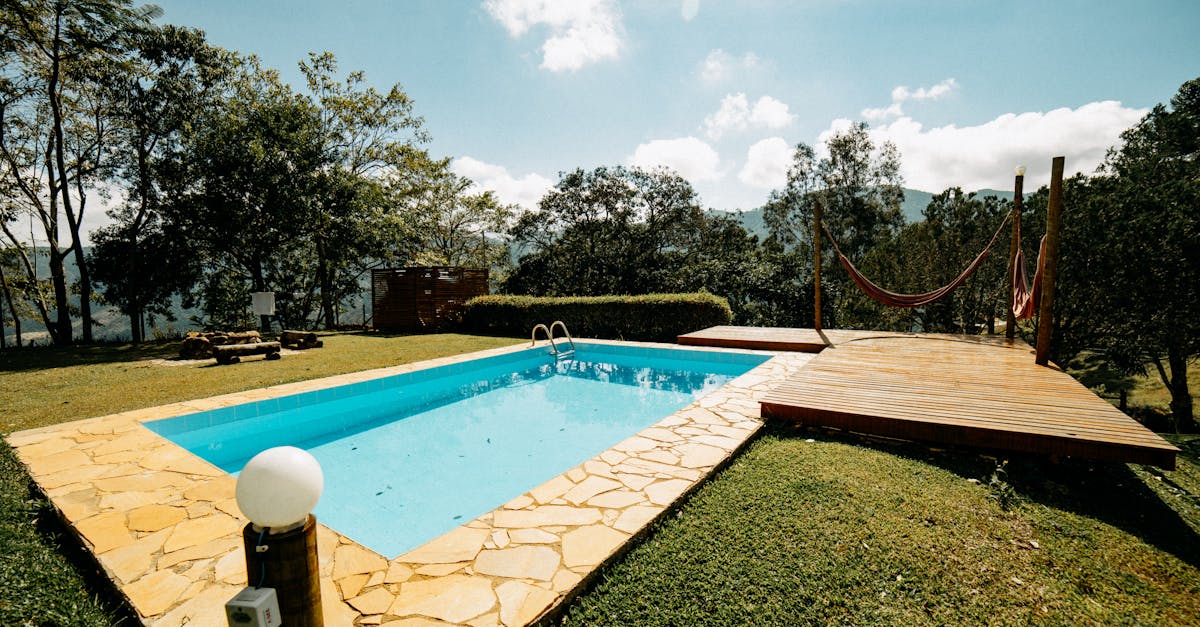
Choosing the right pool deck materials in Southwest Florida is a decision that goes well beyond curb appeal. Fort Myers homeowners face year-round ultraviolet intensity, afternoon surface temperatures that can exceed 140°F on dark pavement, 70%+ ambient humidity, and the ever-present threat of hurricane-force wind and rain. The wrong material can crack, fade, become dangerously slick, or degrade within a few seasons (costing you far more in repairs than the upfront savings ever justified. This guide walks through four of the most common pool deck surfaces) travertine, concrete pavers, stamped concrete, and composite decking: weighing heat performance, slip resistance, installation cost, maintenance demands, and code compliance so you can make a confident, lasting choice.
Why SWFL Climate Conditions Change the Material Equation
What works on a pool deck in Ohio or Colorado does not necessarily translate to Lee County. Southwest Florida sits in ASHRAE Climate Zone 2, which means relentless solar gain, salt-laden air within five miles of the coast, and a wet season that dumps 55–60 inches of rain annually: the majority arriving as heavy, fast-draining storms. These conditions stress every surface differently.
Thermal expansion and contraction cycles are a major issue. Even though SWFL temperatures do not swing as dramatically as northern climates, surfaces heat intensely during the day and cool at night through radiant loss, stressing grout joints, sealers, and material bonds over time. Materials with high thermal mass (like dense concrete) absorb and hold heat longer, making them uncomfortable for bare feet during peak afternoon hours.
Salt air is another factor most homeowners underestimate. If your property sits within five miles of the Gulf, saltwater spray accelerates corrosion of embedded steel, oxidizes certain sealers, and etches unsealed natural stone. Materials specified for coastal applications should be either inherently salt-resistant or properly sealed with a penetrating product rated for marine environments.
Hurricane preparedness matters at the deck level, too. Loose pavers installed without proper base preparation can become airborne debris during a storm. Lee County building code requires pool deck work that alters drainage or structural connections to the home to be permitted through the county. Permit-pulled work with a licensed Florida general contractor ensures your deck is inspected and documented: important for insurance claims after a named storm.
Finally, year-round AC operation in SWFL means the pool is used 12 months a year, not just May through September. Snowbird occupancy patterns also mean homes may sit unoccupied for months, during which mold, mildew, and algae can colonize unsealed or porous surfaces. Choose materials that clean easily even after prolonged neglect.
Travertine and Natural Stone: The Gold Standard for Barefoot Comfort
Travertine remains one of the most popular pool deck materials in Southwest Florida for a straightforward reason: its natural porosity and light color reflect solar radiation rather than absorbing it, keeping surface temperatures 20–30°F cooler than comparably colored concrete or ceramic tile. That translates directly to barefoot comfort at 2 p.m. in August.
Shellstone, a locally quarried Florida limestone, shares many of the same thermal properties and carries a regional character that complements mid-century concrete-block (CBS) homes common throughout Cape Coral and Fort Myers. Tumbled travertine pavers in 16×16 or 12×24 formats are the most requested sizes for pool surrounds, typically installed on a sand-set or thin-set mortar base depending on the structural demands of the adjacent pool shell and deck.
Pros of Travertine for Pool Decks
- Natural slip resistance: The pitted, tumbled surface texture provides grip even when wet: a meaningful safety advantage around the pool edge.
- Heat reflection: Light-toned travertine can remain touchable even during peak sun hours, unlike charcoal concrete or dark porcelain.
- Aesthetic versatility: Coordinates with shellstone coping, travertine pool surrounds, and a wide range of outdoor kitchen and lanai finishes.
- Repairability: Individual pavers can be lifted and replaced without disturbing the entire deck: valuable after tree root movement or slab settlement on SWFL’s sand-over-limestone substrate.
Cons and Maintenance Considerations
- Natural travertine is porous and requires sealing every 2–3 years with a penetrating impregnator sealer to prevent staining from sunscreen, tanning oil, and algae.
- Installed cost ranges from $18–$30 per square foot in the Fort Myers market, depending on stone grade, pattern complexity, and base preparation required.
- Grout joints must be maintained; cracked or missing grout allows water infiltration that can undermine the base over time.
For homeowners within coastal flood zones (common in Bonita Springs, Estero, and along the Cape Coral canal system) verify base flood elevation requirements before specifying the deck height. FEMA’s flood map service provides current BFE data by address to guide your planning.
Concrete Pavers: Durable, Flexible, and Code-Friendly
Interlocking concrete pavers are the workhorse of Southwest Florida pool decks. They’re manufactured locally, available in dozens of colors and profiles, and when properly installed on a compacted gravel and sand base, they flex slightly with ground movement rather than cracking monolithically the way poured concrete does. That flexibility is particularly valuable on slab-on-grade construction common throughout Lee, Collier, and Charlotte counties, where minor soil settling is essentially inevitable over time.
Pavers are installed without mortar between units, allowing water to drain through joints and reducing pooling: a real advantage during SWFL’s 2–3 inch rain events that can arrive in under an hour. Proper grading still matters: code and good practice both call for a minimum 1/8-inch-per-foot slope away from the pool shell and structure to manage sheet flow.
Installed cost for concrete pavers in the Fort Myers area typically runs $12–$22 per square foot, depending on paver profile, edge banding, and base depth. Permeable paver systems, which qualify for some stormwater credits in Lee County, trend toward the higher end of that range due to the engineered aggregate base required.
Color fade is the most common complaint from paver owners. Standard concrete pavers lose surface color intensity within 5–10 years under SWFL ultraviolet exposure. Specifying through-body color pavers or applying a UV-stable sealer every 3–4 years significantly extends the appearance lifecycle. Expect a well-installed paver deck to remain structurally sound for 25–40 years with routine joint sand replenishment and periodic resealing.
One practical note: loose pavers that aren’t edge-restrained can migrate during high winds or flood events. Proper perimeter banding with soldier-course borders and polymeric sand in joints reduces movement and meets the spirit of Lee County’s requirements for secure hardscape installation adjacent to pools.
Stamped Concrete: Lower Upfront Cost, Higher Long-Term Attention
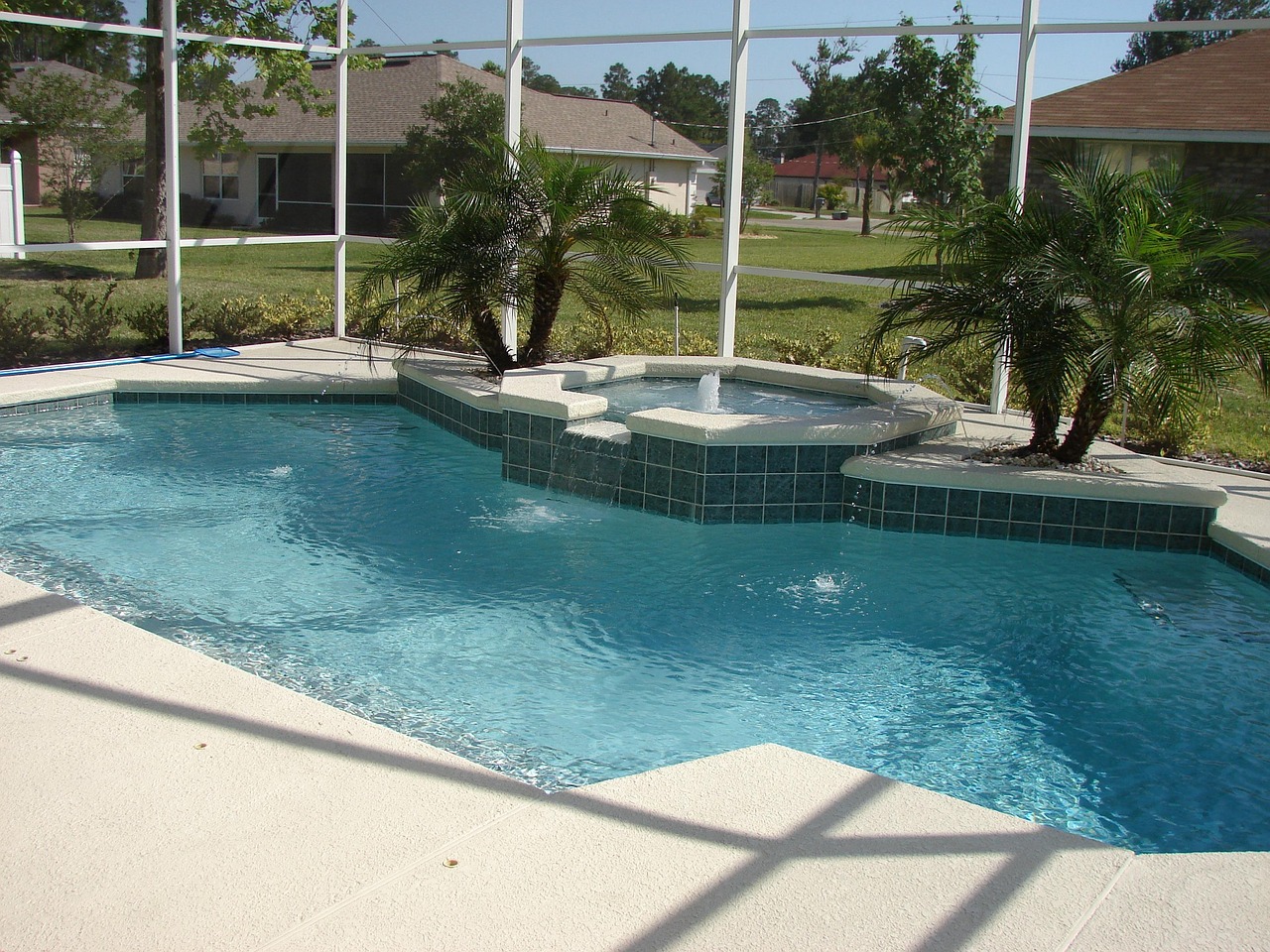
Stamped and colored concrete is a budget-accessible entry point for pool deck renovation, with installed costs generally ranging from $8–$16 per square foot in the Southwest Florida market. It mimics the look of stone, brick, or tile in a single monolithic pour, eliminating individual paver joints and reducing installation labor time.
The tradeoff is that stamped concrete behaves like concrete; it will eventually crack. Slab-on-grade construction in SWFL means the substrate is relatively stable, but root intrusion from established palms and tropical landscaping, minor settling, and thermal cycling all create stress fractures over a 10–20 year lifespan. Control joints cut into the slab at regular intervals manage where cracking occurs, but they don’t eliminate it.
Surface heat is another significant drawback for barefoot use. Stamped concrete absorbs and re-radiates solar heat aggressively, particularly in darker color palettes. Light buff or sand tones help, but surface temperatures in peak afternoon sun can still exceed 120°F: uncomfortable and potentially hazardous for children and pets.
Slip resistance on stamped concrete depends almost entirely on the surface sealer applied. High-gloss sealers look attractive when dry but become dangerously slick when wet. Specify a matte or satin finish sealer with anti-slip additive (either broadcast silica sand or shark-grip polymer aggregate) especially within the splash zone and pool steps. Reseal every 2–3 years; skipping this maintenance cycle leads to UV bleaching, moisture infiltration, and spalling that is expensive to repair cosmetically.
Stamped concrete makes the most financial sense on large deck areas where the square footage savings are meaningful, or on properties where a unified, seamless aesthetic is the priority. For Bonita Springs renovation projects where pool decks connect directly to indoor tile through a wide sliding door transition, a continuous stamped surface can create a clean visual flow between interior and exterior spaces.
Composite and PVC Decking: Best for Elevated or Dock-Adjacent Decks
Composite and cellular PVC decking products (brands like Trex, TimberTech, and Fiberon) have earned a legitimate place in SWFL outdoor living spaces, though they perform best in specific applications rather than as a universal pool deck solution. They excel on elevated pool decks, dock-level platforms, second-story lanai decks, and anywhere a framed wood substructure is already part of the design.
The core advantage in Southwest Florida is moisture resistance. Unlike pressure-treated lumber, quality composite decking does not rot, warp, or support mold growth when properly installed with adequate drainage and airflow beneath the boards. Salt-air resistance is also strong: composite boards won’t corrode or delaminate from salt exposure the way lower-grade materials do.
However, composite decking gets hot. Even light-colored boards in direct SWFL afternoon sun can reach surface temperatures of 130–150°F, which exceeds what most people can walk on barefoot. Brands have improved heat-dissipating cap stocks in recent years, but composite remains a better choice for shaded lanai areas, covered pool cages, or dock platforms where direct sun exposure is intermittent rather than constant.
Installed cost for composite decking in the Fort Myers area runs $20–$38 per square foot depending on board profile, substructure requirements, and railing systems. The lifespan for quality composite products is 25–30 years with minimal maintenance: no sealing, no staining, and periodic washing with a mild detergent and garden hose.
For screen enclosures and pool cage environments common throughout SWFL, composite decking integrates well with aluminum framing systems. The combination of a durable deck surface and a properly permitted screen enclosure provides both the lifestyle benefit of an outdoor room and meaningful protection from SWFL’s insect load and afternoon storms.
Frequently Asked Questions
What pool deck material stays coolest underfoot in Fort Myers summers?
Light-colored travertine and shellstone consistently outperform other materials on barefoot comfort in Southwest Florida. Their natural porosity and pale coloration reflect rather than absorb solar radiation, keeping surface temperatures 20–30°F lower than dark concrete or charcoal pavers. If you’re committed to concrete pavers, choose the lightest available color and apply a light-reflective sealer to reduce heat gain during peak afternoon hours.
Do I need a permit for a pool deck renovation in Lee County?
It depends on the scope of work. Resurfacing an existing deck with pavers or overlayment that doesn’t alter the drainage pattern or structural connection to the pool shell often falls below the permit threshold. However, demolishing and replacing a deck, adding square footage, or modifying deck height relative to base flood elevation typically requires a permit through Lee County. A licensed Florida general contractor can confirm the exact threshold for your specific project before work begins.
How long should a pool deck last in Southwest Florida?
With proper installation and maintenance, travertine and concrete pavers should last 25–40 years structurally, though sealing and joint maintenance are required every 2–4 years. Stamped concrete has a functional lifespan of 15–25 years before significant surface restoration is typically needed. Quality composite decking lasts 25–30 years. Deferred maintenance in SWFL’s humid, UV-intense climate compresses these lifespans significantly, so budgeting for routine upkeep is part of the long-term cost equation.
Can I install travertine over my existing concrete pool deck?
Yes, in many cases. Thin-set travertine overlays are a cost-effective renovation approach when the existing concrete slab is structurally sound, properly sloped, and free of significant cracking or delamination. A licensed contractor should assess the existing slab for hollow spots, moisture vapor transmission, and adequate thickness before specifying an overlay. On SWFL slab-on-grade decks that have experienced settlement or root intrusion, addressing those issues before the overlay is critical to long-term performance.
Ready to move forward with your pool deck renovation? Alliance Construction & Renovation is a licensed Florida general contractor serving Fort Myers, Cape Coral, Naples, Bonita Springs, and the surrounding Southwest Florida area. We pull permits, manage the full scope of work, and select materials proven to hold up in SWFL’s demanding climate. Call us at (239) 771-2855 or visit our Outdoor Living services page to schedule a consultation and get a detailed estimate for your project.