
A snowbird-ready remodel in Southwest Florida is one of the smartest investments you can make if your Fort Myers, Naples, or Cape Coral home sits vacant for four to seven months every year. Unoccupied houses in Lee and Collier counties face a unique set of threats: year-round humidity that hovers above 70%, the ever-present risk of a named storm between June and November, and the slow corrosion that salt air inflicts on everything within five miles of the coast. The upgrades that matter most aren’t the cosmetic ones; they’re the systems and finishes that perform reliably whether you’re in residence or watching a live camera feed from Ohio. This guide walks through the specific improvements that deliver the best return for part-time Florida homeowners.
Water Management: Shutoffs, Leak Detection, and Moisture Control
Water damage is the single greatest threat to an unoccupied SWFL home. A pinhole leak in a copper supply line, a failed washing machine hose, or a slow drip behind a vanity can go unnoticed for weeks, and in Southwest Florida’s humidity, standing moisture triggers mold growth within 24 to 48 hours. A snowbird-ready remodel prioritizes water management above almost everything else.
Start with a whole-house automatic water shutoff valve. Devices like the Moen Flo or Phyn Plus monitor flow rates in real time and can cut supply to the entire house the moment an anomaly is detected. Installation runs $400–$900 for the device plus $200–$400 for a licensed plumber to tie it into your main supply: a small price compared to a $30,000 mold remediation job. Many homeowners’ insurance carriers in Florida now offer premium discounts for certified leak detection systems, so ask your insurer before you buy.
Beyond shutoffs, consider upgrading aging supply lines to braided stainless steel at every toilet, sink, and appliance connection. Rubber lines degrade faster in Florida’s heat, and they’re inexpensive to replace proactively. In slab-on-grade homes (the dominant construction type throughout Lee County) rerouting a failed in-slab copper line through the walls is far more disruptive and expensive than simply monitoring and maintaining above-slab connections.
A whole-home dehumidifier wired into your existing HVAC system is equally critical. Running a standard thermostat at 80°F while you’re away keeps the electric bill down but does nothing to control relative humidity. A dedicated dehumidifier set to 55% RH prevents the mold, musty odors, and wood swelling that greet too many snowbirds on their October return. Expect to invest $1,200–$2,500 for a system-integrated unit installed by a licensed mechanical contractor.
Hurricane Hardening That Protects an Unattended Home
Southwest Florida homes should be reviewed against current local wind-load and opening-protection requirements, and a home with no one watching it during a storm is uniquely vulnerable. Hurricane hardening is not only about protecting occupants; it is also about reducing the risk of water intrusion and damage when you cannot be there to respond.
If your home still has single-pane aluminum windows, upgrading to hurricane impact glass is the most effective hardening investment available. Impact-rated units meet ASCE 7-22 load requirements and eliminate the need for manual shutter deployment: a significant concern when you’re 1,200 miles away and a storm develops quickly. Impact windows in a typical 1,800 sq. ft. Cape Coral or Naples home run $12,000–$22,000 installed, depending on opening count and frame material. That cost must be weighed against annual storm shutter labor, insurance savings (many carriers reduce wind premiums 10–25%), and the peace of mind of knowing your home is sealed without intervention.

Garage doors are the most common point of structural failure in a hurricane. A single-car garage door replacement with a wind-rated panel system (typically rated to 150 mph with horizontal and vertical bracing) costs $1,800–$3,500 installed and is required under current Florida Building Code for new work. If your door was installed before 2002, it almost certainly does not meet current standards.
Roof-to-wall connections are another critical element. Mid-century concrete-block (CBS) construction common throughout Fort Myers and Lehigh Acres may have original tie straps that don’t meet modern requirements. A licensed general contractor can evaluate your attic space and install hurricane clips or straps where they’re missing. Combined with a peel-and-stick modified bitumen underlayment beneath your tile roof (required by code for new installations) these upgrades dramatically reduce the chance of catastrophic water intrusion if any tile is lost in a storm.
For comprehensive hurricane and structural work, Alliance’s general contracting services cover the full scope from permit to final inspection.
Low-Maintenance Interior Finishes That Perform Year-Round
The finishes you choose for a snowbird home need to tolerate long periods without climate control at full efficiency, resist humidity-driven warping and mold, and look good when you return months later. The wrong materials create annual maintenance headaches; the right ones essentially take care of themselves.
Flooring
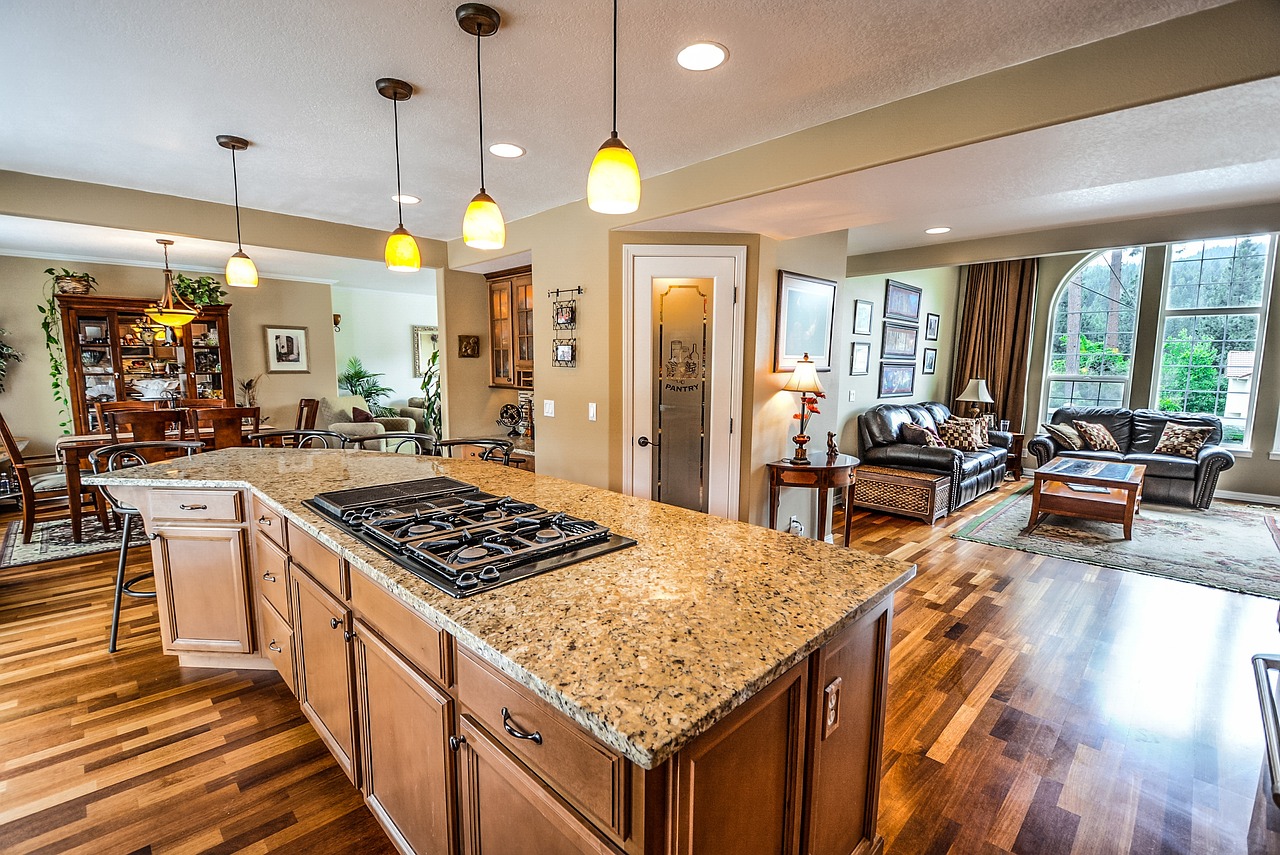
Luxury vinyl plank (LVP) is the most practical flooring choice for unoccupied Florida homes. It’s 100% waterproof at the core, dimensionally stable in heat, and resistant to the mold that grows readily in organic materials like solid hardwood. A quality 6–8 mil wear layer LVP runs $3.50–$6.00 per sq. ft. installed, making it cost-competitive with engineered hardwood while outperforming it in Florida conditions. Large-format porcelain tile (24×24 or 32×32) is equally durable and offers a more traditional Florida aesthetic, though grout lines require periodic sealing. Avoid solid hardwood entirely in coastal Lee or Collier County homes: the thermal cycling between vacant and occupied conditions causes cupping and gap formation that leads to expensive repairs.
Cabinetry and Countertops
For kitchens and bathrooms, specify semi-custom or custom cabinetry with a thermofoil or painted MDF door rather than natural wood veneer, which delaminates in sustained humidity. Quartz countertops outperform granite for low-maintenance applications because their non-porous surface requires no periodic sealing: an important advantage in a home you aren’t actively maintaining. Porcelain slab countertops are another strong option, offering UV stability that matters in Florida’s year-round sun exposure. Budget $4,500–$9,000 for a kitchen countertop replacement in quartz or porcelain for a typical SWFL home.
Paint and Wall Finishes
Specify exterior-grade or high-humidity interior paints with mold and mildew inhibitors in all bathrooms, laundry rooms, and any space with exterior-facing walls. Flat paint holds moisture; use satin or semi-gloss in high-risk areas. This is a small upgrade in cost (roughly $0.15–$0.30 more per sq. ft.) that pays dividends in a climate where mold remediation starts at $1,500 and climbs quickly.
Smart Home Systems for Remote Monitoring and Security
A snowbird home is a target. Extended vacancy patterns are well-known in Southwest Florida neighborhoods, and a visibly unoccupied property attracts opportunistic theft and vandalism. Smart home systems have become inexpensive enough that every part-time Florida homeowner should have a baseline setup before leaving for the season.
At minimum, install a video doorbell and exterior camera system with cloud storage and mobile alerts. Wired systems are more reliable than battery-powered alternatives in Florida’s heat; expect to pay $800–$2,000 installed for a four-camera wired system with a local DVR and cloud backup. Pair cameras with smart deadbolts at all entry points so you can grant access to your housekeeper, HVAC technician, or property manager without issuing physical keys.
A smart thermostat with humidity sensing (the Ecobee SmartThermostat Premium, for example) lets you monitor interior conditions remotely and respond to alerts without calling a neighbor. Set it to hold temperature at 80°F and humidity below 55% while vacant. If the system reports a temperature spike or AC failure, you can dispatch a service tech before damage compounds.
Consider a whole-home surge protector installed at the main panel. Florida leads the nation in lightning strikes per square mile, and a single nearby strike can destroy every connected appliance and HVAC component simultaneously. A service-entrance surge protector costs $300–$600 installed and can save thousands in appliance replacement, particularly for the variable-speed compressors in modern mini-split heat pump systems that are sensitive to voltage spikes.
For homeowners planning a broader interior update, Naples remodeling projects from Alliance can incorporate smart home rough-in during a single mobilization, reducing total installation cost.
Exterior and Lanai Upgrades Built for Vacancy
The exterior of a SWFL snowbird home takes a beating between May and October. UV radiation, wind-driven rain, humidity, salt-laden air, and hurricane-season storm events. Smart exterior upgrades reduce annual maintenance while improving the property’s curb appeal and storm resilience.
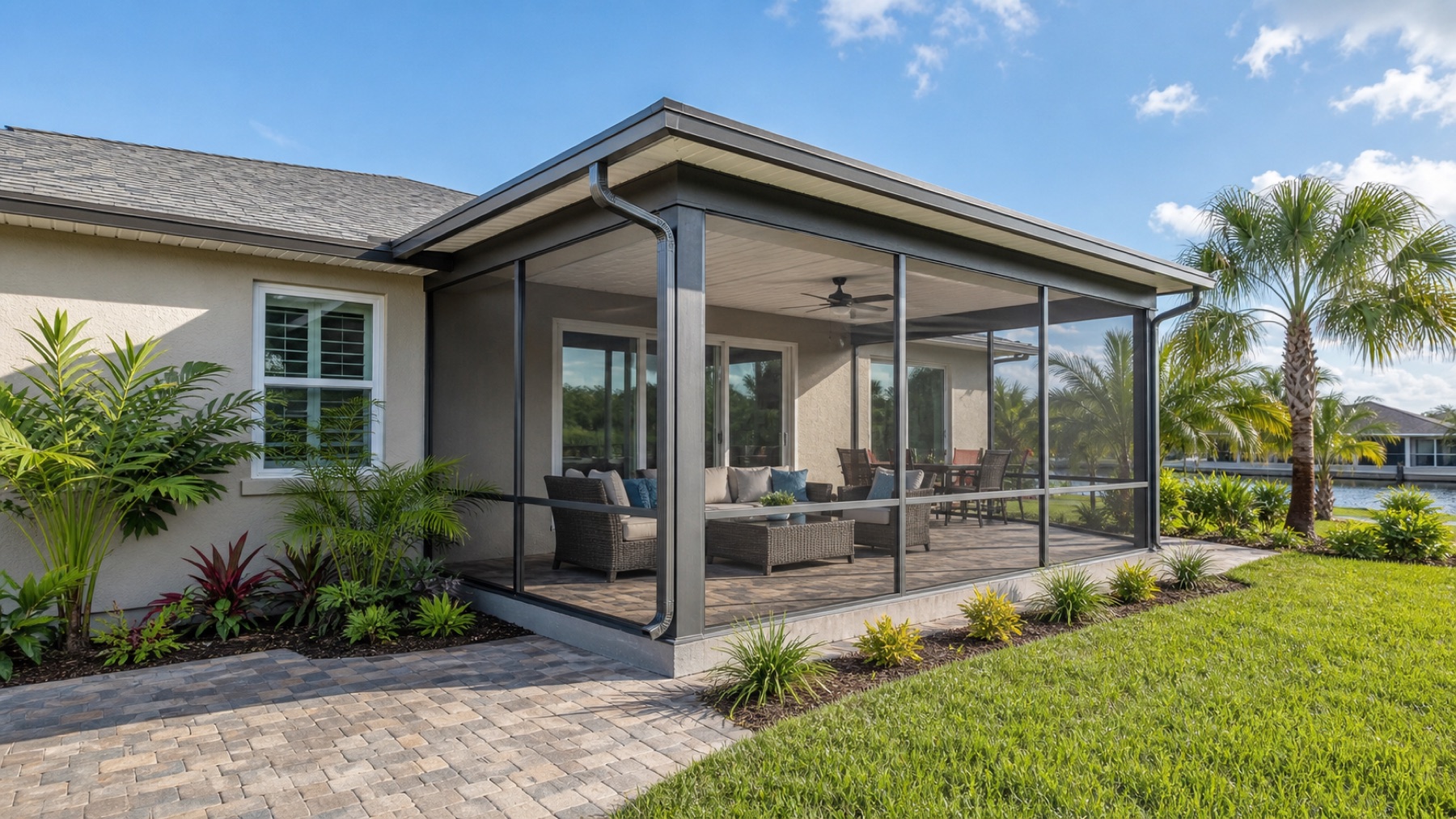
Rescreening or replacing your lanai enclosure with no-see-um or 20/20 mesh in a heavy-duty aluminum frame is a practical upgrade that improves comfort when you return and reduces insect pressure. Standard aluminum screen frames corrode within a few years in coastal zones; specify anodized or powder-coated frames rated for salt-air exposure. A full lanai rescreen on a typical 400 sq. ft. enclosure runs $800–$1,800; a full frame replacement ranges from $4,000–$9,000 depending on size and screen type.
If your pool deck uses natural travertine or shellstone pavers, inspect the grout and sealer annually. These materials are popular throughout Naples and Bonita Springs for their heat-reflective properties, but unsealed stone absorbs moisture and supports algae and mold growth during humid vacant months. Resealing every 18–24 months and confirming proper drainage slope prevents costly replacement.
Exterior stucco on CBS construction (the dominant wall system in pre-2000 SWFL homes) should be inspected for hairline cracks before each departure. Small cracks admit moisture that degrades the concrete masonry and can cause interior staining or mold growth. A stucco patch and elastomeric paint touchup costs a few hundred dollars and prevents repairs that can reach $5,000–$15,000 if water intrusion is left to work through a wall assembly over multiple seasons.
Consult the Lee County Building Department for permit requirements on any structural exterior work, including screen enclosure replacements and roof repairs: permit-pulled work protects your insurance claim eligibility after a storm event.
Frequently Asked Questions
How long does a snowbird-focused remodel typically take in Southwest Florida?
Scope determines timeline significantly. A targeted package (water shutoff installation, smart thermostat, impact window upgrades, and flooring replacement) can be completed in three to six weeks. A broader interior renovation involving kitchen, bathrooms, and flooring throughout runs six to twelve weeks. Most snowbirds schedule work to complete before their October or November return, which means contracting in late spring or early summer to secure permit timelines and subcontractor availability in a busy SWFL construction market.
Do impact windows require a permit in Lee County, Florida?
Yes. Impact window and door replacement requires a building permit in Lee County, and inspections are required at installation. Permit timelines in Lee County currently run two to four weeks for straightforward residential window replacements. Working with a licensed Florida general contractor ensures the permit is pulled correctly, the installation passes inspection, and your documentation is in order, which matters significantly when filing a homeowner’s insurance claim after a storm.
What is the best flooring for a Florida home that sits empty for months?
Luxury vinyl plank is the top choice for unoccupied Florida homes. It’s fully waterproof, handles temperature swings between 65°F and 90°F without cupping or gapping, and resists the mold growth that affects organic materials. Large-format porcelain tile is an equally strong option in bathrooms and common areas. Avoid solid hardwood and cork in any room with exterior-facing walls or near plumbing fixtures: the humidity cycling in a vacant SWFL home will cause premature failure in both materials.
Is a whole-home dehumidifier worth the cost in Southwest Florida?
For most snowbird homeowners, yes. Southwest Florida’s relative humidity stays above 70% for the majority of the year, and standard AC systems do not adequately dehumidify when running at setback temperatures during vacancy. A dedicated whole-home dehumidifier set to 55% RH prevents mold growth, protects wood furniture and cabinetry, and eliminates the musty odor that signals biological activity in the wall cavities and HVAC ductwork. The $1,200–$2,500 installation cost is typically recovered after one avoided remediation event.
When you’re ready to prepare your Southwest Florida property for extended vacancy and seasonal returns, the team at Alliance Construction & Renovation can develop a practical upgrade plan tailored to your home’s age, construction type, and location. As a licensed Florida general contractor serving Lee, Collier, and Charlotte counties, we pull permits, coordinate every trade, and deliver permit-compliant work that holds up to the SWFL climate. Call us at (239) 771-2855 to schedule a consultation, or learn more about our Naples remodeling services for snowbird homeowners throughout the region.
We Serve Southwest Florida
Alliance Construction provides remodeling services in Cape Coral, Naples, Bonita Springs, Estero, North Fort Myers, and Punta Gorda. View all services →