
Choosing between luxury vinyl plank and tile for a Fort Myers bathroom is less about finding one universal winner and more about matching the surface to the room, the subfloor, the budget, and the way the space is used. In Southwest Florida, bathrooms see steady humidity, wet-foot traffic, frequent cleaning, and seasonal guest use, so the flooring choice has to fit both the design plan and daily maintenance expectations. Both luxury vinyl plank and porcelain tile can work well when the product and installation approach match the home.
How Fort Myers Humidity and Moisture Affect Both Materials
Southwest Florida’s climate is the first filter every flooring decision should pass through. Fort Myers homes deal with long cooling seasons, high outdoor humidity, shower moisture, and occasional storm-related water exposure. That persistent moisture, combined with the humidity that enters through door openings, shower steam, and missed caulk joints, means your bathroom floor needs to handle standing water, repeated wet/dry cycles, and realistic maintenance without degrading.
Porcelain tile has been the go-to bathroom floor in Florida for decades for good reason. A fully vitrified porcelain tile has a water absorption rate of less than 0.5%, making it essentially impervious. Even if a grout joint cracks or a tile chips, the tile itself won’t swell, buckle, or grow mold within the material. This is particularly important in slab-on-grade homes (which account for the vast majority of construction in Lee and Collier counties) where the concrete substrate can transfer ground moisture upward if the vapor barrier is compromised.
Luxury vinyl plank (LVP) is marketed as 100% waterproof at the plank level, and that claim is largely accurate for the wear layer and core. However, water that seeps beneath LVP (through expansion gaps at the wall, around toilet flanges, or under shower pan edges) can become trapped and create conditions for subfloor degradation or mold growth underneath. In a Fort Myers bathroom where humidity is already elevated, that trapped moisture becomes a real concern over time. Proper installation with silicone-sealed perimeters and waterproof transition strips mitigates much of this risk, but it requires careful workmanship from a licensed installer.
Installation Cost Comparison for Lee County Bathrooms
Budget is always part of the conversation, and in Fort Myers and the surrounding Lee County market, material and labor costs reflect both regional demand and the complexity of working with slab-on-grade construction.
Porcelain Tile Installation Costs
Porcelain tile installation in a standard Fort Myers bathroom typically runs between $8 and $18 per square foot installed, depending on tile size, pattern complexity, and substrate preparation. Large-format tiles (24×24 or 32×32 inches) are popular in contemporary SWFL bathrooms but require a flatter substrate and more skilled labor to install correctly. If your existing slab has high spots or low spots greater than 3/16 inch over 10 feet (the Florida Building Code tolerance for tile installations), self-leveling compound must be applied first, adding $1–$3 per square foot to the job. Grout selection matters here too: unsanded grout in tight joints is standard, but epoxy grout is worth the premium cost in wet zones because it resists staining and doesn’t require sealing.
LVP Installation Costs
LVP flooring in the same Fort Myers bathroom typically costs $5 to $11 per square foot installed, including materials and labor. The lower cost reflects faster installation time: a skilled crew can float LVP over a prepared slab in a fraction of the time it takes to set and grout tile. For bathrooms under 80 square feet, the total installed cost difference between mid-grade LVP and mid-grade porcelain tile might only be $300–$600, which narrows the financial argument considerably. Keep in mind that LVP requiring glue-down installation (often recommended in Florida to prevent shifting from humidity-related expansion) adds $1–$2 per square foot over click-lock floating methods.
Subfloor and Transition Considerations
In CBS (concrete block structure) homes (the dominant construction type across Fort Myers, Cape Coral, and Lehigh Acres) the concrete slab is typically the direct substrate for bathroom floors. Unlike wood-framed floors in the Northeast, you won’t encounter squeaky subfloor panels or deflection issues. However, the slab can have moisture vapor emissions that affect adhesive-based LVP installations. A moisture vapor emission rate (MVER) test should be performed before any glue-down flooring is installed. Tile set in modified thinset over a well-prepared slab is unaffected by vapor transmission at typical Florida levels.
Comfort, Appearance, and Livability in a Florida Bathroom
Beyond raw performance numbers, how a floor feels underfoot and how it looks matters, especially in a bathroom renovation where you’ll be starting and ending every day on that surface.
Tile’s main comfort drawback is hardness and temperature. However, in Southwest Florida, the “cold tile” complaint common in northern climates is rarely an issue. When your home is air-conditioned to 76–78°F year-round and the slab retains warmth from Florida’s heat, bare tile feels neutral or mildly cool, which many homeowners actually prefer. That said, tile is unforgiving on joints if you stand for long periods, and it provides zero cushion if someone slips or falls, a consideration for aging-in-place bathroom designs.
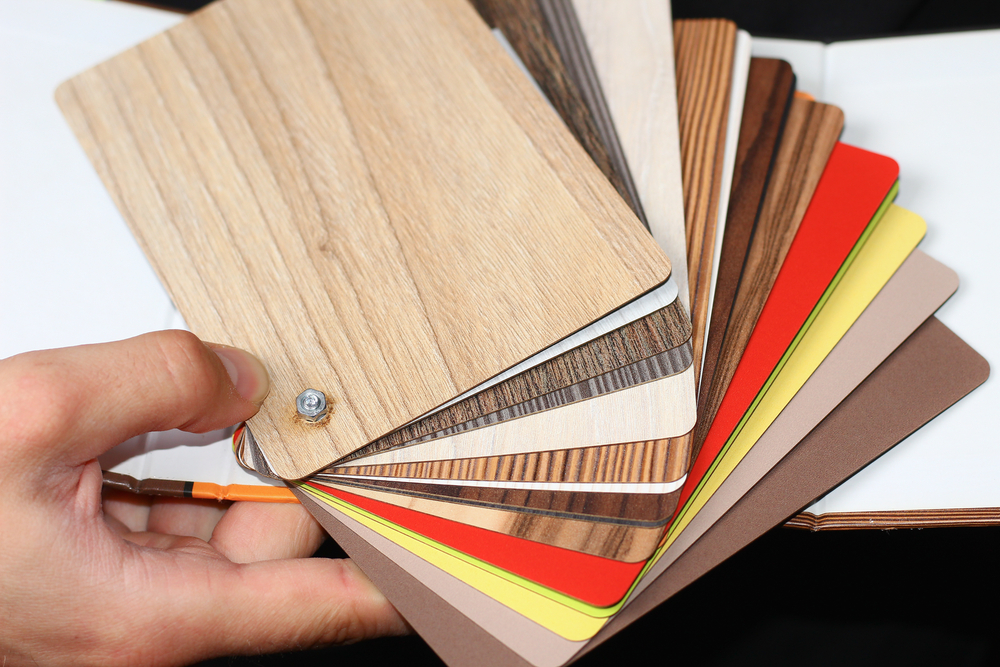
LVP offers a warmer, slightly more cushioned feel underfoot. Modern LVP products with a 12-mil or 20-mil wear layer and attached underlayment replicate the look of wood plank convincingly, which can give a master bathroom a softer, more residential aesthetic compared to the harder lines of large-format porcelain. Coastal-inspired driftwood tones and gray-washed oak patterns are popular LVP choices in Bonita Springs and Naples vacation homes, where the goal is a beachy-casual look that’s easy to maintain between rental seasons.
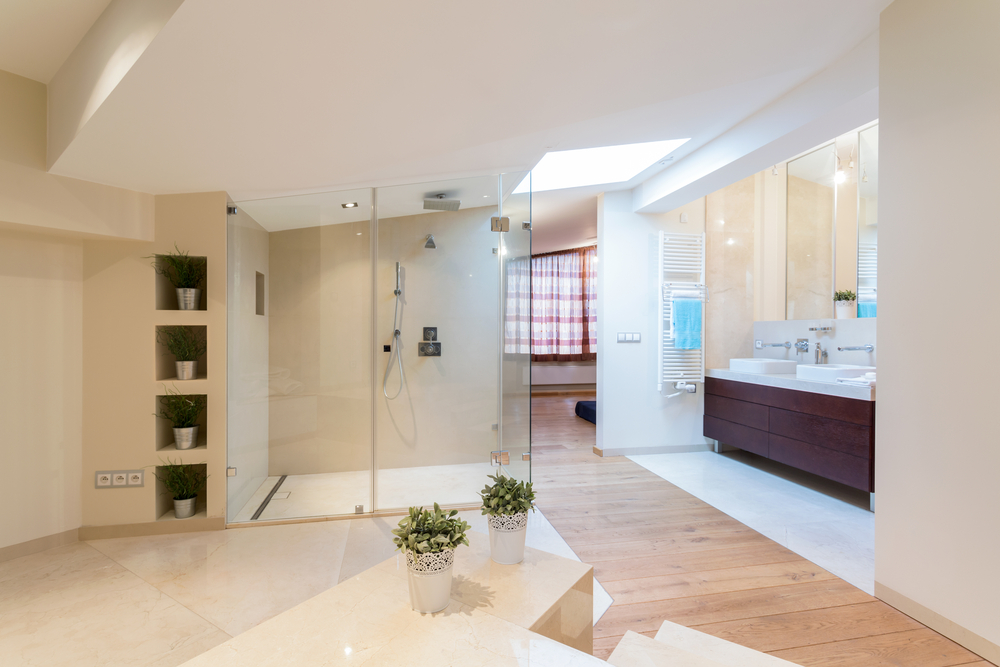
Porcelain tile offers more design range at the high end: wood-look planks, stone-look slabs, encaustic patterns, and through-body color that disguises chips. A well-executed 12×24 porcelain tile floor with a linear mosaic accent strip reads as a quality renovation and photographs well for real estate listings. For homeowners investing in a full bathroom remodeling project with new vanity, shower, and fixtures, tile typically completes the high-end look more convincingly than LVP at similar price points.
Durability, Lifespan, and Maintenance Over Time
In a climate as demanding as Fort Myers, with hurricane season running June through November, salt-air corrosion near the coast, and UV intensity that exceeds most of the continental U.S.: durability isn’t a secondary consideration.
Porcelain tile in a properly installed bathroom can last 30 to 50 years or longer before requiring replacement. The tile itself doesn’t fade, swell, dent, or scratch under normal bathroom use. The vulnerability is the grout: standard cementitious grout requires resealing every 1–2 years in wet areas and can crack over time as the slab experiences minor thermal movement. A cracked grout joint that isn’t addressed quickly allows water intrusion that can damage the thinset bond beneath, leading to loose or hollow-sounding tiles. Routine maintenance (resealing grout annually and recaulking perimeter joints every 3–5 years) keeps a tile floor performing at full capacity for decades.
LVP lifespan in a residential bathroom is generally rated at 15 to 25 years, depending on wear layer thickness and installation quality. A 20-mil commercial-grade wear layer holds up well in high-traffic bathrooms; a standard 12-mil product will show scuffing and wear at pivot points (in front of the vanity, toilet, and shower entry) sooner. LVP is also vulnerable to sustained UV exposure (relevant in a Florida bathroom with a skylight or large window) where the color can fade or the core can soften over years. It’s also susceptible to damage from heavy dropped objects, which can crack or gouge planks in ways that are difficult to repair without replacing entire runs.
From a maintenance standpoint, LVP wins on day-to-day ease: no grout to scrub, no sealing required, and simple damp-mopping keeps it clean. For Fort Myers homeowners with seasonal occupancy who don’t want to worry about grout maintenance between visits, LVP’s lower-maintenance profile is genuinely appealing. You can explore both options in detail with a professional consultation through flooring installation services tailored to Southwest Florida conditions.
One practical durability note specific to SWFL: tile holds up better if your home is subject to storm surge flooding. FEMA flood maps show large portions of Lee County in AE and VE flood zones, and for homes in base flood elevation zones, tile can be cleaned, dried, and returned to service after a flooding event. LVP typically must be fully removed, disposed of, and replaced: a significant cost and disruption factor for coastal homeowners near the Peace River, Estero Bay, or the Caloosahatchee.
Resale Value and Buyer Expectations in the Fort Myers Market
Southwest Florida’s real estate market moves fast, and buyer expectations in the Fort Myers, Cape Coral, and Naples corridors have been shaped by years of high-end renovation competition. When a prospective buyer walks through a bathroom, the floor sends an immediate signal about renovation quality.
Real estate professionals consistently report that porcelain tile (particularly large-format, rectified tile in neutral tones) reads as a premium finish to buyers in the SWFL market. It aligns with the tile roof prevalence, terrazzo nostalgia, and coastal aesthetic that defines the region’s design vocabulary. A well-tiled master bathroom floor can meaningfully support a higher listing price, especially in the $400,000–$700,000 price range where finishes are scrutinized carefully.
LVP in a bathroom doesn’t necessarily hurt resale value: particularly if it’s a high-quality product installed correctly with good-looking transitions and coordinated baseboard. However, sophisticated buyers in the Naples or Bonita Springs luxury market may view it as a budget choice, especially if the rest of the renovation features upscale fixtures, quartz countertops, and frameless glass shower enclosures. In mid-range Fort Myers or Lehigh Acres homes, LVP is well-accepted and often preferred by buyers who value low maintenance.
The honest summary: if you’re remodeling primarily for resale or investment, tile is the safer choice for bathrooms in the Fort Myers market. If you’re remodeling for personal use and prioritize comfort, lower install cost, and easier maintenance, quality LVP is a legitimate option: provided it’s installed with proper moisture management and sealed perimeters.
Frequently Asked Questions
Can LVP be installed directly over my existing bathroom tile in Fort Myers?
In many cases, yes: floating LVP can be installed over existing ceramic or porcelain tile if the surface is flat, firmly bonded, and has grout joints no wider than 1/8 inch. Loose, cracked, or heavily textured tiles should be removed first. Keep in mind that adding LVP thickness (typically 5–8mm) affects door clearances and transition heights, which may require trimming door bottoms or installing new threshold transitions.
Is LVP or tile better for a wet shower floor in Southwest Florida?
Tile is strongly preferred for shower floors and wet deck areas in Florida. LVP should not be installed inside shower enclosures or in direct water contact zones. Porcelain mosaic or small-format tile with quality grout, waterproofing, and a properly sloped assembly is the safer standard for shower floors when reviewed against current local code and manufacturer requirements. LVP works best in the dry bathroom floor area outside the shower.
How long does a bathroom floor installation take in Fort Myers?
LVP installation in a standard bathroom (40–80 sq ft) typically takes one to two days including prep work. Porcelain tile installation takes two to four days: one day for setting tile in thinset, 24 hours of cure time, then grouting and final cleanup. If significant substrate leveling or waterproofing membrane work is needed, add another half to full day. Permit requirements for flooring replacement alone are generally minimal, but a full bathroom remodel with plumbing or structural changes requires a Lee County permit.
Does salt air near Fort Myers coastal areas affect either flooring material?
Salt air primarily affects metal components (fasteners, door hardware, plumbing fixtures) rather than the flooring surface itself. However, LVP adhesive performance can be affected by high humidity and vapor conditions common near coastal areas within five miles of the Gulf. Porcelain tile set in polymer-modified thinset is essentially unaffected by salt air at the material level. Regardless of flooring choice, proper bathroom ventilation with a rated exhaust fan is essential for managing salt-humid air indoors in coastal SWFL homes.
Ready to move forward with your Fort Myers bathroom floor renovation? Alliance Construction & Renovation is a licensed Florida general contractor serving Lee, Collier, and Charlotte counties, with direct experience in both LVP and porcelain tile installations across slab-on-grade CBS homes throughout the region. We pull all required permits, prepare substrates to code, and help you select materials suited to your home’s specific conditions and budget. Call us at (239) 771-2855 to schedule a consultation, or learn more about our complete bathroom remodeling services for Southwest Florida homeowners.