


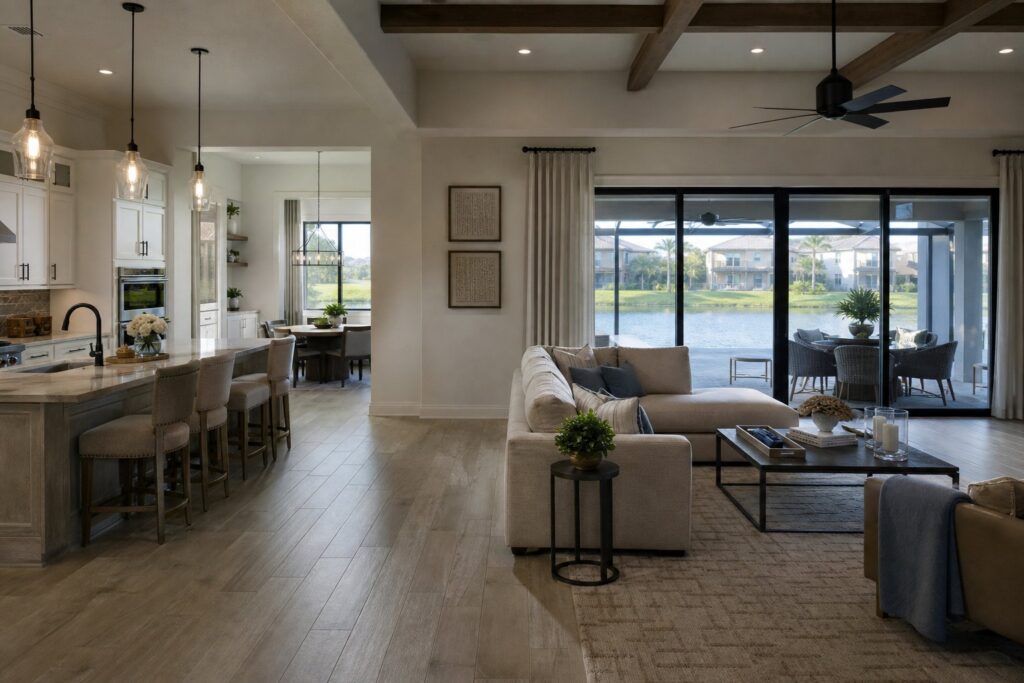
Ask any flooring showroom in Southwest Florida which question comes up most, and the answer is some version of wood look tile vs engineered hardwood. Homeowners in North Fort Myers love the warmth of wood underfoot, but they also know what our climate does to building materials. Months of heavy humidity, sudden summer downpours, sandy foot traffic from the river and the Gulf, and the occasional splash of tracked-in pool water all test a floor in ways that northern homes never experience.
Both products have earned a permanent place in our projects. Wood-look porcelain tile has become remarkably convincing in the last several years, and modern engineered hardwood is far more stable than the solid oak floors many of us grew up with. Neither one is automatically the right answer. The better choice depends on where the floor is going, how the home is used through the year, and how much moisture exposure it will realistically see.
Our team installs both throughout Lee County as part of our flooring installation work, so this comparison is not a pitch for one product over the other. It is the same conversation we have with homeowners at our Metro Pkwy showroom every week, centered on the factor that matters most here: how each floor handles moisture.
Why Humidity Is the Deciding Factor in North Fort Myers

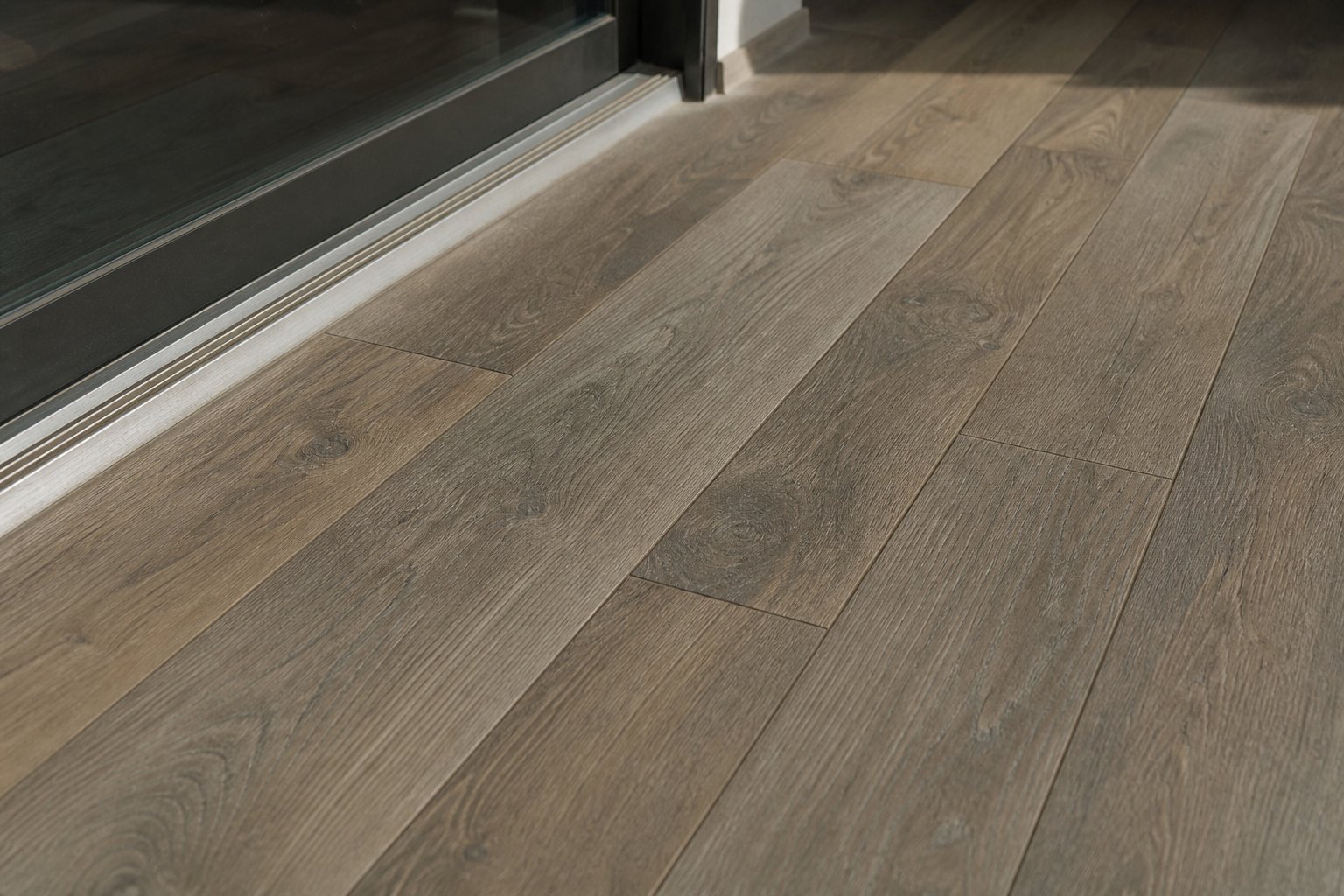
From roughly June through September, outdoor humidity in North Fort Myers sits high enough that any organic material in the home is constantly absorbing and releasing moisture. Wood is hygroscopic, which is a technical way of saying it swells when the air is damp and shrinks when the air conditioning dries things out. Every plank in a wood floor is quietly moving all year long.
There is a second moisture source that surprises many homeowners: the concrete slab itself. Most North Fort Myers homes are slab-on-grade block construction, and concrete can transmit moisture vapor from the ground below. A floor that sits directly on that slab has to tolerate vapor from beneath as well as humidity from above.
Seasonal occupancy adds a third wrinkle. Many homes here sit closed up for months with the thermostat set warmer to save energy. Indoor humidity drifts upward during that stretch, and the flooring rides along with it. Any honest comparison of these two products has to start with those three realities.
How Wood-Look Porcelain Tile Handles Moisture
Porcelain is fired at extremely high temperatures until it becomes dense and nearly glass-like. Quality porcelain tile absorbs almost no water at all, which is why it is rated for showers, pool surrounds, and lanais. Humidity swings simply do not affect it. It will not swell in August, shrink in January, cup at the edges, or gap at the seams.
That indifference to moisture is what makes wood-look plank tile such a natural fit for this area. A spill from the dishwasher, a wet dog coming in from the pool deck, or a summer power outage that lets indoor humidity climb for a week are non-events for porcelain. Porcelain itself does not swell like wood, but the slab, setting materials, and installation still require moisture evaluation and manufacturer-compliant preparation.
The one component that does need attention is the grout. We recommend high-performance grout and a sensible color choice so the joints stay clean-looking, and grout lines on modern plank tile can be quite thin when the tile is rectified. Installed correctly over a properly prepared slab, a porcelain plank floor is about as close to moisture-proof as an interior finish gets.
How Engineered Hardwood Performs in Southwest Florida
Engineered hardwood was created specifically to solve wood movement problems. A real hardwood veneer is bonded to a cross-layered plywood or high-density core, and those alternating layers restrain each other so the plank expands and contracts far less than solid wood. That construction can make some engineered products suitable for installation over concrete when the flooring manufacturer, moisture testing, slab preparation, and installation system all allow it. Solid hardwood can require a different approved subfloor or installation system, so suitability depends on the product and site conditions.
Performance here depends on discipline during installation. The planks need time to acclimate to the home before they go down, the slab must be tested for moisture, and a proper vapor barrier or moisture-rated adhesive must separate wood from concrete. Skip any of those steps and even a premium engineered product can telegraph problems months later.
Engineered hardwood also asks something of the homeowner after installation: reasonably steady indoor humidity. In a home that runs air conditioning year-round, or uses a humidistat while the owners are away, a good engineered floor stays flat and tight. In a home that sits hot and humid all summer, seams can open and edges can lift. It is a genuinely good product for Southwest Florida living areas, as long as the home’s climate is managed.
The National Wood Flooring Association’s concrete-subfloor guidance emphasizes manufacturer requirements, moisture testing, slab preparation, and a vapor-retarding membrane.
Comfort, Sound, and Feel Underfoot
Moisture aside, the two floors live differently. Tile is hard and cool to the touch. In a Florida summer that coolness is honestly pleasant, though standing on tile for a long cooking session is harder on feet and knees, and dropped glassware rarely survives. Tile can also feel cold on winter mornings, brief as our winters are.
Engineered hardwood is warmer and slightly softer underfoot, with the quieter, lower-pitched sound people associate with real wood. Footsteps, pet nails, and dropped items all sound gentler on wood than on tile. For bedrooms and living areas where comfort matters more than splash resistance, that difference is a real point in hardwood’s favor.
Durability, Pets, and Everyday Maintenance
Porcelain is exceptionally hard to scratch. Dog nails, dragged chairs, and sandy shoes that would mark a wood floor generally leave porcelain untouched, and the color runs through the design layer so wear is slow to show. Its weakness is impact: a heavy pot dropped on an edge can chip a tile, and repairing one usually means replacing that tile. Keeping a box of spares from the original lot is smart.
Engineered hardwood will scratch and dent, because the surface is real wood. Felt pads, pet nail trims, and walk-off mats become part of ownership. The trade-off is repairability and character: light damage often blends into the grain, and products with a thicker wear layer can be professionally refreshed or refinished down the road. Sunlight is the other factor to plan for, since the strong light through Florida sliders will slowly shift wood tones, so rugs should be moved around occasionally.
Style and Design Options for SWFL Interiors
This category is closer than it has ever been. High-definition printing gives good porcelain plank tile realistic grain, knots, and color variation, in long wide planks that suit open Florida floor plans. Coastal favorites like white oak, driftwood gray, and sandy blonde tones are plentiful. The tell is repetition: a printed line has a limited number of unique faces, so a careful installer must shuffle planks so twins never land side by side.
Engineered hardwood offers what printing cannot: every plank is genuinely one of a kind, with depth and texture that reads as real at any angle, because it is. For homeowners who grew up with hardwood, the authenticity is often the deciding factor, and real wood remains a strong selling feature when a home goes on the market.
Which Floor Belongs in Which Room
Most of the homes we remodel in North Fort Myers end up with a room-by-room answer rather than a single product everywhere. A typical split looks like this:
- Kitchens, bathrooms, laundry rooms, and entries: wood-look porcelain tile, because these rooms see water on a weekly basis.
- Main living areas and great rooms: either product works; tile favors easy upkeep and pets, hardwood favors warmth and comfort.
- Bedrooms, dens, and offices: engineered hardwood shines here, where moisture exposure is low and comfort is the priority.
- Lanai transitions: tile, every time, since it shrugs off humidity and wet feet.
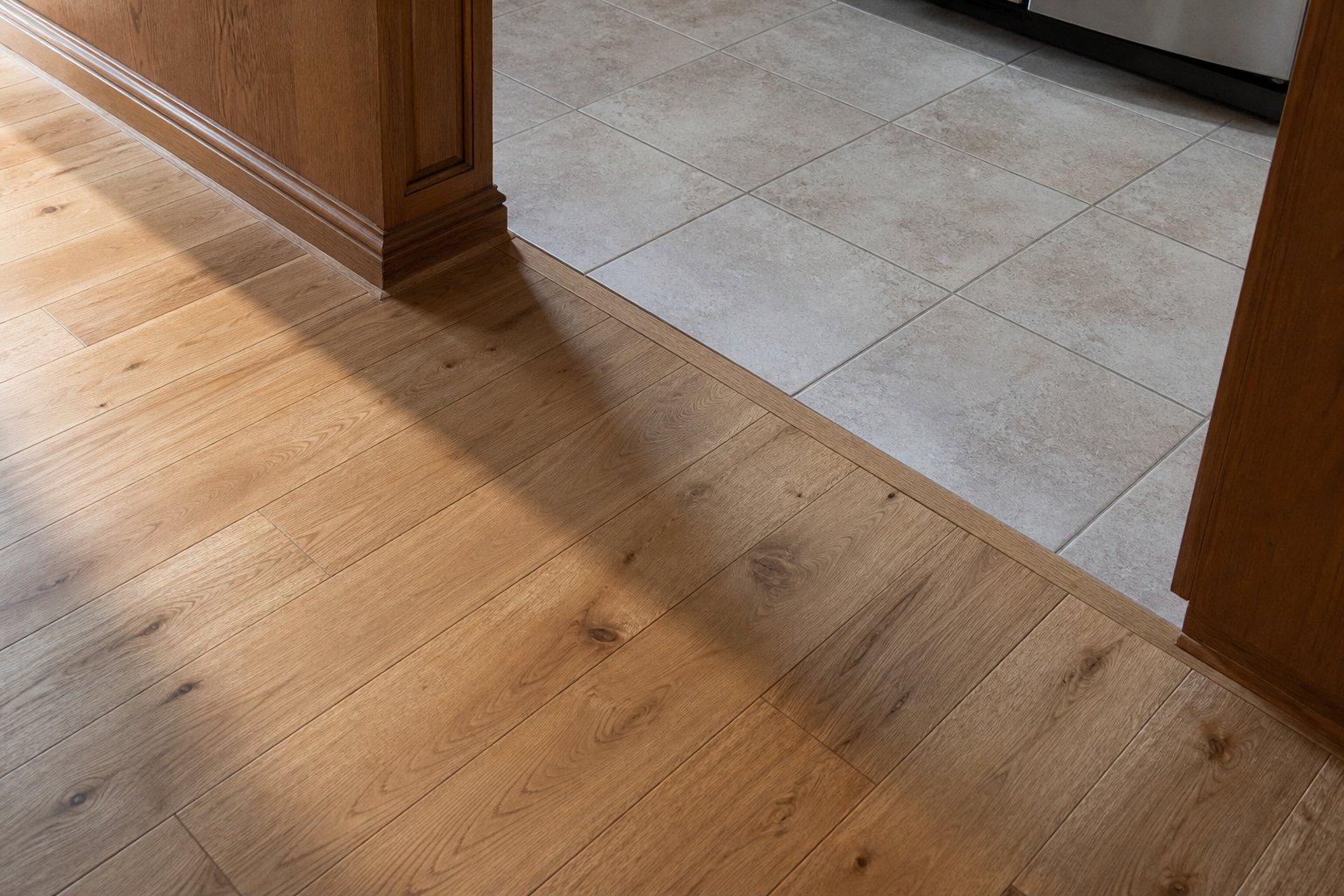
Mixing the two is easy to do well. Flush transition strips and coordinated tones let tile and hardwood meet cleanly at doorways, and we plan those transitions during design so the change feels intentional. Whole-home renovation projects give us the chance to map flooring zones around how each family actually lives.
Frequently Asked Questions
Does wood-look tile actually look like real wood?
Good porcelain plank tile is convincing enough that most guests never notice, especially in matte finishes with textured grain. Viewed up close and at a low angle, real hardwood still wins on depth. Installation quality matters as much as the tile itself, since repeated faces placed side by side are the fastest giveaway.
Can engineered hardwood really survive Florida humidity?
Yes, when three things happen: the slab is tested and sealed against moisture, the planks acclimate before installation, and the home keeps indoor humidity reasonably steady afterward. Engineered construction was designed for exactly this challenge, and we install it successfully across Lee County.
Which is better if my North Fort Myers home sits empty all summer?
If the home will be closed up without humidity control for months, porcelain tile is the safer choice because it is unaffected by damp indoor air. If you prefer hardwood, a humidistat-controlled thermostat that holds indoor humidity in a safe range while you are away protects the floor and the rest of the home too.
Can I mix tile and engineered hardwood in the same home?
Absolutely, and most of our clients do. The key is planning transitions at natural break points like doorways and cased openings, keeping floor heights flush, and choosing tones that complement each other rather than trying to match wood and tile exactly.
Still weighing wood look tile vs engineered hardwood for your own rooms? Explore our flooring installation service, see how new floors fit into a larger North Fort Myers remodeling project, or browse the rest of our home renovation services to plan the whole space at once. Call us at (239) 771-2855 to schedule a visit to our Fort Myers showroom on Metro Pkwy or request an estimate, and we will walk you through full-size samples of both floors so you can choose with confidence.