


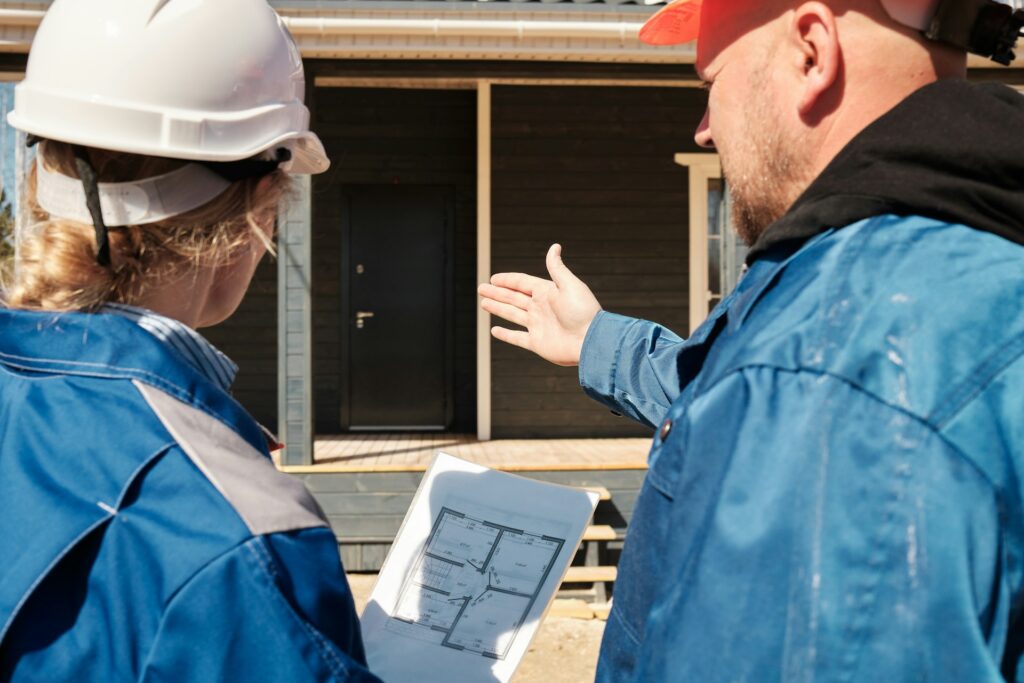
If you’ve ever gotten a quote from a general contractor and wondered what you’re actually paying for (especially when subcontractors do the hands-on work) you’re not alone. Understanding what a general contractor does helps you see why hiring a GC is almost always cheaper than managing a renovation yourself. A general contractor is the project manager, problem solver, and permit puller who keeps your renovation on track, on budget, and up to code.
Here’s a breakdown of every role a GC plays from the first site visit to the final walkthrough.
Project Planning and Estimating
Before a single wall gets touched, a general contractor spends days (sometimes weeks) planning the project. This upfront work is what separates a smooth renovation from a money pit.
The process starts with a thorough property walkthrough. Your GC will assess the full scope of work, identify hidden issues like termite damage or outdated wiring, and determine exactly which materials and trades are needed. From there, they build a detailed cost estimate broken down by trade and material; not a vague lump sum, but a line-by-line breakdown that shows where every dollar goes.
This phase also includes building a realistic project timeline with milestones for each phase. A good GC builds in buffer time for inspections, material delays, and the inevitable surprises that come with opening up walls in a Florida home. They’ll identify potential problems (foundation cracks, code violations, asbestos in popcorn ceilings) before work starts, so you’re not blindsided by a $5,000 change order in week three.
At Alliance Construction & Renovation, our estimates include a detailed scope document so homeowners know exactly what’s included and what falls outside the project boundaries.
Pulling Permits and Managing Inspections
Permits might be the least exciting part of a renovation, but they’re one of the most important. In Fort Myers and across Lee County, almost any work beyond cosmetic changes requires a building permit, and getting caught without one can mean fines, forced demolition, or problems when you sell your home.
Your general contractor applies for building permits through Lee County or your local municipality. They know which permit types are needed for your specific project: a simple kitchen remodel might need plumbing and electrical permits, while a room addition requires structural, plumbing, electrical, and mechanical permits plus a site plan review.
Throughout the project, your GC schedules required inspections at each phase: framing, electrical, plumbing, and final. They ensure all work meets Florida Building Code, which is stricter than most states due to hurricane wind-load requirements. And when an inspection fails (it happens) your GC coordinates the corrections and reschedules without you having to make a single phone call.
Coordinating Subcontractors and Specialists
This is where the real value of a general contractor shows up. Managing multiple trades (plumbing, electrical, HVAC, drywall, painting, flooring) requires precise scheduling so nobody is waiting around and nobody is working on top of each other.
Your GC hires and schedules licensed subcontractors for each trade, verifying that every sub carries proper insurance and licensing before they step on your property. They sequence the work so trades don’t overlap or block each other. Electricians can’t wire a wall that hasn’t been framed. Drywall can’t go up until plumbing and electrical pass inspection. Flooring can’t go down until the ceiling is painted.
We coordinate with trade specialists like CR Benge Drywall & Stucco to handle finishes that require specialized skill. The difference between a general laborer hanging drywall and a dedicated drywall crew is visible in every seam, corner, and texture match. A GC knows which trades demand specialists and which can be handled by a general crew.
This coordination is what you’re really paying for. Homeowners who try to manage subs themselves quickly discover that scheduling five independent contractors (each with their own availability, material needs, and inspection requirements) is a full-time job.
Budget Management and Change Orders
Renovations rarely go exactly according to plan. Hidden water damage, outdated plumbing, or a homeowner who decides mid-project that they want a bigger island; these things happen. A general contractor manages the financial side of these changes so surprises don’t become disasters.
Your GC tracks spending against the original estimate in real time. When you request an addition or scope change, they issue a formal change order that documents the new work, the added cost, and the timeline impact before anything changes on site. This paper trail protects both you and the contractor.
Material sourcing is another budget lever your GC controls. They negotiate pricing with suppliers based on volume and relationships. A homeowner buying 500 square feet of tile pays retail. A contractor who buys thousands of square feet a year gets contractor pricing, and passes part of that savings to you.
Most importantly, a good GC flags cost overruns early. If the plumbing rough-in reveals galvanized pipes that need replacing, you’ll hear about it the same day; not after the drywall is up and the budget is blown.
Quality Control and Final Walkthrough
A general contractor inspects completed work at each phase before the next trade begins. This catches problems when they’re easy to fix: a crooked stud, a plumbing joint that’s not tight, an electrical box in the wrong location. Finding these issues at the framing stage costs minutes. Finding them after drywall costs days.
As the project wraps up, your GC creates a punch list: a detailed list of items that need correction, adjustment, or touch-up before final payment. This might include paint touch-ups, caulk lines, cabinet adjustments, or grout repairs. The punch list is your leverage to ensure everything meets the standard you’re paying for.
The final walkthrough is when you walk the entire project with your contractor, room by room, checking every detail against the original scope. This is your opportunity to flag anything that doesn’t look right before the crew packs up. After the walkthrough, your GC provides warranty documentation and maintenance recommendations for the completed work.
Get a General Contractor Who Manages Every Detail
A good general contractor doesn’t just build; they plan, coordinate, manage, and solve problems so you don’t have to. Alliance Construction & Renovation handles full-scope renovations across Fort Myers, Cape Coral, Bonita Springs, and Lee County. Call us at (239) 244-4341 to discuss your project and get a detailed, itemized estimate.
Frequently Asked Questions
How much does a general contractor charge in Fort Myers?
General contractors in Fort Myers typically charge 10-20% of the total project cost as their fee, or they mark up subcontractor and material costs by 15-25%. On a $50,000 renovation, expect to pay $7,500-$12,500 in GC fees. This covers project management, permit handling, scheduling, inspections, and quality control.
Can I act as my own general contractor in Florida?
Florida allows homeowners to act as their own GC on their primary residence under an Owner-Builder exemption. However, you become personally responsible for permits, inspections, code compliance, worker’s compensation for anyone you hire, and liability for any injuries on site. Most homeowners who try this on projects over $25,000 end up spending more than a GC would have charged.
What’s the difference between a general contractor and a handyman?
A general contractor holds a state license (CGC or CBC in Florida), pulls permits, carries liability and worker’s comp insurance, and manages multi-trade projects. A handyman handles small repairs and tasks that don’t require permits or specialized licensing. In Florida, handyman work is limited to jobs under $2,500 in labor and materials: anything above that requires a licensed contractor.