


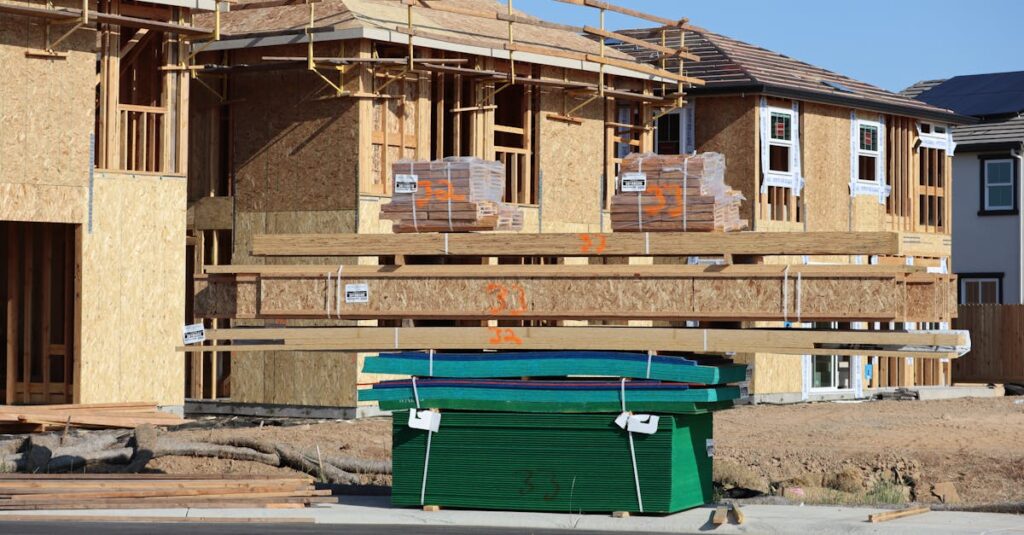
The decision between new construction vs remodel in Fort Myers is one of the most consequential choices a homeowner or property investor can face in Southwest Florida. Both paths can deliver a transformed living space, but they differ dramatically in cost per square foot, timeline, permit complexity, and risk exposure — especially given Lee County’s hurricane wind zone requirements, FEMA flood elevation rules, and the region’s abundant stock of mid-century concrete-block homes. Whether you’re weighing a ground-up build on a vacant lot in Lehigh Acres or a gut renovation of a 1970s CBS home in Cape Coral, this article walks you through the critical factors so you can make a financially sound, code-compliant decision.
Understanding the True Cost Difference Between Building New and Remodeling
Cost is almost always the first question homeowners ask, and in the Fort Myers market it deserves a precise answer rather than a vague range. New construction in Lee County currently runs roughly $180–$260 per square foot for a standard mid-grade build — think 3-bedroom, 2-bath slab-on-grade with impact glass windows, a concrete tile roof, and code-minimum insulation. High-end custom builds with premium finishes push $300–$400+ per square foot. That figure does not include the land, site preparation, impact fees (which in Lee County can run $8,000–$15,000 per residential unit), or utility connection costs.
A major whole-home remodel in Fort Myers typically runs $80–$160 per square foot of renovated space, though “whole-home” projects that involve opening walls, replumbing slab-on-grade lines, upgrading electrical panels, and adding hurricane retrofits can creep toward $200 per square foot quickly. The hidden variable is what you find once work begins. Older CBS homes often have aluminum wiring, galvanized steel supply lines, or original single-pane jalousie windows — all of which trigger code-required upgrades under current Florida Building Code once you cross the 25% substantial improvement threshold.
One factor that consistently tips the financial analysis toward remodeling in Southwest Florida: lot value. A waterfront lot in Cape Coral or a Gulf-access parcel in Bonita Springs may already represent $300,000–$700,000 of your property’s total value. Demolishing the existing structure to build new preserves that lot value, but you lose any permitting grandfathering and must meet current ASCE 7-22 wind load and base flood elevation standards from the ground up. On non-waterfront lots, the math often favors a deep remodel, since the structure itself carries more proportional value.


Florida Building Code and Permit Requirements: How They Shape Your Decision
Many Fort Myers homeowners underestimate how heavily the Florida Building Code influences the remodel-vs-rebuild calculus. The state’s 7th Edition code, adopted statewide, sets the minimum standards for wind resistance, energy efficiency, and life-safety systems — and it applies differently depending on whether you are building new or renovating.
For new construction, every system must fully comply with current code from day one: R-30 attic insulation for Climate Zone 2, hurricane impact glass or approved shutters on all openings, continuous load path framing from roof to foundation, and adherence to the applicable wind speed map (140–150 mph design wind speed across most of Lee and Collier counties). There are no grandfathered exceptions.
For remodels, the trigger point is Florida’s “substantial improvement” rule: if the total cost of improvements equals or exceeds 50% of the structure’s pre-improvement market value, the entire structure must be brought into compliance with current flood and building codes. This is a critical threshold for properties in FEMA Special Flood Hazard Areas (AE and VE zones), which cover significant portions of Fort Myers Beach, Estero, and low-lying Cape Coral neighborhoods. Crossing that threshold on a remodel can require raising the finished floor to current base flood elevation — a project that itself can cost $40,000–$80,000 for an existing slab-on-grade home.
Lee County’s permitting office generally processes residential remodel permits in 4–8 weeks for straightforward scope and 10–14 weeks for complex structural or flood-zone work. New construction permits typically take 8–14 weeks from submission to approval, assuming clean documentation. A licensed and insured Florida general contractor familiar with local plan reviewers can often shorten these timelines significantly by submitting complete, code-compliant drawings the first time.
When a Remodel Triggers New-Construction-Level Requirements
Beyond the substantial improvement rule, Lee County inspectors will flag several specific conditions that escalate a remodel to near-new-construction complexity: adding conditioned square footage, relocating load-bearing walls in a CBS structure, re-roofing more than 25% of the deck area, or upgrading the electrical service to 200A or above. Each of these triggers a full inspection sequence and, in some cases, requires engineering drawings stamped by a Florida-licensed structural engineer.
The Impact of Hurricane Retrofit Requirements
Any permitted work on an exterior opening — windows, doors, garage doors — in Lee County requires upgrading that opening to current impact-resistant or shutter-protected standards. If you are renovating a 1980s home in North Fort Myers with original aluminum single-pane windows, even a kitchen remodel permit can prompt inspectors to note the non-compliant openings. Proactively including hurricane impact glass in your renovation scope avoids stop-work orders and keeps the project on schedule.


Timeline and Lifestyle Disruption: What Each Path Really Costs You in Time
Beyond dollars, time is the currency most homeowners feel most acutely — particularly in a snowbird-heavy market where many SWFL property owners have a narrow window between April and October to complete renovation work before returning for season.
A major whole-home remodel in Fort Myers typically runs 4–9 months from permit issuance to certificate of completion, depending on scope. A kitchen remodel alone averages 4–8 weeks of active construction. Bathroom renovations run 2–4 weeks per room. The complexity spikes when slab-on-grade plumbing is involved: rerouting supply or drain lines through a concrete slab requires jackhammering, re-routing, re-pouring, and multiple inspections — often adding 2–4 weeks to any wet-room scope.
New construction from permit issuance to certificate of occupancy runs 8–14 months for a custom single-family home in Lee County under normal conditions. Supply chain disruptions, inspector backlogs, or custom material lead times can push that closer to 18 months. During that entire period, you need alternative housing — a real carrying cost that rarely appears in initial budget conversations.
For investors and snowbirds, the remodel path often wins on timeline flexibility. Work can be phased room by room, allowing partial occupancy. A new build offers no such option — the home is unusable until the CO is issued. That said, if the existing structure is severely storm-damaged, has widespread mold, or sits in a mandatory flood retrofit zone, trying to salvage it through phased remodeling can actually cost more time and money than a clean demolition and rebuild.
Our team at Alliance Construction handles both paths — from full general contracting for new builds to phased remodels designed around owners’ occupancy schedules. Knowing your timeline constraints upfront is one of the first things we discuss in a pre-construction consultation.
Structural Condition, Lot Considerations, and When Demolition Makes Sense
Fort Myers and Cape Coral are home to thousands of mid-century concrete-block homes built between the 1950s and 1980s — structures that predate modern wind code, energy codes, and current flood mapping. Many of these homes are structurally sound at the shell level but require extensive investment to meet contemporary standards. Others have sustained repeated storm damage, have compromised stem walls, or sit at finished floor elevations well below current FEMA requirements.
A professional structural assessment — typically $500–$1,500 for a residential evaluation — should be the first expenditure before committing to either path. The assessment tells you the condition of the CBS block, slab, roof deck framing, and any existing structural modifications. If more than 30–40% of the structure requires replacement to meet code, the cost gap between remodeling and rebuilding narrows considerably.
Lot characteristics also drive the decision. If the existing footprint is smaller than what current zoning allows, a teardown gives you the opportunity to build to maximum allowable square footage under current Lee County setback and FAR rules. Conversely, if the existing home sits on an older plat with non-conforming setbacks — common in pre-1970s Cape Coral subdivisions — demolishing the structure can eliminate those grandfathered setbacks, forcing a new build to comply with current, more restrictive positioning requirements.
Salt-air corrosion is a real factor within 5 miles of the Gulf or any tidal waterway. Aluminum framing members, steel fasteners, and exterior electrical components in homes that have sat near the coast for 30+ years may be more compromised than a visual inspection reveals. An experienced contractor will probe wall cavities and examine fastener corrosion before committing to a remodel budget.
Matching the Decision to Your Financial and Lifestyle Goals
Ultimately, the new construction vs remodel question in Fort Myers isn’t purely technical — it’s financial and personal. Here are the scenarios where each path tends to win:
- Remodel wins when: the existing structure is sound, the lot is non-waterfront with limited additional value, you want to preserve neighborhood character, your timeline is 6–12 months, and the renovation scope stays below the substantial improvement threshold.
- New construction wins when: the existing home is storm-damaged, undersized relative to the lot’s allowable square footage, below flood elevation with no cost-effective path to compliance, or when you require a fully custom layout that a remodel cannot deliver without essentially gutting the entire structure.
- Remodel with additions is often the middle path — expanding the footprint with a permitted addition while renovating the existing shell. This can deliver significant square footage and quality gains at $120–$180 per square foot for the addition, while leaving the compliant portions of the existing structure intact.
For kitchen and bathroom upgrades specifically, a remodel almost always delivers better value retention per dollar than a full rebuild. A well-executed kitchen remodel in Fort Myers using quartz countertops, semi-custom cabinetry, and LVP or large-format porcelain tile floors typically recaptures 60–80% of cost in resale value — and transforms daily livability without the 12-month disruption of a full rebuild.
Financing structure also matters. New construction typically requires a construction-to-permanent loan with draw schedules and inspections, while a remodel can often be financed through a home equity line of credit or renovation loan with simpler administration. Your lender’s requirements may effectively make the decision for you if equity or lot-loan access is limited.
Frequently Asked Questions
How do I know if my Fort Myers home qualifies for a major remodel or needs to be rebuilt?
Start with a licensed structural engineer’s assessment, especially for homes built before 1992 when Florida’s first major post-Hurricane Andrew wind codes took effect. If the shell is structurally intact, the slab is unlevel by less than 1 inch, and the home sits at or above current base flood elevation, a remodel is almost always feasible. Severe storm damage, extensive mold, or a floor elevation more than 2 feet below current FEMA requirements typically tips the analysis toward rebuilding.
What is the substantial improvement rule and how does it affect my renovation budget in Lee County?
Florida and FEMA define “substantial improvement” as any repair, reconstruction, or improvement that equals or exceeds 50% of the structure’s pre-improvement market value — not the assessed value. If your project crosses that threshold and the property is in a Special Flood Hazard Area, the entire structure must comply with current base flood elevation and building code requirements. Lee County’s floodplain administrator can confirm your property’s flood zone and current BFE before you commit to a scope.
How long does it take to pull permits for new construction vs a remodel in Fort Myers?
In Lee County, straightforward residential remodel permits currently average 4–8 weeks for review and approval. Complex structural or flood-zone remodel permits run 10–14 weeks. New construction permits typically require 8–14 weeks, assuming complete and code-compliant drawing sets are submitted. An experienced Fort Myers general contractor who submits clean documentation and responds quickly to plan review comments can significantly compress these timelines.
Can I phase a major remodel in Fort Myers to stay within the substantial improvement threshold?
Phasing is a legitimate strategy, but Lee County tracks cumulative improvement costs over a 10-year period for flood-zone properties. Attempting to artificially split a single scope into multiple permits to avoid the substantial improvement threshold is considered fraud and can result in permit revocation. A legitimate phase strategy involves genuinely deferring work to future years with separate design and budget cycles — a conversation best had with a licensed contractor and your county floodplain manager before committing to any approach.
If you’re working through the new construction vs remodel decision in Fort Myers and want a realistic cost and code analysis for your specific property, Alliance Construction is here to help. As a licensed and insured Florida general contractor serving Lee, Collier, and Charlotte counties, we provide honest, permit-pulled work grounded in real SWFL construction conditions. Call us at (239) 771-2855 to schedule a consultation, or explore our general contracting services to learn more about how we manage projects from initial feasibility through certificate of occupancy.

