


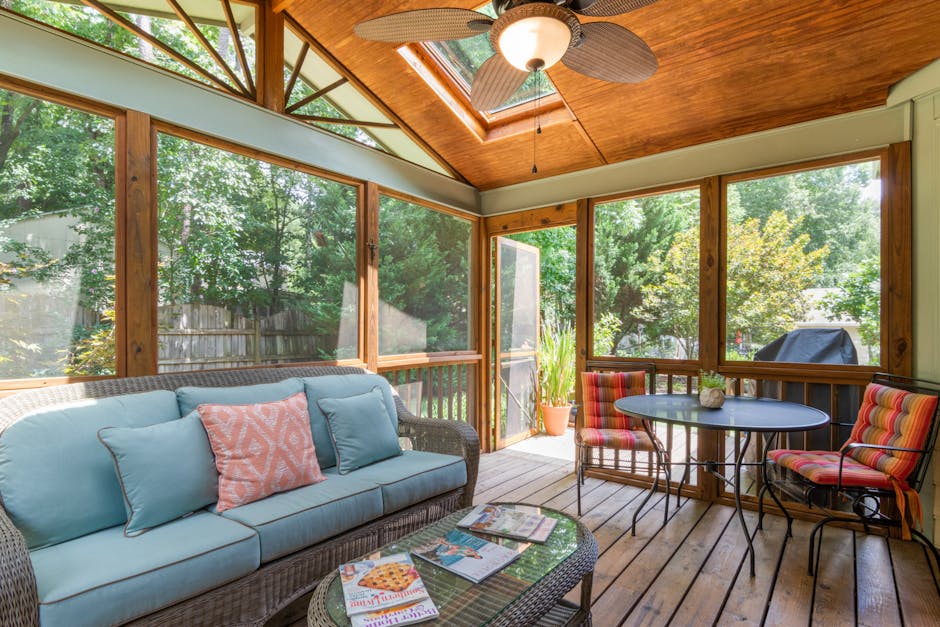
Deciding between screen enclosure repair vs rebuild in SWFL is one of the more consequential calls a Southwest Florida homeowner faces after a major storm. Whether Hurricane Ian peeled your pool cage off its slab anchors in Cape Coral or a fast-moving line of thunderstorms collapsed a corner bay of your Fort Myers lanai, the damage can range from a few torn screen panels to a fully twisted aluminum frame. Making the wrong call (patching a compromised structure or tearing down something salvageable) costs you money in either direction. This guide walks through the structural, code, and financial factors that drive the repair-or-rebuild decision, so you can approach your contractor and your insurance adjuster with the right questions.
How SWFL Storms Stress Screen Enclosures Differently Than Other Climates
Southwest Florida’s outdoor living structures face a demanding combination of heat, humidity, salt exposure, and storm-season wind requirements. Current wind-load assumptions, product approvals, and engineering details should be confirmed for the property before deciding whether a damaged screen enclosure can be repaired or should be rebuilt. Older cages may not match current expectations, especially if they were designed before newer opening-protection and connection standards were adopted.
Beyond wind, the SWFL environment attacks aluminum framing year-round. Properties within five miles of the Gulf or Charlotte Harbor deal with salt-air corrosion that can pit and weaken extruded aluminum in as little as seven to ten years. Year-round humidity consistently above 70% keeps fastener holes and cut ends of aluminum members perpetually damp, accelerating oxidation at every connection point. Pool splash chemistry (chlorine off-gassing and pH swings) compounds the corrosion picture at the base rail and knee-wall connections.
Slab-on-grade construction, which covers the vast majority of SWFL homes, creates its own complication. The anchor bolts that attach your enclosure’s perimeter posts to the concrete deck or pool coping are the most critical structural element in the entire cage. When a storm twists a frame, those anchors either pull out, shear, or crack the slab around them. You cannot reliably assess anchor integrity by looking at the frame above it: a post can appear plumb while its base anchor is fractured below the surface.


Structural Inspection Checklist Before You Decide
Before any contractor quotes repair work, a proper structural assessment should cover six areas. Working through this list helps you understand what you’re paying for and gives you documentation your insurance carrier needs.
Frame Geometry and Plumb
Stand back and sight down each post line. Any post that is visibly bowed, bent at a node connection, or leaning more than half an inch over its height has yielded past its elastic limit. Aluminum that has bent does not spring back to engineered tolerances; it has permanently deformed and its load-carrying capacity is reduced. Replacing individual bent posts while leaving the rest of the frame is acceptable only if the surrounding structure is truly undamaged, which is uncommon after a significant storm.
Slab Anchor and Base Plate Condition
Each post base should be inspected for cracked coping, spalled concrete around the anchor bolt, and any movement when lateral pressure is applied to the post. For permit-pulled enclosure work, anchor embedment depth and spacing are typically reviewed against the engineer-of-record drawings. If anchors are compromised, the repair scope may need to include a full re-anchor, which can mean cutting and patching the slab or coping and may push the project toward rebuild territory.
Hip, Ridge, and Rafter Connection Hardware
The hip and ridge members at the peak of a pool cage carry disproportionate load in wind events. Inspect every gusset plate, tension cable anchor, and screw connection. Stripped screws, cracked gusset plates, or pulled tension cables are serious red flags. Replacing isolated hardware is straightforward; replacing most of the connection hardware means the frame survived the storm mostly by luck, not by design margin.
Cost Ranges for Repair vs Rebuild in SWFL
Cost is often the deciding factor, but homeowners frequently compare repair estimates against rebuild quotes without accounting for what each scope actually includes. The ranges below are rough planning estimates for Southwest Florida labor and materials; confirm current pricing with local contractors before choosing a scope.
Screen re-screening only: Replacing fiberglass or aluminum screen mesh on an intact frame runs $3–$6 per square foot of screen area, including labor. A typical 1,200-square-foot pool cage costs $3,600–$7,200 for mesh replacement alone. Super-screen or heavy-duty no-see-um mesh adds roughly 40% to material cost but resists tearing far better in future storms.
Partial frame repair: Replacing one to three bent posts, re-anchoring a section, and re-screening affected bays typically runs $2,500–$7,000 depending on scope. This is only cost-effective when less than 25–30% of the frame is damaged and anchor integrity is confirmed across the rest of the structure.
Full rebuild: A new aluminum screen enclosure in SWFL may include engineered drawings, local building permits, slab anchoring, aluminum framing, and standard fiberglass mesh. As a rough planning range, homeowners often see $18–$32 per square foot of enclosed area, so a 1,200-square-foot cage could land around $21,600–$38,400 before upgrades. Picture-frame panoramic screen panels, heavier-gauge aluminum packages, Super Screen, custom hip-roof designs, or enclosures that wrap a larger lanai and screened porch area can move the final number substantially higher.
One critical cost often overlooked: when damage is extensive, the building department, engineer, or insurance scope may require the rebuilt structure to meet current applicable code rather than matching older details. That can mean heavier-gauge aluminum, revised post spacing, updated anchor engineering, or other changes a simple repair quote may not capture. Confirm the code path for your specific property before comparing repair and rebuild numbers.


Insurance Documentation and the Permit Question
Screen enclosures are covered under most Florida homeowners’ policies as “other structures,” typically at 10% of the dwelling coverage limit. After a named storm, your adjuster will walk the property and assess damage using one of two approaches: actual cash value (ACV), which deducts depreciation, or replacement cost value (RCV), which pays toward a like-kind replacement. The distinction matters enormously for a 15-year-old cage that has depreciated significantly.
Document everything before any cleanup. Photograph every bent post, every pulled anchor, every torn screen panel, and every crack in the surrounding slab or coping. Video the entire structure walking all four sides. If your insurance company sends a field adjuster before you’ve had an independent contractor inspect, ask for the adjuster’s line-item estimate and compare it against contractor quotes. Insurance scopes may not include every labor, drawing, or permit item a contractor identifies, so reconcile the scope before approving repair work.
Permitting should be confirmed before structural work starts. In Lee County and many Collier County municipalities, work that involves removing or replacing frame members, re-anchoring, or substantial re-screening may require a building permit. Work performed without required permits can complicate resale, inspections, and future insurance discussions. A qualified contractor can help identify the permit path, document the scope, and coordinate required inspections.
FEMA flood zone designation may also matter if your property sits in an AE or VE zone. Rebuilding a screen enclosure in a Special Flood Hazard Area can introduce additional design considerations, including base flood elevation and how the enclosure handles floodwater. Your contractor, engineer, or building department can verify the flood zone on FEMA’s Flood Map Service Center before finalizing any rebuild plan.
When the Numbers Clearly Point to a Full Rebuild
After working through the inspection checklist and cost ranges above, several situations consistently favor a full rebuild over repair: even when the damage appears limited at first glance.
The frame is more than 15–20 years old. Older enclosures may have been engineered under earlier wind-load assumptions and connection details. Even if the frame came through the last storm mostly intact, repairs that extend its life another decade should be evaluated against the property’s current engineering requirements. Re-screening an older frame can also affect warranty coverage depending on the mesh manufacturer and installer terms.
More than three posts are bent or pulled. Once frame deformation is distributed across multiple members, realigning and reusing the remaining frame becomes an engineering guess rather than a calculated repair. The labor cost of disassembling, straightening, and reassembling approaches the cost of new material, with inferior results.
The slab anchor pattern no longer fits the scope. Older cages were sometimes installed with anchor spacing or fastener details that may not satisfy today’s engineered repair scope. Permit review or engineering review may identify needed upgrades, which can be easier to handle during a full frame removal than as a surgical fix around an existing structure.
You want to change the enclosure configuration. Post-storm rebuilds are the most cost-effective time to reconfigure your outdoor living and general contracting scope: adding square footage, converting a flat-top cage to a hip-roof design, integrating a summer kitchen space, or combining the pool cage with a screened front entry. The engineering fees and permit costs are largely fixed regardless of scope, so capturing the redesign within a rebuild produces much better value than doing two separate projects.
Frequently Asked Questions
How long does a full screen enclosure rebuild take in Lee County?
Timeline depends on engineering, permit review, contractor backlog, material availability, and inspection scheduling. For planning purposes, homeowners should expect several weeks for drawings and permit review, with the enclosure build itself often taking about one to two weeks for a standard pool cage once materials and approvals are ready. Post-storm surge periods can extend the total timeline.
Can I repair just the screen mesh and skip a structural inspection?
Re-screening mesh panels on an intact, undamaged frame is generally a maintenance task that doesn’t require a permit. However, if your frame sustained any storm impact (even if it looks mostly straight) a structural inspection is strongly advisable before re-screening. Installing new mesh on a frame with compromised anchors or bent members creates false confidence and puts you at greater risk in the next storm event. The cost of an inspection is small relative to the risk of getting this wrong.
Will my homeowners insurance cover the full cost of a code-compliant rebuild?
Coverage depends on your policy language, damage cause, deductible, exclusions, and any ordinance-or-law coverage. Review your declarations page and ask your agent or adjuster how code-related upgrades, depreciation, and replacement-cost provisions apply before settling on a repair-vs-rebuild decision based on insurance payout alone.
What aluminum gauge should I specify for a new SWFL pool cage?
Aluminum member sizing should come from the engineer-of-record drawings for the specific enclosure, not a generic rule of thumb. Ask your contractor to identify the alloy, wall thickness, connection details, and product approvals being used for the project location before signing a contract.
Alliance Construction serves Fort Myers, Cape Coral, Naples, Bonita Springs, Estero, Lehigh Acres, and surrounding SWFL communities. If a storm has left your screen enclosure bent, torn, or structurally questionable, our team can walk the structure with you, assess what’s salvageable, and provide a documented scope for either repair or full rebuild based on the project conditions. Call us at (239) 771-2855 to schedule your consultation, or visit our outdoor living services page to learn more about how we approach screen enclosure and lanai projects across Lee County and beyond.