


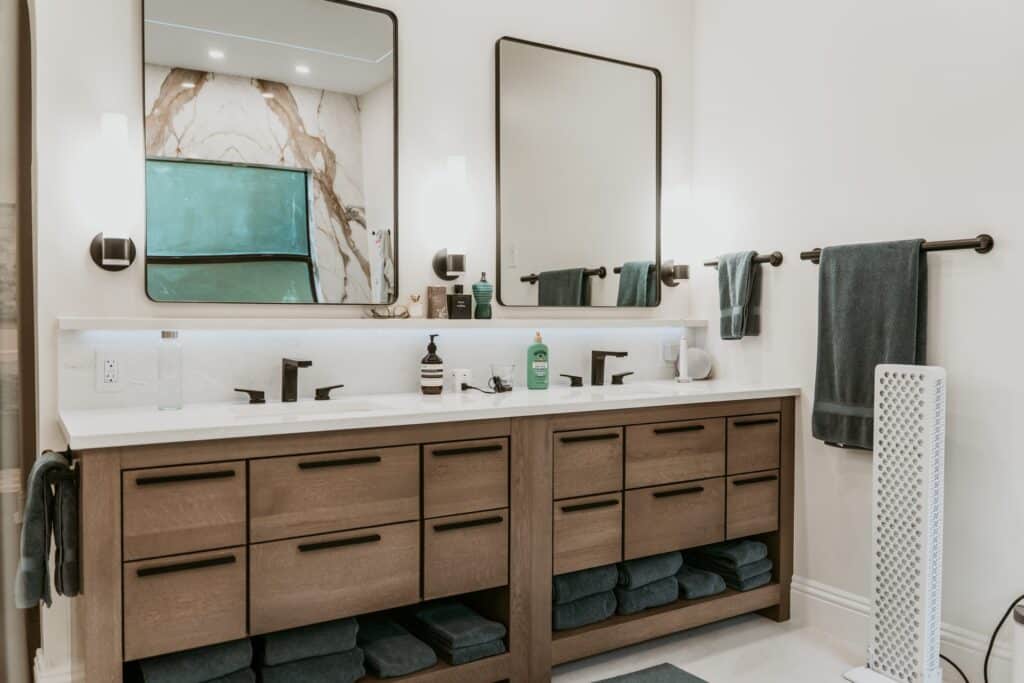
Bathroom hardware can look polished and layered without feeling busy, but only if the finishes are chosen with a clear plan. Homeowners thinking about mixing metals in bathroom spaces often worry that one faucet, one light, and one shower trim choice will start to compete with everything else. In Southwest Florida, where many homes use bright natural light, glossy tile, and open sightlines, small finish decisions stand out fast. A bathroom does not need many metal tones to feel custom. It needs a dominant finish, a supporting accent, and a smart layout that keeps the room calm from the vanity to the shower.
Start with one dominant finish and let it lead the room
The easiest way to avoid clutter is to stop thinking in terms of collecting finishes and start thinking in terms of hierarchy. One finish should clearly lead. That finish usually appears on the largest or most repeated items: the faucet set, shower trim, cabinet hardware, or lighting.
In many bathrooms, the dominant finish is the one you see first when entering. If the vanity wall is the main focal point, the faucet and mirror lights often set the tone. If a glass shower is the visual anchor, the shower trim can take the lead instead.
Good places for the main finish
A dominant finish works best when it shows up in at least two or three key areas. That could mean matte black on the faucet, shower hardware, and towel bars. It could mean brushed nickel on the faucet, sconces, and drawer pulls. Repetition keeps the eye relaxed.
What to avoid
Do not let every fixture become a different statement piece. A polished faucet, black shower trim, brass mirror frame, chrome sconces, and bronze pulls can turn a clean bathroom into a showroom display. Even beautiful finishes look disorganized when none of them seems intentional.
If you are remodeling and replacing multiple fixtures at once, it helps to sketch the room by zones. Mark the vanity, shower, tub area, storage wall, and accessories. Then decide where the primary finish appears most often. That simple step can save a lot of second-guessing later.

Choose a secondary accent for mixing metals in bathroom designs
Once the primary finish is set, add one secondary accent. Most bathrooms look best with two metal finishes total. In larger primary baths, a third finish can work, but only if one of them is very limited and subtle.
The secondary finish should support the room, not compete with it. Think of it as jewelry, not the outfit. It may appear on mirror frames, light fixtures, a tub filler, cabinet knobs, or small shelf brackets.
Where accents usually work best
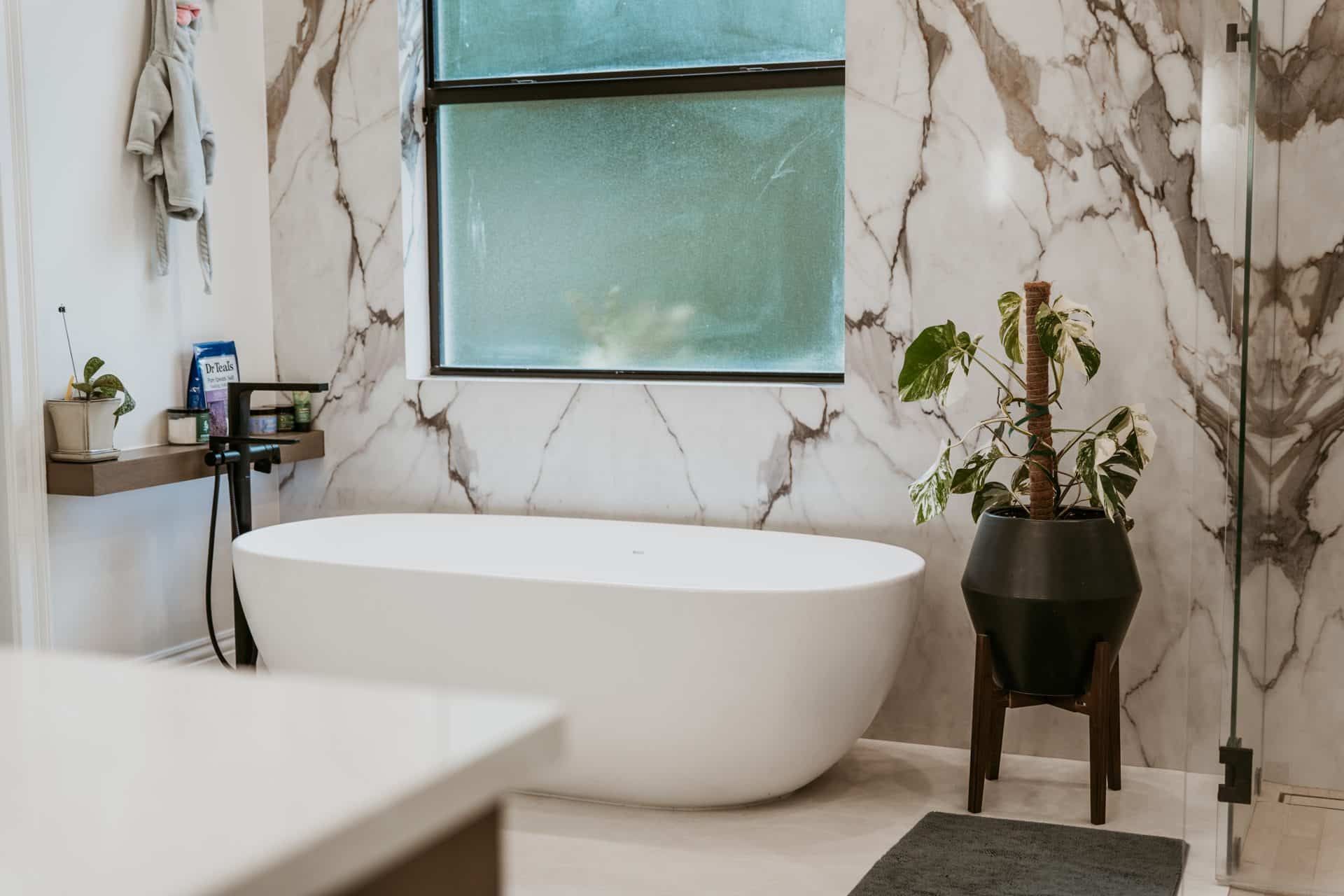
Accent finishes tend to look strongest on pieces that are easy to notice but do not overwhelm the room. Sconces are a common choice because they sit at eye level and can add warmth. Cabinet hardware is another safe place because it repeats in a controlled pattern. A freestanding tub filler can also be an accent if the tub area is meant to stand apart.
How to pair warm and cool tones
Not all metals behave the same way. Brushed brass and champagne bronze usually read warm. Chrome, stainless, and many nickel finishes read cooler. Matte black acts more like a neutral and can bridge both sides.
If your tile leans gray, white, or crisp blue, cooler metals often feel more natural. If your flooring, cabinetry, or wall color has beige, sand, taupe, or wood warmth, a warmer accent may feel more settled. Southwest Florida homes often use light stone looks and sunlit neutrals, which can support either direction. The key is consistency in undertone, not just color.
When homeowners are comparing ideas from room to room, existing fixtures in other parts of the home can help steer the choice. That guidance aligns with Kohler bathroom mixed-metal design tips, which suggests looking at surrounding finishes so the bathroom feels connected to the rest of the house.
Distribute finishes by zone so the room looks balanced
Balance is what keeps mixed finishes from looking accidental. Instead of scattering one accent everywhere, place each finish in logical groups. That means you are creating zones rather than peppering the room with unrelated pieces.
Vanity zone
The vanity usually includes faucet hardware, mirror frames, light fixtures, and cabinet pulls. This is where many remodels either succeed or get noisy. If the faucet is your dominant finish, decide whether the mirror lights match it or provide the accent. Then carry that same accent to the cabinet hardware or keep the hardware with the main finish for a quieter look.
Shower zone
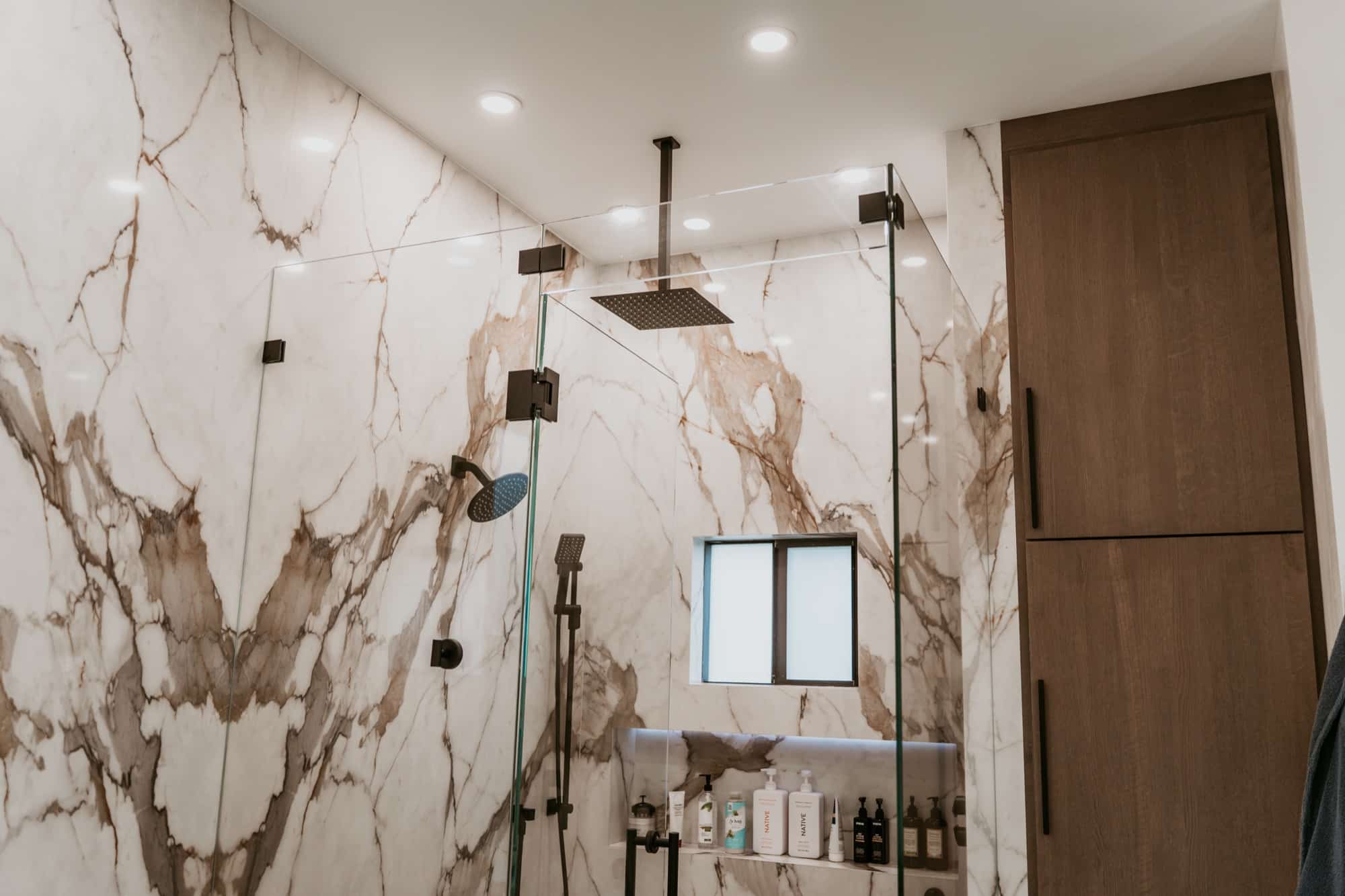
The shower should usually stay consistent within itself. Mixing the shower valve trim, shower head, handheld, and enclosure hardware can make the space look patched together. If you want contrast here, keep it simple. For example, shower plumbing trim in black with a framed mirror or sconces in a warm metal can look composed, while multiple different finishes inside the shower often look busy.
Tub and accessory zone
If your bathroom includes a tub area, it can either echo the vanity or act as the place for the secondary finish. Accessories such as towel bars, robe hooks, and toilet paper holders should not feel random. They should either match the dominant finish or repeat the accent in a very controlled way.
This is one reason many homeowners planning a bathroom remodeling project choose finish boards before ordering fixtures. Seeing all finish placements at once makes it easier to spot overload before materials arrive.
For more visual references, browsing a completed remodel gallery can help you notice how repetition and spacing affect the overall feel of a bathroom, even when the exact finishes differ from your plan.
Test real samples under your bathroom lighting before you order
A finish that looks soft and warm in a showroom can look sharp, yellow, flat, or overly reflective once it is in your home. That is especially true in Southwest Florida bathrooms with strong daylight, glossy surfaces, and bright vanity lighting.
Photos online are useful for inspiration, but they should not make the final call. Real samples are the better guide. Hold them near your tile, paint, countertop, flooring, and cabinet finish. Then check them in morning light, evening light, and with the actual vanity lights you expect to use.

Watch the undertone, not just the label
Two products both labeled brushed gold may not match each other at all. One may look muted and sandy, while another leans bright and yellow. The same problem happens with nickel, bronze, and black finishes. One black may appear chalky and soft. Another may look deep and slick.
That is why mixing across brands requires extra attention. If you are not buying all fixtures from one collection, compare samples side by side before making final selections.
Reflective finishes change more during the day
Polished metals pick up surrounding colors and light quickly. In a bathroom with white walls and daylight, chrome may look crisp and almost invisible. In a room with warm paint and wood accents, it may feel colder. Brushed finishes often read calmer because they reflect less and hide fingerprints more easily.
For households that are seasonal or have guest baths sitting unused for stretches, easy cleaning is often part of the choice too. Finishes with softer visual texture can be more forgiving of spots between cleanings, though every manufacturer has its own care guidance.
Match the finish plan to fixture style, maintenance, and the age of the home
A finish combination can fail even when the colors work, simply because the fixture styles do not belong together. Metal selection is only half the job. Shape, edge detail, and profile matter just as much.
Keep fixture styles in the same design family
If your faucet is sleek and modern, heavily ornate sconces in a contrasting metal may feel out of place. If the bathroom has classic details, an ultra-industrial shower set can look disconnected. You can mix finishes more confidently when the silhouettes still relate to each other.
For example, a simple black faucet with a gently curved brass sconce can work if both have clean lines. A square-edged contemporary faucet with traditional scroll hardware usually creates tension that is hard to fix with color alone.
Think about slab construction and wall access during a remodel
Many Southwest Florida homes are built on slab, so plumbing changes can be more involved than surface-level finish swaps. If you are already opening walls or relocating fixtures during a bathroom remodel, it makes sense to finalize finish choices early. That way the trim kits, valve compatibility, mirror sizes, and lighting rough-ins all support the final look instead of forcing last-minute substitutions.
Use care instructions as part of the selection process
Not every finish wants the same cleaning routine. Before choosing a statement finish, make sure you are comfortable with the care approach recommended by the manufacturer. Bathrooms with glass showers, hard water spotting, and frequent use can make maintenance more noticeable. A finish you love visually should also fit how the room will actually be used.
If you are narrowing down options and want a second opinion on fixture coordination, layout, or remodel sequencing, you can contact the team before locking in your order list.
Frequently asked questions about mixing metal finishes in a bathroom
Can you mix black and brass in the same bathroom?
Yes, black and brass are one of the easiest pairings when they are distributed clearly. Black often works well as the dominant finish on plumbing fixtures, while brass adds warmth through lighting, mirror frames, or cabinet hardware. The room stays cleaner when one of those metals appears more often and the other is limited to select accents.
Should all bathroom hardware match exactly?
No, exact matching is not required for a bathroom to feel finished. What matters more is that the choices feel deliberate. A faucet, shower trim, lighting, and hardware can use more than one finish if the undertones are compatible and each finish repeats in a logical area. Random one-off pieces are what usually create visual clutter.
Is chrome too cool to mix with warmer finishes?
Chrome can mix well with warmer finishes if the room has a clear plan. Because chrome is bright and reflective, it often works best when paired with one warmer accent rather than several other metals. In bathrooms with warm wood cabinetry or sandy tile, chrome can still look sharp if the warmer finish is repeated in controlled places like lights or hardware.
What is the safest way to test mixed finishes before remodeling?
The safest approach is to gather physical samples and review them in the actual bathroom. Place them next to tile, stone, paint, flooring, and cabinet doors under both daylight and artificial light. If possible, compare the exact faucet, hardware, and lighting finishes together rather than relying on online photos, which can hide undertone differences and reflectivity.
Alliance Construction & Renovation helps homeowners plan mixing metals in bathroom remodels with a practical eye for fixture coordination, layout, and finish balance in Fort Myers, North Fort Myers, Naples, Punta Gorda, Cape Coral, Estero, and Bonita Springs. Call (239) 771-2855 or request an estimate.