


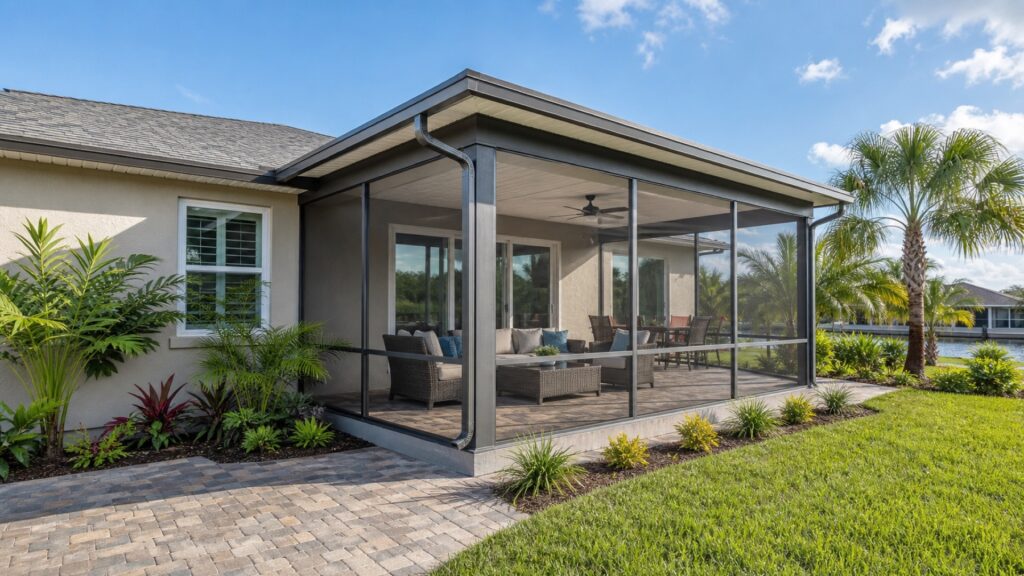
A lanai addition in Cape Coral can make a home more usable in everyday Florida weather, but the right plan depends on the existing slab, roof tie-in, screening or glass choice, and current local permitting requirements. This guide compares common lanai configurations, explains the questions that affect budget and schedule, and shows why homeowners should confirm code, zoning, and appraisal assumptions before treating any outdoor-living project as a guaranteed resale upgrade.
Understanding Cape Coral’s Outdoor Living Landscape
Cape Coral lanai work should be planned around current wind-load, product-approval, zoning, and floodplain requirements for the specific address. Attached structures may need engineering review, and the correct permitting office and review timeline can vary by scope and jurisdiction. Confirm those details before signing off on drawings, ordering materials, or assuming a start date.
Beyond code, Cape Coral’s environment shapes material choices in ways that homeowners arriving from northern states often underestimate. Salt air infiltrates up to five miles inland from the Gulf and from Cape Coral’s extensive canal network, accelerating corrosion on aluminum framing, fasteners, and screen hardware. Year-round humidity sitting above 70% means any wood framing used in a lanai structure must be pressure-treated or replaced entirely with aluminum or concrete block. These aren’t optional upgrades; they’re the baseline for a lanai that will still look correct a decade from now.
Cape Coral also has a large inventory of mid-century concrete block (CBS) homes on slab-on-grade foundations, and that construction type creates specific attachment challenges. Adding a covered lanai to a CBS home typically requires a stem wall or concrete column footer rather than a simple post-anchor, which affects both cost and timeline. Knowing this upfront prevents sticker shock mid-project.
For a full picture of outdoor living options across the region, explore our outdoor living services page, which covers pool decks, pergolas, and screened enclosures alongside lanai additions.

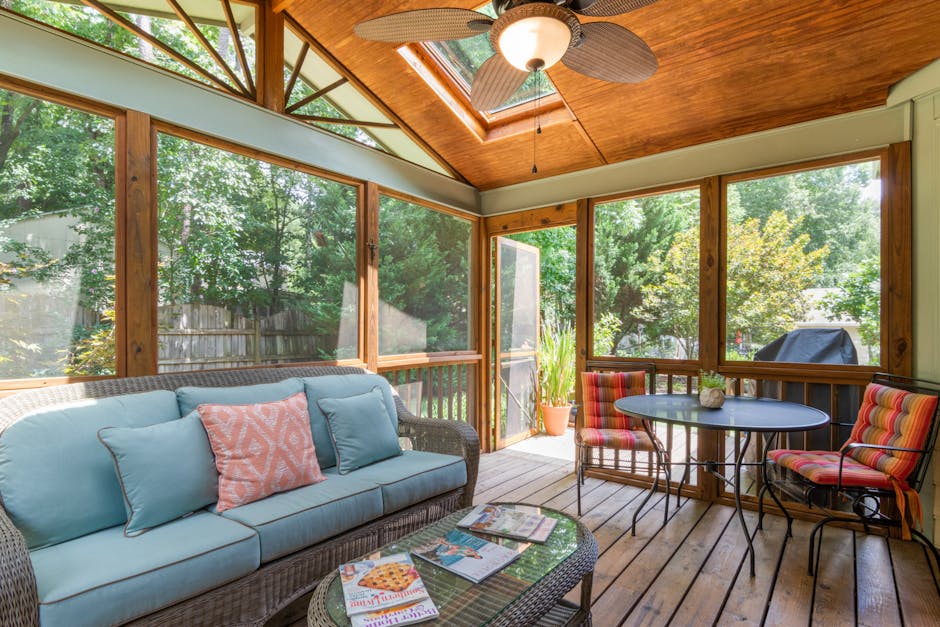
Four Lanai Configurations and What They Cost in SWFL
Not all lanai additions are created equal, and the configuration you choose determines the budget, comfort level, maintenance profile, and permitting path. Here is how the four most common options compare for Cape Coral homeowners.
Open Covered Lanai
This is a roofed slab extension with no screens or enclosure walls, essentially a covered patio. Roof structure may be aluminum or a full architectural tie-in to the existing roofline. Costs depend on engineering, slab work, finishes, access, and permit requirements. It adds shade and weather protection but does not control insects or humidity.
Screened Enclosure
The classic Florida lanai: aluminum frame with fiberglass or aluminum mesh screening. Standard 18×16 screen mesh blocks most insects; 20×20 no-see-um mesh is worth the modest upcharge in Southwest Florida where the smallest biting insects are a real nuisance. Costs range from $60–$120 per square foot for a screen-only structure on an existing slab, or $130–$180 per square foot if a concrete slab must be poured. A 400 sq ft screened enclosure on an existing slab runs approximately $24,000–$48,000. Screened enclosures are the most common lanai addition in Cape Coral precisely because they balance cost, livability, and buyer appeal.
Picture-Window (No-See-Um) Screen with Solid Knee Wall
A step up from standard screening, this configuration uses a solid masonry or aluminum knee wall (typically 18–36 inches tall) topped by large-panel picture-window screening that maximizes the view while blocking insects and reducing wind-driven rain entry. Costs sit at $140–$210 per square foot all-in. The knee wall adds structural rigidity, which appraisers and buyers both notice.
Glass-Enclosed or Insulated Lanai (Florida Room)
Using impact-rated glass panels can transform the lanai into conditioned or semi-conditioned space when the rest of the assembly is designed for that use. This is typically the most complex option because glass weight, product approvals, cooling, insulation, and permit classification all need review. Whether the space affects gross living area or appraised value should be confirmed with the building department, appraiser, and insurer before the project is priced around that assumption.
How to Think About Resale and Everyday Use
The question homeowners ask most often is simple: will I get my money back? The careful answer is that resale impact varies by configuration, neighborhood, buyer expectations, maintenance condition, and whether the work was permitted and documented correctly.
Unpermitted lanai additions can complicate inspections, insurance questions, financing, and future sale negotiations. Permitted work by a licensed Florida general contractor creates a clearer improvement record and gives buyers, appraisers, and insurers better documentation to review.
For screened enclosures, the clearest benefit is often daily usability: shade, insect control, and a more comfortable transition between the house and pool or yard. Appraised value should be discussed with a local real estate professional or appraiser using comparable sales rather than generic percentage assumptions.
Glass-enclosed lanais may be viewed differently when comparable sales include similar permitted, conditioned spaces, especially in neighborhoods where outdoor views are central to the home. Even then, the financial outcome depends on permit classification, finish quality, current buyer demand, and how the space is represented during appraisal.
Outdoor living space is a strong preference for many Southwest Florida buyers, but that does not make every lanai design equally valuable. The project still needs to fit the home, the neighborhood, and the way future buyers are likely to use the space.
One factor that surprises homeowners: buyer perception of maintenance burden matters. A screened enclosure with corroded frames, torn mesh, and sagging panels actually subtracts value from a listing. A lanai addition built with marine-grade aluminum and properly maintained is an asset; a neglected one is a liability. Budget for re-screening every eight to twelve years and frame cleaning annually.


Structural and Permitting Questions You Need to Verify
Current Florida Building Code requirements, local amendments, zoning rules, floodplain review, and product approvals can all affect an attached lanai. Confirm the details for the property address before final design.
- Wind-load design: Attached structures may need engineered drawings and approved connection details.
- Roof tie-in: If the lanai roof attaches to the main structure, the existing tie-down conditions should be reviewed before pricing the work.
- Impact glazing: Glass enclosure products should be checked against current product approvals and the approved installation method.
- Floodplain review: Flood zone, elevation, and drainage requirements can affect slab and equipment placement.
- Setbacks and zoning: Rear and side setbacks vary by property, so a survey and zoning review should come before design assumptions.
- Slab-on-grade attachment: CBS homes may need reviewed footer, post, or anchor details for uplift and lateral loads.
Pulling the right permits is documentation that the structure was reviewed for the approved scope. Any contractor who suggests skipping required permits is creating a future problem. Our team coordinates permit-required work for Cape Coral remodeling projects so the paper trail matches the construction.
Choosing the Right Contractor and Materials for the SWFL Climate
Material selection for a Cape Coral lanai is not the same exercise as it would be in Atlanta or Phoenix. The combination of salt air, year-round 70%+ humidity, intense UV exposure, and storm-season wind events demands specific product choices.
For framing, 6063-T5 or 6061-T6 aluminum alloy with a powder-coat finish is the standard. It will not rust, it can be extruded into the complex shapes needed for screen and glass track systems, and it holds up to marine-adjacent environments far better than painted steel. Avoid any contractor proposing galvanized steel framing within five miles of salt water; it will corrode visibly within three to five years.
For decking within the lanai, shellstone, travertine pavers, or large-format porcelain tile are the dominant choices in Southwest Florida. Travertine is popular for its natural look and cool surface temperature underfoot, but it requires sealing every two to three years to prevent staining. Large-format porcelain (24×24 or larger) offers lower maintenance and excellent durability. Avoid natural wood decking in a humid enclosure; LVP flooring can work inside a fully enclosed, conditioned lanai room but is not appropriate for semi-open screened structures.
For ceiling treatment in a covered lanai, tongue-and-groove PVC planking has largely replaced wood in Florida installations because it does not absorb moisture, will not harbor mold, and holds paint indefinitely. Actual wood ceilings in humid enclosures show mildew staining within two to three seasons in SWFL without aggressive maintenance.
When evaluating contractors, confirm they hold a Florida Certified General Contractor license (CGC prefix) or a Florida Certified Building Contractor license (CBC prefix), both of which authorize the structural and permit-required work a lanai addition involves. A screen enclosure contractor license (SCC prefix) covers screen-only work but does not authorize roof tie-in or structural glass enclosure work. Ask to see the license certificate and verify it through the Florida DBPR license search before signing a contract.
Frequently Asked Questions
How long does a lanai addition take to complete in Cape Coral?
Timeline depends on design complexity, engineering, permit review, material availability, hurricane season demand, and inspection scheduling. A screened enclosure on an existing slab is usually simpler than a glass-enclosed or roof-tied addition. Ask for a schedule that separates design, permit review, fabrication, construction, and final inspection instead of relying on one broad completion promise.
Will a lanai addition increase my homeowner’s insurance premium?
It can. Adding a permitted structure may affect replacement cost, dwelling coverage, wind-mitigation documentation, or underwriting questions. Ask your insurance agent to review the proposed scope before construction so premium and documentation expectations are clear.
Can I enclose an existing screened lanai with glass panels?
Possibly, but it needs review before pricing. The conversion may require a building permit, product approvals, impact-rated glass, and verification that the existing frame can support the added weight and wind-load requirements. Many older screen enclosure frames are not suitable for a simple panel swap, so structural review is the first step.
What is the difference between a lanai and a Florida room for appraisal purposes?
For appraisal and tax purposes, classification depends on permit records, enclosure type, permanent conditioning, finish quality, and how the local appraiser treats the space. A screened lanai is usually viewed differently from a fully enclosed, conditioned room addition. Confirm the intended classification before designing the project around square-footage assumptions.
If you’re ready to explore a lanai addition for your Cape Coral home, Alliance Construction & Renovation is a licensed Florida general contractor serving Lee, Collier, and Charlotte counties. We handle design coordination, permit-required work, and construction from planning through final inspection. Call us at (239) 771-2855 to schedule a consultation, or visit our Cape Coral remodeling page to learn more about the full range of projects we complete in your area.