


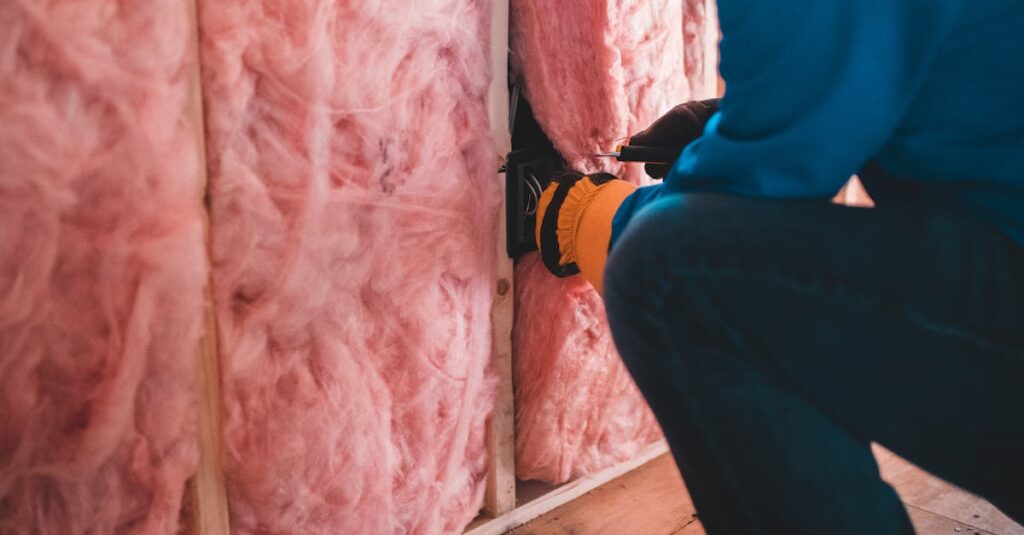
Insulation upgrades that cut SWFL cooling bills are one of the highest-return improvements a Southwest Florida homeowner can make, yet they’re among the most overlooked. Unlike colder states where heating dominates energy budgets, Fort Myers and Cape Coral homes run air conditioning 10 to 11 months a year, and a poorly insulated attic or leaky duct system quietly erases hundreds of dollars every summer. Florida’s Climate Zone 2 sets specific minimums (R-30 in the attic, R-13 in framed walls), but meeting code minimum and achieving real-world comfort are two different targets. This guide walks you through where heat actually enters your home, which upgrades deliver measurable ROI, and how to prioritize work so every dollar you invest comes back in lower utility bills.
Why SWFL Homes Lose the Cooling Battle Faster Than Most
Southwest Florida’s climate creates a set of conditions that standard insulation guides (written for four-season climates) simply don’t address. Year-round humidity above 70 percent, intense radiant heat from a sun angle that stays high through most of the calendar, and the thermal mass of mid-century concrete block (CBS) construction all combine to make heat management a different problem here than it is in Atlanta or Charlotte.
Most homes in Lee County, Collier County, and Charlotte County are built slab-on-grade with flat or low-slope rooflines and minimal attic depth. Tile roofs (the dominant roofing product in Naples, Bonita Springs, and Estero) trap an enormous amount of solar heat in the airspace below the tile. Studies have measured attic temperatures in SWFL homes exceeding 150°F on a July afternoon. When your attic is that hot, even a properly functioning R-30 batt insulation layer is fighting a losing battle if there’s no radiant barrier above it.
CBS walls, which make up the exterior structure of the majority of pre-2000 homes in Fort Myers and Cape Coral, have their own challenge: concrete block has poor insulative value (roughly R-1.5 per 4-inch block). Most older CBS homes rely on a thin layer of interior drywall furring for their entire wall R-value: sometimes as little as R-4 total. That’s less than a third of what current Florida Building Code recommends for new construction in Climate Zone 2.
Add in snowbird occupancy patterns (homes that sit unoccupied in peak summer heat) and you have a scenario where the AC must cycle hard on any given August afternoon without a human even inside the house. Sealing air leaks, boosting attic R-value, and addressing thermal bridging in walls aren’t luxuries for SWFL homeowners; they’re the structural foundation of a sensible energy strategy.


Attic Insulation: The Biggest Return on Every Dollar Spent
If you’re going to invest in one insulation upgrade, the attic is where your money does the most work. Heat radiates downward from the roofline throughout the day and continues to radiate at night as thermal mass releases stored energy. Every BTU that makes it into your conditioned space is one more BTU your AC system has to remove.
Blown-In Cellulose and Open-Cell Spray Foam
For most SWFL homes, blown-in cellulose or fiberglass to reach R-38 to R-49 (beyond code minimum) is the cost-effective starting point. Blown-in cellulose runs approximately $1.50–$2.50 per square foot installed and covers irregular framing and pipe penetrations better than batt insulation. Open-cell spray foam applied to the underside of the roof deck instead (creating an unvented conditioned attic) runs $2.50–$4.00 per square foot but moves your AC air handler into conditioned space, which significantly reduces duct losses.
Radiant Barriers
A foil radiant barrier stapled to the underside of roof rafters blocks 95–97 percent of radiant heat before it ever reaches your insulation layer. In Florida, the Energy Star program recognizes radiant barriers as a Climate Zone 2 upgrade, and Florida-specific studies suggest they reduce attic temperatures by 20–30°F. Installation typically runs $0.25–$0.50 per square foot and pairs well with any insulation upgrade rather than replacing it.
Air Sealing Before You Insulate
Adding R-value on top of a leaky attic floor is like insulating a screen door. Recessed light cans, plumbing chases, and top plates on interior walls are the most common leak points in SWFL homes. A licensed contractor should foam-seal every penetration before any blown-in product goes down. Air sealing alone can reduce conditioned air loss by 20–30 percent in older homes.
Wall Insulation in CBS Construction: Options and Realistic Costs
Improving wall insulation in a concrete block home is more involved than in wood-framed construction, but it’s far from impossible. The three practical approaches are interior rigid foam, closed-cell spray foam against the block interior, and exterior continuous insulation (CI) applied under new stucco or siding.
Interior rigid foam board (typically polyisocyanurate or XPS) glued directly against the inside face of the block and covered with new drywall adds R-4 to R-6 without significant loss of floor space. Cost typically runs $3.00–$5.50 per square foot including drywall and finishing. This is a realistic scope for a room-by-room renovation rather than a whole-home project.
Closed-cell spray foam applied to the interior face of block adds about R-6.5 per inch and also acts as a vapor retarder: important in SWFL’s humid climate where moisture management inside a wall cavity is critical. At $1.50–$3.00 per board-foot, two inches of closed-cell foam provides R-13, meeting code for framed walls and dramatically reducing infiltration.
Exterior continuous insulation is the most disruptive but also the most thermally effective option. When combined with a re-stucco project, adding a 1-inch layer of rigid CI under the new finish reduces thermal bridging through the block entirely. If you’re already planning an exterior repaint or stucco repair after hurricane damage (common in Lee County after recent storm seasons) this is the right time to evaluate CI as an add-on scope.
For general contracting projects that involve gut-renovating a room, integrating wall insulation into the scope rather than treating it as a separate job almost always reduces overall cost per square foot.


Duct Insulation and Air Handler Location: Often the Largest Hidden Loss
In many Fort Myers, Cape Coral, and Lehigh Acres homes, the HVAC duct system runs through an unconditioned attic: the same space that reaches 150°F in summer. Standard duct wrap is R-6, which means your 75°F conditioned air is traveling through a pipe surrounded by air that is 75 degrees hotter. Duct losses in an unconditioned Florida attic can account for 25–40 percent of total AC energy consumption according to data from the Florida Solar Energy Center.
Upgrading duct insulation to R-8 or R-11 is a straightforward mechanical project, typically running $800–$2,500 for a standard 2,000-square-foot home depending on duct layout and accessibility. More importantly, any duct with loose connections, separated joints, or failed mastic sealant needs remediation before additional insulation goes on. Insulating a leaky duct accomplishes very little.
The most effective solution (particularly for homeowners doing a broader renovation) is to move the air handler into conditioned space entirely. This means either a closet within the living area or, with spray foam on the roof deck, a conditioned attic. Mini-split heat pump systems eliminate duct losses altogether by delivering conditioned air directly to each zone, and they’re increasingly common in SWFL additions, garage conversions, and Florida room enclosures where extending existing ductwork is impractical.
Permit requirements for duct work changes vary by county. Lee County’s building department typically requires a mechanical permit for duct extensions or relocations, and inspections are scheduled within the permit timeline: plan for 2–4 weeks from permit application to final inspection approval on a straightforward mechanical scope. Working with a licensed Florida general contractor who coordinates mechanical subcontractors under one permit ensures the work is inspected and code-compliant under current Florida Building Code.
Garage Ceilings and Secondary Spaces: The Overlooked Heat Sources
In a typical SWFL home, an attached two-car garage shares a wall and ceiling with living space: bedrooms, kitchens, or living rooms. The garage is almost never conditioned, which means its ceiling (your floor above or the conditioned ceiling below) becomes a conduction path for heat. An uninsulated garage ceiling over a first-floor bedroom in a Naples or Bonita Springs home is essentially a radiant panel pointed at your pillow.
Adding R-19 to R-30 blown-in or batt insulation to the garage ceiling costs approximately $1.20–$2.50 per square foot and is often a half-day project for a crew. The ROI is fast (within two to four years in SWFL’s cooling-dominated climate) because this upgrade directly reduces the thermal load on the bedrooms or living spaces above or adjacent.
Florida rooms and screened lanais converted to conditioned glass enclosures present a similar opportunity. When an existing lanai is enclosed with hurricane impact glass (required under Florida Building Code for new glazing in SWFL’s 140–150 mph design wind zones) the new glass wall becomes part of the thermal envelope. Properly specifying low-e impact glass with a solar heat gain coefficient (SHGC) of 0.25 or lower significantly reduces radiant heat gain through that new wall versus standard clear impact glass.
For commercial properties or multi-unit residential in SWFL, insulation upgrades in roof decks, common wall assemblies, and mechanical rooms follow the same logic but require ASHRAE 90.1 compliance rather than residential energy codes. Our team at Alliance handles both residential and commercial remodeling projects with full code coordination from permit to inspection.
Prioritizing Your Investment: A Realistic ROI Framework
Not every insulation upgrade delivers the same return, and SWFL’s specific climate means the priority order looks different here than in most of the country. Here’s a practical sequence based on typical cost and cooling-bill impact:
- Air sealing the attic floor: Lowest cost, highest impact. Budget $300–$800 for a 2,000 sq ft home. Reduces infiltration losses immediately.
- Attic insulation to R-38 or R-49: $1,500–$4,000 for most SWFL homes. Typical payback 4–7 years at current FPL rates.
- Radiant barrier installation: $500–$1,200 for most homes. Often done same day as attic insulation with minimal added labor.
- Duct sealing and R-8 upgrade: $800–$2,500. Addresses a loss mechanism that insulation alone cannot fix.
- Garage ceiling insulation: $600–$1,800. Fast ROI if living space is directly adjacent.
- Wall insulation (CBS upgrade): $3.00–$5.50/sq ft. Best scheduled alongside existing renovation scopes to minimize disruption cost.
Florida Power & Light offers rebates on certain insulation and air sealing measures through their energy efficiency programs: check current program availability when budgeting, as rebate amounts change seasonally. The federal energy-efficient home improvement credit (IRS Form 5695) also covers insulation materials at 30 percent of cost through 2032, which materially changes the net out-of-pocket for attic and wall insulation projects.
When evaluating contractors, confirm that permit-pulled work and final inspection by the local building department are included in the scope. Insulation installed without permits in a slab-on-grade CBS home in Lee County can complicate future insurance claims, refinancing appraisals, and resale disclosure requirements. Code-compliant work is not optional; it’s the foundation of long-term property value.
According to Lee County’s building department, energy-related improvements including insulation upgrades may require a building permit depending on scope. Verify requirements before work begins.
Frequently Asked Questions
What R-value do I need in my SWFL attic to meet Florida Building Code?
current Florida Building Code requires a minimum of R-30 in attic assemblies for residential construction in Climate Zone 2, which covers all of Lee, Collier, and Charlotte counties. However, upgrading to R-38 or R-49 is widely recommended in SWFL because attic temperatures routinely exceed 150°F, placing extreme demands on any insulation layer. The incremental cost of going from R-30 to R-38 with blown-in cellulose is typically small relative to the additional cooling savings.
Can I insulate a concrete block wall from the outside without removing stucco?
Yes, but it requires removing the existing stucco down to the block surface, applying rigid continuous insulation board, installing a new weather-resistant barrier, and applying new stucco over a fiberglass mesh base coat. This is most cost-effective when stucco is already scheduled for replacement due to cracking, hurricane damage, or failing paint adhesion. The scope should be permitted and inspected in Lee County. Combined with the existing re-stucco project, the cost premium for adding 1-inch CI is typically $1.50–$3.00 per square foot.
Do insulation upgrades affect my homeowner’s insurance in Florida?
Insulation upgrades alone generally don’t directly affect homeowner’s insurance premiums. However, if insulation work is combined with air sealing, duct replacement, or a roof retrofit that incorporates a peel-and-stick membrane underlayment (all of which affect wind and water resistance) some insurers may recognize those improvements in wind mitigation inspections. In Florida’s current insurance market, anything that reduces risk exposure is worth documenting with a licensed inspector after work is complete.
How long does an attic insulation upgrade take from permit to completion in Fort Myers?
For a straightforward blown-in attic insulation project with air sealing in Fort Myers or Cape Coral, the typical timeline is 2–4 weeks from permit application to final inspection, with the physical work completed in one to two days. Lee County building permits for energy-related insulation work are generally processed in 5–10 business days for residential projects. Scheduling inspections promptly after rough work is the main variable affecting total project duration.
If you’re ready to reduce your cooling bills with code-compliant, permit-pulled insulation upgrades, Alliance Construction & Renovation is a licensed Florida general contractor serving Fort Myers, Cape Coral, Naples, and the surrounding SWFL region. Call us at (239) 771-2855 to schedule a consultation, or learn more about our full scope of general contracting services, from air sealing and attic retrofits to whole-home renovations built for Florida’s demanding climate.
We Serve Southwest Florida
Alliance Construction provides remodeling services in Cape Coral, Naples, Bonita Springs, Estero, North Fort Myers, and Punta Gorda. View all services →