


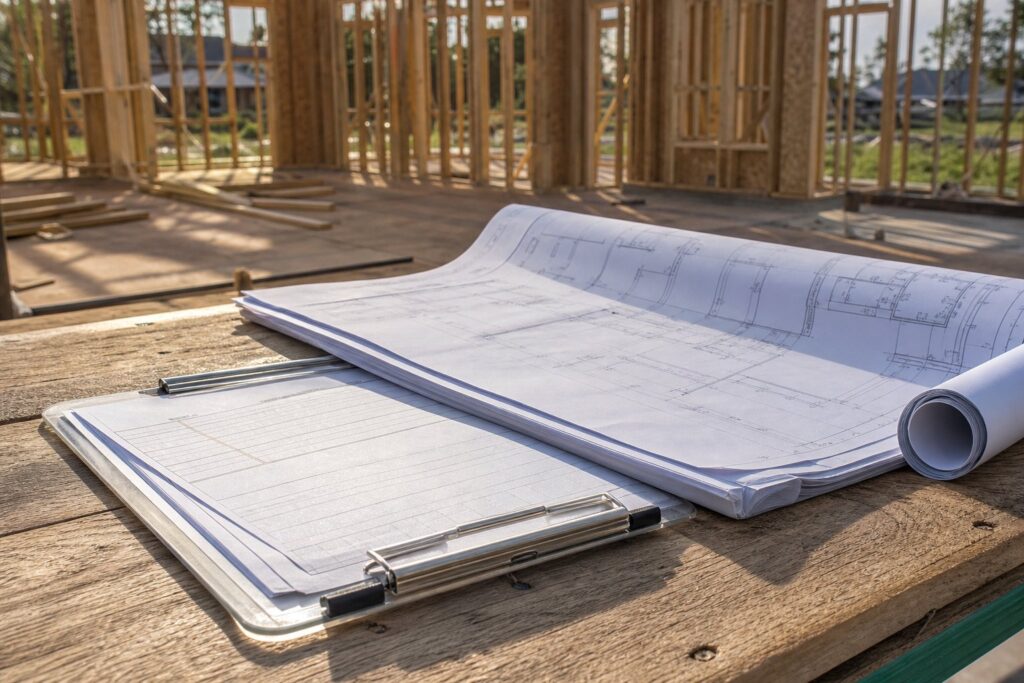
License, insurance, references, and reputation help homeowners narrow a contractor search. The next decision is more specific: does the proposed contract explain what will be built, who is responsible, when payments are due, and what happens when the scope changes? This Florida contractor contract and payment checklist focuses on that written agreement. For the earlier screening stage, see our guide to hiring a contractor in Southwest Florida.
This article is general educational information, not legal advice. Contract requirements and remedies depend on the project, parties, property, license type, and current law. For a significant project or an agreement you do not understand, consider review by a qualified Florida construction attorney before signing.
Verify the Contracting Party Before Reviewing Price
The contract should identify the legal name of the contractor or company, address, contact information, and applicable license information. Compare those details with the proposal, insurance documents, payment instructions, and state records. A trade name on a truck is not enough if a different entity appears on the agreement.
Use the Florida DBPR license lookup to search both the individual and business. Confirm the license type covers the proposed scope, the status is current, and the names match the party accepting responsibility under the contract.
Define the Scope, Exclusions, and Allowances
A useful scope describes the rooms or areas involved, demolition, preparation, structural work, utilities, finishes, fixtures, cleanup, and closeout. It should distinguish included work from owner-supplied items and excluded work. If drawings, specifications, selections, or an estimate define the scope, the agreement should identify the applicable version or date.
Allowances need a dollar amount and a clear explanation of what the amount covers. Ask whether tax, delivery, installation, contractor markup, and waste are included. A low allowance can make an initial price look attractive while shifting predictable cost into later selections.
Confirm the Code and Permit Responsibilities
The agreement should identify who determines permit requirements, who submits applications, who pays fees, who schedules inspections, and who corrects rejected work. Requirements vary by jurisdiction and scope. Verify the plan with the local building department instead of relying on a blanket statement that a permit is or is not needed.

For windows, doors, structural connections, and other regulated assemblies, ask what product approvals, plans, fastening details, or inspection documents will be required. A photograph of a window opening cannot prove that a product is impact-rated or code-compliant; the selected assembly and its documentation must do that work.
Review the Initial Payment Against the Project Plan
There is no single deposit percentage that fits every remodeling project. Review what the initial payment funds, which special-order materials will be purchased, when orders become noncancelable, and what refund or cancellation terms apply. Payment instructions should name the same contracting party shown in the agreement.
Florida’s contractor-payment statute imposes permit-application and start-of-work timing duties in certain residential projects when the initial payment exceeds 10% of the contract price, subject to the statute’s terms and exceptions. Review the current law and agreement rather than treating “10%” as a universal cap.
Build a Payment Schedule Around Defined Milestones
Each progress payment should be tied to a milestone a homeowner can understand, such as completion of a defined phase, delivery of identified special-order materials, or a passed inspection when applicable. Avoid milestones that are vague, depend only on a date, or require nearly the full contract amount while substantial work remains.
The schedule should address deposits, stored or delivered materials, retainage if any, disputed work, approved change orders, and the final payment. A written contract should clearly identify scope, price, changes, and payment terms; a generic paperwork image is only an illustration, not proof that a specific agreement contains them.
Understand Construction Lien Notices and Releases
Florida construction lien rules can involve contractors, subcontractors, suppliers, notices, payment affidavits, and releases. The exact documents and timing depend on the project. The agreement should explain how the contractor will manage payment documentation and what the owner should expect before progress and final payments.
Florida’s construction lien law includes notices and warns that unpaid parties may have lien rights even when an owner has paid the contractor. Because lien rights are legal and deadline-driven, obtain project-specific legal guidance when notices or releases are unclear.
Write the Change-Order Process Before Work Starts
Renovations can uncover hidden conditions or prompt selection changes. The contract should define who may authorize a change, what information a written change order must contain, and whether price and schedule effects must be approved before changed work begins. It should also explain how emergency safety work or concealed conditions are handled.
Ask whether contractor markup, design fees, permit revisions, restocking charges, and added supervision are included in a change price. A verbal request at the job site should not become an unexplained invoice weeks later.
Require a Realistic Schedule With Stated Assumptions
Ask for a written schedule or duration range that identifies the assumptions behind it. In Southwest Florida, permitting, inspections, weather, material lead times, building access, owner decisions, and concealed conditions can affect progress. The agreement should explain how delays are communicated and how time is adjusted after an approved change.
A schedule is a planning tool, not a promise that every variable will cooperate. Look for transparent dependencies, regular updates, and a clear process for documenting changes rather than an unsupported guarantee of a perfect completion date.
Check Insurance and Workers’ Compensation Documentation
Request current general liability information and workers’ compensation coverage or valid exemption documentation as applicable. Names and effective dates should align with the contracting party and project period. Insurance questions can be fact-specific, so ask your insurance adviser how the contractor’s documents interact with your property and proposed work.
The contract should also state who is responsible for subcontractor coordination and site safety. Do not assume a certificate answers every coverage question; confirm the documents and exclusions that matter to the planned scope.
Define Communication, Access, Protection, and Cleanup
Identify the primary contact, expected update frequency, normal work hours, access arrangements, parking, restroom use, dust protection, debris removal, and protection of occupied areas. If the homeowner will remain in the house, note planned utility interruptions and which rooms or entrances may be unavailable.
Clear site rules reduce avoidable conflict. They also make it easier to distinguish a genuine change from something already included in normal protection or cleanup.
List Closeout Documents and Final-Payment Conditions
Before final payment, the agreement should identify the expected inspections, correction-list process, warranties, manuals, care instructions, keys or controls, permit closeout, and applicable payment affidavits or releases. Product warranties and contractor warranties are different, so ask who administers each one and what exclusions apply.
Confirm how incomplete or disputed items are documented and when they are considered resolved. A project is easier to close when both parties know in advance what paperwork and physical conditions make the final payment due.
Frequently Asked Questions
How much deposit is normal? There is no universal percentage. Evaluate the project, special-order materials, cancellation terms, milestone schedule, and Florida Statute 489.126 when its conditions apply.
Should I pay a contractor in cash? Use a traceable method allowed by the contract and make payments only to the identified contracting party. Keep invoices, receipts, change orders, and payment records together.
Can work start before the permit is issued? That depends on the jurisdiction and scope. Confirm what work is allowed with the building department and define permit responsibility and sequencing in writing.
Do I need a lawyer to review the contract? Not every agreement receives legal review, but a qualified Florida construction attorney can help when the project is significant, the terms are unfamiliar, lien notices are involved, or the parties disagree about risk.
If you are comparing a remodeling proposal in Lee County, Alliance Construction can walk through its proposed scope, selections, communication plan, and payment milestones with you. Our general contracting process and project gallery provide more context. To start a conversation, call (239) 771-2855 or use the contact form.

