


Choosing the right bathroom vanity for Florida humidity is one of the most practical decisions you’ll make during a bathroom remodel in Southwest Florida. Fort Myers, Cape Coral, Naples, and the surrounding SWFL region sit in a climate zone with frequent humidity, quick temperature swings, and salt-air corrosion risk in coastal neighborhoods. A vanity that performs well in a dry northern climate can still delaminate, rust, warp, or develop mold problems early when the materials and ventilation are wrong. This guide walks you through the materials, finishes, hardware choices, and ventilation pairings that help a new vanity last longer in Florida conditions.
Why Florida’s Climate Is Unusually Hard on Bathroom Vanities
Most vanity manufacturers design and test products around typical indoor conditions. Florida bathrooms often work harder than that, especially when ventilation is weak or air conditioning cycles repeatedly between cool indoor air and warm humid outdoor air. Showers, closed doors, and damp towels can keep moisture in the room long after the water is turned off. Those repeated moisture cycles can accelerate material degradation if the vanity box, finish, hardware, and exhaust plan are not chosen together.
Coastal proximity amplifies the problem. Salt-laden air penetrates cabinet boxes, attacks metal hardware, and degrades MDF-core vanities from the inside out. Homes near the Gulf, including many properties around Cape Coral, Bonita Springs, Estero, and Naples, are more likely to see corrosion on hinges, drawer slides, and steel structural components that are not properly coated or substituted with a non-ferrous alternative.
Beyond moisture, Florida’s slab-on-grade construction presents a specific challenge: bathroom plumbing runs through the concrete slab, and any future leak or plumbing modification is more disruptive and expensive than in a home with a crawl space or basement. That makes the vanity cabinet box (the piece sitting directly over or nearest to that slab) a component worth investing in upfront. Replacing a vanity because it warped from humidity is disruptive; replacing one while simultaneously dealing with a slab leak repair is far worse. Choosing moisture-resistant materials now reduces your total long-term exposure.
Cabinet Box Materials: What Holds Up and What Fails
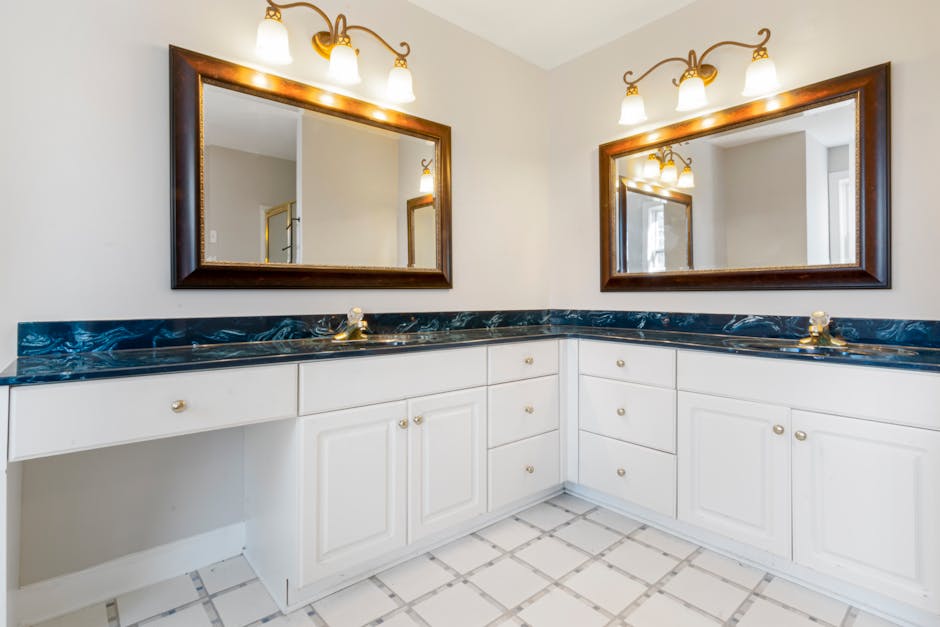
The cabinet box (the structural shell of your vanity) is where moisture resistance starts. In Florida bathrooms, you have four realistic options, and they are not equal.
MDF and Particle Board: Avoid in Wet Areas
Medium-density fiberboard (MDF) and particle board are the most common core materials in builder-grade vanities at big-box stores. They’re inexpensive, paint well, and look fine in photographs. In a Florida bathroom, they can absorb moisture, swell, delaminate, and develop mold problems behind the finish layer far earlier than a homeowner expects. If a vanity listing doesn’t specify the core material, assume it’s MDF or particle board and plan accordingly. For a coastal or high-humidity SWFL home, these materials belong in dry areas only.
Plywood Core: The Mid-Range Standard
Marine-grade or furniture-grade plywood resists moisture significantly better than MDF because its cross-laminated construction limits swelling. Plywood-core cabinets (common in semi-custom and custom cabinetry lines) are a meaningful upgrade for Florida bathrooms. They still require a well-sealed finish on all interior surfaces, proper ventilation behind the cabinet, and hardware that won’t corrode. Expect a plywood-core vanity to carry a higher upfront cost than a particle-board equivalent, but that difference is often justified by better moisture resistance and longer service life.
PVC and Thermofoil-Wrapped PVC: The Highest Moisture Resistance
PVC-core or solid-PVC cabinet boxes are the most moisture-resistant option available for bathroom vanities. They resist swelling and delamination better than wood-composite cores and do not provide the same absorbent food source that MDF or particle board can create when moisture gets behind the finish. Some manufacturers also offer thermofoil-wrapped MDF, which is different: the thermofoil wrap adds a moisture barrier but doesn’t change the underlying core. Confirm with your supplier that “moisture-resistant” actually means PVC or marine plywood core, not just a surface treatment on an MDF box.
Countertop Materials Ranked for Humidity Tolerance
Your vanity countertop faces direct water contact daily: splashing, pooling at faucet bases, and condensation from cold-water pipes. In a SWFL bathroom, the material you choose needs zero maintenance porosity and resistance to cleaning chemicals, because mold remediation products (bleach-based sprays) are a routine part of Florida home maintenance.
Quartz is the most practical countertop choice for Florida bathrooms. Engineered quartz is non-porous, requires no sealing, resists staining from hard South Florida water, and holds up well to UV from bathrooms with skylights or solar tubes. Installed pricing varies by slab grade, edge profile, supplier, and project scope, so it should be confirmed during the estimate rather than assumed from a national range.
Porcelain slabs have gained significant traction as a vanity top material and are a strong alternative to quartz. Large-format porcelain (think 3-cm thick slabs with minimal seams) is non-porous, UV-stable, and particularly suitable for bathrooms that open to a lanai or outdoor area. It can chip under impact more readily than quartz, but for a standard enclosed bathroom it’s a durable, elegant option.
Granite is widely used in Southwest Florida and performs well when properly sealed annually. However, granite is porous (even so-called “tight-grained” granites) and in a humid Florida bathroom, a missed sealing cycle can allow mold to colonize the micro-surface. It’s a manageable material, not a bad choice, but it requires more maintenance than quartz or porcelain.
Natural marble and travertine are beautiful and common in Naples and Bonita Springs luxury remodels, but they are porous and acid-sensitive. In a bathroom that sees daily cleaning sprays, hard water, and humidity, they require diligent sealing and careful product selection. Reserve them for powder rooms or applications where you’re committed to the maintenance schedule.
For a deeper look at how cabinet material choices apply beyond the bathroom, see our work on custom cabinetry throughout the home.

Hardware, Hinges, and Drawer Slides in Salt-Air Environments
Hardware failure is one of the common callbacks Alliance Construction sees on older Florida bathroom remodels – not because the cabinet failed, but because the hinges seized, the drawer slides corroded, and the pulls pitted. In coastal Lee County and Collier County homes, the wrong hardware selections can show wear much sooner than the cabinet box itself.
The standard advice (“choose stainless steel”) is correct but incomplete. Look specifically for 316 stainless steel (marine grade) rather than 304, which is the common grade used in most decorative hardware. The difference matters most in coastal and high-humidity homes. For cabinet hinges, soft-close European-style hinges with a stainless or zinc-alloy body outperform steel hinges with a decorative nickel plate, which will corrode beneath the finish.
Drawer slides deserve particular attention. Undermount soft-close slides from manufacturers like Blum or Grass use a zinc-alloy or stainless mechanism that resists corrosion far better than the side-mount steel slides common in builder-grade vanities. They’re also easier to adjust if the cabinet shifts slightly over time, which can happen in older CBS (concrete-block construction) homes that have settled, a common situation in mid-century Fort Myers and Cape Coral neighborhoods.
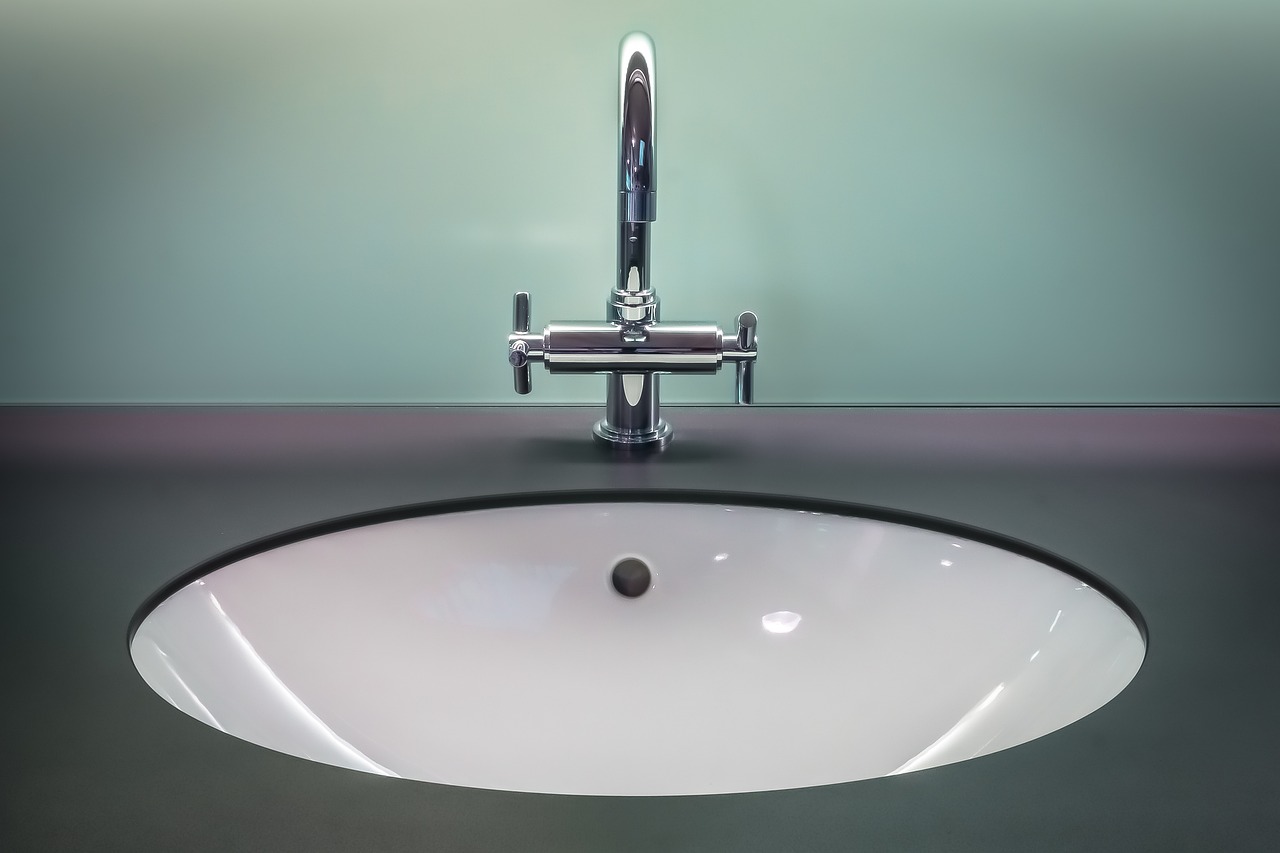
Faucet finishes in humid Florida bathrooms follow a similar logic. Brushed nickel can develop water spots and surface corrosion over time in high-humidity applications. Matte black powder coat and PVD (physical vapor deposition) finishes (available on faucets from brands like Kohler, Delta, and Moen) hold up significantly better against both moisture and the cleaning chemicals required in a Florida home. Polished chrome remains a durable choice as long as you’re consistent about wiping standing water from fixtures.
Beyond finish selection, mounting method matters. Faucets with deck plates that trap water against the countertop surface accelerate countertop degradation at the base. Where your countertop selection allows, a single-hole faucet or vessel configuration reduces the number of moisture traps at the sink deck.
Ventilation: The Variable That Determines How Long Everything Lasts
You can install the most moisture-resistant vanity available (PVC box, quartz top, marine-grade hardware) and still experience mold and premature deterioration if your bathroom ventilation is inadequate. This is one of the most common mistakes in Florida bathroom remodels, and it’s correctable at relatively low cost when addressed during construction rather than after.
The Energy Star program recommends bathroom exhaust fans be rated for continuous ventilation or have an auto-humidity sensor. In a SWFL bathroom, a humidity-sensing exhaust fan is often worth considering during a remodel. These sensors turn on automatically when moisture rises and continue running until the room dries, regardless of whether the homeowner remembers to turn the fan on or leave it running after a shower.
Fan sizing matters too. The common sizing rule starts around 1 CFM per square foot of bathroom floor area, but Florida bathrooms often benefit from reviewing the fan location, duct run, shower enclosure, and humidity load with the contractor instead of relying only on a generic minimum. For bathrooms with a separate shower enclosure, consider a second dedicated fan unit in the shower ceiling. Make sure all exhaust runs terminate outside the building envelope: many older Florida homes have fans that vent into the attic, which creates a mold reservoir above the living space.
For vanities themselves, leave a small gap at the back of the cabinet box to allow air circulation between the cabinet and the wall. Fully sealing a vanity against the wall traps moisture and accelerates cabinet box deterioration even with a PVC core. During a full bathroom remodeling project, your contractor should address both the vanity installation and the ventilation strategy together as a system; not as separate line items.
Frequently Asked Questions
What is the best cabinet material for a bathroom vanity in Florida?
PVC-core or marine-grade plywood-core cabinet boxes provide strong moisture resistance for Florida bathroom conditions. Avoid MDF or particle board cores in wet areas; they absorb moisture, swell, and delaminate relatively quickly in SWFL conditions. Semi-custom and custom cabinetry lines typically offer plywood or PVC core options; confirm the core material specification in writing before purchasing.
How often does granite need to be sealed in a Florida bathroom?
In a Southwest Florida bathroom with daily use and high humidity, granite countertops should be sealed once every twelve months at minimum. Some porous granite varieties may require sealing every six months. A simple water-bead test (drop water on the surface; if it soaks in rather than beading, reseal) tells you when the sealer has worn. Quartz and porcelain countertops eliminate this maintenance requirement entirely.
Does a bathroom vanity near the coast need different hardware?
Yes. In waterfront and coastal areas, including many Cape Coral, Bonita Springs, Estero, and Naples homes, standard decorative hardware can corrode faster than in inland locations. Specify 316 (marine-grade) stainless steel for pulls and knobs, soft-close hinges with zinc-alloy or stainless bodies, and PVD-finished or powder-coated faucets. Checking hardware specifications before ordering prevents expensive replacement callbacks two to three years into ownership.
Is a humidity-sensing exhaust fan worth the extra cost in SWFL?
For most Florida homeowners, yes. A humidity-sensing exhaust fan automatically removes moisture after showers without relying on the homeowner to remember. In a region where bathrooms can stay damp after use, that automation helps protect the vanity, tile grout, wall finishes, and ceiling from premature moisture damage.
When you’re ready to plan a bathroom update that’s built to handle Florida’s climate long-term, the team at Alliance Construction & Renovation is here to help. We’re a licensed Florida general contractor serving Fort Myers, Cape Coral, Naples, Lehigh Acres, Punta Gorda, and the surrounding Southwest Florida region. All work is permit-pulled and Lee County code-compliant. Call us at (239) 771-2855 to schedule a consultation, or explore our full bathroom remodeling services to see how we approach vanity selection, layout, and ventilation as part of a complete, durable bathroom renovation.