


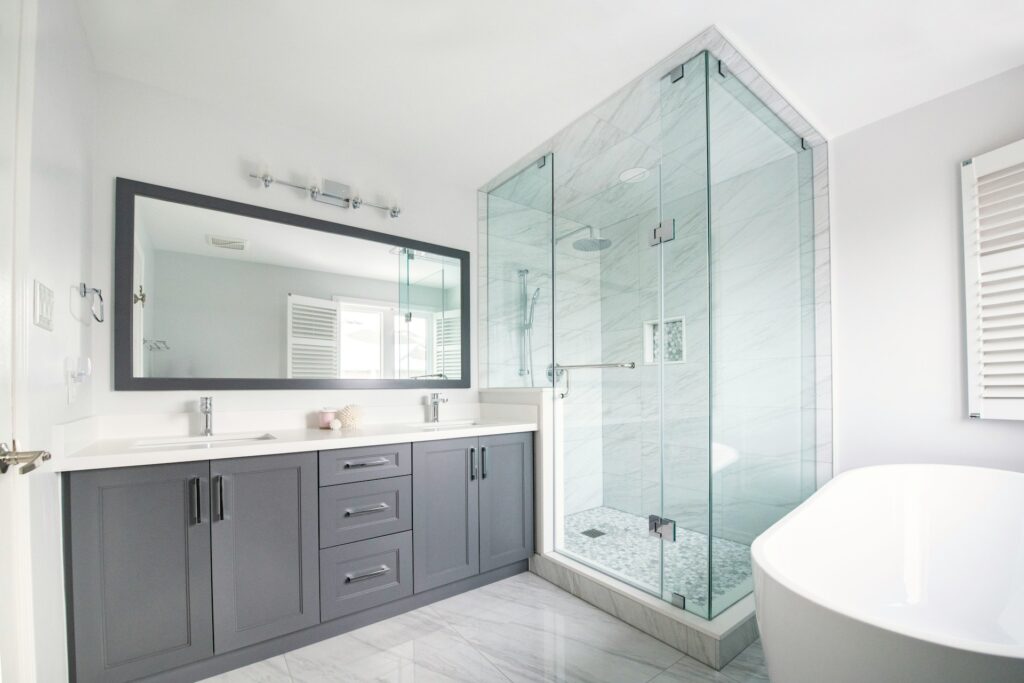
Bathroom tile in Southwest Florida has to work harder than tile in most other parts of the country. Between daily humidity levels that regularly push past 80 percent and the constant cycling of air conditioning, the wrong tile choice can lead to mold, cracking, and premature wear. If you are planning a bathroom remodel in Fort Myers, Cape Coral, or anywhere in the region, selecting the right tile is one of the most important decisions you will make.
Why Florida Humidity Matters for Tile Selection
Moisture does not just come from your shower. In Florida, the air itself carries moisture year-round. This means bathroom walls, floors, and even ceilings are exposed to dampness even when the shower is not running. Tile that absorbs too much water can harbor mold behind the surface, weaken the adhesive bond, and develop cracks over time. The key metric to pay attention to is the water absorption rate of the tile you choose.
Porcelain Tile: The Gold Standard for Wet Environments
Porcelain tile has a water absorption rate below 0.5 percent, making it the best all-around choice for Florida bathrooms. It is fired at higher temperatures than standard ceramic, which creates a denser, harder surface. Porcelain holds up against moisture penetration, resists staining, and is available in a wide range of styles including wood-look planks and natural stone patterns. For shower walls and floors, large-format porcelain panels also reduce grout lines, giving mold fewer places to take hold.
Ceramic Tile: Budget-Friendly but Choose Carefully
Ceramic tile works well in many bathrooms, but it absorbs more water than porcelain: typically between 0.5 and 3 percent. For dry bathroom walls or accent areas, ceramic is a solid and affordable option. For shower floors and walls that see direct water contact, stick with glazed ceramic at minimum. Unglazed ceramic is not recommended for wet areas in humid climates like ours.
Natural Stone: Beautiful but High Maintenance
Marble, travertine, and slate bring a luxury feel to any bathroom. However, natural stone is porous and requires regular sealing in Florida: typically every 6 to 12 months depending on exposure. Without proper sealing, stone absorbs moisture and can develop discoloration, etching, and mold. If you love the look of stone, talk to your contractor about high-quality impregnating sealers designed for humid environments.
Grout and Waterproofing: Just as Important as the Tile
Even the best tile will fail if the waterproofing behind it is not done right. In Florida, a membrane system like Schluter DITRA or RedGard behind shower walls and under floor tile adds a critical layer of moisture protection. Use epoxy grout in wet areas; it does not absorb water the way cement-based grout does, and it resists mold growth without regular sealing.
Slip Resistance for Safety
Florida bathrooms tend to stay damp, which increases the risk of slipping. Look for tiles with a slip resistance rating of at least 0.42 (DCOF) for floors. Textured finishes, matte surfaces, and smaller tiles with more grout lines all improve traction on wet floors.
Quick Selection Checklist
- Shower floors and walls: porcelain with a water absorption rate under 0.5 percent
- Bathroom floors: porcelain or glazed ceramic with slip-resistant finish
- Accent walls and dry areas: ceramic, natural stone (sealed), or decorative porcelain
- Grout: epoxy for all wet areas
- Waterproofing membrane: required under all shower tile
Choosing the right bathroom tile for Florida’s humidity protects your investment and keeps your bathroom looking great for years. Alliance Construction helps homeowners across Fort Myers and Southwest Florida select and install tile that performs in our climate. Call us at (239) 244-4341 for a free design consultation.
We Serve Southwest Florida
Alliance Construction provides remodeling services in Cape Coral, Naples, Bonita Springs, Estero, North Fort Myers, and Punta Gorda. View all services →